 Last week we published a post about how it was discovered through trial and error that Tektronix application modules are designed with laughable security. We’ll get to that part of it in a minute. We received a DMCA Takedown Notice from Tektronix (which you can read after the break) demanding that we remove the post. We have altered the original post, but we believe our coverage of this story is valid and we don’t agree that the post should be completely removed.
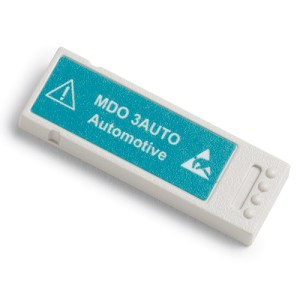
First off, Tektronix sells the modules to unlock the features already present on the Oscilloscope in questions. We’re operating on the moral assumption that using these features without paying their asking price is wrong. If you want the features they’ve developed you should pay for them.
The real story here is that Tektronix designed a woefully weak system for unlocking these modules. Learn from this. If you’re ever designing a hardware key, don’t do it like this!
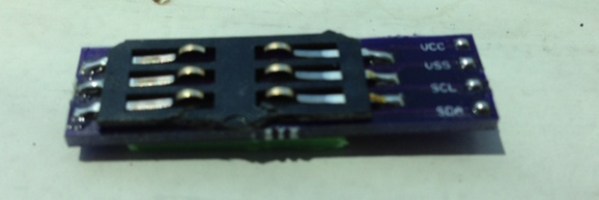
An EEPROM, a connector, and a plain text string of characters which is already published publicly on their website is all that is necessary to unlock these “crippled” features. Let’s just say that again: apparently every hardware key is the same and just uses a plain-text string found on their website which is not encrypted or obfuscated. If you were selling these keys for $2.99 perhaps this would be adequate, but Tek values these modules at $500 apiece.
If you were designing this system wouldn’t it be worth using an encryption key pair based on the serial number or some other piece of unique information? How do you think this should have been done? Leave your comment below.
Continue reading “Hardware “Security” And A DMCA Takedown Notice”
 A few years ago, [Pat] sent in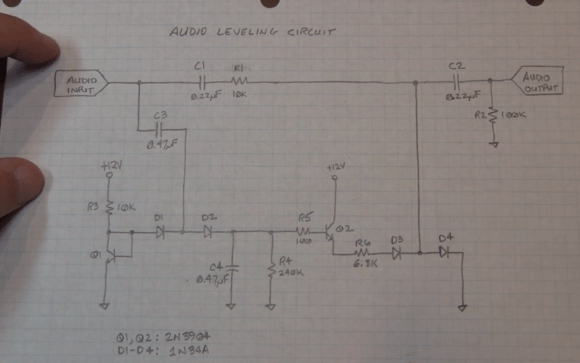
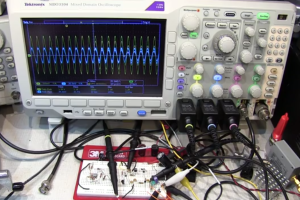 ircuit isn’t new, he states right in the video that various audio limiting, compressing, and automatic gain control circuits have been passed around the internet for years. What he’s brought to the table is his usual flair for explaining the circuits’ operation, with plenty of examples using the oscilloscope. (For those that don’t know, when [Alan] isn’t building circuits for fun, he’s an RF applications engineer at Tektronix).