USB VU-meter

[youtube http://www.youtube.com/watch?v=jsg24MGNpRc&feature=player_embedded%5D

WaitingForFriday’s [Simon Inns] is quite possibly the USB interface and PIC master. This week he let us know about his VU-meter repurposed as a computer performance monitor using a PIC18F2550 and his open source USB Generic HID communication class. With PWM the meter’s needles and RGB LED can be accurately set and even dampened for CPU usage, network usage, HDD utilization, and even memory usage. Oddly enough, in his software we didn’t find the ability to use the device as a VU-meter – go figure.
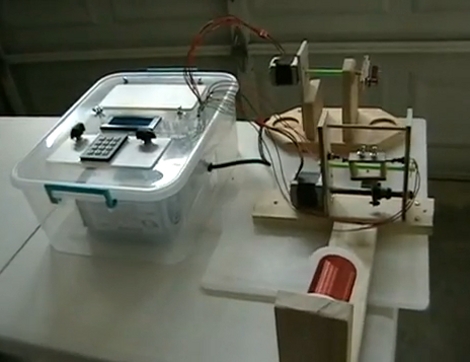
Automated Guitar Pickup Winding

[Robert Pickering] shares his automated guitar pickup winder with us. He built it for his senior project at Old Dominion University. Two stepper motors are used to wind the magnet wire around the pickup hardware. The unit is PIC based and about six minutes into the video (embedded after the break) you can see that he used wire wrapping for this build. Curious, one of the comments on our latest Hackaday Links mentioned that wire wrapping was rarely used anymore, but here it is anyway.

We especially like the limiting switches he’s using on the traverse mechanism. There are momentary push buttons on either side of a carriage which are depressed when a drywall screw in the sides of that carriage hits them. This makes for very easy calibration because the screw can be raised or lowered with just a bit of screwdriver work. Well built and documented, we’re sure he’ll get some high marks on this one. Continue reading “Automated Guitar Pickup Winding”

Beginner Concepts: Using An Accelerometer

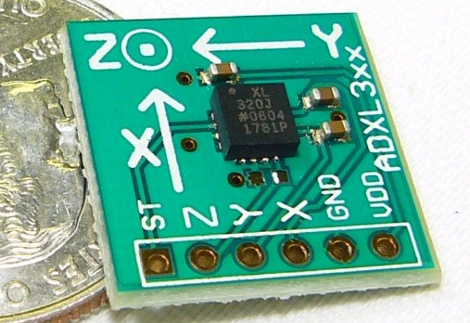
Accelerometers make for nice user interaction, that’s why every Apple product seems to have one included and the Nintendo Wii is still alive despite its underpowered graphics capabilities. Adding one to your project is pretty simple, just a matter of reading in analog data and interpreting it according to the datasheet. If you’re just starting out, here’s a tutorial on how to interface an accelerometer with a PIC microcontroller. They’re using an ADXL320 which can be acquired on a breakout board for about $30. The schematic and code are simple so even if you don’t intend to build the circuit (or want to use a different uC), this is easy to understand as an academic exercise.

[Thanks Skitchin]

[Photo credit: SparkFun]

Coin-op Pays Out When You Win

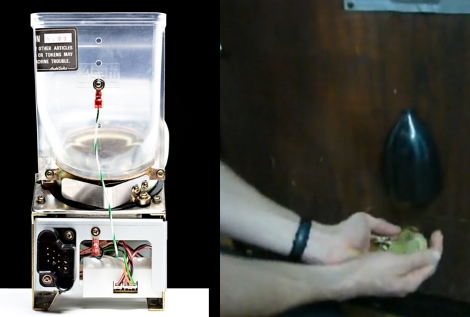
The days of plugging coins into a stand up arcade game are sadly dwindling. [Dirk] figured out a way to prolong the nostalgia by incorporating currency back into the experience in a useful way. He rebuilt the video game Raiden to pay out a prize when you win the game. Now it takes a coin for each play but if you make it to the end you can recoup the expense.

[Dirk] took an original cabinet game, did some dangerous work to replace the old CRT monitor, and retrofit a MAME machine to handle the gaming. He’s using Windows and had some problems because of it but, as you can see after the break, things worked out in the end. The hopper hardware that spits out coins went through several steps from the initial design to the finished product, but it has always been based around a PIC controller connected to the MAME box via parallel port. This is a fun addition to any MAME cabinet.

Continue reading “Coin-op Pays Out When You Win”

PWM Fan Controller For External Hard Drive

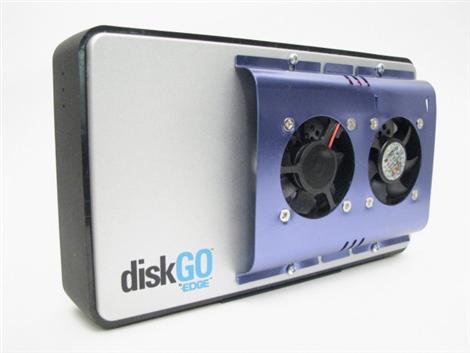
[Alan] noticed that his external hard drive was getting quite hot to the touch after a few hours. He says that it was probably designed to handle the heat sufficiently, he thought it would be fun to beef it up. He’s using a pic 12f675 microcontroller as the brain and an LM35 temperature sensor. The Fan speed is varried in 8 steps from 35 degrees C to 45 degrees C.

PIC USB Host Shortcuts

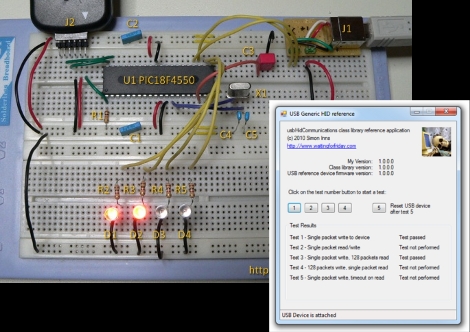
[Simon Inns] is still hard at work making USB connectivity for PIC microcontrollers easier for the hobbiest. He’s released a framework for PIC based USB devices under Windows. It includes the firmware needed for USB compatible 18F PIC chips as well as a C# class library and example programs for the Windows side of things. This goes quite a bit further than his PIC-USB tutorial but with little added effort on your end of things.

We do our USB prototyping on a breadboard just like [Simon] did in this example. He’s got a nice little USB-B connector breakout that is easy to plug into the breadboard. If you prefer to have a more stable development area, check out the one he designed. It’s a single-sided PCB made for through-hole components with just a handful of jumper wires.

Microchip’s PIC Development For IPhone And IPod

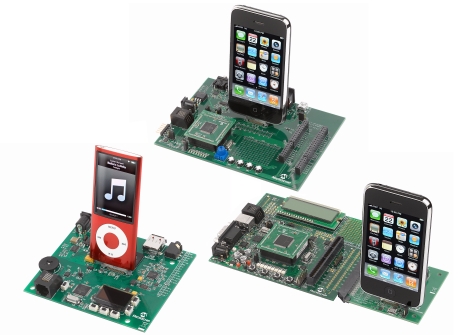
It seems a bit late to the party, but Microchip has just announced a family of PIC development boards for Apple products. The three offerings include a digital audio development kit, 8-bit accessory development and charging kit, and a 16-bit accessory development and charging kit for iPhone or iPod.

We’ve seen a lot of homebrew Apple addons that use microcontrollers. This not only takes the hardware interface to the next level, it does it with Apple’s blessing. But somehow that doesn’t seem like quite as much fun.

[Thanks Juan]