Pandora Dev Unit Unboxed

pandora

[skeezix] has got his hands on one of the first Pandora dev kits to make it out the door and took a few photos. This is 1 of the 20 MK2 devboards that were produced. Although, not final it certainly is close to the version they’ll be shipping. Pandora is a Linux based portable game console. The main chip in the clamshell device is a TI OMAP3530. It has OpenGL hardware acceleration and an 800×480 touchscreen. A QWERTY keyboard is included along with analog and digital game controls. WiFi, bluetooth, USB host, TV-out, and dual SDHC card slots round out the package. The team has already presold 4000 devices.

Meggy Jr RGB Portable Game Platform

meggy

Evil Mad Scientist Laboratories have just announced the release of the Meggy Jr RGB, a fully programmable handheld console with an 8×8 RGB LED matrix display. Like its big sisters Peggy and Peggy 2.0, the Meggy Jr is driven by an ATmega168 microcontroller and is made up of a bank of fully addressable LEDs. Unlike its siblings, the device boasts six buttons and the ability to be mounted inside of a custom case (or “handle set”) constructed from plastic or wood, drastically altering the look of the console. Using the popular open-souce Arduino environment, users are able to write custom software for the device. While it works great as a game console, of the many possible configurations and suggested uses, we think “disco floor for your Lego minifigurines” is the most amusing.

No Nintendo DSi Homebrew

The latest version of the Nintendo DS, the DSi, has officially launched in Japan. It features larger dual touchscreens, dual cameras, and an SD card slot. The members of GBAtemp.net have decided to tackle the most important question: will it run homebrew? Current DS systems just need a purpose built flash cartridge to load homebrew software (usually stored on MicroSD). Forum members have tested at least 10 different flash carts, and none of them worked. While not completely exhaustive it’s proof enough to us that current generation carts will not work. We hope this is something that can patched with a new firmware. Most carts load their firmware off the flash, so upgrades are easy. The blocking of homebrew maybe a side-effect of Nintendo’s announced region-locking on the DSi.

We hope this gets sorted out soon. Maybe we’ll see hackers figure out how to take advantage of the SD slot instead. If you’ve got a Nintendo DS, there’s no excuse not to be playing with homebrew. It’s as easy as copying files to a card. We’ve had success with the DSTT, which you can find on DealExtreme for just $10.

[via Gizmodo]

Install GPS In Your Dell Mini 9

[acabtp] has already started hacking on his Dell Mini 9. He wanted to add GPS functionality, but didn’t want a dongle or anything external. After ordering the smallest GPS unit he could find, he found a place to wire it in internally. The end result had no bearing on the external looks of the computer. I wonder if he used the modification guide dell released?

Marketed as direct competition for the EEEPC, we’ll probably start seeing a lot more hacks for these. We’ve already seen the EEEPC taken hacked more than we ever expected.

[thanks strider_mt2k]

Xbox 360 Wireless Visual Interface

[jon barber] pointed out another great project on the benheck forums that hasn’t gotten much attention. [techknott] built a wireless video interface for his Xbox 360. Think of it as a sort of video game thin client. It has the form-factor of a portable but doesn’t include the 360’s components. Instead it has a 1.2GHz A/V receiver and the guts of a wireless controller. The specific transmitter was chosen because it wouldn’t interfere with the 2.4GHz controller. The power supply is two 2600mAh batteries running at 7.5V with a built in charging circuit. The draw from the screen is ~500mA. The entire unit is 1 inch thick.

Modular Portable System


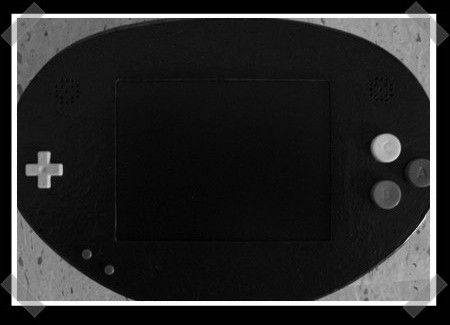
Reader [John Grayson], known for his multiconsole portable, has constructed a brand new portable. Not liking the controls or the tethered nature of retro TV games he decided to build a modular portable system. He built a custom system that uses cartridges created from TV game systems. The device has a 5.4″ screen and two Canon batteries for 4.5 hours of play.

Pac-Man Portable


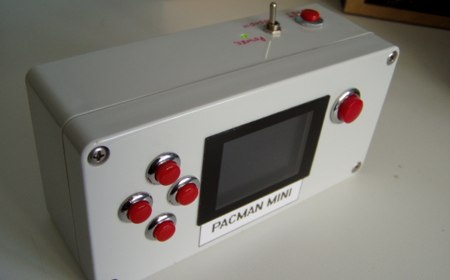
This is another fine project to come out of the benheck forums. [sam_thornley] built this portable game system last Fall. It uses the guts of a JAKKS Namco TV arcade stick. The composite signal from the board is connected to a 2.5″ Intec screen with a CCFL backlight. Four rechargable AA batteries are in the case for 2.5 hours of play. It doesn’t have sound, but he says the TV games’ sound pales to the original anyway. It’s certainly a nice compact build in a regular project box.

[via Engadget]