Solving Ultra High Vacuum Leaks Has An Elementary Solution

When we think of a vacuum leak we generally think of a car that just doesn’t want to run quite right. Most normally aspirated internal combustion engines rely on the vacuum created by the pistons to draw in the air fuel mixture that’s produced by the carburetor or fuel injection system. Identifying the leak usually involves spraying something combustible around common trouble areas while the engine is running. Changes to the engine speed indicate when the combustible gas enters the intake manifold and the leak can be found.

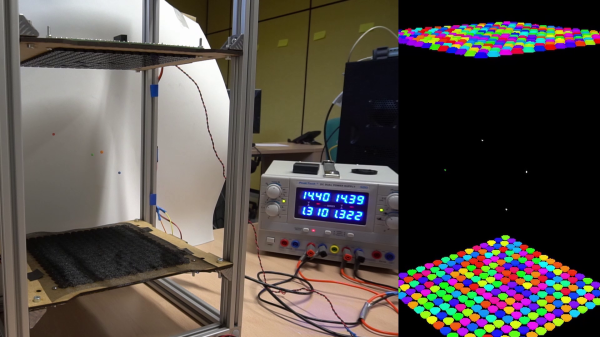
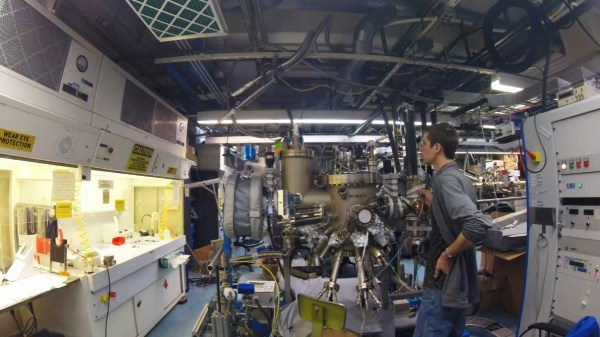
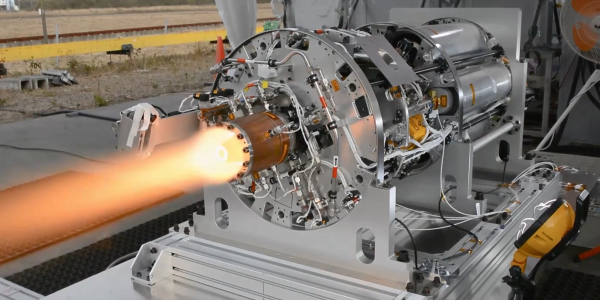
What if your vacuum leak is in a highly specialized piece of scientific equipment where the pressures are about 12 times orders of magnitude lower than atmospheric pressure, and the leak is so small it’s only letting a few atoms into the vacuum chamber at a time? [AlphaPhoenix] takes dives deep into this very subject in his video “Air-tight vs. Vacuum-tight.” which you can watch below the break.

Not only does [AlphaPhoenix] discuss how a perfect pressure vessel is sealed, he also explains the specialized troubleshooting methods used which turn out not to be all that different from troubleshooting an automotive vacuum leak- only in this case, several magnitudes more complex and elemental in nature.

We also enjoyed the comments section, where [AlphaPhoenix] addresses some of the most common questions surrounding the video: Torque patterns, the scarcity of the gasses used, and leaving well enough alone.

Does talking about vacuums get you pumped? Perhaps you’d enjoy such vacuum hacks as putting the toothpaste back in the tube in your homemade vacuum chamber.

Thank you [Morgan] for sending this one in. Be sure to send in your own hacks, projects, and fantastic finds through the Tip Line!

Continue reading “Solving Ultra High Vacuum Leaks Has An Elementary Solution”

Affordable Transilluminator Helps Visualize DNA

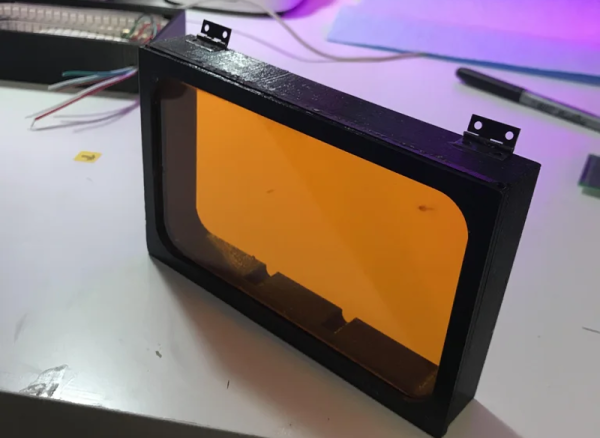
If you want to examine the results of gel electrophoresis — and who doesn’t — you need a transilluminator. These devices can be quite pricey, though, so you might want to check out [Gabriel St-Pierre’s] plans to make an affordable blue-light version. You can see a video about the device below.

Using a UV filter, an Arduino Nano, an LED strip, 3D printing, and some mechanical items, it looks like this is a very easy project if you need such a device. There are a few miscellaneous parts like a hinge and some mirror material, but nothing looks too exotic.

Continue reading “Affordable Transilluminator Helps Visualize DNA”

Something’s Up In Switzerland: Explaining The B Meson News From The Large Hadron Collider

Particle physics is a field of extremes. Scales always have 10really big number associated. Some results from the Large Hadron Collider Beauty (LHCb) experiment have recently been reported that are statistically significant, and they may have profound implications for the Standard Model, but it might also just be a numbers anomaly, and we won’t get to find out for a while. Let’s dive into the basics of quantum particles, in case your elementary school education is a little rusty.

It all starts when one particle loves another particle very much and they are attracted to each other, but then things move too fast, and all of a sudden they’re going in circles in opposite directions, and then they break up catastrophically…

Continue reading “Something’s Up In Switzerland: Explaining The B Meson News From The Large Hadron Collider”

The Laser Power Record Has Been Broken

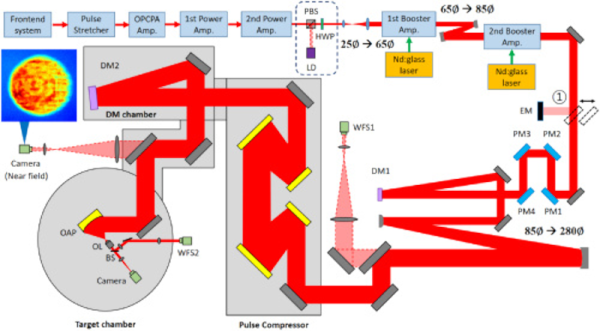
Lasers do all sorts of interesting things and — as with so many things — more is better. Korean scientists announced recently they’ve created the most powerful laser beam. 1023 watts per square centimeter, to be exact. It turns out that 1022 Watts/cm2 may not be commonplace, but has been done many times already at several facilities, including the CoReLS petawatt (PW) laser used by the researchers.

Just as improving a radio transmitter often involves antenna work instead of actual power increases, this laser setup uses an improved focus mechanism to get more energy in a 1.1 micron spot. As you might expect, doing this requires some pretty sophisticated optics.

Continue reading “The Laser Power Record Has Been Broken”

Measuring An Atom

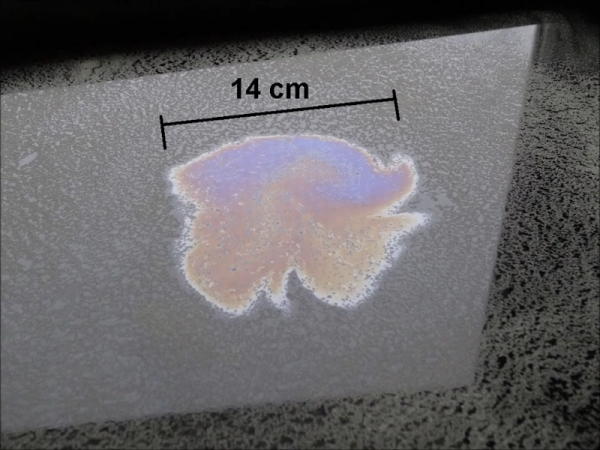
Do you need a well-equipped lab to measure the size of an atom (German, machine translation)? According to [stoppi], no. You need sunflower oil, some bear moss spores, and a bit of gasoline. You’ll also need some common things like a syringe, a baking sheet, and a jar. You can see the whole process in the video below. The measurement isn’t really for a specific atom, but it is an average for a lipid molecule, which is still impressive.

You essentially measure the diameter of an oil drop spread over water. Since the oil is mostly oleic acid, the height of the layer is known as 167 atoms. After that, it is some simple measurements and math to get the height and find the average atom height.

Continue reading “Measuring An Atom”

X-Ray Defeats Letterlocking — Unfolds And Reads Letter Sealed Since 1697

Over recent years we’ve been treated to a series of fascinating advances in the world of x-ray imaging, as  researchers have developed their x-ray microtomography techniques and equipment to the point at which they can probe and then computationally reconstruct written material within objects such as letters or scrolls in museum collections whose value or fragility means they can’t be opened and read conventionally. There is more to this challenge than simply extracting the writing though, in addition to detecting the ink the researchers also have to unpick the structure of whatever it was written upon. A particular challenge comes from letterpackets, the art of folding a letter into its own envelope, and a newly-published Nature Communications paper details work from a team of academics in the USA, the UK, and the Netherlands in tackling it.

Letterpackets were more than a practical method of packaging a missive for the mail, they also had a security function often called Letterlocking. A packet would be folded in such a way as to ensure it was impossible to open without tearing or otherwise damaging the paper, and their structure is of especial interest to historians. The researchers had a unique resource with which to work; the Brienne collection is a trunk full of undeliverable mail amassed by a 17th century postmaster couple in Den Haag in the Netherlands, and now in the possession of the Beeld en Geluid museum in that city. In it were a cache of letters including 577 never-opened letterpackets, and the x-ray technique promised a means to analyse these without compromising them.

A letter imaged using the technique.

The researchers have developed an entirely computational technique for the virtual unfolding process. Starting with a 3D volumetric x-ray scan of the unopened packet they then identify the various layers of paper and the bright spots which denote the ink. Their algorithm has to cope with areas in which two or more layers are tightly in contact, for example when multiple levels are folded, and then unpick the resulting 3-dimensional mesh into a 2-dimensional sheet. Their process for mapping the crease pattern involves applying a colour map representing the mean curve radius at a given point. The final section of the paper looks at the multiple different methods of letterlocking, and attempts to categorise them all including a security rating for each. It’s evident that this could be a highly personalised process, indeed they give as an example a letter from Mary Queen of Scots that used an intricate spiral folding technique to identify its sender.

It’s clear that this technique will reveal many more fascinating historical documents as it is both refined and extended across the many more collections of further artefacts that have lain waiting for it. As they say, individual letters do not necessarily contain earth-shattering historical discoveries, but taken together they shed an important light on the social history of past centuries.

One of the names on the paper is [David Mills], whose work has featured here before.

Graphene Generates A Little Power

We never know exactly what to make of university press releases, as we see plenty of them with breathless claims of new batteries or supermaterials, but then we don’t see much else. Sometimes, the claims in the press release don’t hold up in the paper, while other times the claims seem to be impractical for use in real life. We aren’t quite sure what to make of a press release from the University of Arkansas claiming they can draw current from a sheet of freestanding graphene purely from its temperature fluctuations.

The press release seems to claim that this is a breakthrough leading to “clean, limitless power.” But if you look at the actual paper, normal room temperature is causing tiny displacements in the graphene sheet as in Brownian motion. A scanning tunneling microscope with two diodes can detect current flowing even once the system reaches thermal equilibrium. Keep in mind, though, that this in the presence of a bias voltage and we are talking about nanometer-scale displacements and 20 pA of current. You can see a simple video from the university showing a block diagram of the setup.

Continue reading “Graphene Generates A Little Power”