WOPR: Security Loses Some Of Its Obscurity

As we’ve seen time and time again, the word “hacker” takes on a different meaning depending on who you’re talking to. If you ask the type of person who reads this fine digital publication, they’ll probably tell you that a hacker is somebody who likes to learn how things work and who has a penchant for finding creative solutions to problems. But if you ask the average passerby on the street to describe a hacker, they might imagine somebody wearing a balaclava and pounding away at their laptop in a dimly lit abandoned warehouse. Thanks, Hollywood.

The “Hollywood Hacker” Playset

Naturally, we don’t prescribe to the idea of hackers being digital villains hell-bent on stealing your identity, but we’ll admit that there’s something of rift between what we call hacking versus what happens in the information security realm. If you see mention of Red Teams and Blue Teams on Hackaday, it’s more likely to be in reference to somebody emulating Pokemon on the ESP32 than anything to do with penetration testing. We’re not entirely sure where this fragmentation of the hacking community came from, but it’s definitely pervasive.

In an attempt bridge the gap, the recent WOPR Summit brought together talks and presentations from all sections of the larger hacking world. The goal of the event was to show that the different facets of the community have far more in common than they might realize, and featured a number of talks that truly blurred the lines. The oscilloscope toting crew learned a bit about the covert applications of their gadgets, and the high-level security minded individuals got a good look at how the silicon sausage gets made.

Two of these talks which should particularly resonate with the Hackaday crowd were Charles Sgrillo’s An Introduction to IoT Penetration Testing and Ham Hacks: Breaking into Software Defined Radio by Kelly Albrink. These two presentations dealt with the security implications of many of the technologies we see here at Hackaday on what seems like a daily basis: Bluetooth Low Energy (BLE), Software Defined Radio (SDR), home automation, embedded Linux firmware, etc. Unfortunately, the talks were not recorded for the inaugural WOPR Summit, but both presenters were kind of enough to provide their slides for reference.

Continue reading “WOPR: Security Loses Some Of Its Obscurity”

What To Do When The Botnet Comes Knocking

“It was a cold and windy night, but the breeze of ill omen blowing across the ‘net was colder. The regular trickle of login attempts suddenly became a torrent of IP addresses, all trying to break into the back-end of the Joomla site I host. I poured another cup of joe, it was gonna be a long night.”

Tech noir aside, there was something odd going on. I get an email from that web-site each time there is a failed login. The occasional login attempt isn’t surprising, but this was multiple attempts per minute, all from different IP addresses. Looking at the logs, I got the feeling they were pulling usernames and passwords from one of the various database dumps, probably also randomly seeding information from the Whois database on my domain.

Continue reading “What To Do When The Botnet Comes Knocking”

Hackers Turn Hard Drive Into Microphone That Can Listen In On Your Computer’s Fan Whine

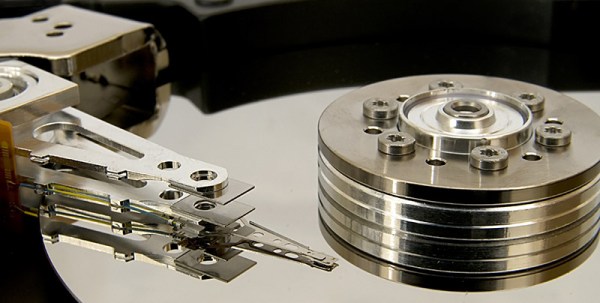
As reported by The Register, hackers can now listen in on conversations happening around your computer by turning a hard drive into a microphone. There are caveats: the hack only works if these conversations are twice as loud as a blender, or about as loud as a lawn mower. In short, no one talks that loud, move along, nothing to see here.

The attack is to be presented at the 2019 IEEE Symposium on Security and Privacy, and describes the attack as a modification of the firmware on a disk drive to read the Position Error Signal that keeps read/write heads in the optimal position. This PES is affected by air pressure, and if something is affected by air pressure, you’ve got a microphone. In this case, it’s a terrible microphone that’s mechanically coupled to a machine that has a lot of vibrations including the spinning platter and a bunch of fans inside the computer. This is an academic exercise, and not a real attack, and either way to exfiltrate this data you need to root the computer the hard drive is attached to. It’s attacks all the way down.

The limiting factor in this attack is that it requires a very loud conversation to be held near a hard drive. To record speech, the researchers had to pump up the volume to 85 dBA, or about the same volume as a blender crushing some ice. Recording music through this microphone so that Shazam could identify the track meant playing the track back at 90 dBA, or about the same volume as a lawnmower. Basically, this isn’t happening.

The interesting bit of this hack isn’t using a hard drive as a microphone. It’s modifying the firmware on a hard drive to do something. We’ve seen some hacks like this before, but the latest public literature on hard drive firmware hacking is years old. If you’ve got a tip on how to hack hard drives, even if it’s to do something that’s horribly impractical, we’d love to see it.

1 Trillion USD Refund! (PDF Enclosed)

Security researchers have found that it is possible to alter a digitally signed PDF without invalidating its signatures. To demonstrate it, they produced a fake document “refund order” of $1,000,000,000,000 dollars, with a valid signature from Amazon. This sparked my attention, since I was quite sure that they didn’t use some sort of quantum device to break the cryptography involved in the signing process. So what exactly is going on?

The researchers claim to found at least three different ways to, in their words:

… use an existing signed document (e.g., amazon.de invoice) and change the content of the document arbitrarily without invalidating the signatures. Thus, we can forge a document signed by invoicing@amazon.de to refund us one trillion dollars.

That’s not good news if you take into account that the main purpose of digitally signing a document is, well, prevent unauthorized changes in that document. The good news is that you can update your software to fix this flaws because of this research; the main PDF readers companies were given time to fix the issues. The bad news is that if you rely on the signature verification for any sensitive process, you likely want to go back and see if you were using vulnerable software previously and check that documents were correctly validated. I’m thinking about government institutions, banks, insurance companies and so on.

The implications are yet to be seen and probably won’t even be fully known.

There are three classes of attacks that work on different software. I’ll try to go into each one from what I could tell from reading the research.

Continue reading “1 Trillion USD Refund! (PDF Enclosed)”

WiFi Hides Inside A USB Cable

If you weren’t scared of USB cables before, you should be now. The O.MG cable (or Offensive MG kit) from [MG] hides a backdoor inside the shell of a USB connector. Plug this cable into your computer and you’ll be the victim of remote attacks over WiFi.

You might be asking what’s inside this tiny USB cable to make it susceptible to such attacks. That’s the trick: inside the shell of the USB ‘A’ connector is a PCB loaded up with a WiFi microcontroller — the documentation doesn’t say which one — that will send payloads over the USB device. Think of it as a BadUSB device, like the USB Rubber Ducky from Hak5, but one that you can remote control. It is the ultimate way into a system, and all anyone has to do is plug a random USB cable into their computer.

In the years BadUSB — an exploit hidden in a device’s USB controller itself — was released upon the world, [MG] has been tirelessly working on making his own malicious USB device, and now it’s finally ready. The O.MG cable hides a backdoor inside the shell of a standard, off-the-shelf USB cable.

The construction of this device is quite impressive, in that it fits entirely inside a USB plug. But this isn’t a just a PCB from a random Chinese board house: [MG] spend 300 hours and $4000 in the last month putting this project together with a Bantam mill and created his own PCBs, with silk screen. That’s impressive no matter how you cut it.

Future updates to this cable that will hack any computer might include a port of ESPloitV2, an Open Source WiFi controlled USB HID keyboard emulator. That will bring a lot of power to this device that’s already extremely capable. In the video attached to this tweet you can see the O.MG cable connected to a MacBook, with [MG] opening up a webpage remotely.

Blacksmith Elevates The Craft With This Fabulous Strongbox

For most of human industrial history, the blacksmith was the indispensable artisan. He could fashion almost anything needed, from a simple hand tool to a mechanism as complex as a rifle. Starting with the most basic materials, a hot forge, and a few tools that he invariably made himself, the blacksmith was a marvel of fabrication.

If you have any doubt how refined the blacksmith’s craft can be, feast your eyes on [Seth Gould]’s masterpiece of metalwork. Simply called “Coffer”, [Seth] spent two years crafting the strongbox from iron, steel, and brass. The beautifully filmed video below shows snippets of the making, but we could easily watch a feature-length film detailing every aspect of the build. The box is modeled after the strongboxes built for the rich between the 17th and 19th centuries, which tended to favor complex locking mechanisms that provided a measure of security by obfuscation. At the end of the video below, [Seth] goes through the steps needed to unlock the chest, each of which is filled with satisfying clicks and clunks as the mechanism progresses toward unlocking. The final reveal is stunning, and shows how much can be accomplished with a forge, some files, and a whole lot of talent.

If you’ve never explored the blacksmith’s art before, now’s the time. You can even get started easily at home; [Bil Herd] will show you how.

Continue reading “Blacksmith Elevates The Craft With This Fabulous Strongbox”

This Tiny Router Could Be The Next Big Thing

It seems like only yesterday that the Linksys WRT54G and the various open source firmware replacements for it were the pinnacle of home router hacking. But like everything else, routers have gotten smaller and faster over the last few years. The software we run on them has also gotten more advanced, and at this point we’ve got routers that you could use as a light duty Linux desktop in a pinch.

But even with no shortage of pocket-sized Linux devices in our lives, the GL-USB150 “Microrouter” that [Mason Taylor] recently brought to our attention is hard to ignore. Inside this USB flash drive sized router is a 400 MHz Qualcomm QCA9331 SoC, 64 MB of RAM, and a healthy 16 MB of storage; all for around $20 USD. Oh, and did we mention it comes with OpenWRT pre-installed? Just plug it in, and you’ve got a tiny WiFi enabled Linux computer ready to do your bidding.

On his blog [Mason] gives a quick rundown on how to get started with the GL-USB150, and details some of the experiments he’s been doing with it as part of his security research, such as using the device as a remote source for Wireshark running on his desktop. He explains that the diminutive router works just fine when plugged into a USB battery bank, offering a very discreet way to deploy a small Linux box wherever you may need it. But when plugged into a computer, things get really interesting.

If you plug the GL-USB150 into a computer, it shows up to the operating system as a USB Ethernet adapter and can be used as the primary Internet connection. All of the traffic from the computer will then be routed through the device to whatever link to the Internet its been configured to use. Depending on how you look at it, this could be extremely useful or extremely dangerous.

For one, it means that something that looks all the world like a normal USB flash drive could be covertly plugged into a computer and become a “wiretap” through which all of the network traffic is routed. That’s the bad news. On the flip side, it also means you could configure the GL-USB150 as a secure endpoint that lets you quickly and easily funnel all the computer’s traffic through a VPN or Tor without any additional setup.

We’ve seen all manner of hacks and projects that made use of small Linux-compatible routers such as the TP-Link TL-MR3020, but we expect the GL-USB150 and devices like it will be the ones to beat going forward. Let’s just hope one of them doesn’t show up uninvited in your network closet.