posted Jun 20th 2010 6:00am by
Mike Szczys
filed under:
Hackaday links
Nixie Voltmeter Clock

[Gmglickman] built a clock out of an old digital voltmeter. The Fluke 8300A came out in 1969 and is featured in their 60 years of innovation slideshow. What makes it a cool clock? The Voltmeter’s display is made up of Nixie tubes.
Easy optical encoder wheel generator

If you need to print out encoder wheels for your project there is an online tool you can use. It has almost any setting you would want to make a rotary encoder wheel.The black wheel can be used with old mouse parts and the checkered wheel with an optical sensor. [Thanks Bluewraith]
New CD without the CD

1-bit Symphony is a newly released album. It come in a CD jewel case but there’s no CD included. That’s because they’ve built a circuit to playback their music via a headphone jack. We didn’t see any info on what microcontroller was used, but we love the cleanliness of the design. This apparently isn’t the first time the artist has released an album like this either.[Thanks Juan]
Making a standard SIM work with the iPad

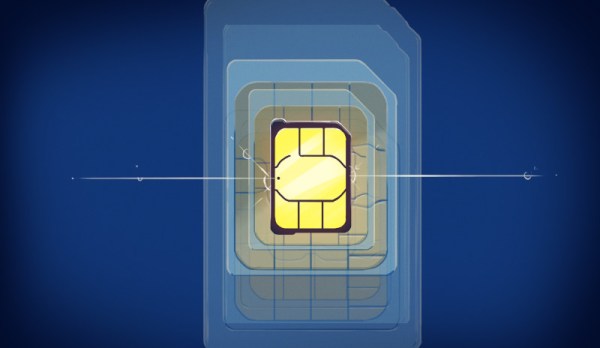
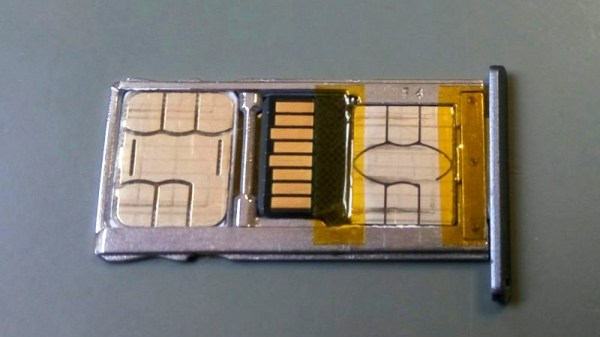
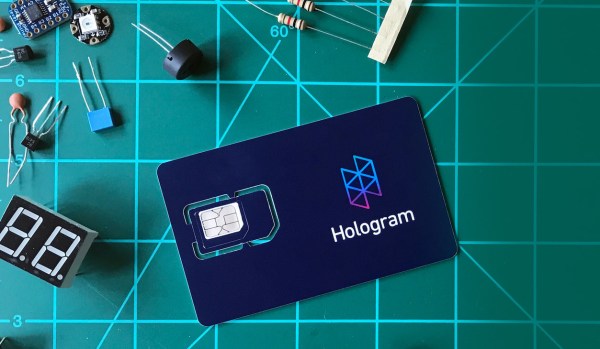
[Tony Million] used a standard SIM to reduce the monthly cost of using broadband on the iPad. This is the exact opposite of using the iPad SIM in an iPhone and requires that you cut down your standard SIM quite a lot. [Tony] did this because he imported his iPad to the UK from the United States and using AT&T wasn’t an option for him. [Thanks David]
16TB NAS is a thing of beauty

The Black Dwarf is a sixteen terabyte network attached storage device that looks more like a display counter for high-end hard drives. We’d usually think of this as a closet or basement dweller, but an item this gorgeously crafted deserves a place of honor in your home or office. Documenting the entire process was as complex as the build itself. We like seeing the time-lapse version. [Thanks Howard via Engadget]
posted May 14th 2010 11:00am by
Mike Szczys
filed under:
iphone hacks

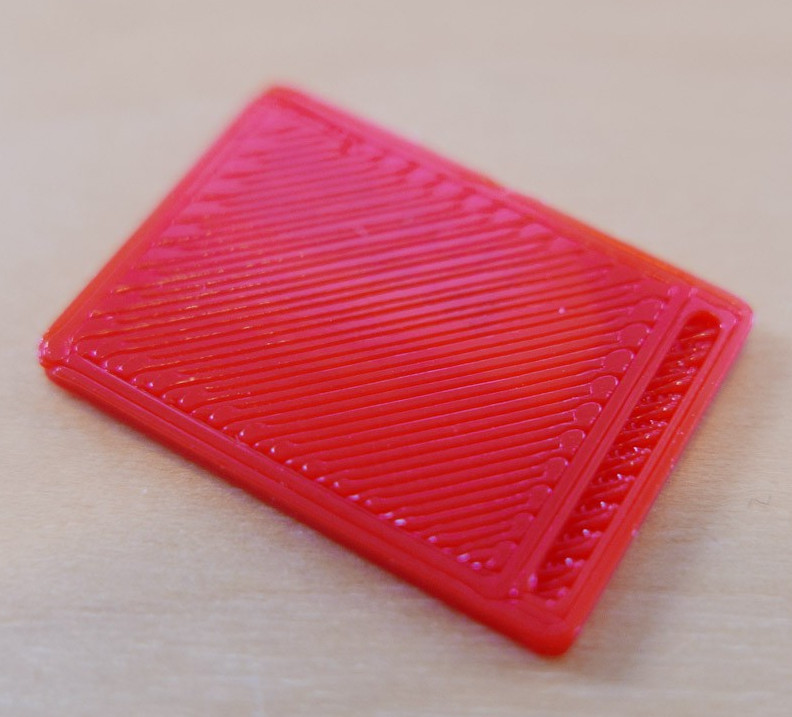
[Aaron Nelson] tipped us off about a simple hack to use an iPad SIM with an iPhone. You won’t be able to use the iPhone as a phone, but the relatively cheap $29.99 for unlimited Internet was his goal. He used an old plastic gift card to cut out an adapter for the iPad’s micro SIM so that it will fit into the iPhone’s SIM cradle as seen above. From there he used a web service via the WiFi connection to enter “Broadband” as a custom APN.
posted Jan 15th 2010 9:33am by
Mike Szczys
filed under:
cellphones hacks,
transportation hacks

It’s just starting to warm up around here but it was very cold for a long time. We’re not fond of going anywhere when it’s way below freezing but those professional hermit opportunities never panned out so we’re stuck freezing our butts off. Fed up with his frigid auto, [Aaron] installed a remote starter to warm the car up before he got to it. This didn’t help at work because of the distance from his office to the sizable parking lot is too far for the key fob’s signal to carry. He decided to make his starter work with GSM so he could start the car with a phone call.
The first attempt involved a pre-paid cell phone for $30. The problem is that anyone who called the phone would end up starting the car. After a bit of looking he found a GSM switch that just needs an activated SIM to work. When called, it reads the incoming phone number for authentication but never picks up the phone so there’s no minutes used. He cracked open an extra key-fob and wired up the lock and start buttons to the relays in the GSM switch. Bam! A phone call starts (and locks) his car.
Maybe this isn’t as hardcore as body implants but it’s a fairly clean solution. He uses the car’s 12v system to power the switch and pays $10 every three months to keep the SIM card active. There’s an underwhelming demonstration video after the break showing a cellphone call and a car starting. Read the rest of this entry »
posted Dec 21st 2009 2:11pm by
Mike Szczys
filed under:
home entertainment hacks,
robots hacks

We like a good flight simulator but often find the available control schemes lacking. [Roland] not only builds his own controls, but creates full cockpits that add physical motion to the mix. He completed his third generation cockpit last year. It’s pictured above as well as in video after the break. That design uses a belt system to move the tricked out cockpit.
Now he’s started work on prototypes for generation IV. This time he’s using three Sarrus linkages to replace the belt system. We saw these linkages yesterday in an extruder prototype and if they can handle the load they should work well for this application. Video of the prototype is embedded after the break but be warned, the lewd thrusting motions are not for the faint-of-heart. Read the rest of this entry »
posted Jun 23rd 2009 12:25pm by
Eliot
filed under:
cellphones hacks,
iphone hacks,
macs hacks

The iPhone dev-team has released Ultrasn0w to SIM unlock the iPhone 3G running the 3.0 firmware. It’s available via Cydia, which installs when you use the recently released PwnageTool to unlock the 3.0 firmware. There doesn’t seem to be any caveats besides advising T-Mobile US users to turn off 3G before install.
posted Feb 13th 2009 12:30pm by
Eliot
filed under:
laptops hacks,
netbook hacks,
wireless hacks

[tnkgrl] has concluded her Sony Vaio P by adding GSM support. We covered the switch to XP earlier, but this should work on Vista too. The Vaio P is sold in the US with support for Verizon’s EVDO wireless broadband, but it uses the same hardware as the European model that uses GSM. This is possible because of the the Qualcomm Gobi radio module. To get GSM support, you trick the VZAccess Manager into loading a different firmware than the stock EVDO. The difficult part is that the Vaio P doesn’t come with a SIM card slot, so you’ll have to solder in your own. When you’ve got the computer reassembled, just change VZAccess Manager to use your carrier.
UPDATE: Wired has an article on the Gobi chipset.
posted Dec 21st 2008 7:13pm by
Eliot
filed under:
android hacks,
cellphones hacks,
g1 hacks,
iphone hacks,
macs hacks

To appease people waiting for the iPhone 3G unlock, iphone-dev team member [MuscleNerd] did a live video demo this afternoon. The video shows him removing the AT&T SIM and putting in a T-Mobile SIM. After the switch, the phone shows no connectivity. He then runs “yellosn0w” in an SSH session with the phone. The phone then unlocks without needing to be rebooted and the signal bars appear. The final test shows the phone receiving a call.
The target for this release is New Year’s Eve and it doesn’t support the most recent baseband. Well be attending the 25C3 talk hosted by [MuscleNerd] and other team members. The VNC screen you see in the video is thanks to [saurik]‘s Veency.
posted Dec 19th 2008 4:11pm by
Eliot
filed under:
android hacks,
cellphones hacks,
g1 hacks,
google hacks

In our Dev Phone 1 excitement last week, we somehow overlooked phoneWreck’s teardown of the T-Mobile G1. The complex slider mechanism is certainly worth looking out. One of the major oddities they point out is the inclusion of two vibration motors. One is mounted next to the SIM on the mainboard. While the other is mounted in the frame next to the earpiece. We wonder what was gained/solved by using two. The phone also includes a digital compass module. We’d like a more detailed explanation of how the Xilinx CPLD is used. From this article in 2006, it seems HTC uses them to generate custom clock signals and switching off devices for power management.