
 I ran into a guy at Maker Faire Kansas City who I used to scoop ice cream with twenty years ago. We were slinging frozen dairy at a Baskin Robbins in a dying suburban strip mall that had a one-hour photo booth in the parking lot. It was just far enough away from our doorstep that dotting its backside with the hard-frozen ice cream balls that had been scooped and then not always accidentally dropped into the depths of the freezer was challenging. This guy, [Blake], kept a hockey stick hidden in the back room especially for this purpose. I never could get them to fly that far, but he was pretty good at it.
I hadn’t seen him since those days, and there he was manning a booth at Maker Faire. He looked quite professional, showing no hint of the mischief from those days of ice cream hockey. His booth’s main attraction was Niwa, a connected indoor garden. Having spent four years living and working in Japan after college, [Blake] did not choose this name arbitrarily: ‘niwa’ is Japanese for ‘garden’. He loves Hackaday and was more than happy to share his story.
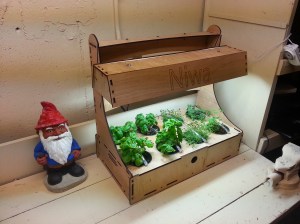
Connecting with Nature
[Blake] is an avid gardener, but his wife does not share this passion. A few years ago, he took a new job that required travel on an almost weekly basis, which meant big trouble for his plants. Unfortunately, he couldn’t find what he wanted to ensure they were taken care of. You know what comes next: he decided he would design his own system. However, he had no experience with electronics.
Continue reading “Kumo Connect: From Automated Desktop And Backyard Gardens To Automated Everything”


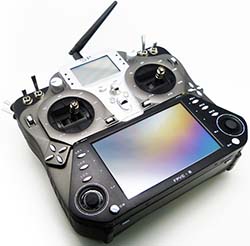 With few exceptions, most of The Hackaday Prize are things we really haven’t seen much of before: base-3 computers that have been relegated to the history books, extremely odd 3D printers, and fancy, new IoT devices are the norm.
  The project featured in this post is an entry in
 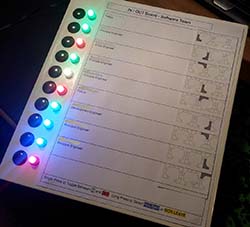 Before this project, [David]’s office had a fairly terrible system to tell everyone who was in the office, who was out, and who wasn’t coming in today. Velcro and whiteboards will do the job, but arcade buttons and LEDs called to [David], leading him to create this

 There’s a problem with products geared towards building the Internet of Things. Everyone building hardware needs investors, and thus some way to monetize their platform. This means all your data is pushed to ‘the cloud’, i.e. a server you don’t own. This is obviously not ideal for the Hackaday crowd. Yes, IoT can be done with a few cheap radios and a hacked router, but then you don’t get all the cool features of a real Things project – mesh networking and a well designed network.








