How To Run A Pagekite Server To Expose Your Raspberry Pi

Last time I showed you how to expose a web service on a Raspberry Pi (or, actually, any kind of device) by using a reverse proxy from Pagekite. On your Pi, you just need a simple Python script. However, it also depends on the Pagekite server, which isn’t always convenient. There are limits to the free service, and you don’t control the entire thing. The good news is twofold: the same Python script you use to set up the client-side can also set up a server. The other good news is the entire thing is open source.

In practical terms, then, if you have a computer that is always on and has an IP address that can be found on the public internet, you can run your own Pagekite server (they call it a front end) and service your own backends.

Continue reading “How To Run A Pagekite Server To Expose Your Raspberry Pi”
Panel Meter-To-Bluetooth Hack Hijacks The Display Segments

There are a proliferation of cheap digital meter modules available online for pocket money prices. Current, voltage, frequency, or combinations thereof can all be yours for just a few dollars and a wait for shipping. Unfortunately though these meters are all self-contained units. They do not have a serial port or other interface through which you can log their readings.

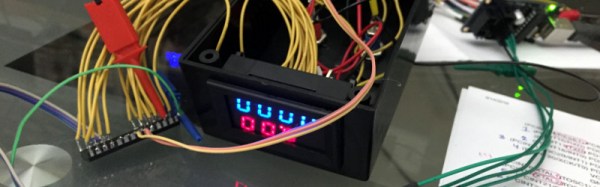
This failing was not an obstacle for [Scott Harden], though. He simply added a Bluetooth interface to his combined voltage and current meter module by using an ATmega328 microcontroller to capture the signals sent to the module’s display LEDs and interpret them into readings for his Bluetooth module. He details the process of reverse engineering the meter, and his build. The result is an intriguing mess of wires with a DIP ATmega hanging on their ends. But it performs the task requested of it admirably and when mounted in a project box you would not know what lurks within.

He has made his code for the project available in his GitHub repository, we can see that this could be a valuable technique for use with other similar displays. In the video below the break he gives us a full run-down, as if his comprehensive write-up was not enough.

Continue reading “Panel Meter-To-Bluetooth Hack Hijacks The Display Segments”

5 More SuperCon Speakers You Don’t Want To Miss

This morning it is my pleasure to announce five more confirmed speakers for the Hackaday SuperConference. The ultimate hardware conference takes place in just a few weeks: November 5th and 6th in Pasadena, California.

Get your tickets now!

Continue reading “5 More SuperCon Speakers You Don’t Want To Miss”

Hackspace Websites And The Great Software Trap

Part of the job of a Hackaday writer involves seeking out new stories to write for your delectation and edification. Our tips line provides a fruitful fount of interesting things to write about, but we’d miss so much if we restricted ourselves to only writing up stories from that source. Each of us writers will therefore have a list of favourite places to keep an eye on and catch new stuff as it appears. News sites, blogs, videos, forums, that kind of thing. In my case I hope I’m not giving away too much to my colleagues when I say I keep an eye on the activities of as many hackspaces as I can.

So aside from picking up the occasional gem for these pages there is something else I gain that is of great personal interest as a director of my local hackspace. I see how a lot of other spaces approach the web, and can couple it to my behind-the-scenes view of doing the same thing here in our space. Along the way due to both experiences I’ve begun to despair slightly at the way our movement approaches the dissemination of information, the web, and software in general. So here follows a highly personal treatise on the subject that probably skirts the edge of outright ranting but within which I hope you’ll see parallels in your own spaces.

Before continuing it’s worth for a moment considering why a hackspace needs a public website. What is its purpose, who are its audience, and what information does it need to have?

Continue reading “Hackspace Websites And The Great Software Trap”

Arduino Detects Pants On Fire

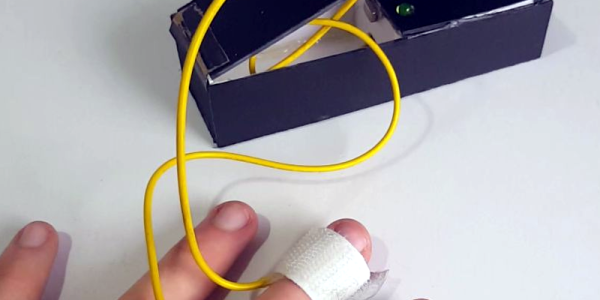
Hard as it is to imagine, lie detectors have been sold as children’s toys for a number of years. A simple battery-operated device clipped to your fingers and would show the conductivity of your skin. The concept — which is probably not very reliable — observers that lying causes you to imperceptibly sweat which causes a sudden increase in your skin’s conductivity. These cheap toys would have a meter and you’d note the meter deflection to determine if the subject was lying.

You can debate the amusement value of interrogating your friends, perhaps, but they were pretty common and still exist (including some that shock you if they detect you are lying). Seventeen-year-old [BuildIt] has his own modern take on this classic device using — what else? — an Arduino. You can see a video of the device below.

Continue reading “Arduino Detects Pants On Fire”

Here’s The Turbocharged BBQ Grill You’ve Been Waiting For

We’re not actually sure that it’s a good idea at all, but it’s got a heck of a lot of style; [Morgan]’s barbecue grill is turbocharged. Literally.

Keeping with the automotive theme, a serve-motor-driven throttle from a Ford Mustang serves as a (naturally-aspirated) air intake, and a Honda Civic manifold delivers it to the grill. But when he really needs to turn up the heat, a 360 watt fan can force-feed the fire.

Continue reading “Here’s The Turbocharged BBQ Grill You’ve Been Waiting For”

Hackaday Prize Entry: The Internet Of Meat

We’ve only just begun to see the proliferation of smart kitchen gadgets. Dumb crock pots with the intelligence of a bimetallic strip, are being replaced by smart sous vide controllers. The next obvious step is barbecue. For his Hackaday Prize entry, [armin] is building a smart, eight-channel BBQ controller for real barbecue, with smoke and fans, vents and metal boxes.

This BBQ controller has been in the works for years now, starting with a thread in a German barbeque forum. The original build featured an original Raspberry Pi, and could relay temperatures from inside a slab of meat to anywhere with range of a WiFi network.

For his Hackaday Prize entry, [armin] is working on a vastly improved version. The new version supports eight temperature probes, temperature logging and plotting, a webcam, setting alarms, a web interface, 433MHz radio, and PWM and fan control. Yes, if you’re very, very clever you can use this project to build a barbeque that will cycle a fan, and open and close a damper while monitoring the temperature of a brisket and email you when it’s done. It’s the Internet of Meat, and it’s the most glorious thing we’ve seen yet.