A Briefcase Pentesting Rig For The Discerning Hacker

In the movies, the most-high tech stuff is always built into a briefcase. It doesn’t whether whether it’s some spy gear or the command and control system for a orbiting weapons platform; when an ordinary-looking briefcase is opened up and there’s an LCD display in the top half, you know things are about to get interesting. So is it any surprise that hackers in the real-world would emulate the classic trope?
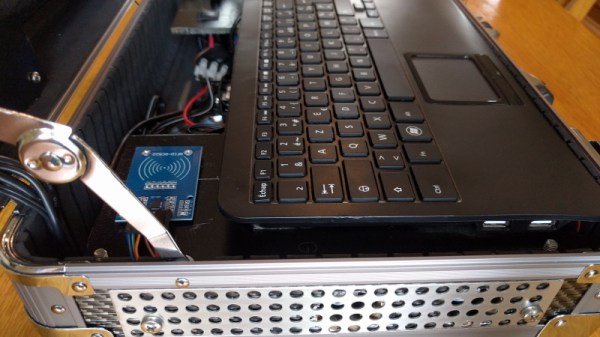
As an example, take a look at the NightPi by [Sekhan]. This all-in-one mobile penetration testing rig has everything you need to peek and poke where you aren’t supposed to, all while maintaining the outward appearance of an regular briefcase. Well, admittedly a rather utilitarian aluminum briefcase…with antennas sticking out. OK, so it might not be up to 007’s fashion standards, but it’s still pretty good.

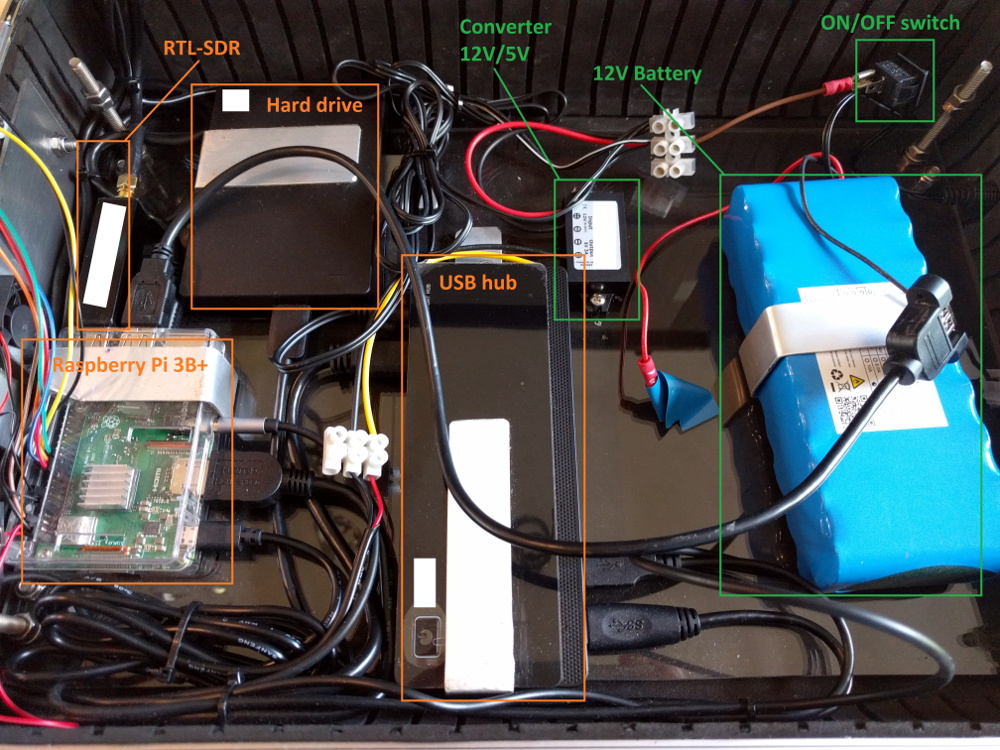
[Sekhan] has crammed a lot of gear into the NightPi beyond the eponymous Raspberry Pi 3B+. There’s an RFID reader, an RTL-SDR dongle, an external HDD, plus the 12V battery and 5V converter to power everything. All told, it cost about $500 USD to build, though that figure is going to vary considerably depending on what your parts bins look like.

To keep things cool, [Sekhan] has smartly added some vent holes along the side of the briefcase, and a couple of fans to get the air circulating. With these cooling considerations, we imagine you should be able to run the NightPi with the lid closed without any issue. That could let you hide it under a table while you interact with its suite of tools from your phone, making the whole thing much less conspicuous. The NightPi is running Kali Linux with a smattering of additional cools to do everything from gathering data from social media to trying to capture keystrokes from mechanical keyboards with the microphone; so there’s no shortage of things to play with.

If you like the idea of carrying around a Pi-powered security Swiss Army knife but aren’t too concerned with how suspicious you look, then the very impressive SIGINT tablet we covered recently might be more your speed. Not that we think you’d have any better chance making it through the TSA unscathed with this whirring briefcase full of wires, of course.


Neural Network Smartens Up A Security System

It’s all well and good having a security camera recording all the time, but that alone can’t sound the alarm in the event of a crime. Motion sensing is of limited use, often being triggered by unimportant stimuli such as moving shadows or passing traffic. [Tegwyn☠Twmffat] wanted a better security system for the farm, and decided that neural networks would likely do the trick.

The main component of the security system is a Raspberry Pi fitted with a camera and a Movidius Neural Compute Stick. This allows the Raspberry Pi to run real-time object identification on video. The Raspberry Pi is programmed to raise the alarm if it detects humans approaching, but ignores the family dog and other false targets. In the event of a detection, the Raspberry Pi sends a signal over LoRa to a base station, which sounds an alarm. The pitch of the alarm increases the closer the target gets to the camera, thanks to some simple code with bounding boxes.

It’s a nifty way to create an intelligent security system, and all the more impressive for being entirely constructed from off-the-shelf parts and code. Neural networks have become increasingly useful; they can even tell when your cat wants to go outside. Video after the break.

Continue reading “Neural Network Smartens Up A Security System”

Teardown 2019: A Festival Of Hacking, Art, And FPGAs

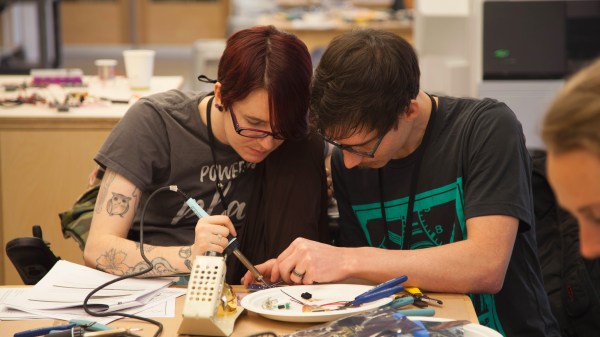
As hackers approached the dramatic stone entrance of Portland’s Pacific Northwest College of Arts, a group of acolytes belonging to The Church of Robotron beckoned them over, inviting them to attempt to earn the title of Mutant Saviour. The church uses hazardous environments, religious indoctrination, a 1980s arcade game and some seriously funny low tech hacks to test your abilities to save humanity. This offbeat welcome was a pretty good way to set the tone for Teardown 2019: an annual Crowd Supply event for engineers and artists who love hardware. Teardown is halfway between a conference and a party, with plenty of weird adventures to be had over the course of the weekend. Praise the Mutant! Embrace Futility! Rejoice in Error!

For those of us who failed to become the Mutant Saviour, there were plenty of consolation prizes. Kate Temkin and Mikaela Szekely’s talk on accessible USB tools was spectacular, and I loved following Sophi Kravitz’s journey as she made a remote-controlled blimp. Upstairs in the demo room, we had great fun playing with a pneumatic donut sprinkle pick and place machine from tinkrmind and Russell Senior’s hacked IBM daisywheel typewriter that prints ASCII art and runs a text-based Star Trek adventure game.

It wouldn’t be much of a hardware party if the end of the talks, demos and workshops meant the end of each day’s activities, but the Teardown team organised dinner and an afterparty in a different locations every night: Portland’s hackerspace ^H PDX, the swishy AutoDesk offices, and the vintage arcade game bar Ground Kontrol. There also was a raucous and hotly-contested scavenger hunt across the city, with codes to crack, locks to pick and bartenders to sweet talk into giving you the next clue (tip: tip).

Join me below for my favorite highlights of this three day (and night) festival.

Continue reading “Teardown 2019: A Festival Of Hacking, Art, And FPGAs”

Locking Up Lock Washers

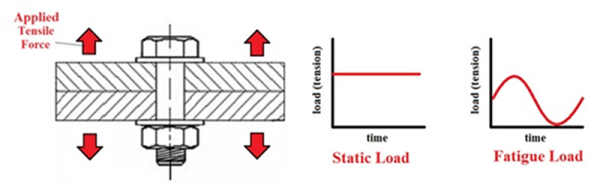
We’ll admit most of us are more comfortable with solder and software than mechanical things. However, between robots, 3D printers, and various other mechanical devices, we sometimes have to dig into springs, belleville washers, and linear actuators. Unless you are a mechanical engineer, you might not realize there’s a lot of nuances to something even as simple as a nut and bolt. How many threads do you need to engage? Do lock washers work? [Engineer Dog] has a post that answers these and many other questions.

The top ten list starts off with something controversial: split ring lock washers don’t work. The original post cites a paper that claims they don’t except in very special circumstances. However, he updated the post later to say that some people disagree with his cited study. In the end, you’ll have to decide, but given there are other options, maybe we’ll start using those more often.

Continue reading “Locking Up Lock Washers”

Forty Four Hackers And A Hatch: Progress Egress Takes Off

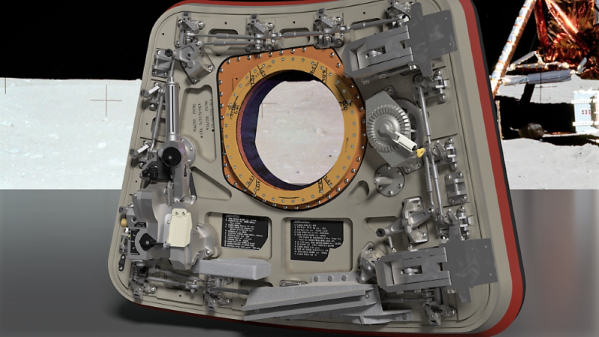
The 50th anniversary of the first Moon landing is rapidly approaching, and uber space-nerd Adam Savage is in the thick of the celebration of all the amazing feats of engineering that made humanity’s first steps out of the cradle possible. And in a grand and very hacker-friendly style, we might add, as his Project Egress aims to build a full-scale replica of the Apollo 11 Command Module Columbia’s hatch.

Continue reading “Forty Four Hackers And A Hatch: Progress Egress Takes Off”

Amiga In The MiST Gets Online With An ESP8266

While he couldn’t quite come up with the cash to buy one in their hayday, [Bruno Antunes] has always been fascinated with the Amiga. When PCs got fast enough he used emulators like UAE to get a taste of the experience, but it was never quite the same thing. Not until he found the MiST anyway, which uses an FPGA to implement several retro computers such as the Apple II, Atari, and of course his beloved Amiga.

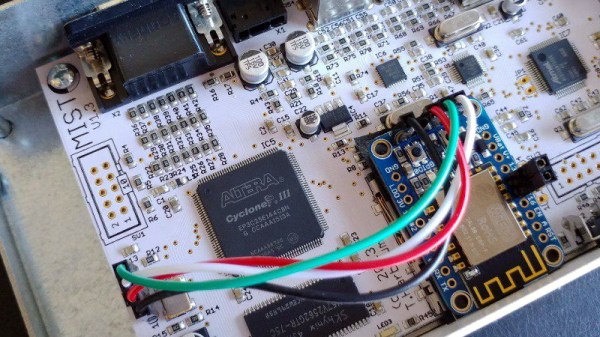
The only downside for [Bruno] was that the MiST has no network interfaces. To get onto the Internet, he had to install an ESP8266 inside the device and spend some quality time tweaking various software settings to get everything talking to each other. The end result is a BBS hosted on an Amiga 1200, that’s running on an FPGA, that’s connected to WiFi via an ESP8266. What a time to be alive.

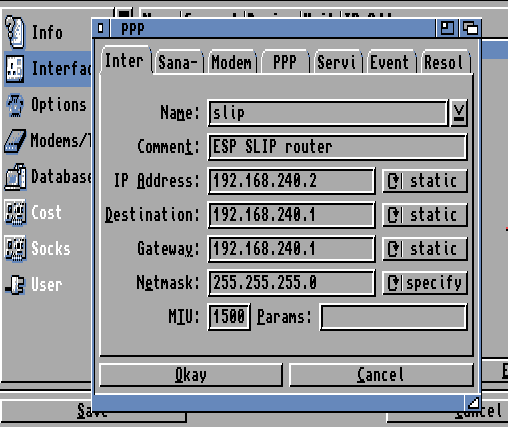
Adding the ESP8266 to the MiST was actually quite straightforward, as there’s an unpopulated serial port header right on the board. Though [Bruno] cautions this header has been removed as of version 1.4 of the device, so if you’re in the market for an FPGA retro box and might want to get it online at some point, that may be a detail to keep in mind. The ESP is running a firmware which implements Serial Line IP (SLIP); which allows you to use TCP/IP over a serial port, albeit very slowly.

The hardware implant went well enough, but unfortunately [Bruno] found the ESP8266 was unable to communicate through the thick metal case of the MiST. He enlisted his girlfriend to make a new papercraft enclosure for the MiST that the ESP could talk though, and it even has the added benefit of glowing thanks to the internal LEDs. We probably would have just got one of the ESP modules that includes an external antenna, but to each their own.

With the hardware taken care of, the rest of the considerable write-up details how he got the Amiga operating system to talk to the Internet through the SLIP connection. He goes over everything from setting the system time with NTP to getting a Telnet daemon installed. As you might expect, this involves installing a number of additional software packages, but [Bruno] is kind enough to provide links for everything you’ll need.

We’ve seen the ESP8266 used to get other retro computers onto the modern Internet before, but it’s usually through the use of an external device. This internal modification is very clean, and seems like a no-brainer for anyone who owns a MiST and a soldering iron.

Continue reading “Amiga In The MiST Gets Online With An ESP8266”

This MDF Sound Bar Sounds Great

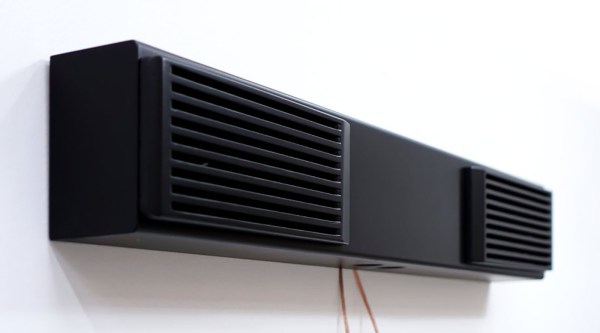
Everyone should build a speaker cabinet at least once in their life, if only so they can realize how much thought goes into building a simple box. [John] of ibuildit.ca wanted a sound bar for his home theater setup, and that means building a sound bar. The result is beautiful, and a demonstration of how much you can do with just a router and a table saw.

[John] built this sound bar almost entirely out of MDF, which isn’t the best material but it works well enough for a speaker cab that’s meant to be mounted to a wall. The sides were constructed first, with a rabbet holding the front and back on. Both the woofer and tweeter are inset into the front, and a standard piece of plumbing pipe serves as the bass port. Slap a round over bit into the router and do some light sanding, and everything looks great with a coat of black paint.

As with any speaker enclosure, the design is effectively parametric, designed entirely around the drivers being used. In this case, [John] is using a spreadsheet named ‘Unibox’ that gives you all the formulas and graphs for designing a speaker enclosure.

With the box built and the speakers installed, the only matter left were a few aesthetic choices. [John] went with a standard black finish with a very nice wooden grille held onto the front with magnets. It’s a design that pops, but the true test of a speaker is how it sounds. That’s a bit hard to convey over the Internet, but [John] included a few sound samples at the end of the build video, available below.

Continue reading “This MDF Sound Bar Sounds Great”