FLOSS Weekly Episode 870: Open Source Gardening

This week Jonathan chats with Alexander Neumann about Restic, a particularly compelling backup and restore solution written in Go. Why did the world need one more backup program? And what’s Alexander’s personal take on transitioning from programmer to maintainer? Watch to find out!

Continue reading “FLOSS Weekly Episode 870: Open Source Gardening”

DIY CO2 Scrubber In DIY Sub By A Hacker Braver Than Most

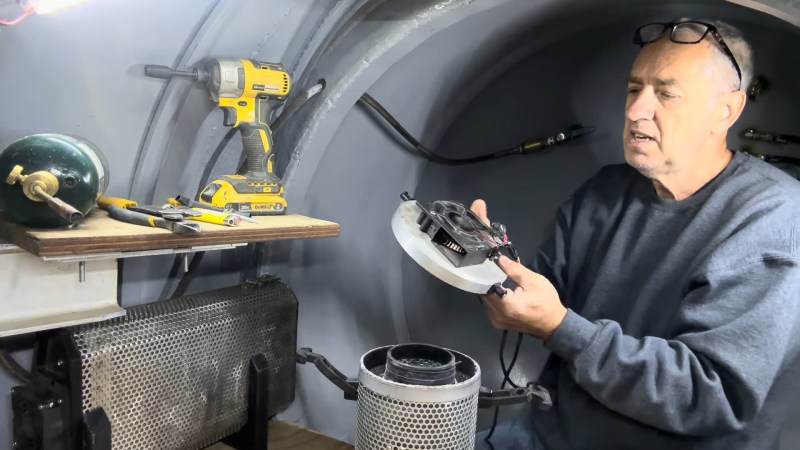
If you look around your environment, you can probably pick off quite a few things that you’ve made, at least if you’ve been at this a while. You probably aren’t reading this from the bottom of a body of water though, which means you lack the incredible confidence of submarine builder [Hank Pronk]. Not only is he building himself a capable-looking diesel-electric submarine over on YouTube, he’s even DIYing CO2 scrubbers for it! Yeah, that’s a man who believes in himself.

Luckily [Hank] is not anywhere near the Caribbean, so needn’t worry about being misidentified as a narco-sub, but he still has to be concerned about his oxygen supply when tooling around beneath the local lakes. Perhaps more important than the oxygen supply in a sub is the build up of CO2. It doesn’t matter how many oxygen tanks you bring down with you if you can’t scrub CO2 out of the air to make room for it. Just like the Apollo missions, he’s using a chemical adsorbent to take carbon dioxide out of the air — and just like Apollo 13, he’s switching from square to round.

Or, rather, from a rather rectangular commercial model to a DIY little round unit. That’s because he doesn’t need the big scrubber in this sub: being diesel-powered, he expects to spend a lot of time at snorkel depth, where both the pilot and the engines can get clean air through the tube. Dives are expected to be short, and in that use case, too big of a CO2 scrubber is really a waste. If for some reason he gets stuck on the bottom, well, the lake isn’t that deep. He can swim to surface, and has a detailed bailout plan. If he wants to stay under overnight to avoid bailing at night, he’s carrying enough extra adsorbent for that.

There’s a reason almost every submarine we’ve featured on this site over the years is an ROV. It’s not that a homemade submarine is automatically a death trap, but you sure do have to be confident in your design.

Continue reading “DIY CO2 Scrubber In DIY Sub By A Hacker Braver Than Most”

NASA Announces Artemis III Crew And Ambitious Goals

When the Artemis lunar program was first conceived, the third mission would have seen astronauts step foot on the Moon for the first time since Apollo 17 in 1972. But as hard as getting into space is, a sojourn to our nearest celestial neighbor is even more mindbogglingly complex, and so earlier this year it was announced that actually landing on the Moon would be pushed out to the fourth mission.

In turn Artemis III would take a page out of the Apollo 9 playbook and test out rendezvous and docking procedures with commercial landers while operating in the relative safety of low Earth orbit. Moving the target date for the landing a few years down the road gave all involved parties a little more breathing room, but it also provided a valuable opportunity to gain insight into the performance of the vehicles and systems ahead of the critical moment. In the original timeline, the first time Orion would attempt to dock with the lander would have been just before descending to the lunar surface — leaving precious little time to troubleshoot should anything go wrong.

Yesterday NASA held a press conference to update the public on their progress towards the planned 2027 launch of Artemis III, which included the long-awaited announcement of the crew that will kick the tires on the next-generation lunar landers being developed by SpaceX and Blue Origin

Continue reading “NASA Announces Artemis III Crew And Ambitious Goals”

Pi Media Player With VCR Vibe Is Perfect For CRTs

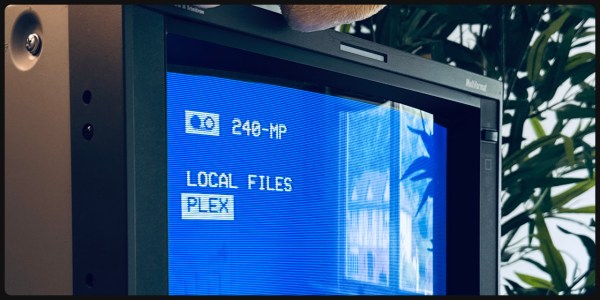
If you have a TV and a Pi, you have the workings of a media center, and you’re not exactly short on options for software. But options are good, so here’s one more by [Anthony Caccese] — a player called 240-MP that explicitly targets CRTs with its retro stylings, released under the GPLv3 license.

Don’t let the name fool you, though. While the blue-and-white styling is very evocative of 90s VCRs, the output isn’t limited to 240p. If you’re running it into a vintage CRT over composite, as [Anthony] does, sure, it’ll do that. If you want to use HDMI on a modern TV, however, that’s an option too, in 4K if that’s your jam. Higher resolution video will need a beefier Pi, of course, but MPV can handle the files, and ultimately this is a wrapper for MPV. You still get the vintage styling, which can do green-and-black as easily as white-and-blue, as well as whatever custom color scheme you want to define. It might not look quite as good if it’s not on a display tube, but we could see this as a good fit for a plasma TV, too.

As you can see in the demo video embedded below, the player is equally happy listing and playing local files — including playlists — or streaming via a PLEX server. Other add-ons, for example to launch emulators, may be forthcoming. Of course, if you’re not willing to wait you could always code them yourself.

Given the roots of this project in old VHS interfaces, we’re somewhat surprised there doesn’t seem to be an option for control via physical tokens. We’ve already seen projects that try and replicate that portion of the VCR magic, though. If it’s not the tapes you miss from back in the day, you can also simulate cable TV.

Continue reading “Pi Media Player With VCR Vibe Is Perfect For CRTs”

Giving A Power Mac G4 A USB Upgrade, For Free!

At various times in the history of desktop computing, the market has stubbornly refused to follow the path dictated for it by a dominant manufacturer. IBM’s move to MCA in their PS/2 line is one of many examples. Another is Apple’s take on USB a couple of decades ago, when their view of the future lay with Firewire 800. [Pierre Dandumont] has revisited a Power Mac G4 from that era and unleashed what Apple never did back in the day: a USB 2.0 port. (French language, Google Translate).

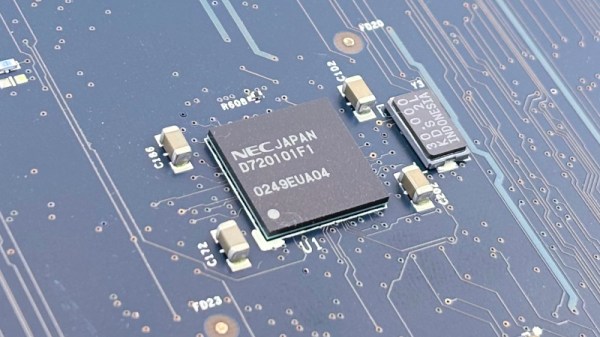
The hack lies in Apple shipping the machine with an NEC USB 2.0 controller, but only using it for USB 1.1. A PowerPC Linux distro will happily use it for USB 2.0, but Mac OS refused. Replacing the BIOS ROM with an image designed for the same Mac without Firewire 800 cured the problem, but at the expense of being so we’re told irreversible.

An obscure set of Macs from the early 2000s with an odd combination of hardware and OS may not count for much in 2026, but back in the day having USB 2.0 was a big deal and this would really have mattered. We like it that he put this together, even if the chances of having a G4 on the Hackaday desktop probably isn’t too high.

This isn’t the first USB hack we’ve seen for a PowerMac G4.

Re-Enable All Compute Units On The PS5-like BC-250 Cryptomining Card

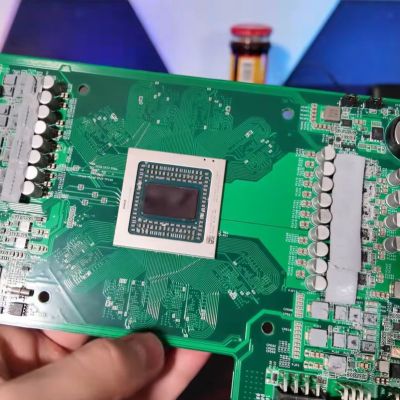
The custom APU at the core of Sony’s PlayStation 5 hasn’t just been quietly powering these game consoles, but also made their way onto cryptomining cards around 2023 which are called the BC-250. The APUs on these boards differ from the one found in the PS5 most notably by having two out of eight CPU cores disabled, along with many compute units (CUs) of the iGPU. Now apparently it seems that you can re-enable these CUs per instructions by [duggasco] if you’re feeling adventurous.

The BC-250's AMD APU in all its glory. (Credit: Lowest Logan, YouTube)
The BC-250’s AMD APU in all its glory. (Credit: Lowest Logan, YouTube)

As stated in the project’s README, BC-250 boards come with only 24 out of 40 CUs enabled, but this is not a permanent (e-fuse) thing. Instead you can write to two hardware registers during the GPU driver initialization, something which can be added to for example the Linux kernel module parameters.

Since many of these APUs likely had cores and CUs disabled due to them failing QA during PS5 APU manufacturing, there’s a good chance that some of the CUs truly are bad. Yet as we saw with the AMD Phenom II X3 with a supposedly bad fourth core back in the day, sometimes demand for the ‘defective’ part is high enough that good parts get mixed in as well.

Thus people like [Lowest Logan] decided to give it a shot, demonstrating the use of the patch with Bazzite Linux on a BC-250 system. After a reboot the system does indeed list 40 CUs as being enabled, and running Furmark shows a big boost in performance without any glitches or fire. There is of course thermal throttling, but that is due to the default cooling solution not being designed for running it at full blast.

Incidentally the real PS5 has only 36 active CUs, so this technically makes these unlocked APUs more powerful. With the water cooling solution demonstrated by [Lowest Logan] the thermal throttling is also resolved, showing that you can get a pretty nice gaming system out of these old cryptomining boards if you happen to win the silicon lottery.

Continue reading “Re-Enable All Compute Units On The PS5-like BC-250 Cryptomining Card”

Deep Dive Into Sputnik

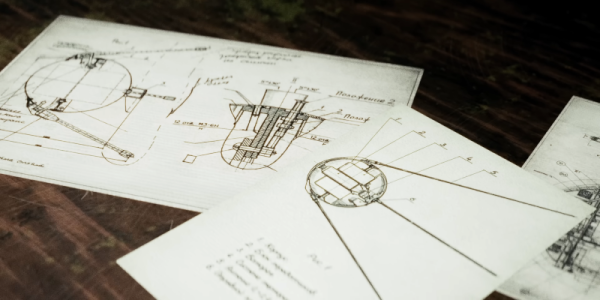
If you are an American of a certain age, you know the Soviet Union launched the first satellite, Sputnik, beating the United States to orbit. You might even remember ham radio operators tuning into the satellites beeping. But you probably haven’t heard much about the team that built the vehicle, the problems they had, or the clever design choices they made. [Hoog] has a video that details the birth of Sputnik. You can see the video below.

The original plan was to launch a massive space lab, but it proved too ambitious. Keep in mind that in the late 1950s, you didn’t have tiny computers, high-density power sources, or advanced materials, and no one really knew what to expect in the Earth orbit environment. Even the viability of radio from the ground to orbit wasn’t a given. But Sputnik’s 1-watt transmitter did the job.

Continue reading “Deep Dive Into Sputnik”