Very Large Touchpads For Very Old Computers

Way back when most of our demographic was in diapers, engineering workstations had huge touchscreens for plotting drawings in CAD programs, drawing, and just about everything a Wacom tablet does today. Finding one of these touch pads now is a fool’s errand, more so than finding the computer it was attached to, but [Daniel] figured out a way to relive those days of large touchpads and old computers with a resistive touchscreen and an MSX computer (portuguese, google translatrix).

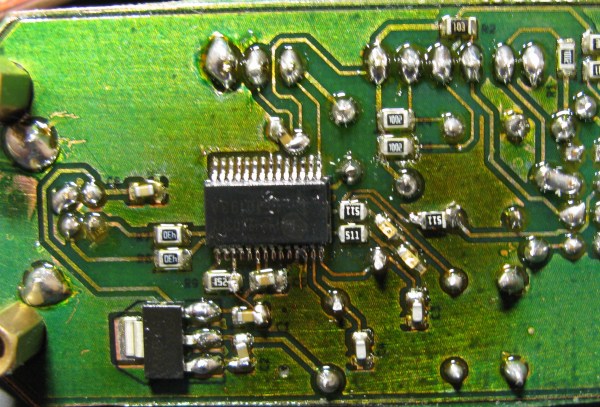
[Daniel] is using a touchscreen normally used for a monitor, and with the right bit of code on a PIC16F micro, pressure on the touchscreen can be translated into X and Y coordinates. Using the PIC was a great choice in this instance: it’s possible to multiplex ports on an ADC pin with a PIC, making the entire system extremely efficient and easy to calibrate.

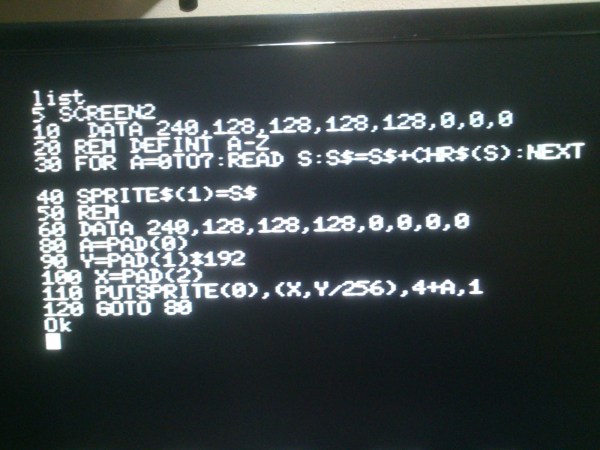
After that, it’s just a matter of plugging the output of the microcontroller into the touchpad connector of the MSX and writing a few lines of BASIC to draw a point on the screen. Video below.

Continue reading “Very Large Touchpads For Very Old Computers”
Recording Time Lapse Of Endangered Reptiles Hatching

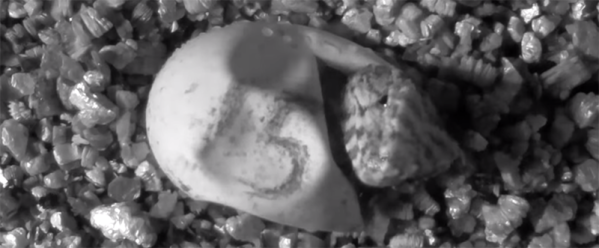
The tuatara is a reptile native to New Zealand, and thanks to the descendants of stowaway rats on 17th century ships, these little lizards are critically endangered. [Warren] was asked if he could film one of these hatchlings being born and pulled out a Raspberry Pi to make it happen.

[Warren] constructed a small lasercut box to house the incubating egg, but he hit a few snags figuring out how to properly focus the Raspi camera board. The original idea was to use a Nikkor macro lens, without any kind of adapter between it and the camera board. A bit of googling lead [Warren] to this tutorial for modifying the focus on the Raspi camera, giving him a good picture.

The incubator had no windows and thus no light, making an IR LED array the obvious solution to the lighting problem. Time was of the essence, so an off-the-shelf security camera provided the IR illumination. After dumping the video to his computer, [Warren] had a video of a baby tuatara hatching. You can check that out below.

Continue reading “Recording Time Lapse Of Endangered Reptiles Hatching”

Light Up Component Bins And A Manual Pick And Place

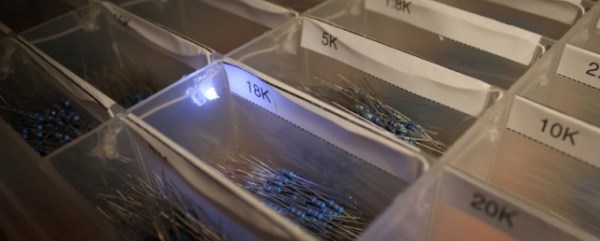
[Mike] makes some very niche musical instruments, and the production volume he’s looking at means there isn’t a need to farm out his assembly. This means doing everything by hand, including the annoying task of picking resistors and other components out of bins. After searching for a way to speed up his assembly process, he came up with the Stuffomatic, a device that locates the correct component at the press of a button.

The normal way of grabbing a part when assembling is reading the reference on the board, cross referencing the value on the BOM, and digging the correct part out of the bin. To speed this up, [Mike] put LEDs in each of the part bins, connected to a Teensy 2.0 that has the BOM stored in memory. Clicking a foot switch looks up the next component and lights up the LED in the associated part bin.

[Mike] says this invention has speeded up his assembly time by about 30%, a significant amount if you’re looking at hours to assemble one unit.

If you’re wondering exactly what [Mike] is assembling, check this out. It’s heavily inspired by the Ondes Martenot, an electronic musical instrument that’s about as old as the theremin, but a million times cooler. Video sample below.

Continue reading “Light Up Component Bins And A Manual Pick And Place”

A Development Board For The ESP8266

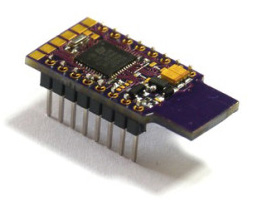
[Necromant] is ready to dip his toes into the world of firmware development for everyone’s favorite WiFi chip, the ESP8266. Before that begins, it would be a good idea to make a nifty little breakout board for this chip. Here it is, a board with a USB to UART converter with board art that’s compatible with a toner transfer process.

Since this is just a board that turns USB into something the ESP8266 can understand, the most reasonable course of action would be to throw an FTDI chip in there and call it a day. We wouldn’t suggest that. Instead, [necromant] is using a Prolific PL2303HX. The RTS/DTR pins on the serial chip aren’t used, but only because the ESP8266 forums haven’t yet decided on how to connect them to the WiFi chip. GPIOs on the Prolific are broken out for some other projects [necromant] has in mind, with a userspace driver to make everything work.

[Necromant] is the creator of Antares, a build system for microcontrollers and a Hackaday Prize entry. He intends to make his build system compatible with this WiFi chip, just as soon as everyone else figures out an easy way to make it work.

Hackaday Prize Finalist: A Portable SDR

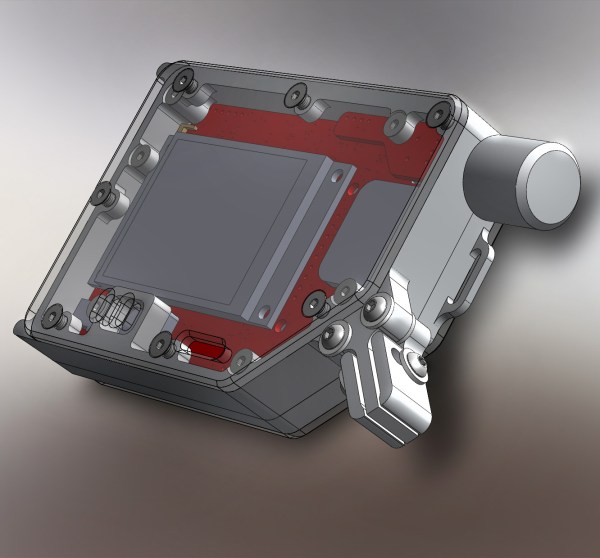
No other project to make it to The Hackaday Prize has people throwing money at their computer screen hoping something would happen than [Michael Colton]’s PortableSDR. It’s a software defined radio designed for coverage up to 30MHz. Amateur radio operators across the world are interested in this project, going so far as to call this the first Baofeng UV-5R killer. That’s extremely high praise.

[Michael] was kind enough to sit down and answer a few questions about how his entry to The Hackaday Prize has gone. You can check that out below, along with the final round video of the project. Anyone who wants their own PortableSDR could really help [Michael] out by taking this survey.

Continue reading “Hackaday Prize Finalist: A Portable SDR”

Atari Video Game Burial Hits Ebay

1983 was the year of the great video game crash, and after the chiefs of Atari realized they had produced more copies of Pac-Man than consoles sold, these games, along with other ‘treasures’ were loaded into trucks, shipped out to the desert, and buried in a New Mexico landfill. Last year, these consoles were rescued. Now, thanks to the efforts of the Tularosa Basin Historical Society, these cartridges are for sale again.

Want to grab your own copy of E.T., Asteroids, Star Raiders, or Centipede rescued from a landfill in a desert? Here’s a link to the seller on eBay, with the highest auction being E.T., in box, going for $400 with nine days left. The auction comes with a certificate of authenticity from the city of Alamogordo.

This is only the first batch of cartridges and boxes rescued from the dump, with the Tularosa Basin Historical Society putting at least another 700 items up for sale if this batch goes well.

With the rousing success of this bit of dumpster diving, we must point out another techno-archeological myth/legend: there are several thousand Apple Lisas in a Utah landfill, just waiting for someone to come in and pick through the remnants of an Apple tax writeoff.

Using A Headphone Jack As A UART

We’ve seen audio ports being used to establish a communications channel between a computer and a microcontroller before, but nothing quite as slick as this. [Gordon] is using a webpage running on a tablet to send Javascript to a microcontroller where the entire program is interpreted.

[Gordon] is using the Espruino Pico, a board that’s on Kickstarter right now. This tiny board is built around a javascript interpreter, allowing code to be written and updated on the fly without mucking around with bootloaders.

This technique can be expanded to provide bidriectional communication between a microcontroller and a computer. On the project Github, [Gordon] used the microphone pin on a TRRS jack to sent data to a computer. It needs two more resistors, but other than that, it’s as simple as the one-way communications setup.

[Gordon] put together a few demos of the program, including one that will change the color of some RGB LEDs in response to input on a webpage.

Continue reading “Using A Headphone Jack As A UART”