Garbage Can CNC Machine Build

Forget sourcing parts for your next project from some fancy neighborhood hardware store. If you really want to show your hacker chops, be like [HomoFaciens] and try a Dumpster dive for parts for a CNC machine build.

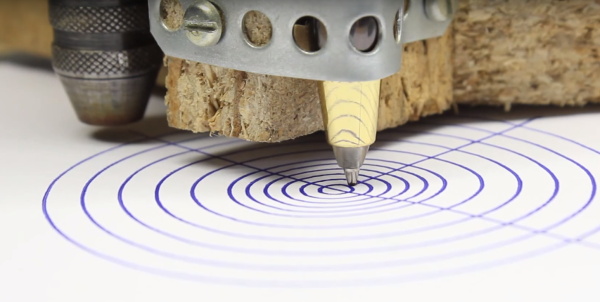
OK, we exaggerate a little – but only a little. Apart from the control electronics, almost everything in [HomoFacien]’s build could be found by the curb on bulk-waste pickup day. Particle board from a cast-off piece of flat-pack furniture, motors and gears from an old printer, and bits of steel strapping are all that’s needed for the frame of a serviceable CNC machine. This machine is even junkier than [HomoFacien]’s earlier build, which had a lot more store-bought parts. But the videos below show pretty impressive performance nonetheless.

Sure, this is a giant leap backwards for the state of the art in DIY CNC builds. but that’s the point – to show what can be accomplished with almost nothing, and that imagination and perseverance are more important for acceptable results than an expensive BOM.

With that in mind, we’re throwing down the gauntlet: can anyone build a CNC machine from cardboard and paperclips?

Continue reading “Garbage Can CNC Machine Build”

Back To Basics: What’s The Deal With Magnets?

I consider myself a fairly sharp guy. I’ve made a living off of being a scientist for over 20 years now, and I have at least a passing knowledge of most scientific fields outside my area. But I feel like I should be able to do something other than babble incoherently when asked about magnets. They baffle me – there, I said it. So what do I do about it? Write a Hackaday post, naturally – chances are I’m not the only one with cryptomagnetonescience, even if I just made that term up. Maybe if we walk through the basics together, it’ll do us both some good understanding this fundamental and mysterious force of nature.

Continue reading “Back To Basics: What’s The Deal With Magnets?”

3D Carver Makes Magnetic Fields Visible

The history of science is full of examples when a 3D physical model led to a big discovery. But modelling something that’s actually invisible can be tough. Take magnetic fields – iron filings on a card will give you a 2D model, but a 3D visualization of the field would be much more revealing. For that job, this magnetic field following 3D carving machine is just the thing.

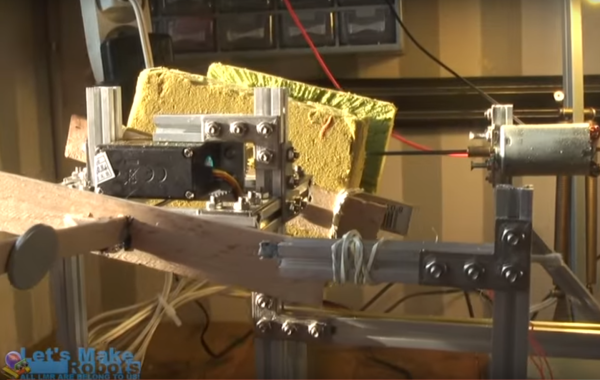
What started out as a rapid prototyping session with servos and hot glue ended up as quick and dirty 3D carving rig for [Frits Lyneborg]. The video shows his thought progression and details how he went from hot glue and sticks to LEGO Technics parts and eventually onto Makerbeam extrusions for the frame of his carver. A probe with a Hall effect sensor is coupled to a motor spinning a bit that cuts into a block of floral foam. A microcontroller keeps the Hall sensor a more or less fixed distance from a rare-earth magnet, resulting in a 3D model of the magnetic field in the foam, as well as a mess of foam nubbles. Despite a few artifacts due to in-flight adjustments of the rig, the field presents clearly in the block as two large lobes.

Carving foam isn’t the only way to visualize a magnetic field in three dimensions, of course. If you’d rather have a light show based on the local magnetic field, try this 3D compass build we covered a while back.

Continue reading “3D Carver Makes Magnetic Fields Visible”

Old-school Rotary Phone Gets GSM Upgrade

Sometimes, the answer to, “Why would you bother with a project like that?” is just as simple as, “Because it’s cool.” We suspect that was the motivation behind [Dirk-Jan]’s project to make portable versions of classic rotary telephones.

On style points alone, [Dirk-Jan] scores big. The mid-1950s vintage Belgian RTT model 56 phone has wonderful lines in its Bakelite case and handset and a really cool flip-up bail to carry it around, making it a great choice for a portable. The guts of the phone were replaced with a SIM900 GSM module coupled with a PIC microcontroller and an H-bridge to drive the ringer solenoids, along with a Li-ion battery and charger to keep it totally wireless – except for the original handset cord, of course. The video after the break show the phone in action both making and receiving calls; there’s something pleasing on a very basic level about the sound of a dial tone and the gentle ringing of the bell. And it may be slow, but a rotary dial has plenty of tactile appeal too.

Rotary-to-cell conversions are a popular “just because” project, like this conversion designed to allow an angry slam-down of the handset. The orange Siemens phone in that project is nice and all, but we really favor the ’50s look for a portable.

Continue reading “Old-school Rotary Phone Gets GSM Upgrade”

3D Printed Lens Gears For Pro-grade Focus Pulling

Key Grip, Gaffer, Best Boy – any of us who’ve sat through every last minute of a Marvel movie to get to the post-credits scene – mmm, schawarma! – have seen the obscure titles of folks involved in movie making. But “Focus Puller”? How hard can it be to focus a camera?

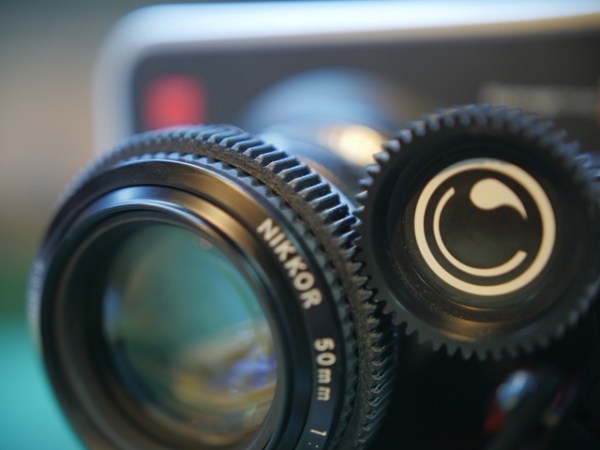
Turns out there’s a lot to the job, and in a many cases it makes sense to mechanize the task. Pro cinematic cameras have geared rings for just that reason, and now your DSLR lens can have them too with customized, 3D printed follow-focus gears.

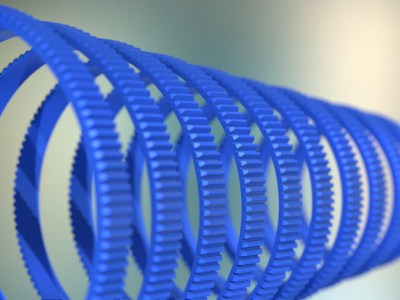
Gear_Selection_01_full_render_preview_featuredUnwilling to permanently modify his DSLR camera lens and dissatisfied with after-market lens gearing solutions, [Jaymis Loveday] learned enough OpenSCAD to generate gears from 50mm to 100mm in diameter in 0.5mm increments for a snug friction fit. Teamed up with commercially available focus pulling equipment, these lens gears should really help [Jaymis] get professional results from consumer lenses. 
Unfortunately, [Jaymis] doesn’t include any video of the gears in action, but the demo footage shown below presumably has some shots that were enabled by his custom gears. And even if it doesn’t, there are some really cool shots in it worth watching.

And for the budding cinematographers out there without access to a 3D printer, there’s always this hardware store solution to focus pulling.

Continue reading “3D Printed Lens Gears For Pro-grade Focus Pulling”

Audio-coupled Smoke Alarm Interface Sends Texts, Emails

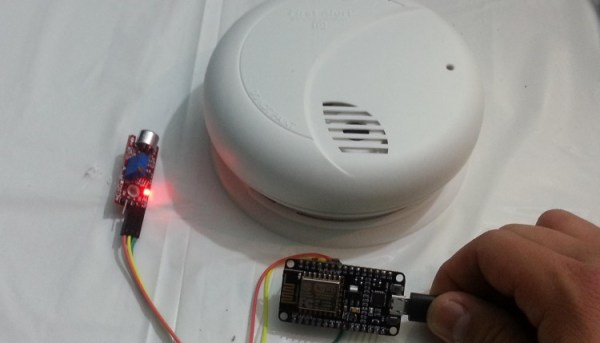
The Internet of Things is getting to be a big business. Google’s Nest brand is part of the trend, and they’re building a product line that fills niches and looks good doing it, including the Nest Protect smoke and CO detector. It’s nice to get texts and emails if your smoke alarm goes off, but if you’d rather not spend $99USD for the privilege, take a look at this $10 DIY smoke alarm interface.

The secret to keeping the cost of [Team SimpleIOThings’] interface at a minimum is leveraging both the dirt-cheap ESP8266 platform and the functionality available on If This Then That. And to keep the circuit as simple and universal as possible, the ESP8266 dev board is interfaced to an existing smoke detector with a simple microphone sensor. From what we can see it’s just a sound level sensor, and that should work fine with the mic close to the smoke detector. But with high noise levels in your house, like those that come with kids and dogs, false alarms might be an issue. In that case, we bet the software could be modified to listen for the Temporal-Three pattern used by most modern smoke detectors. You could probably even add code to send a separate message for a CO detector sounding a Temporal-Four pattern.

Interfacing to a smoke detector is nothing new, as this pre-ESP8266 project proves. But the versatile WiFi SoC makes interfaces like this quick and easy projects.

Continue reading “Audio-coupled Smoke Alarm Interface Sends Texts, Emails”

Citizen Scientist: Hedy Lamarr

For all the destruction and human misery unleashed during World War II, it was also a time of incredible creativity and ingenuity. In America, it was a time when everyone wanted to pitch in. Young men and women enlisted and were shipped overseas, and those left behind kept the factories running full tilt. Even Hollywood went to war, with its steady output of films that gave people a little glamour and provided an escape from the horror and loss of the war. Hollywood stars lined up to entertain troops and raise money for the war effort, and many joined up and fought too.

But one Hollywood star made an unconventional contribution to the war effort, and in the process proved that beauty and brains are not always mutually exclusive. This is the story of Hedy Lamarr, movie star and inventor.

“The Most Beautiful Woman in the World”

By the time she was 23 in 1937, Hedwig Eva Maria Kiesler was a genuine film star in her native Austria. She was also trapped in an unhappy marriage to a rich and powerful Austrian munitions magnate, Fritz Mandl. Hedy was miserable as a trophy wife, adorning the dining room as her husband entertained rich and powerful guests – including Mussolini and Hitler – over long dinners in one of his mansions. They dismissed her; clearly a woman so beautiful could have nothing else to offer, an empty head perched on a graceful neck. But she was far from stupid, and while her husband discussed business with the men who were building the Axis arsenal, Hedy listened and learned.

Continue reading “Citizen Scientist: Hedy Lamarr”