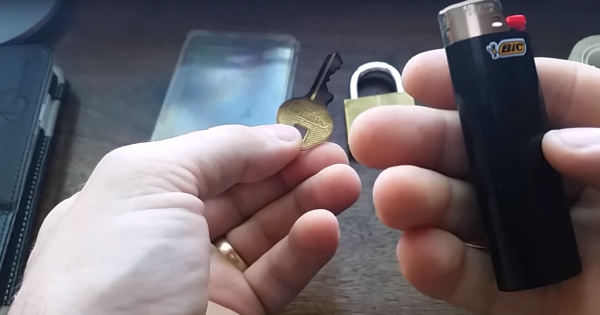
Not too many years ago, if you wanted a decent copy of a key made, you had to head to either a locksmith’s shop or the nearest hardware store, where real people actually knew their trade. Now we generally take our keys to the Big Orange Box o’ Stuff and have it copied by a semi-automated machine, or even feed it into one of the growing number of fully automated key-copying kiosks, with varying results. But as [BlueMacGyver] shows us, a serviceable padlock key can be whipped up quickly at home with nothing but scraps.
The video below details the process – soot the profile of the key with a lighter, transfer the carbon to some stiff plastic with Scotch tape, and cut out the profile. With a little finagling the flat copy makes it into the lock and opens it with ease. Looks like the method could be applied to locks other than padlocks. As for raw material, we think we’ve found a use for all those expired credit cards collecting in the desk drawer.
We’ve given a lot of coverage lately to hacks involving locks, including copying keys from photos and making bump keys with a 3D printer. But we like this hack for its simplicity. True, you need physical access to the key to copy it, and that limits the hack’s nefarious possibilities. But maybe that’s not such a bad thing.
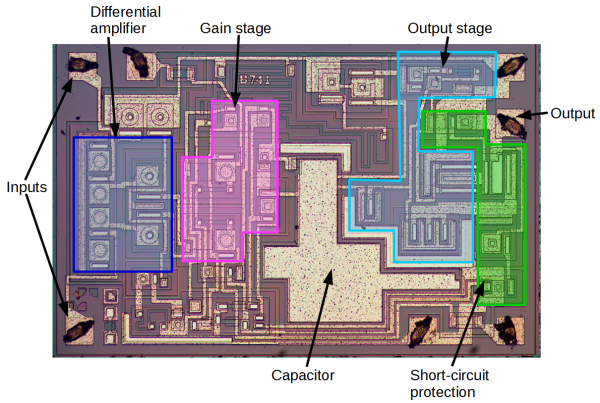
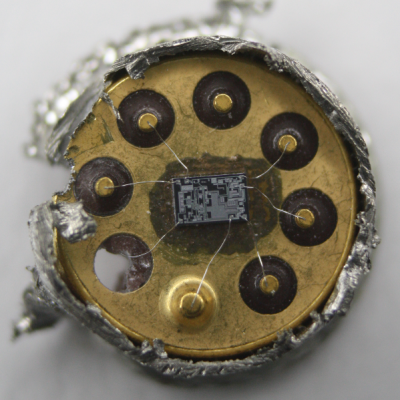 Rather than risk the boiling acid method commonly used to decap epoxy-potted ICs, [Ken] wisely chose a TO-99 can format to attack with a hacksaw. With the die laid bare for his microscope, he was able to locate all the major components and show how each is implemented in silicon. Particularly fascinating is the difference between the construction of NPN and PNP transistors, and the concept of “current mirrors” as constant current sources. And he even whipped up a handy interactive chip viewer – click on something in the die image and find out which component it is on the 741 schematic. Very nice.