Running A Hackerspace Is Hard: Egypt Edition

It’s no secret that it’s difficult to run a hackerspace. Different personalities, different material requirements, and often constrained spaces can require continual negotiation. But if you think that having the metalworking types getting their shavings on your electronics bench is a problem, try having your entire hackerspace demolished on short notice.

The situation in Cairo is far from normal at the moment. The building that Cairo Hackerspace had recently moved to was raided, closed for two months, and then re-opened under strict surveillance in February.

All was well until a part of the building unexpectedly collapsed. Then they got a demolition order, followed by postponement, followed by armed police entering anyway and breaking stuff, followed by a further declaration of the building as safe, and now a heritage site. And all of this over a week’s time. While some of the art studios in the Townhouse were saved, the Cairo Hackerspace’s space is gone.

tumblr_inline_o5virriTeD1t3bbl6_500

The good news? Nobody got hurt in all of this, and the Cairo Hackerspace crew were able to get their gear out after the initial demolition notice. They’ve been working on a mobile hackerspace-in-a-van approach lately, so hopefully they’ll be able to keep on hacking.

So when you’re bickering over who didn’t clean up the hackspace’s coffee machine, or the proper location of your favorite soldering iron, think kindly about the Cairo crew and get back to doing what you do best — projects.

How about you? What hackerspace tales do you have? Contact us through the tips line — we’d love to hear.

Smallest MIDI Synth, Again!

Not content with fitting a tiny square-wave MIDI synthesizer into a MIDI plug, [Mitxela] went on to cram a similar noisemaker into a USB plug itself.

Besides being physically small, the code is small too, as well as the budget. It uses V-USB for the USB library running on an ATtiny85, and a couple of passive parts. His firmware (apparently) takes in MIDI notes and spits out square waves.
Continue reading “Smallest MIDI Synth, Again!”

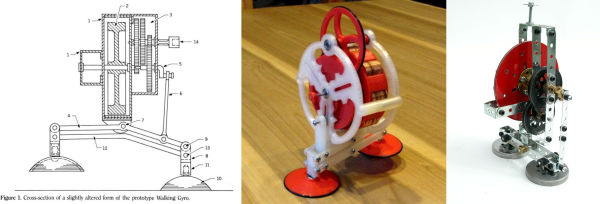
Gyroman Walks With Just One Motor

For some reason, we seem to really want our robots to walk on two legs like we do. And this despite how much the robots themselves want to be made out of motors, which match up so naturally with wheels. The result is a proliferation of inventive walking mechanisms. Here’s another.

Gyroman is a 3D printed gyroscope with legs. The gyroscope is geared down to lift one leg and then the other. First-semester physics, that we still find a little bit magical, makes the gyro precess and the robot turns a bit. Time these just right and it walks. See the video below for a demo. (Admittedly, Gyroman looks like he’s had a bit too much to drink as he winds down.)

Continue reading “Gyroman Walks With Just One Motor”

Thinking Of You: IoT Style

Do you have loved ones who live far away? Or do you just want an interesting starter ESP8266 project to get your feet wet? If the answer to either of these questions is “yes”, we’ve got just the project for you. [Craig Lindley] built a “thinking of you” button-and-LED display device that helps people keep in touch, in a very simple way.

We like the minimalism of the design. One party presses their button, electrons flow, WiFis WiFi, data travels through a set of tubes, and an LED far away glows a pre-arranged color. The other side can signal back to say “hi” as well. It’s a cute item to have on your desk, or wherever you spend the most time. If you’re new to all of this, you can hardly beat the circuit for its simplicity.

Yeah, you could totally just send the other person a text message or an e-mail. But then you don’t get an excuse to play around with NodeMCU, and it just lacks the personal hacker touch. The code is available in a zip file here, and if you want to stay in touch with someone other than [Craig]’s sisters, you’ll probably want to customize it a bit.

Fail Of The Week: ESP8266 Heats Temperature Sensor

[Richard Hawthorn] sent us in this interesting fail, complete with an attempted (and yet failed) clever solution. We love learning through other people’s mistakes, so we’re passing it on to you.

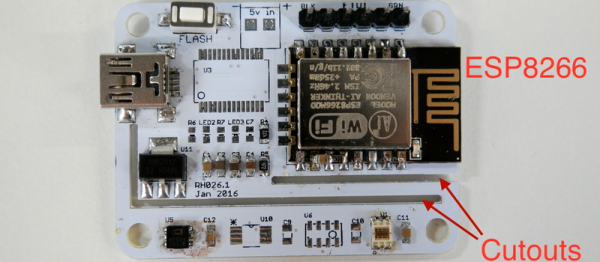
First the obvious-in-retrospect fail. [Richard] built a board with a temperature sensor and an ESP8266 module to report the temperature to the Interwebs. If you’ve ever put your finger on an ESP8266 module when it’s really working, you’ll know what went wrong here: the ESP8266 heated up the board and gave a high reading on the temperature sensor.

temp2Next came the clever bit. [Richard] put cutouts into the board to hopefully stop the flow of heat from the ESP8266 module to the temperature sensor. Again, he found that the board heats up by around four degrees Celcius or nine degrees Farenheit. That’s a horrible result in any units.

What to do? [Richard’s] first ideas are to keep hammering on the thermal isolation, by maybe redoing the board again or adding a heatsink. Maybe a daughterboard for the thermal sensor? We can’t see the board design in enough detail, but we suspect that a flood ground plane may be partly to blame. Try running thin traces only to the temperature section?

[Richard]’s third suggestion is to put the ESP into sleep mode between updates to reduce waste heat and power consumption. He should be doing this anyway, in our opinion, and if it prevents scrapping the boards, so much the better. “Fix it in software!” is the hardware guy’s motto.

But we’ll put the question to you electronics-design backseat drivers loyal Hackaday readers. Have you ever noticed this effect with board-mounted temperature sensors? How did you / would you get around it?


2013-09-05-Hackaday-Fail-tips-tileFail of the Week is a Hackaday column which celebrates failure as a learning tool. Help keep the fun rolling by writing about your own failures and sending us a link to the story — or sending in links to fail write ups you find in your Internet travels.

35 MPH NERF Darts!

Did you know the muzzle velocity of a NERF dart out of a toy gun? Neither did [MJHanagan] until he did all sorts of measurement. And now we all know: between 35 and 40 miles per hour (around 60 km/h).

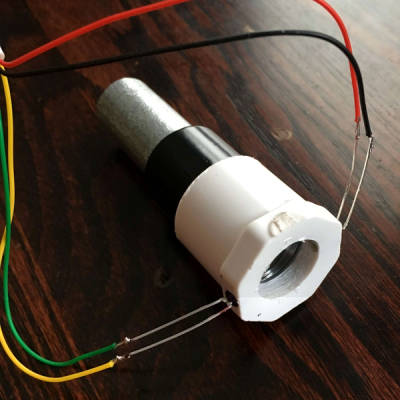
foo_thumbnailFirst, he prototyped a single beam-break detector (shown above) and then expanded his build to two in order to get velocity info. A Propeller microcontroller took care of measuring the timing. Then came the gratuitous statistics. He took six different darts and shot them each 21 times, recording the timings. Dart #3 was the winner, but they all had similar average speeds. You’re not going to win the office NERF war by cherry-picking darts.



Anyway, [MJ] and his son had a good time testing them out, and he thinks this might make a good kids’ intro to science and statistics. We think that’s a great idea. You won’t be surprised that we’ve covered NERF chronographs before, but this implementation is definitely the scienciest!

Thanks [drudrudru] for the tip!

Reverse Engineer Your Robot Lawnmower

Your home is your castle, and you are king or queen of all you survey. You’ve built your own home-automation system from scratch. Why would you possibly settle for the stock firmware in your robotic lawnmower? [Daniel Wiegert] wouldn’t either, so in Project Landlord he has started to reverse-engineer it.

You can hardly blame him. The Worx Landroid‘s controller board uses an NXP LPC1768 ARM Cortex-M3, and the debug pins are labelled on the backside. The manufacturer didn’t protect the flash memory. It’s just begging to have its firmware dumped. So far, [Daniel] has managed to both brick and unbrick the device, and has completely mapped the controller’s pinout, so he’s on his way to complete control.

Right now, he’s got a working proof-of-concept firmware on his GitHub that’s able to drive the machine around a little bit and set the brakes. It’s running FreeRTOS, and [Daniel] is looking for other people to get in on the project. He’s done the hard initial work, so get in there and reap the rewards! Just don’t neglect to remove the blade before custom firmware.

Will custom firmware in a robotic lawnmower change the world? Probably not. But it is awesome, and will certainly make a difference in the lives of people whose robot mowers continually get stuck behind the hydrangeas.

The HackadayPrize2016 is Sponsored by: