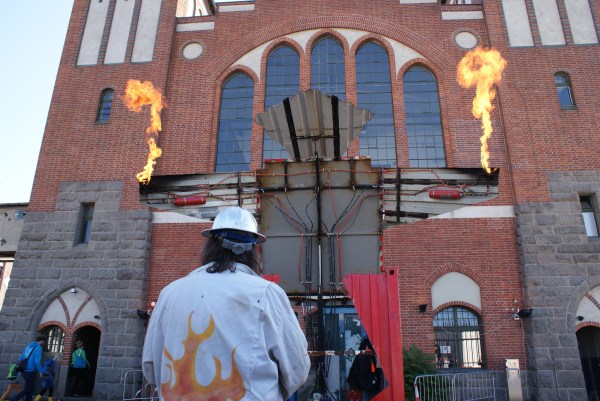
The first-ever Berlin Maker Faire was last weekend, and Hackaday was there. Berlin’s a city with an incredible creative vibe, so it’s no surprise that there was good stuff on display. What was surprising, though, was how far many of the presenters traveled to be there. I wandered around with a camera and a notebook, and here’s what we saw.
Author: Elliot Williams1449 Articles
Deuterium Powered Homes And The Return Of Cold Fusion Hype
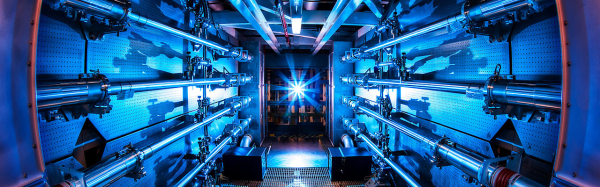
We’ve been sent this press release claiming a new kind of fusion reaction that works at small scales using an incredibly exotic fuel material: ultra-dense deuterium. We looked into it with an open mind, and if we’re being kind we’ll conclude that there’s a ten-year long research project being undertaken by [Leif Holmlid], a single scientist whose claims would win him one or two Nobel prizes if any of it were true.
If we drop the kindness and approach it rationally, this doesn’t smell right and can’t be believed until it has been reliably reproduced by someone not associated with the original research. Let’s delve into the claim of Deuterium powered reactions, and circle around on the cold-fusion hype we found so sadly entertaining back in the ’90s.
Continue reading “Deuterium Powered Homes And The Return Of Cold Fusion Hype”
DIY Lego Slit-Scan 2001 Stargate
[Filmmaker IQ] has a bunch of great tutorials on the technical aspects of making movies, but this episode on copying the stargate Stanley Kubrick’s famous 2001: A Space Odyssey using Legos is a hacker’s delight.
The stargate in 2001 is that long, trippy bit where our protagonist Dave “I’m sorry Dave” Bowman gets pulled through space and time into some kind of alternate universe and is reborn as the star child. (Right, the plot got a little bit bizarre.) But the stargate sequence, along with the rest of the visual effects for the film, won them an Academy Award.
Other examples of slit scan animations you’ll recognize include the opening credits for Doctor Who and the warp-drive effect in Star Trek: TNG.
Embed With Elliot: Interrupts, The Ugly
Welcome to part three of “Interrupts: The Good, the Bad, and the Ugly”. We’ve already professed our love for interrupts, showing how they are useful for solving multiple common microcontroller tasks with aplomb. That was surely Good. And then we dipped into some of the scheduling and priority problems that can crop up, especially if your interrupt service routines (ISRs) run for too long, or do more than they should. That was Bad, but we can combat those problems by writing lightweight ISRs.
This installment, for better or worse, uncovers our least favorite side effect of running interrupts on a small microcontroller, and that is that your assumptions about what your code is doing can be wrong, and sometimes with disastrous consequences. It’s gonna get Ugly
TL;DR: Once you’ve started changing variables from inside interrupts, you can no longer count on their values staying constant — you never know when the interrupt is going to strike! Murphy’s law says that it will hit at the worst times. The solution is to temporarily turn off interrupts for critical blocks of code, so that your own ISRs can’t pull the rug out from under your feet. (Sounds easy, but read on!)
Continue reading “Embed With Elliot: Interrupts, The Ugly”
Numato Opsis: FPGA-based Open Video Platform
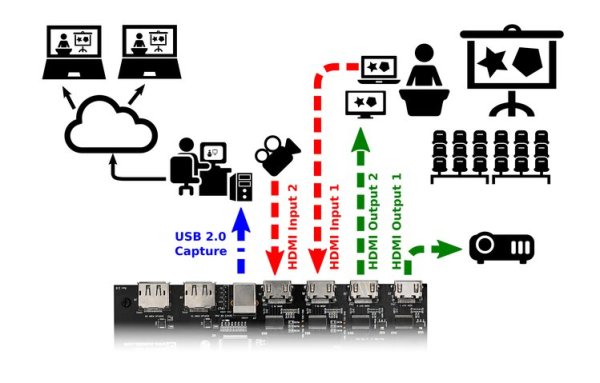
Imagine that you’re running a conference and you want to do a professional job recording the speakers and their decks. You’ll need to record one video stream from the presenter’s laptop, and it’d be nice to have another of the presenter taken with a camera. But you also need to have the presenter’s screen displayed on a projector or two for the live audience. And maybe you’d like all of this dumped down to your computer so that you can simultaneously archive the presentation and stream it out over the Internet.
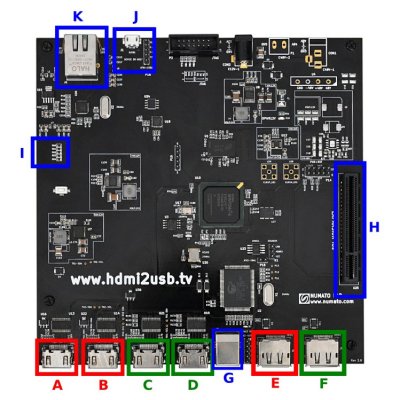
That’s exactly the problem that the hdmi2usb project tries to solve on the software side for open-source software conventions. And to go with this software, [Tim Ansell] has built the Numato Opsis FPGA video board, to tie everything together. What’s great about the platform is that the hardware and the firmware are all open source too.

Because everything’s open and it’s got an FPGA on board doing the video processing, you’re basically free to do whatever you’d like with the content in transit, so it could serve as an FPGA video experimenter board. It also looks like they’re going to port code over so that the Opsis could replace the discontinued, but still open source, Milkimist One video effects platform.
One thing that’s really cute about the design is that it reports over USB as being a camera, so you can record the resulting video on any kind of computer without installing extra drivers. All in all, it’s an FPGA-video extravaganza with a bunch of open-source software support behind it. Very impressive, [Tim]!
Cardboard Robot Deathmatch
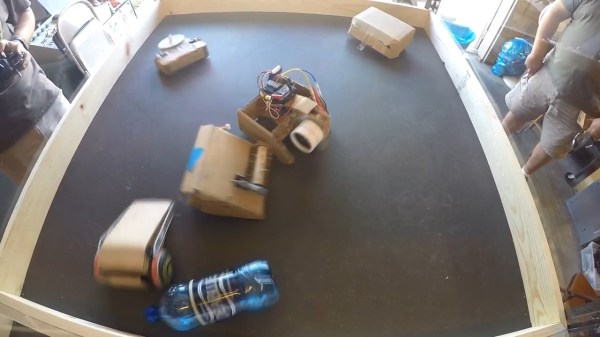
Fighting robots are even more awesome than regular robots. But it’s hard for us to imagine tossing all that money (not to mention blood, sweat and tears) into a bot and then watching it get shredded. The folks at Columbia Gadget Works, a Columbia, MO hackerspace had the solution: make the robots out of cardboard.
The coolest thing about building your robots out of cardboard and hot glue is that it’s cheap, but if they’re going to be a modest scale, they can still be fairly strong, quick to repair, and you’re probably going to be able to scrounge all the parts out after a brutal defeat. In short, it’s a great idea for a hackerspace event.
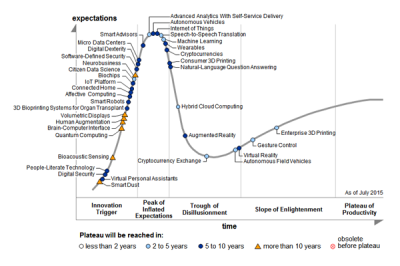
Quantum Computing Kills Encryption
Imagine a world where the most widely-used cryptographic methods turn out to be broken: quantum computers allow encrypted Internet data transactions to become readable by anyone who happened to be listening. No more HTTPS, no more PGP. It sounds a little bit sci-fi, but that’s exactly the scenario that cryptographers interested in post-quantum crypto are working to save us from. And although the (potential) threat of quantum computing to cryptography is already well-known, this summer has seen a flurry of activity in the field, so we felt it was time for a recap.
How Bad Is It?
If you take the development of serious quantum computing power as a given, all of the encryption methods based on factoring primes or doing modular exponentials, most notably RSA, elliptic curve cryptography, and Diffie-Hellman are all in trouble. Specifically, Shor’s algorithm, when applied on a quantum computer, will render the previously difficult math problems that underlie these methods trivially easy almost irrespective of chosen key length. That covers most currently used public-key crypto and the key exchange that’s used in negotiating an SSL connection. That is (or will be) bad news as those are what’s used for nearly every important encrypted transaction that touches your daily life.