Will The Real Commodore Please Stand Up?

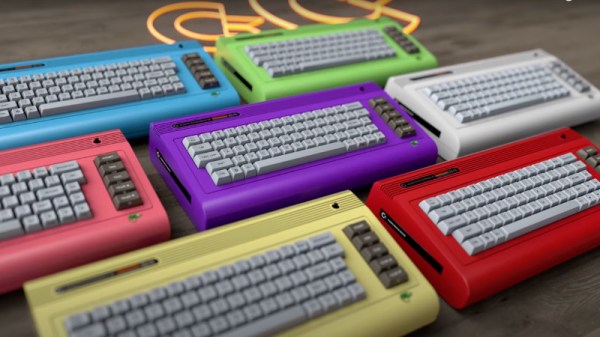
The Commodore 64 is a much-loved 8-bit retro computer that first appeared in 1982 and finally faded away around a decade later. The Commodore company started by [Jack Tramiel] went on to make the Amiga, and eventually ceased trading some time in the late 1990s. All history, now kept alive only by enthusiasts, right? Well, not quite, as the C64 has been the subject of a number of revivals both miniature and full-sized over the years. The latest came in the form of a Kickstarter for the C64x, a seemingly legitimately-branded Commodore 64-shaped PC, but it seems that has now been paused due to a complaint from an Italian company claiming to be the real heirs of Commodore. So will the real Commodore please stand up?

The origin of the Kickstarter C64x breadbin C64 PC is well enough documented, having its roots in a legitimate 2010 offering for which the person behind the C64x appears to have gained the rights. The Italian company is also called Commodore and uses the familiar branding from the glory days to sell some Commodore-themed games, novelties, and a tablet computer, but its website is a little tight-lipped about how it came by the use of that IP. Could it have come upon those rights through the 1990s German owner of the brand, Escom? We’d be fascinated to know.

Continue reading “Will The Real Commodore Please Stand Up?”

1200 Addressable LEDs Make For The Perfect First Dance

The first dance of a newly married couple at the wedding reception is both a sentimental and memorable event, so why not make it even more so with something a bit special? Hackaday alumnus [Brett Haddoak] and his wife [Rachelle] certainly achieved that, with 1200 addressable LEDs turning her wedding dress into a real-life reproduction of Princess Aurora’s color changing dress from Disney’s Sleeping Beauty.

Tradition dictates that a groom must not see the dress before the Big Day, thus the LEDs were fixed to a petticoat and bustier that go underneath. The design would need so many LEDs that it crossed the limit that an Arduino can address, thus there were two Arduinos to control the whole. Electronics and batteries were worn in a pair of polo shorts, and after some nail-biting moments involving flaky connections, the whole thing came to life. The result can be seen in the video below the break, and certainly comes with a significant wow factor!

We would like to wish the happy couple all the best for the future, and we hope that this won’t be their last such electronic collaboration. If you’re hungry for more, it’s not the first light-up wedding outfit we’ve brought you.

Continue reading “1200 Addressable LEDs Make For The Perfect First Dance”

Odd Inputs And Peculiar Peripherals: A Joystick Like They Used To Make

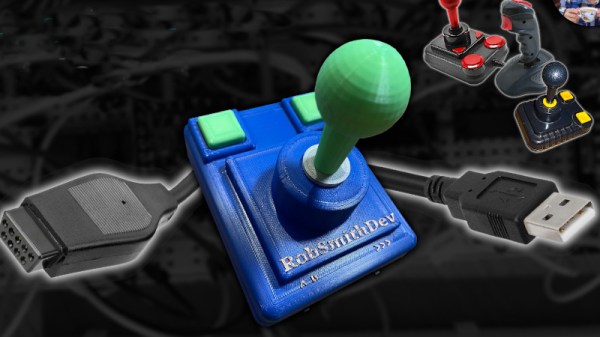
With the rise of the gamepad courtesy of several generations of game consoles, the joystick has become an almost forgotten peripheral, sidelined into the world of flight simulators with its design tending towards copying that of aircraft joysticks. Classic joysticks from the 8- and 16-bit eras were far more workaday devices, more suitable for Space Invaders than Microsoft Flight Simulator, and it’s one of these that [Rob Smith] has recreated in 3D printed form.

The design he’s come up with bears a strong resemblance to the Zipstik, a classic stick that he already owned. It’s a fairly simple device that uses microswitches for all contacts, and is thus very tough. He’s produced a 3D-printed shaft but didn’t trust its strength, so copied the original by using a metal shaft with a pair of circlips. We remember our Zipstik as having a steel shaft; he replaces that with aluminium. A handy jig and a hacksaw allows him to create grooves for circlips, resulting in a sturdy ZipStik clone that should satisfy any retro gamer.

The stick is wired for an Amiga and includes a 555-based rapid-fire circuit, but that’s not the end of the electronics as he’s also created a USB interface for Amiga joysticks to go with it. Not everyone has a classic machine, so now everyone can enjoy the retro peripheral experience! Both builds can be seen in the videos below the break.

This isn’t the first Amiga joystick we’ve brought you, but it’s more sophisticated than some previous designs.

Continue reading “Odd Inputs And Peculiar Peripherals: A Joystick Like They Used To Make”

A Sleep Monitor For Minimum Outlay

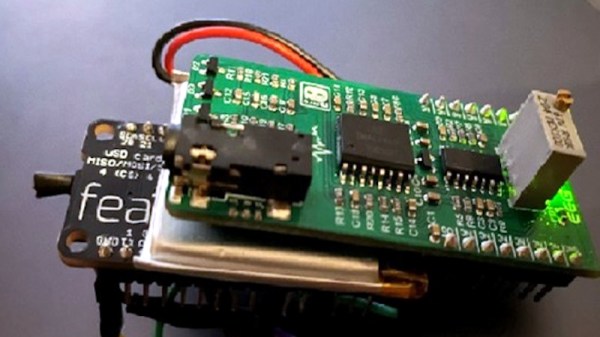
There are a variety of instruments used in sleep studies to measure bodily activity during sleep and consequent sleep quality. Many of them use techniques that perhaps aren’t so easy to replicate on the bench, but an EEG or electroencephalograph to measure brain waves can be achieved using a readily-available module. [Ben Jabituya] shows us a sleep monitor using one of these modules, an EGG Mikroe Click.

The brains of the operation is an Adafruit Adalogger Feather M0, which is hooked up to a headband containing the sensing electrodes. The write-up gives us a round-up of the available boards, which should be handy for any experimenters in this field. The firmware meanwhile was written using the Arduino IDE. It collects raw sampling data to an SD card, and one surprise comes in just how relatively small a space it requires to store a night’s results.

Finally, a Python script was used to process the data and turn it into a spectrogram to look at brain activity through the night. He envisages using the device for triggering lucid dreaming during REM sleep, but we can see it might be rather useful for sleep disorder sufferers, too. Take a look at it in the video below the break. Continue reading “A Sleep Monitor For Minimum Outlay”

The RP2040 Doth A Motor Controller Make

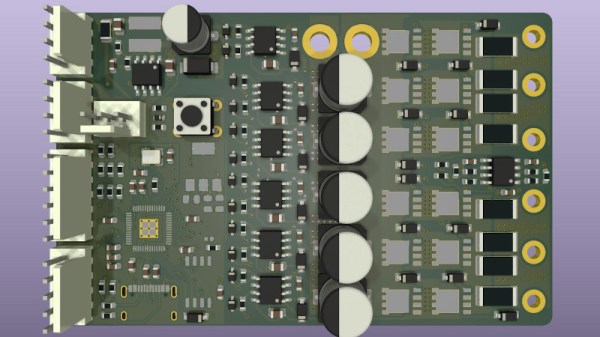
When the Raspberry Pi people launched their RP2040 microcontroller, it seemed as though it might be destined as a niche product for those areas in which the Pi has traditionally been strong. But during the global semiconductor shortage, it has remained almost alone among microcontrollers in having plenty of fab capacity to keep the supplies rolling. That, and its very vanilla set of ARM peripherals alongside those programmable state machines have thus seen it find a home in many places it might not otherwise have seen. Take the dual RP2040 motor controller from [Twisted Fields] as an example, would it have been more likely to have sported an STM32 in previous years?

It’s been produced as part of the Acorn Precision Farming Robot platform, and it’s a fully open-source two-channel controller on a board the same size as a credit card. The schematic appears fairly conventional through a cursory glance at the PDF, but we know from experience that motor controllers are never as deceptively simple to get right as their circuit would lead the unwary engineer to believe. The heat dissipation, current, and transient handling all play a part in a successful design, and we expect this one to evolve to fix any issues it might still contain.

If you’d like to remind yourself about the Acorn farming robot, then take a look at our earlier coverage of the project.

Thanks [Mark] for the tip.

Odd Inputs And Peculiar Peripherals: The Morse Keyboard

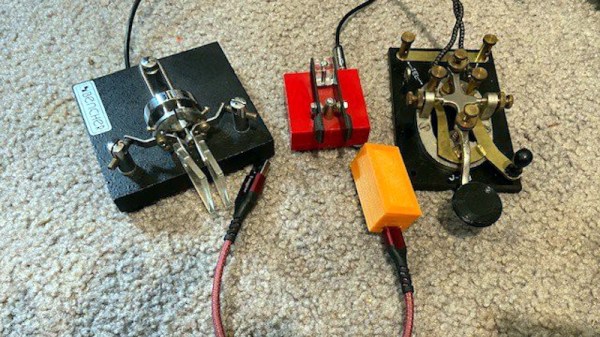
When it comes to rendering text input into an electronic form,the newest keyboards use USB for wired interfacing, while the oldest Morse keys use a single conductor. Shall the two ever meet? For [Matthew Sparks] the answer is yes, with his “The Gadget” Morse-to-USB HID interface which presents a Morse key to a computer as though it were a USB keyboard.

At its heart is a Seeduino Arduino clone, upon which the Morse key waggles a pin, and which through the extensive magic of software recognizes the keyed characters and converts them into USB key presses for the computer. It’s thus a surprisingly simple project, and the write-up spends far more time proselytizing the art of the carrier wave than it does on Arduino code.

Morse is simultaneously a manual art form, an efficient means of communicating through congested radio bands, and an anachronism, which probably explains its continued appeal in the radio amateur fraternity. We’re not sure how many keyboard warriors will switch to the single key with this project, but we can see that it might be a useful aid to learning as well as a pretty quick input method for the owner of an experienced fist.

Morse has featured in many projects here before, not least in this assistive Morse keyboard.

Odd Inputs And Peculiar Peripherals: Touch This Macro Pad

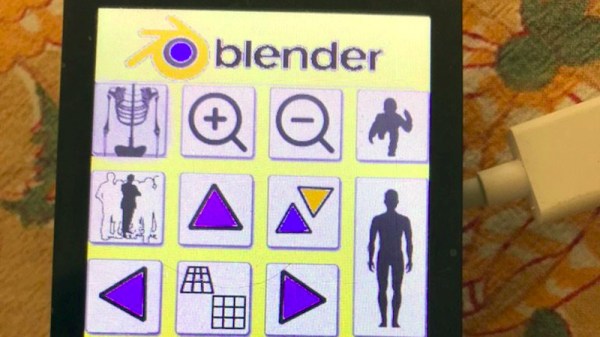
The need to provide custom controls for complex software packages has been satisfied in many ways, the most usual of which is to have a configurable keypad. It’s a challenge [Meir Michanie] has taken up in a slightly different way, by creating a custom touch-screen macro pad. Unlike the buttons, this allows entirely custom layouts with different shaped keys in any configuration.

At its heart is a versatile ESP32 touch screen development board of the type that can be found easily among the pages of your favorite online electronics mart. The Arduino IDE has been used to program the device, and configuration is as simple of providing it with a PNG of the desired layout, and a CSV file to define the buttons. The whole then connects via BLE where it’s presented to the host computer as a keyboard. The result is one of the coolest macro pads we’ve ever seen, with a limitless number of options.

With such a neat idea it’s perhaps no surprise among the numbers of macro pads that have made it to these pages there might be another take on the same idea.