Spacing Out: All The Orbital News You’re Missing

We keep finding more great space stories than we can cover, so here’s a speed-run through the broader picture of the moment as it applies to space flight.

The big news this week was the first launch of a manned SpaceX Crew Dragon capsule to the ISS. I was excited because the pass en route to the space station was scheduled to be visible from the UK at dusk, and on Wednesday evening I perched atop a nearby hill staring intently at the horizon. Except it had been cancelled due to bad weather. The next launch window is planned for today and you can watch it live.

Meanwhile, fashion is the other piece of this manned-launch’s appeal. Their sharply-designed spacesuits have attracted a lot of attention, moving on from the bulky functional Michelin Man aesthetic of previous NASA and Roscosmos garments for a positively futuristic look that wouldn’t be out of place in Star Trek. Never mind that the two astronauts are more seasoned space dog than catwalk model, they still look pretty cool to us. Against the backdrop of a political upheaval at the top of NASA, this first crewed orbital mission from American soil since the retirement of the Shuttle has assumed an importance much greater than might be expected from a run-of-the-mill spaceflight.

While we’re on the subject of the ISS, it’s worth noting that we’re approaching twenty years since the first crew took up residence there, and it has been continuously crewed ever since as an off-planet outpost. This is an astounding achievement for all the engineers, scientists, and crews involved, and though space launches perhaps don’t have the magic they had five decades ago it’s still an awe-inspiring sight to see a man-made object big enough to discern its shape pass over in the night sky. We understand that current plans are to retain the station until at least 2030, so it’s a sight that should remain with us for a while longer.

Closer to Earth are a couple of tests for relative newcomers to the skies. When Richard Branson’s Virgin group isn’t trying to boot millionaires off the planet through its Virgin Galactic operation, it’s aiming to cheaply fling small satellites into orbit from a rocket-toting airborne Boeing 747 with its Virgin Orbit subsidiary. Their first test launch sadly didn’t make it to space, once the rocket had flawlessly launched from the airliner it suffered a fault and the mission had to be aborted. Getting into space is hard.

The second test was never intended to make it into space, but is no less noteworthy. The British company Skyrora have performed a successful ground test of their Skylark L rocket, aiming for a first launch next year and for offering low-earth orbit services by 2023. This is significant because it will be the first British launch since the ill-fated Black Arrow launch in 1971, and with their Scottish launch site the first ever from British soil. If you’ve seen Skyrora mentioned here before, it is because they were behind the retrieval of the Black Arrow wreckage from the Aussie outback that we mentioned when we wrote about that programme.

Looking forward to the coming week, especially today’s rescheduled SpaceX launch. This time however, I’ll check the weather conditions before climbing any hills.
Psst – Wanna Buy A Control Panel From A Nuclear Power Station?

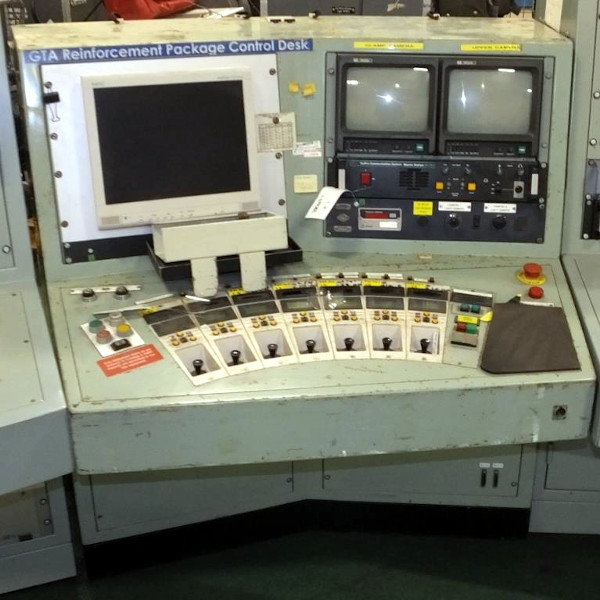
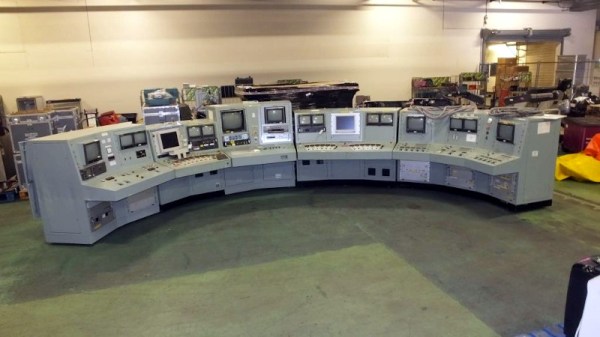
Doing the rounds today is an interesting lot in an otherwise unexciting industrial dispersal auction in Lincolnshire, UK. On sale is an “Ex nuclear plant reactor control/monitoring system“, at the time of writing attracting the low low bid of £220 ($270), but we guess it will rise. Everyone who has watched Chernobyl (or maybe The Simpsons) is now gazing awestruck at a crescent of metal consoles covered in screens, buttons, and joysticks just waiting for a staff of white-coated technicians to pore over them.

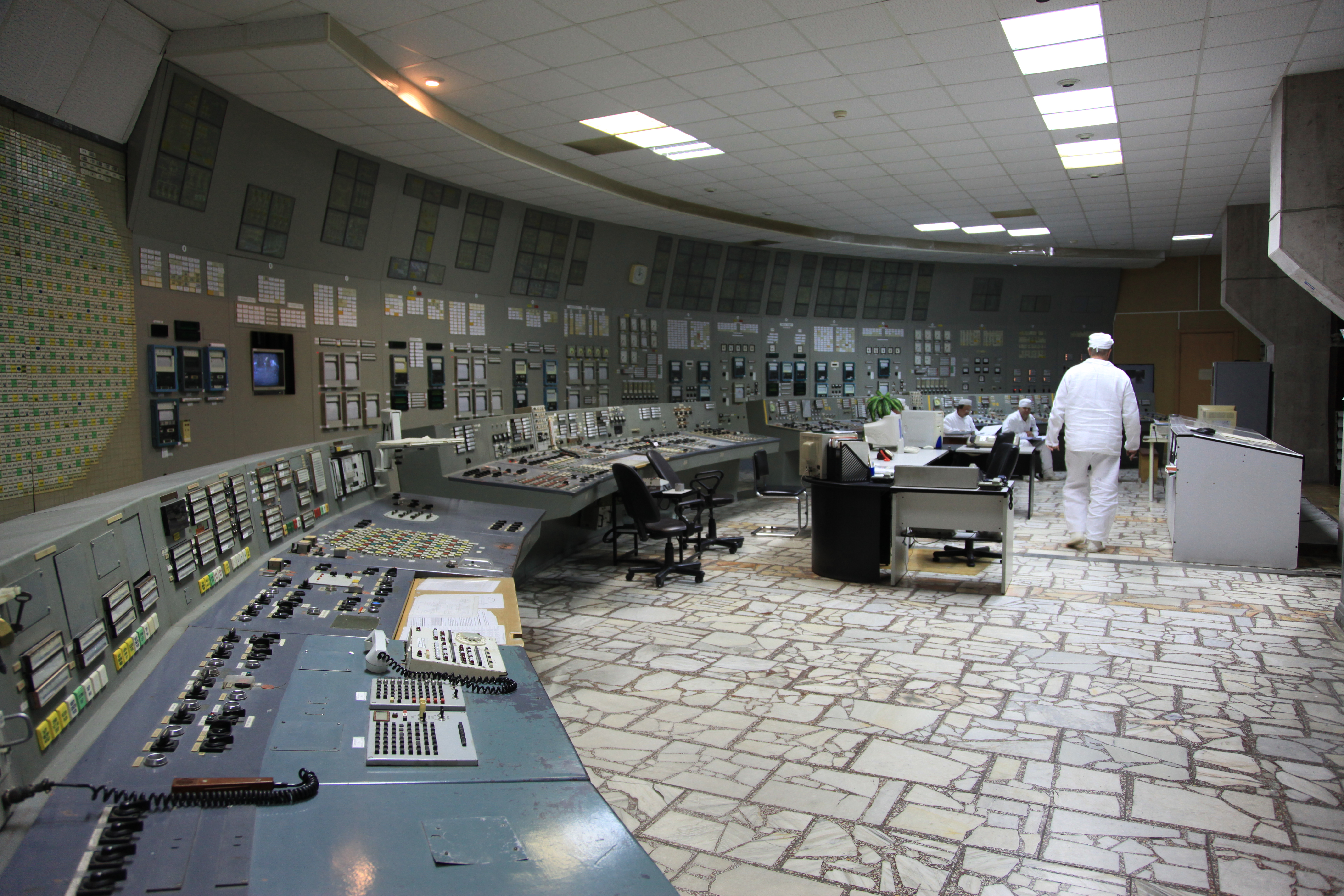
Chernobyl Unit 3 control room (still active). [Source: IAEA Imagebank on Flickr CC-SA 2.0]
It’s a very cool lot indeed, but it raises more questions than it answers. The auction house has very little information indeed, so we’re left guessing, where did it come from? From this image showing the unit 3 control room at Chernobyl it’s obvious didn’t come from there (/s). Since it is for sale in the UK, and the country has decommissioned the majority of its first-generation reactors by now, so there is no shortage of candidates. But that intriguing possibility raises another question. Is it even a reactor control panel in the first place?

British civilian nuclear plants have tight security but they are hardly a secret, so plenty of photos are online showing their interiors. And in studying those we hit a problem, this panel doesn’t resemble any of the control panel images we can find. The first generation of Magnox (Magnetic Oxide Magnesium Non Oxidising) plants had panels covered in analogue dials and chart recorders so it’s unlikely to be one of those. The second-generation AGR (Advanced Gas-cooled Reactor) stations had similarly complex panels, and it’s evidently not one of them.

Looking closely at the photos it becomes apparent that there are a lot of camera controls and monitors, and even what looks like a uMatic video recorder. It’s definitely nuclear-related and the 1980s look of it suggests maybe it could have come from an Advanced Gas-Cooled Reactor (AGR) station, but could it be a little closer to Sector 7G than the centre of the action? Is it a video monitoring console used to keep a physical eye on its operation?

Be careful if you bid, you could end up with a rather cool but absurdly large 1980s CCTV system. Can any of our readers shed any light on the matter?

Thanks [Gregg “Cabe” Bond] for the tip.

Jack Tramiel Got A Good Deal, And Ruined Everything

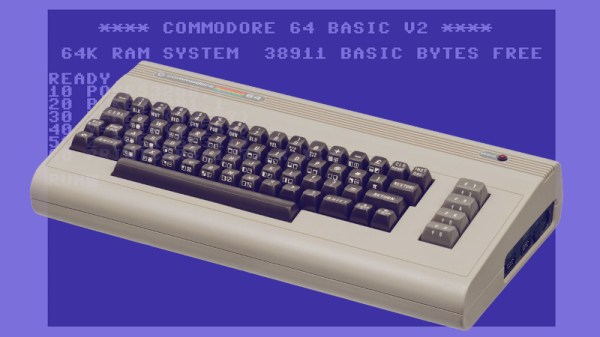
A sideshow in the playground wars of the early 1980s over who had the best home computer lay in the quality of their onboard BASIC interpreters. Where this is being written the cream of the crop was Acorn’s BBC Basic, while Sinclair owners could hold their own, and the Commodore 64 was regarded as powerful, but not easy to program. It’s a teenage memory brought to mind by [Liam Proven], who argues in a blog post that Commodore’s BASIC left a problematic legacy that can still be felt today.

It’s an interesting proposition, and one with its roots in Commodore founder Jack Tramiel’s 1977 deal with Bill Gates to acquire a version of Microsoft BASIC for his machines, in which he paid a one-off fee for unlimited uses of the language rather than a per-sale levy. The argument in the post is that this led to later Commodore machines being hamstrung by an outdated BASIC interpreter as a cost saving measure. It fits well with those 1980s memories from school computer labs, because by comparison its competitors six years after the deal had the benefit of language extensions missing in Commodore’s 64.

Where [Liam]’s analysis becomes interesting is in how he perceives the effect of this long-in-the-tooth BASIC; he postulates that the sheer number of Commodore 8-bit machines sold ensured it had a dominant position in the market place and thus coloured the perception of BASIC as a programming language in the years that followed. We’re not so sure about his view that this led eventually to some of the shortcomings in computing today, but we agree wholeheartedly with him that Commodore were less than competent in marketing their hardware.

We look forward to hearing your take on the matter in the comments, and meanwhile for some perspectives on the Commodore of the day who better to relate them than somebody who had a ringside seat. Our colleague [Bil Herd] has shared with us some of his Commodore recollections over the years, including the Commodore 128 story, an account of the 1985 CES show, and a two-parter on the TED chip and its speech capabilities.

Header image: Commodore BASIC / Public Domain, and Evan-Amos / Public domain.

Losing A Wheel On Your Commute; 3-Wheelers Vie For The Open Road

We live at an interesting point in time for the technologically minded motor vehicle enthusiast, and we stand on the brink of a major directional shift in  how we imagine a car. Within ten years it’s likely that the electric motor will have moved from an extravagance or a fringe choice to a mainstream one, and a piston engine will be the preserve of an ever smaller niche market.

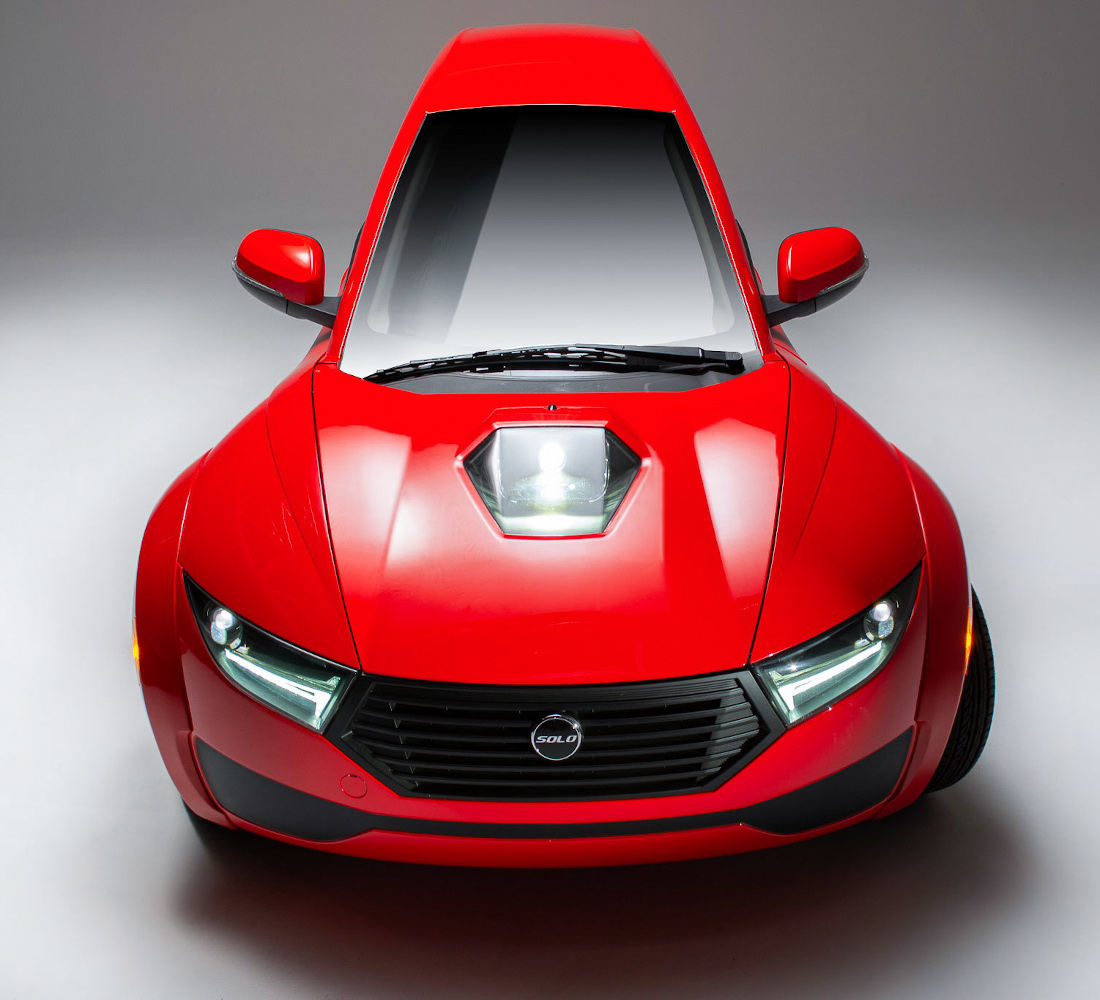
The Electrameccanica Solo three-wheeler car.

Along the way is it possible that the very form factor of an automobile will change, or will cars in decades hence have the same basic shape as those we’re used to? The Canadian company Electrameccanica certainly think so, because they’ve launched a refreshingly different take on commuter transport for one. Their Solo is a three-wheeler car, with two wheels at the front and one trailing wheel at the back configuration. It’s a bold design, but if it’s such an obvious one then why don’t we drive three-wheelers already?

It’s time to examine a few of the properties of a three-wheeler, and along the way visit some of the past attempts at this configuration.

Continue reading “Losing A Wheel On Your Commute; 3-Wheelers Vie For The Open Road”

Teardown: Nabaztag

In 2020 there is nothing novel or exciting about an online device. Even the most capable models are designed to be unobrusive pucks and smart speakers; their function lies in what they do rather than in how they look. In 2005, an Internet connected device was a rare curiosity, a daring symbol of a new age: the “Internet of Things”!

Our fridges were going to suggest recipes based upon their contents, and very few people had yet thought of the implications of an always-on connected appliance harvesting your data on behalf of a global corporation. Into this arena stepped the Nabaztag (from the Armenian for “rabbit”), an information appliance in the form of a stylised French plastic rabbit that could deliver voice alerts, and indicate status alerts by flashing lights and moving its ears.

Continue reading “Teardown: Nabaztag”

FPGA Raises Component Video From A Sinclair ZX Spectrum

An abiding memory of the early-80s heyday of 8-bit computing for many is operating their computer from the carpet in front of the family TV. While the kids in the computer adverts had parents who bought them a portable colour telly on which to play Jet Set Willy, the average kid had used up all the Christmas present money on the computer itself. The cable would have been an RF connection to the TV antenna socket, and the picture quality? At the time we thought it was amazing because we didn’t know any different, but with the benefit of nearly 40 years’ hindsight, it was awful.

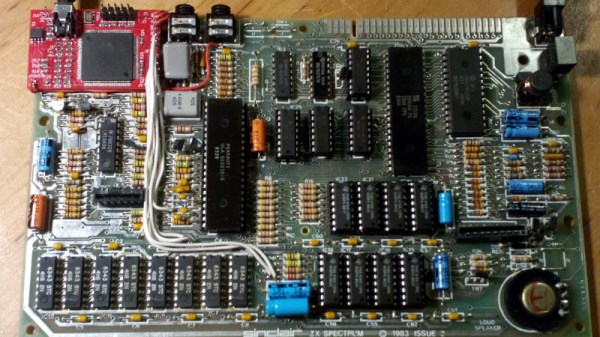
For ZX Spectrum owners in 2020 a standard modification is to bring out a composite video signal, but [c0pperdragon] has gone a step or two beyond that with a component video interface. And this isn’t a mod in which the signals are lifted from the Spectrum’s colour encoder circuitry, instead it uses an FPGA hooked directly to the ULA chip to generate the component video itself.

The Altera chip sits on a little PCB designed to occupy the footprint of the original Astec modulator, and sports a neat bundle of wires hooked up to the various Spectrum signals it needs. There are a couple of jumpers to select the output type and resolution, it supports YPbPr or RGsB outputs and both 288p and 576p. If you think perhaps it looks a little familiar, that’s because it’s the sister project of an earlier board for the Commodore 64. So if you have a Spectrum and are annoyed by UHF and PAL, perhaps it’s worth a look.

DMCA Takedown Issued Over Casio Code That Wasn’t

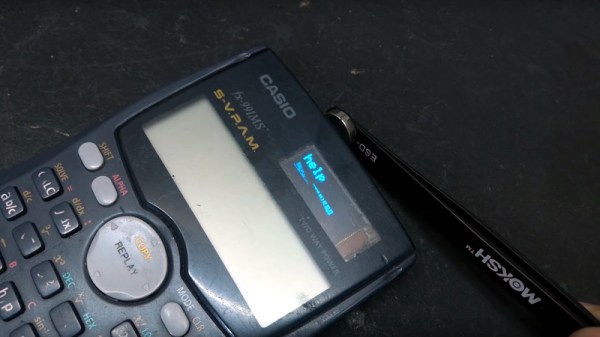
Earlier this month, we posted coverage of an ingenious calculator hack that took a Casio calculator and put an ESP8266 module and an OLED display in the space occupied by its solar cell. Controlled by a pair of unobtrusive Hall effect devices, the calculator could have been used as an ingenious cheating device but was to us the epitome of a well-executed hack. We may have liked it but it seems the folks at Casio didn’t, because they’ve issued a DMCA takedown notice for the project’s GitHub repository.

Editor’s Update: [Tom Fleet] reports that GitHub has completed the DMCA review and found the code repo does not infringe on Casio’s IP. However, it appears the copyright claim on the YouTube video has not been resolved and that video remains unavailable. However, that video is still available on the Internet Archive.

This is a picture of Barbra Streisand, who might almost be the patron saint of unintended consequences. Unknown author / Public domain
This is a picture of Barbra Streisand, who might almost be the patron saint of unintended consequences. Unknown author / Public domain.

We’re not lawyers, but if you’d care to visit our original coverage and watch the video in full, you’ll see that the ESP does not in any way tap into the calculator’s functions. The epoxy blob over the Casio processor is intact and no wires connect to the calculator mainboard, so it is difficult to imagine how any Casio code could have found its way into a repository full of ESP8266 code for the Arduino IDE. A quick search for “Hack-Casio-Calculator” on GitHub, at the time of publishing, turned up the relevant code despite Casio’s takedown, and we can’t see what they’re on about. Maybe you can?

Over the years there have been many attempts to use the DMCA on projects in our community. Some have been legitimate, others have been attempts to suppress exposure of woeful security, and still more have been laughably absurd. This one seems to us to edge into the final category, because it is difficult to see how the project described could contain any Casio code at all. It would be entirely legitimate to  issue a DMCA takedown had the epoxy blob been removed and Casio’s code been retrieved from the calculator chip (and we’d certainly cover that story!), but as far as we can see taking a scalpel to a calculator’s case and stuffing a module behind the solar panel window does not come close.

It’s evident that Casio do not like the idea of one of their calculators being turned into a cheating device, and we understand why that might be the case. But to take the DMCA route has served only to bring more publicity to the affair, and those of us with long memories know that this can only lead to one conclusion.

Thanks [Tom] and others for the tip.