Rule Your Furnace With This Network-enabled Thermostat

diy_thermostat

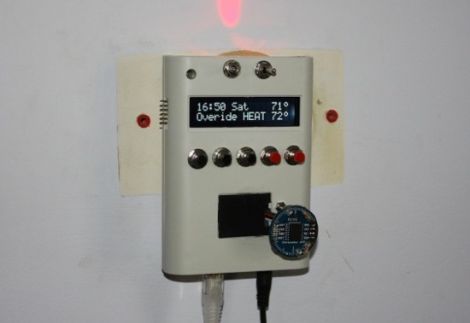
Adafruit forum member [Stephanie] embarked on a mission to replace the thermostat in her home with one that was far more robust and full of electronic goodies.

Her goal was to build a networked thermostat that allowed for 2-way communications between the base station and any other networked device, such as her laptop or iPhone. She wanted to not only be able to monitor her furnace and air conditioning systems remotely, but to control the units from afar as well.

The brains of the thermostat have changed throughout the project, becoming simpler as time went on. It is now controlled with just an ATMega328 mounted to the back of an LCD display with a Wiznet network module where an Adafruit Ethernet shield used to reside. The thermostat shows the current temperature, set temperature, and time on the front mounted LCD, the latter of which is provided by a Chronodot module. It also has an on board LED that can be seen from afar, indicating whether the heat or air conditioning is running,

Right now the thermostat can be controlled at the unit itself, or remotely using a Telnet session. [Stephanie] is currently happy with the setup, but future plans include creating an iPad application to provide a more user-friendly interface.

If you are interested in learning more, or building one yourself, be sure to swing by her blog for a far more in-depth look at the build process.
Laser Tripwire Water Balloon Prank

laser_tripwire_prank

Even though it’s a bit late for April Fool’s jokes, [Ameres] wrote in to share a project guaranteed to catch your friends (or enemies) by surprise.

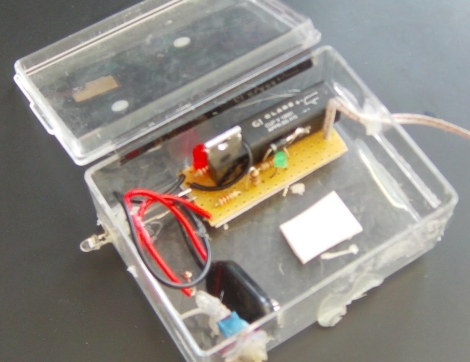
Like us, he had some old CD-ROM drives sitting around and thought that there must be some way to put them to good use. He gutted one, saving the laser’s carrier unit for use as his mechanical trigger. He placed the unit above a doorway, soldered a pin on to the end of the laser carrier, and positioned a water balloon at the end of the CD-ROM’s rails. The laser carrier’s motor was then connected to a photocell located about half way down the side of the door.

He mounted a laser on the far side of the door, which is pointed at the photocell. Once the laser beam is broken, the CD-ROM motor is actuated, popping the balloon over the unsuspecting victim.

It’s not the most high-tech prank out there, but how high tech does a water prank need to be? We just wonder how easy it would be to attach one of these things to our cube at work…

Have any ideas as to how he can make a bigger splash with his friends?  Share them with us in the comments.

Blackberry LCD Reverse Engineering

blackberry_lcd

[Scott] was looking to source some LCD screens for an upcoming project, and was considering buying them from SparkFun. While the Nokia panels they sell are not expensive, they aren’t necessarily the cheapest option either – especially when building in volume.

He searched around for something he could use instead, and settled on Blackberry screens. Old Blackberry models were even more durable than the current offerings, plus companies are trying to get rid of old handsets by the truckload. The only problem was that he could not find any information online that would show him how to write to the screens.

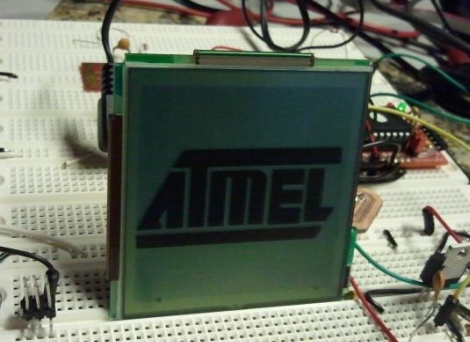
It took a bit of digging, but he eventually determined which ICs were used to drive the LCD screen. He had no luck finding screen pinout information online, so after spending a few hours testing things with his multimeter, he came up with a full listing on his own.

He wired up a connector so that he could use the screen on a breadboard, then got busy writing code to display some text on the screen. Everything came together nicely as you can see in the video below, and he has released his code in case anyone else is looking to repurpose some old Blackberry screens.

All we want to know is what sort of project all these screens are going to be used in.

Continue reading “Blackberry LCD Reverse Engineering”

Camera Software Learns To Pick You Out Of A Crowd

tld_object_tracking

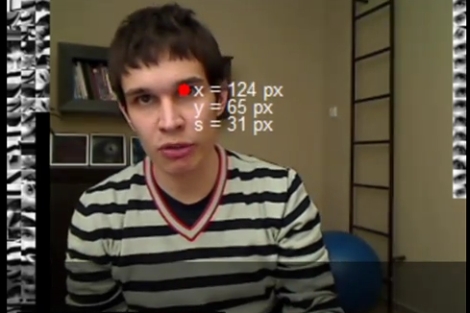
While the Kinect is great at tracking gross body movements and discerning what part of a person’s skeleton is moving in front of the camera, the device most definitely has its shortfalls. For instance, facial recognition is quite limited, and we’re guessing that it couldn’t easily track an individual’s eye throughout the room.

No, for tracking like that, you would need something far more robust. Under the guidance of [Krystian Mikolajczyk and Jiri Matas], PhD student [Zdenek Kalal] has been working on a piece of software called TLD, which has some pretty amazing capabilities. The software uses almost any computer-connected camera to simultaneously Track an object, Learn its appearance, and Detect the object whenever it appears in the video stream. The software is so effective as you can see in the video below, that it has been dubbed “Predator”.

Once he has chosen an object within the camera’s field of vision, the software monitors that object, learning more and more about how it looks under different conditions. The software’s learning abilities allow it to pick out individual facial features, follow moving objects in video, and can recognize an individual’s face amid a collection of others.

While the software can currently only track one object at a time, we imagine that with some additional development and computing horsepower, this technology will become even more amazing.

Continue reading “Camera Software Learns To Pick You Out Of A Crowd”

Internet-controlled Robotic Arm

internet_robotic_arm

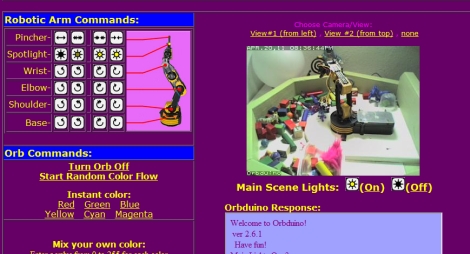
[Trav] was pondering virtual reality and decided it was no longer all that it was cracked up to be, so he created an experience in what he calls “Remote Reality”. While we have seen many installations over the years that allow people to remotely interact with objects across the globe, his Orbduino project consists of more than simply toggling lights on and off (though he’ll let you do that too).

In his house, he has set up a robotic playground of sorts that allows anyone who visits a chance to play around with the robotic arm he has installed there. The arm is situated in a pen filled with random objects which can be stacked and moved around. He also promises to show you something fun, provided you can guide the arm to pick up an object and hold it against the target positioned outside the pen.

He didn’t forget the obligatory remote light controls either. You can turn the overhead lights on and off, as well as control a multi-colored orb situated in the corner of the room. Most of the project’s interface is done with an Arduino Mega, which handles the robot arm interface, as well as messing with the light installations.

If you have some free time, swing by his site and give the robotic arm a try. It’s a fun little time waster that you will likely enjoy.  Just make sure to take it easy on his web server!

Easter Egg Hacking

ateam_easter_egg

Spring is upon us and Instructables user [Mischka] decided it was a good idea to combine two flavors we never considered putting together: The Easter Bunny and the A-Team.

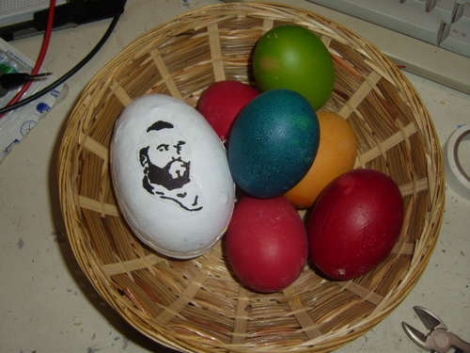
He decided to build the egg as an Easter gift for his brother, who is a huge fan of the A-Team. He found a slightly larger than normal plastic egg, and proceeded to paint the shell white, adding a printed picture of Mr. T once the paint had dried.

The guts of the egg are made up of a Picaxe 08M micro controller mounted on a Picaxe protoboard. Rather fond of buzzing, beeping audio, he decided to forgo a normal speaker and opted to use a piezo instead. To activate the music when the egg is shaken, a tilt switch was added to the board as well. He uploaded his software to the Picaxe, sealed up the egg, and called it a day.

We can imagine his brother will be pretty pleased with the creation – who wouldn’t be? We only wish that there was video of the egg in action.

Rube Goldberg Machine Puts Engineering Students In The Record Books

rube_goldberg

Rube Goldberg machines are always a fan favorite around here. They truly embody the concept of over-engineering, and are an entertaining departure from what we normally cover on Hackaday.

Back in February, engineering students from two on-campus professional associations at Purdue University teamed up to construct a world record-setting Rube Goldberg machine. Their entry in the Purdue Regional Rube Goldberg Machine Contest not only won them the regional title, but also potentially put them in the books as creating the most complex device of its nature.

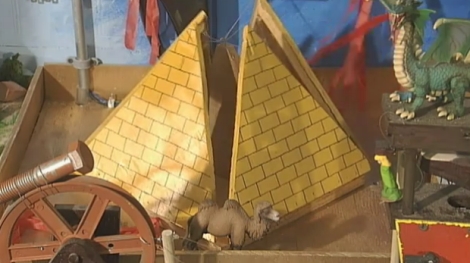
Their contraption was dubbed “The Time Machine” and acts out events in our planet’s history. It starts with the big bang, moving through various other time periods, including the stone age, ancient Egypt, and the medieval era. It also makes several stops in more recent times, including World War II and the Cold War, before self-destructing at the Apocalypse.

All told, the machine incorporates 244 steps to water a plant, which is 14 more than the previous record holder. Continue reading to see a video that highlights some of the machine’s more interesting features, and be sure to check out these Rube Goldberg machines we’ve covered in the past.

[via BoingBoing]

Continue reading “Rube Goldberg Machine Puts Engineering Students In The Record Books”