Mark Your Calendars, NASA Is Holding A Public Meeting On UFOs

We’re sorry, the politically correct term these days is “unidentified anomalous phenomena” (UAP), as it’s less likely to excite those with a predilection for tinfoil hats. But whether you call them flying objects or anomalous phenomena, it’s that unidentified part that has us interested.

Which is why we’ll be tuned into NASA TV at 10:30 a.m. EDT on May 31 — that’s when the agency has announced they’ll be broadcasting a meeting of an independent study team tasked with categorizing and evaluating UAP data. The public can even submit their own questions, the most popular of which will be passed on to the team.

Before you get too excited, the meeting is about how NASA can “evaluate and study UAP by using data, technology, and the tools of science”, and the press release explains that they won’t be reviewing or assessing any unidentifiable observations. So if you’re hoping for the US government’s tacit acknowledgment that we’re not alone in the universe, you’ll probably be disappointed. That said, they wouldn’t have to assemble a team to study these reports if they were all so easily dismissed. As always, interstellar visitors are dead last on the list of possible explanations, but some cases have too much hard evidence to be dismissed out of hand. They might not be little green men, but they are something.

Continue reading “Mark Your Calendars, NASA Is Holding A Public Meeting On UFOs”

Home Heating With Bitcoin Miners Is Now A Real Thing

If you were reading this post a month ago, you could have been forgiven for thinking it was an April Fools post. But we assure you, this is no joke. A company called HeatBit has recently opened preorders for their second generation of Bitcoin miner that doubles as a space heater.

The logic goes something like this: if you’re going to be using an electric space heater anyway, which essentially generates heat by wasting a bunch of energy with a resistive element, why not replace that element with a Bitcoin miner instead? Or at least, some of the element. The specs listed for the HeatBit Mini note that the miner itself only consumes 300 watts, which is only responsible for a fraction of the device’s total heat output. Most of the thermal work is actually done by a traditional 1000 watt heater built inside the 46 cm (18 inch) tall cylindrical device.

Continue reading “Home Heating With Bitcoin Miners Is Now A Real Thing”

Tricorder Tutorial Isn’t Just For Starfleet Cadets

For many of us, the most difficult aspect of a project comes when it’s time to document the thing. Did you take enough pictures? Did you remember all the little details that it took to put it together? Should you explain those handful of oddball quirks, even though you’re probably the only person in the world that knows how to trigger them?

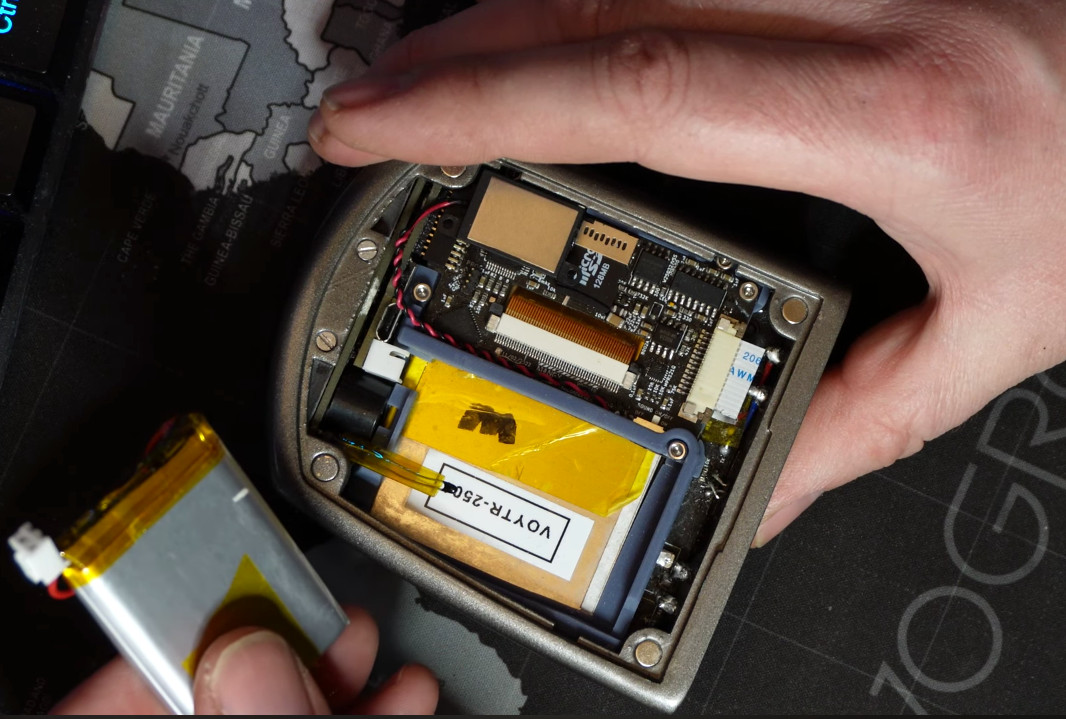
Well, we can’t speak to how difficult it was for [Mangy_Dog] to put together this training video for his incredible Star Trek: Voyager tricorder replica, but we certainly approve of the final product. Presented with a faux-VHS intro that makes it feel like something that would have been shown to cast members during the legendary run the franchise had in the 1990s, the video covers the use and operation of this phenomenal prop in exquisite detail.

Replaceable batteries are standard again in the 2370s.

Now to be fair, [Mangy_Dog] has sold a few of his replicas to other Trek aficionados, and we’re willing to bet they went for a pretty penny. As such, maybe it’s not a huge surprise he’d need to put together a comprehensive guide on how to operate the device’s varied functions. Had this been a personal project there wouldn’t have been the need to record such a detailed walk-through of how it all works — so in that regard, we’re fortunate.

One of the most interesting things demonstrated in this video is how well [Mangy_Dog] managed to implement mundane features such as brightness and volume control without compromising the look of the prop itself. Rather than adding some incongruous switches or sliders, holding down various touch-sensitive buttons on the device brings up hidden menus that let you adjust system parameters. The project was impressive enough from the existing images and videos, but seeing just how deep the attention to detail goes is really a treat.

Previously we took a look at some of the work that [Mangy_Dog] has put into these gorgeous props, which (unsurprisingly) have taken years to develop. While they might not be able to contact an orbiting starship or diagnose somebody’s illness from across the room, it’s probably fair to say these are the most realistic tricorders ever produced — officially or otherwise.

Continue reading “Tricorder Tutorial Isn’t Just For Starfleet Cadets”

Hackaday Prize 2023: Meet The Ten Re-Engineering Education Finalists

They say time flies when you’re having fun, and doubly so when you’re hacking hardware. If you can believe it, we’ve already closed out the first challenge of the 2023 Hackaday Prize, and you know what that means — it’s time to announce the 10 finalists.

As a reminder, each of these projects not only takes home $500 USD, but moves on to the next round of judging. During the recently announced 2023 Supercon, we’ll announce the six projects that were selected by our panel of judges to collect their share of $100,000 in prize money– plus a residency at Supplyframe’s DesignLab and eternal hacker glory for the Grand Prize winner.

Continue reading “Hackaday Prize 2023: Meet The Ten Re-Engineering Education Finalists”

VCF East 2023: Alan Wolke On His Passion For Tech

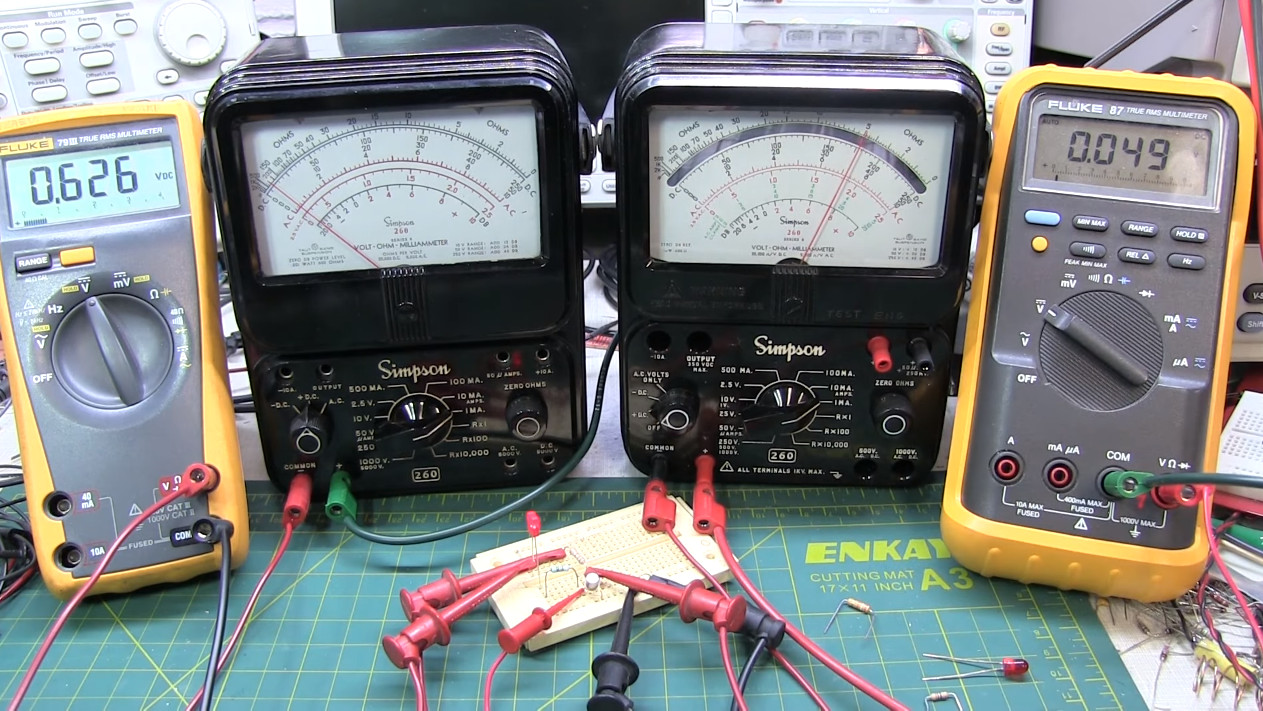
If you’re one of the more than 180,000 subscribers to [Alan Wolke]’s YouTube channel W2AEW, you’ll know he’s a lover of old test gear and ham radio hardware. You may have followed one of his tutorials, or referenced his work while repairing or upgrading your own equipment. But when we got a chance to talk to him one-on-one during Vintage Computer Festival East 2023, we were treated to a more personal look at the man himself.

Like many of us, [Alan] says he got his start with electronics at a young age simply by taking things apart and trying to put them back together again. From there he got a job in a TV repair shop during high school, where he was able to hone his natural curiosity into a marketable skill. His career took him through several of tech companies, but he ultimately ended up in an engineering role at Tektronix, a position he’s held for nearly 20 years.

Despite continuing to stay on the cutting edge, it’s no surprise that he still has a certain attraction to the technology from his youth. But it’s more than simple nostalgia — he points out that vintage hardware is generally easier to service than modern gear. As many of his own videos show, there was something of a technological “sweet spot” around the mid-20th century to the 1980s or so; where you could expect to not only have schematics available, but the design and construction of hardware was such that you could still reason your way through it using basic troubleshooting principles.

As for being a ham, [Alan] thinks it’s a great way for get an even deeper understanding of technology. He says that if you’re interested in learning how electronics work, repairing and upgrading old radio hardware is a great way to flex your mental muscles. But at the same time, being a ham isn’t limited to dusting off war-surplus radios that were built before you were born. There’s plenty of ways to mix in modern technology, from digital modes to receiving signals from satellites using a software-defined radio.

[Alan] was just one of the fascinating people we got a chance to speak with during our visit to the 2023 Vintage Computer Festival East. We’ve still got more interviews to come, but in the meantime, you can check out our previous coverage of this incredible retrocomputing event.

Continue reading “VCF East 2023: Alan Wolke On His Passion For Tech”

Hackaday Podcast 217: The Unintentional Space And 3D Printing Episode

Hackaday Editors Elliot Williams and Tom Nardi definitely didn’t plan on devoting most of this episode to 3D printing and space stories, but let’s be honest, it was bound to happen sooner or later. After an update on the Hackaday Prize, the discussion moves on to a pair of troubled spacecraft and the challenges of exploring the final frontier. From there you’ll hear about a chocolate 3D printer we’ve had our eyes on for years, the tools you should have next to your own (non-chocolate) 3D printer, and a bit of contemplation of what it really means to design for 3D printing versus traditional manufacturing methods. But it’s not all plastic fantastic — by the end of the episode you’ll also hear about some particularly bold high-altitude aviators and the surprisingly short time we have left with the humble barcode.

Check out the links below if you want to follow along, and as always, tell us what you think about this episode in the comments!

Going to be stranded on a desert island? Download the podcast now!

Continue reading “Hackaday Podcast 217: The Unintentional Space And 3D Printing Episode”

NVIDIA Jetson Powers Real-Time Iron Man HUD

If you could recreate any of the capabilities of Tony Stark’s Iron Man suit in real life, it would probably be the ability to fly, the super strength, or maybe even the palm-mounted lasers that can cut through whatever obstacle is in your path. But let’s be real, all that stuff is way too hard to try and pull off. Plus you’ll probably just end up accidentally killing yourself in the backyard.

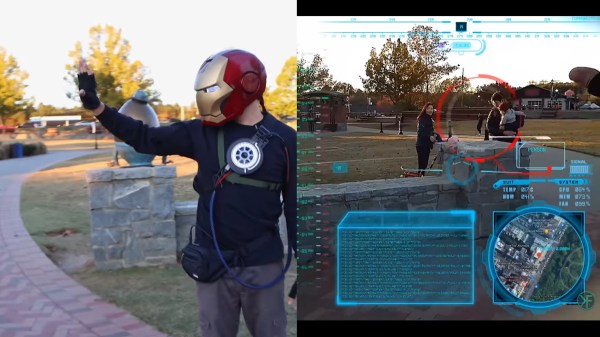
But judging by the videos he’s been posting, [Kris Kersey] is doing one hell of a job creating a functional heads-up display (HUD) similar to the one Tony uses in the films. He’s even building it into a 3D printed Iron Man helmet, with the NVIDIA Jetson board that’s powering the show inside a chest-mounted “Arc Reactor”. He goes into a bit more detail about the project and his goals in an interview recently published on NVIDIA’s own blog. Continue reading “NVIDIA Jetson Powers Real-Time Iron Man HUD”