DR-DOS Is Back, But Not Quite As We Knew It

If you weren’t around for the early PC era, or were a little more casual about operating systems, you could perhaps be forgiven for not knowing that DOS is not synonymous with MS-DOS. MS-DOS was just Microsoft’s implementation — or rather, an implementation they purchased — of a Disk Operating System, one that was…let’s just say “inspired by” Digital Research’s CP/M.

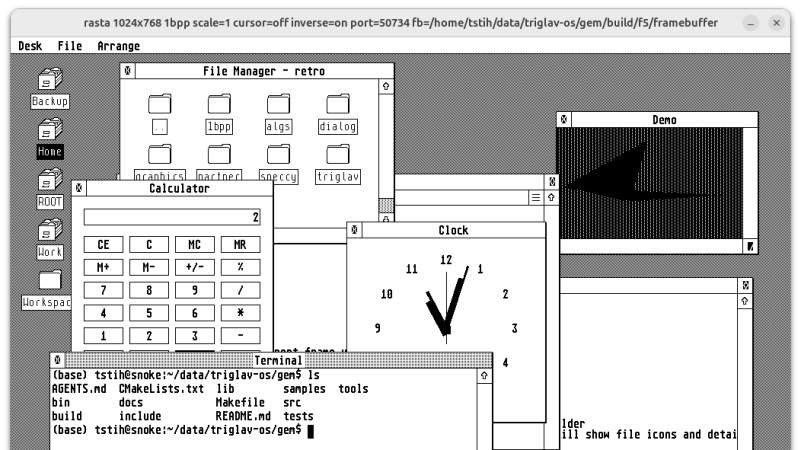
Digital Research shot back with DR-DOS, an operating system that was both compatible with and much superior in some ways to MS-DOS. The last version was released in 1991, after Novell bought the struggling Digital Research. Now it’s back, or at least, it’s on its way back with a fully clean-room implementation by a fellow who calls himself [CheeseWeezel] on Reddit.

He’s gone so far as to purchase the trademark, so this re-creation is the official DR-DOS. In any case [CheeseWeezel]’s DR-DOS is considered version 9.0, and is currently in Beta. The clean-sheet re-implementation of DR-DOS’s API was sadly necessary due to the rather tortured history of the IP after DR was bought by Novel, who sold DR-DOS to Caldera, who briefly open-sourced the code before retracting the license and selling on. Some of you may remember a controversy where a previous rights holder, DR DOS INC, was found purloining FreeDOS code in violation of the GPL. Perhaps because of that, [CheeseWeezel] isn’t using any old code, and isn’t open-sourcing what he’s done. Right now, the beta of DR-DOS 9 is free for non-commercial use, but as is standard for EULAs, that could change at any time without warning. [CheeseWeezel] is still working full compatibility, but at this point it at least runs DOOM.

Still, given the origins of DOS in Digital Research’s early work on CP/M, it warms the heart to see what many of us thought of as the “true” DOS survive in some form in the 21st century. Arguably it already had, in the form of SvarDOS, but you can’t use that to make smug jokes about your operating system having PhD instead of a measly master’s. If you did not like DOS, we recall the joke from Mac users was that those were the degrees needed to operate the PC. Speaking of DOS, you don’t necessarily need a retrocomputer to run it.

Thanks to [OldDOSMan] for the tip!

If You Like The Sound Of A Thermoacoustic Stirling Engine, Check Out These Plans

[My Engines] has been doing some sterling work on Stirling engines for some years now. Their thermoacoustic engine is now finally far enough along to open-source, so the magic of collaboration can speed technological advancement.

You’ve probably heard of Stirling Engines, but what’s this “thermoacoustic” business? Hot sound? Well, that’s the translation, and it’s not a bad starting point for understanding what’s going on: the engine converts heat into high-amplitude sound waves — that is, waves of pressure — which means the engine itself has no moving parts. Well, almost. Obviously moving parts are required to get power out. In [My Engines] case he’s using a piston and linear generator, but otherwise it makes for a very simple, very reliable engine that can be fueled by any available source of heat. Say like burning methane from [My Engines]’s home biogas plant.

[My Engines] promises more videos to help you understand the construction in a way his previous videos might not detail, and has put 3D models and drawings at a public Google Drive. There’s also a Discord you can join, because apparently that’s the only way to communicate about projects these days.

The whole build is very much within range of a home maker, though there’s a lot more to it than the toy Stirling engines you may have made out of tin cans back in the day. If you want to play with thermoacoustics but [My Engines]’s design seems like a little much to get started with, you can make a demonstrator with some steel wool and a test tube. Be careful, though: model engines can be an addictive hobby.

Continue reading “If You Like The Sound Of A Thermoacoustic Stirling Engine, Check Out These Plans”

Ford, Take Note: Classic Pickup Becomes The EV We Want

Ford does sell an electric pickup, but not very many of them. We can’t say for sure, but it’s possible that if the F150 Lightning had the classic cool of [ScottenMotors] 1977 F150 SuperCab conversion they’d have better numbers.

The battery box sits where a V8 used to choke on well-meaning emissions controls.

On Reddit, [Scotten] shares the takeaways from his conversion effort, which involved a custom Tesla-cell battery pack and a new rear axle assembly to house the Tesla SDU (Small Drive Unit). A Large Drive Unit (LDU) would probably fit, but the SDU already puts out 264 HP, which compares rather favourably to the 156 HP this truck’s malaise-era V8 put out stock. The old F-bodies were great trucks in a lot of respects, but even an die-hard ICE enthusiast is probably not going to be sad to see that motor go.

Continue reading “Ford, Take Note: Classic Pickup Becomes The EV We Want”

Perfecting The Shape-Changing Fruit Bowl

Fruit bowls have an unavoidable annoyance– not flies and rotten fruit, those would be avoidable if your diet was better. No, it’s that the bowl is never the right size. Either your fruit is sad and lonely in a too-large bowl, or it’s falling out. It’s the kind of existential nightmare that can only be properly illustrated by a late-night infomercial. [Simone Giertz] has a solution to the problem: a shape-changing fruit bowl.

See, it was one thing to make a bowl that could change shape. That was easy, [Simone] had multiple working prototypes. There are probably many ways to do it, but we like [Simone]’s use of an iris mechanism in a flat base to allow radial expansion of the walls. The problem was that [Simone] has that whole designer thing going on, and needs the bowl to be not only functional, but aesthetically pleasing. Oh, and it would be nice if expanding the bowl didn’t create escape routes for smaller fruits, but that got solved many prototypes before it got pretty.

It’s neat to see her design process. Using 3D printing and CNC machining for prototyping is very familiar to Hackaday, but lets be honest — for our own projects, it’s pretty common to stop at “functional”. Watching [Simone] struggle to balance aesthetics with design-for-manufacturing makes for an interesting 15 minutes, if nothing else. Plus she gives us our inspirational quote of the day: “As much as I feel like I’m walking in circles, I know that product development is a spiral”. Something to keep in mind next time it seems like you’re going around the drain in your own projects. Just be warned, she does have a bit of a potty mouth.

We’ve featured [Simone]’s design decisions here, if you’re interested in seeing how she goes the rest of the way from project to product. We’re pretty sure her face-slapping-alarm clock never made it into the SkyMall catalog, though.

Continue reading “Perfecting The Shape-Changing Fruit Bowl”

Replicating A Nuclear Event Detector For Fun And Probably Not Profit

Last year, we brought you a story about the BhangmeterV2, an internet-of-things nuclear war monitor. With a cold-war-era HSN-1000 nuclear event detector at its heart, it had one job: announce to everything else on the network than an EMP was inbound, hopefully with enough time to shut down electronics. We were shocked to find out that the HSN-1000 detector was still available at the time, but that time has now passed. Fortunately [Bigcrimping] has stepped up to replicate the now-unobtainable component at the heart of his build with his BHG-2000 Nuclear Event Detector — but he needs your help to finish the job. Continue reading “Replicating A Nuclear Event Detector For Fun And Probably Not Profit”

Hands On With Creality’s New M1 Filament Maker

Ever since 3D printing has become a popular tool, the question of waste has been looming in the background. The sad reality of rapid prototyping is that you’re going to generate a lot of prints that just aren’t fit for purpose, even if your printer runs them off perfectly every time. Creality has some products on the way aimed at solving that problem, and [Embrace Making] on YouTube has got his hands on a pre-production prototype of the Creality M1 Filament Maker to give the community a first look.

The M1 is actually only half of the system; Creality is also working on an R1 shredder to reduce your prints into re-usable shreds. [Embrace Making] hasn’t gotten his hands on that, but shredding prints isn’t the hard part. We’ve featured plenty of DIY shredders in the past. Extruding filament reliably at home has traditionally proven much more difficult, which is why we mostly outsource it to professionals.

Lacking the matching shredder, and wanting to give the M1 the fairest possible shake, [Embrace] tests the machine out first using Creality-supplied PLA pellets. The filament diameter isn’t as stable as we’ve gotten used to, and the spool rolling setup needs a bit more work.

Again, this is an early prototype. Creality says they’re working on it and claims they’ll get to ±0.05 mm precision in the production models. Doubtless they’ll also fix the errors that led to [Embrace]’s messy spool. That’s probably just software given that the winding mechanism did a pretty good job on the Creality-supplied spool.

Most importantly, the M1-produced filament does print. The prints aren’t perfect due to the variation in diameter, but they turn out surprisingly well for home-made filament. [Embrace] also shows off the ability to mix custom colors and gradients, but, again, using raw PLA rather than shredded material. Hopefully Creality lets him test drive the R1 shredder once its design is further along.

This is hardly the first time we’ve seen a filament extruder. The goal of this product is to pair with a shredder and use it for recycling, but if you’re going to stick with raw plastic pellets, you may as well print them directly.

Continue reading “Hands On With Creality’s New M1 Filament Maker”

Are We Finally At The Point Where Phones Can Replace Computers?

There was an ideal of convergence, a long time ago, when one device would be all you need, digitally speaking. [ETA Prime] on YouTube seems to think we’ve reached that point, and his recent video about the Samsung S26 Ultra makes a good case for it. Part of that is software: Samsung’s DeX is a huge enabler for this use case. Part of that his hardware: the S26 Ultra, as the upcoming latest-and-greatest flagship phone, has absurd stats and a price tag to match.

First, it’s got 12 GB of that unobtanium once called “RAM”. It’s got an 8-core ARM processor in its Snapdragon Elite SOC, with the two performance cores clocked at 4.74 GHz — which isn’t a world record, but it’s pretty snappy. The other six cores aren’t just doddling along at 3.62 GHz. Except for the very youngest of our readers, you probably remember a time when the world’s greatest supercomputers had as much computing power as this phone.

Continue reading “Are We Finally At The Point Where Phones Can Replace Computers?”