Amazon Drones Don’t Go Far

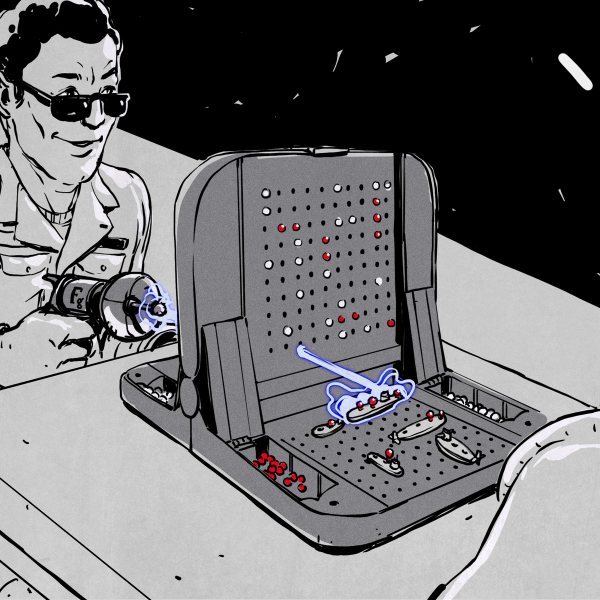
If you are like us, you’ve wondered what all the hoopla about drones making home deliveries is about. Our battery-operated vehicles carry very little payload and still don’t have a very long range. Add sophisticated smarts and a couple of delivery packages and you are going to need a lot more battery. Or maybe not. Amazon’s recent patent filing shows a different way to do it.

In the proposed scheme, a delivery truck drives to a neighborhood and then deploys a bunch of wheeled or walking drones to deliver in the immediate area. Not only does that reduce the range requirement, but there are other advantages, as well.

Continue reading “Amazon Drones Don’t Go Far”

Discount Microfluidics From A $9 Spree At The Dollar Store

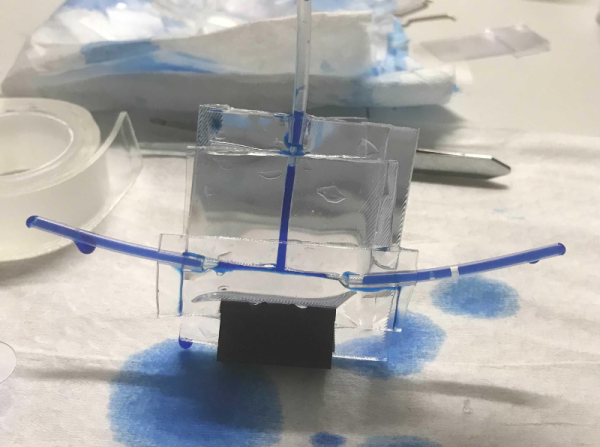
Microfluidics — working with tiny volumes of fluids in tiny channels — isn’t something you’d think would be inexpensive. Unless you read [Alexander Bissells’] post on how he created microfluidic devices using stuff from the dollar store. The channels in these devices can be much smaller than a millimeter and the fluid volumes are sometimes measured in femtoliters. At those scales, fluids don’t work like we intuitively think they will.

The parts list included gel tape, baby droppers, and some assorted containers and tools. Total price at the dollar store $9. One of the key finds in the dollar store was some small spray bottles. They weren’t important themselves, but they contain small lengths of silicone tubing and that was useful. Plastic fresnel lenses along with the tubing and gel tape worked to make “chips.” The gel tape also gets cut to make the channels. An eyedropper with some modifications makes a reasonable syringe.

We aren’t sure what you can practically do with any of these, but the T-junction looked pretty interesting. If you want some ideas on how these devices work in biology, including COVID-19 testing, check out this article. And just last week [Krishna Sanka] hosted a Hack Chat on microfluidics in biohacking, you can find the transcript on the project page. If you need a pump, this one uses 3D printer firmware to control it.

Astronomical Clock Uses Your Spare Clock Motors

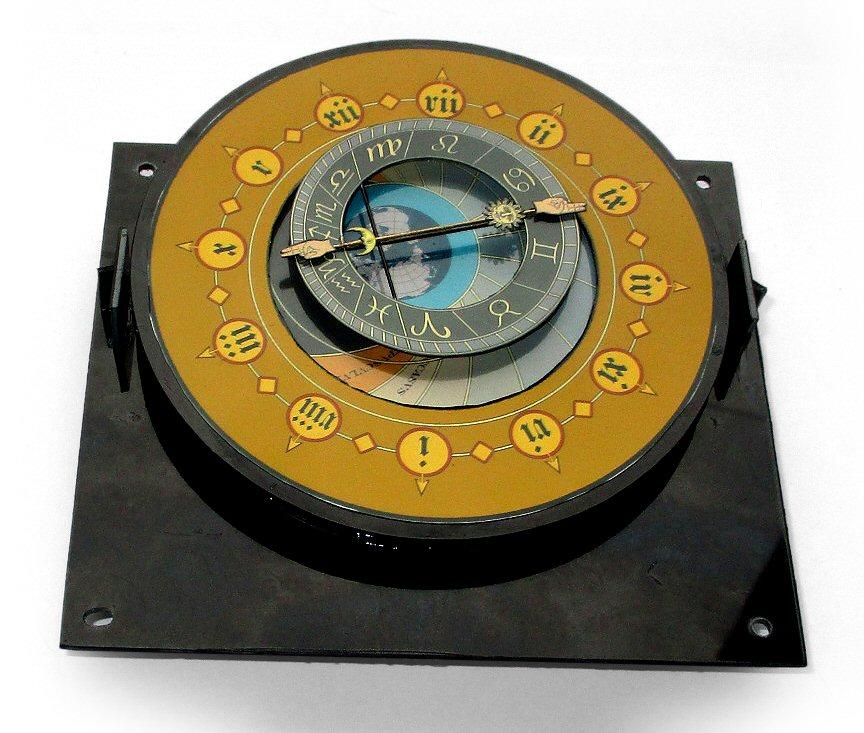
We’ll admit we are suckers for clock projects, and the more unusual, the better. We liked the look of [Peter Balch’s] astronomical clock, especially since it was handcrafted and was a relatively simple mechanism. [Peter] admits that it looks like an astronomical clock, but it isn’t the same as a complex instrument from medieval times. Instead, it uses several standard clock motors modified.

We didn’t quite follow some of the explanations for the rotation of the different elements, but the animated GIF cleared it all up. The inner and outer discs are geared at a 6:5 ratio. It takes 2 hours for the inner disc to make one rotation, meaning that every 12 hours the two discs will be back to where they began relative to one another.

Modifying the motors is fine work, requiring a good bit of disassembly and some glue. The electronics that make it tick are quite interesting. To drive the motors, a very specific pulse train is needed, but you also want to conserve battery as much as possible. A simple oscillator with a hex inverter drew more power than desired and an Arduino, even more so. A PIC12F629, though, could sleep a lot and do the job for a very low current consumption. The final clock should run a year on two AA cells.

3D Printed Copper Rocket Nozzle Costs Under Two Grand

You don’t think of hobby-grade 3D printing as a good method for creating rocket nozzles. But [Mister Highball] managed to create a copper nozzle using a common printer, a kiln, and some special copper-bearing filament.

The copper filament is about 90% metal. Virtual Foundry recommends preheating it before printing and you have to sinter it in an oven to remove the plastic and leave a solid metal piece which will, of course, shrink.

Continue reading “3D Printed Copper Rocket Nozzle Costs Under Two Grand”

10 Gigabit Ethernet For The Pi

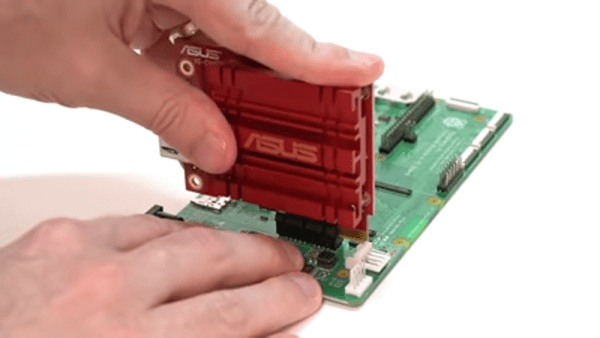
When people like Bell and Marconi invented telephones and radios, you have to wonder who they talked to for testing. After all, they had the first device. [Jeff] had a similar problem. He got a 10 gigabit network card working with the Raspberry Pi Compute Module. But he didn’t have any other fast devices to talk to. Simple, right? Just get a router and another network card. [Jeff] thought so too, but as you can see in the video below, it wasn’t quite that easy.

Granted, some — but not all — of the hold-ups were self-inflicted. For example, doing some metalwork to get some gear put in a 19-inch rack. However, some of the problems were unavoidable, such as the router that has 10 Gbps ports, but not enough throughput to actually move traffic at that speed. Recabling was also a big task.

Continue reading “10 Gigabit Ethernet For The Pi”

The Nuclear Powered Car From Ford

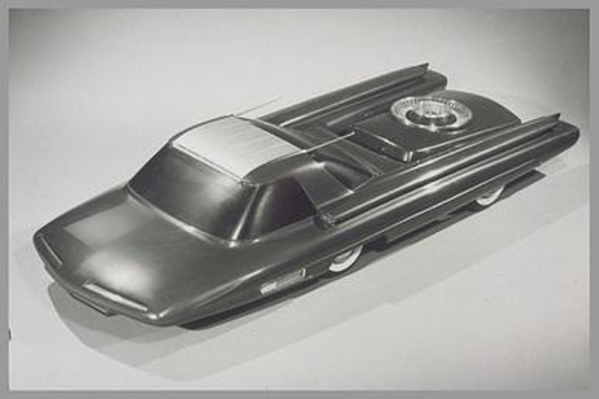
We think of electric cars as a new invention, but even Thomas Edison had one. It isn’t so much that the idea is new, but the practical realization for normal consumer vehicles is pretty recent. Even in 1958, Ford wanted an electric car. But not just a regular electric car. The Ford Nucleon would carry a small nuclear reactor and get 5,000 miles without a fillup.

Of course, the car was never actually built. Making a reactor small and safe enough to power a passenger car is something we can’t do even today. The real problem, according to experts, is not building a reactor small enough but in dealing with all the heat produced.

Continue reading “The Nuclear Powered Car From Ford”

Tech Hidden In Plain Sight: Cruise Control

The advent of the microcontroller changed just about everything. Modern gadgets often have a screen-based interface that may hide dozens or hundreds of functions that would have been impractical and confusing to do with separate buttons and controls. It also colors our thinking of what is possible. Imagine if cars didn’t have cruise control and someone asked you if it were possible. Of course. Monitor the speed and control the gas using a PID algorithm. Piece of cake, right? Except cruise control has been around since at least 1948. So how did pre-microcontroller cruise control work? Sure, in your modern car it might work just like you think. But how have we had seventy-plus years of driving automation?

A Little History

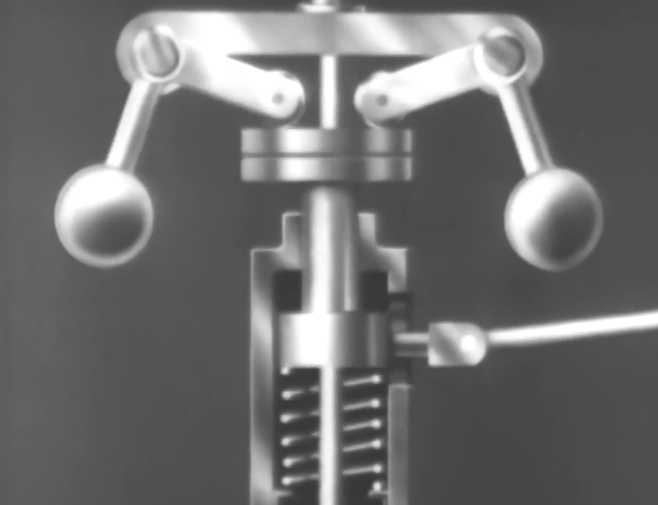
A flyball governor from a US Navy training film.

Controlling the speed of an engine is actually not a very new idea. In the early 1900s, flyball governors originally designed for steam engines could maintain a set speed. The idea was that faster rotation caused the balls would spread out, closing the fuel or air valve while slower speeds would let the balls get closer together and send more fuel or air into the engine.

The inventor of the modern cruise control was Ralph Teetor, a prolific inventor who lost his sight as a child. Legend has it that he was a passenger in a car with his lawyer driving and grew annoyed that the car would slow down when the driver was talking and speed up when he was listening. That was invented in 1948 and improved upon over the next few years.

Continue reading “Tech Hidden In Plain Sight: Cruise Control”