Inside The VIC-20

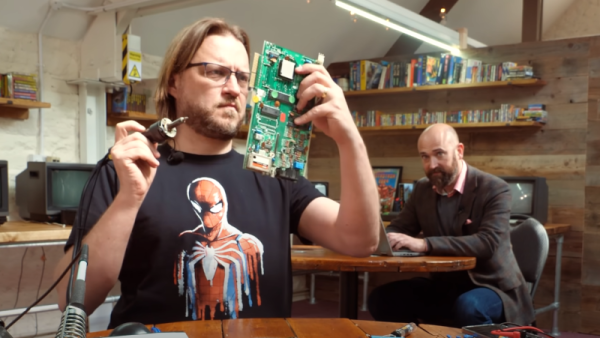
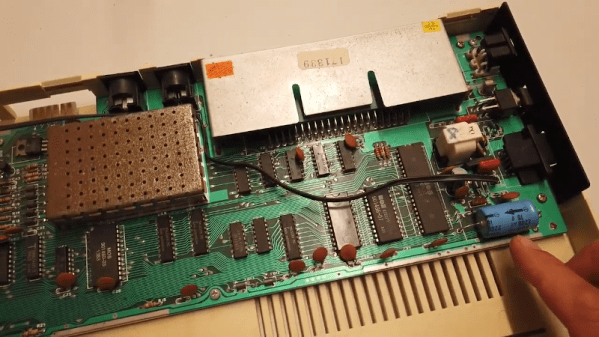
Commodore machines are well-loved around here, but usually when you think Commodore, you think about the Commodore 64, or maybe the PET or Amiga. But the Commodore 64 had an older sister, the VIC 20. This was the first computer to sell a million units and has a lot in common with its better-known successor. The machine was only made for a few years, and [Dubious Engineering] has been restoring one over a few videos. In the video below, he opens it up for a look inside, among other things.

If you want to get straight to the opening, you’ll need to fast forward about 5 and a half minutes. The keyboard pulls off and a nice old-fashioned set of cables made from individual wires connect to the skinny main board with all the smarts on it. No ribbon cables or flex PCBs!


Continue reading “Inside The VIC-20”

FIR Filters For Xilinx

Digital filters are always an interesting topic, and they are especially attractive with FPGAs. [Pabolo] has been working with them in a series of blog posts. The latest covers an 8th order FIR filter in Verilog.  He covers some math, which you can find in many places, but he also shows how an implementation maps to DSP slices in a device. Then to reduce the number of slices, he illustrates folding which trades delay time for slice usage.

Folding takes a multi-stage parallel multiplication and breaks it into fewer multiplications done over a longer period of time. This reuses slices to reduce the number required for high-order filters.

Continue reading “FIR Filters For Xilinx”

Do You Really Own It? Motorcycle Airbag Requires Additional Purchase To Inflate

If you ride a motorcycle, you may have noticed that the cost of airbag vests has dropped. In one case, something very different is going on here. As reported by Motherboard, you can pick up a KLIM Ai-1 for $400 but the airbag built into it will not function until unlocked with an additional purchase, and a big one at that. So do you really own the vest for $400?

Given the nature of the electronics and computer business lately, we spend a good bit of time thinking of what it means to own a piece of technology. Do you own your cable modem or cell phone if you aren’t allowed to open it up? Do you own a piece of software that wants to call home periodically and won’t let you stop it?  Sometimes it makes sense that you are paying for a service. But there have been times where, for example, a speaker company essentially bricks devices that could work fine on their own even though you — in theory — own the device.

Continue reading “Do You Really Own It? Motorcycle Airbag Requires Additional Purchase To Inflate”

Spy Tech: CIA Masks In Five Minutes Or Less

You know the old trope: James Bond is killed but it turns out to be someone else in an incredibly good-looking Sean Connery mask. Mission: Impossible and Scooby Doo regularly had some variation of the theme. But, apparently, truth is stranger than fiction. The CIA has — or at least had — a chief of disguise. A former holder of that office now works for the International Spy Museum and has some very interesting stories about the real masks CIA operatives would use in the field.

According to the video you can see below, the agency enlisted the help of Hollywood — particularly the mask maker from Planet of the Apes — to help them with this project. Of course, in the movies, you can take hours to apply a mask and control how it is lit, how closely the camera examines it, and if something goes wrong you just redo the scene. If you are buying secret plans and your nose falls off, it would probably be hard to explain.

Continue reading “Spy Tech: CIA Masks In Five Minutes Or Less”

A “Disgusting” 1980s Computer Restored

It takes a special eye to see a junkyard car and envision it as your latest hotrod. The guys at RMC found what they termed a “disgusting” Acorn Electron and decided to restore it to its former glory. The Electron was a budget version of the BBC micro with a 6502 running at 2 MHz when executing code from ROM and 1 MHz when it hit the RAM. Apparently, at least some of the bus was operating at 4 bits instead of 8. Go figure.

The 1982 machine was meant to head off the Sinclair ZX and was set to sell for about £200. However, the machine didn’t catch on like the Sinclair and undersold it by around 20 times with a paltry quarter of a million units.

Continue reading “A “Disgusting” 1980s Computer Restored”

The History Of Neon Lights

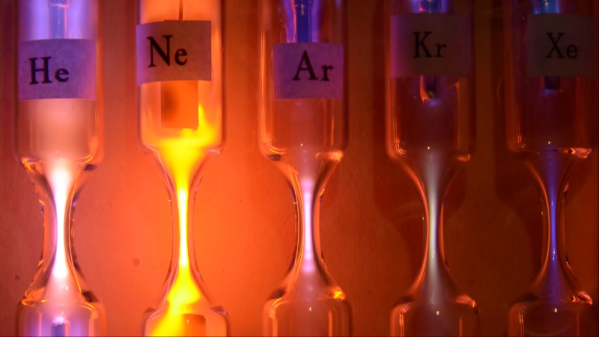
We always enjoy history videos from [The History Guy] but they don’t always cover technology history. When they do, though, we enjoy them twice as much as with the recent video he posted on the history of neon signs. Of course, as he points out, many neon lights don’t have actual neon in them — they use various noble gasses depending on the color you want. Sure, some have neon, but the name has stuck.

The back part of the video is more about the signs themselves, but the early portion talks about [William Ramsay], a Scot chemist who started extracting component gasses out of the atmosphere. The first one found was argon and then helium. Krypton and neon were not far behind. The other noble gas, Xenon, also fell to his experiments. He and another scientist won the Nobel for this work.

Continue reading “The History Of Neon Lights”

Projecting Moving Images In Air With Lasers

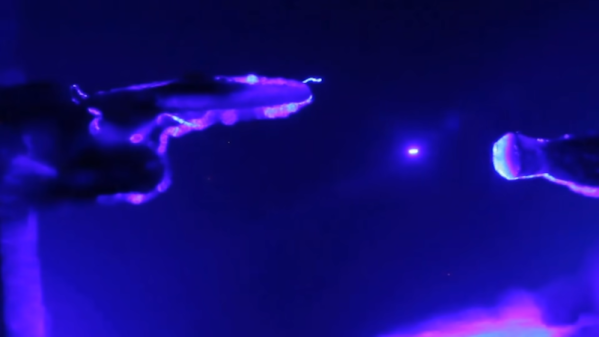
You’ve seen it a million times in science fiction movies and TV shows: a moving holographic display. From Princess Leia asking for help to virtual tennis on Total Recall, it is a common enough idea. [Dan Smalley]’s team at BYU has made progress in projecting moving 3D images in thin air. While they might not be movie quality, they are a start, and, after all, you have to start somewhere.

The display traps a small particle in the air with a laser beam and then moves that particle around, leaving behind an illuminated path in the air. You can see the effect in the video below. The full paper explains how a type of ray tracing allows the relatively small optical trap display to appear larger and more fluid. While it does make images seem to appear behind the display’s actual volume, it also requires eye tracking to work since the illusion only works from a certain perspective.

These are not, of course, technically holograms. That’s actually an advantage in some cases because holograms require a tremendous amount of data that increases rapidly as the size of a display scales up. The optical trap display uses a much more manageable data rate.

We’ve seen optical trap displays before. In fact, volumetric displays seem to be all the rage lately.

Continue reading “Projecting Moving Images In Air With Lasers”