Learn IC Decapping

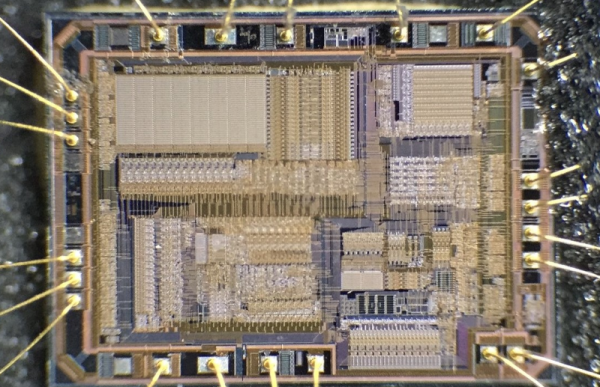
Decapsulating ICs used to be an exotic technique. (I should know, I did that professionally for one of the big IC vendors back in the 1980s.) These days, more and more people are learning to take apart ICs for a variety of reasons. If you are interested in doing it yourself, [Juan Carlos Jimenez] has a post you should read about using acid to remove epoxy from ICs.

[Juan Carlos] used several different techniques with varying degrees of success. Keep in mind, that using nitric acid is generally pretty nasty. You need safety equipment and be sure to plan for bad things to happen. Have eyewash ready because once you splash acid in your eye, it is too late to get that together.

Continue reading “Learn IC Decapping” →

Thinking About Creating A Raspberry Pi Replacement?

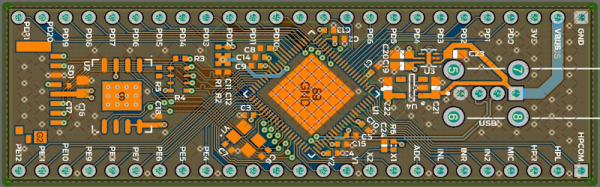
If you’ve ever wanted to try your hand at creating a Raspberry Pi-like board for yourself, you should check out [Jay Carlson’s] review of 10 different Linux-capable SoCs. Back in the 1960s, a computer was multiple refrigerator-sized boxes with thousands of interconnections and building one from scratch was only a dream for most people. Then ICs came and put all the most important parts in a little relatively inexpensive IC package and homebrew computing became much more accessible. Systems on Chip (SoC) has carried that even further, making it easier than ever to create entire systems, like the Pi and its many competitors.

Only a few years ago, making an SoC was still a big project because the vendors often didn’t want to release documentation to the public. In addition, most of the parts use ball grid array (BGA) packaging. BGA parts can be hard to work with, and require a multilayer PC board. Sure, you can’t plug these into a typical solderless breadboard. But working with these relatively large BGAs isn’t that hard and multilayer boards are now comparatively cheap. [Jay] reports that he got cheap PCBs and used a hot plate to build each board, and has some sage advice on how to do it.

Continue reading “Thinking About Creating A Raspberry Pi Replacement?” →

Let KiCad And Python Make Your Coils

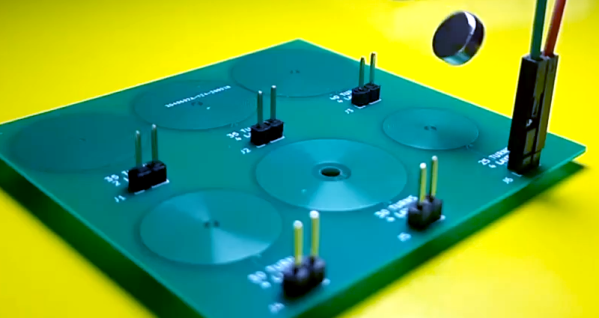
We like to pretend that our circuits are as perfect as our schematics. But in truth, PCB traces have unwanted resistance, capacitance, and inductance. On the other hand, that means you can use those traces to build components. For example, it isn’t uncommon to see a very small value current sense resistor be nothing more than a long PC board trace. Using PC layers for decoupling capacitance and creating precise transmission lines are other examples. [IndoorGeek] takes us through his process of creating coils on the PCB using KiCad. To help, he used a Python script that works out the circles, something KiCAD has trouble with.

The idea is simple. A coil of wire has inductance even if it is a flat copper trace on a PCB. In this case, the coils are more for the electromagnetic properties, but the same idea applies if you wanted to build tuned circuits. The project took inspiration from FlexAR, an open-source flexible PCB magnet.

Continue reading “Let KiCad And Python Make Your Coils” →

Does Your Phone Need A RAM Drive?

Phones used to be phones. Then we got cordless phones which were part phone and part radio. Then we got cell phones. But with smartphones, we have a phone that is both a radio and a computer. Tiny battery operated computers are typically a bit anemic, but as technology marches forward, those tiny computers grew to the point that they outpace desktop machines from a few years ago. That means more and more phones are incorporating technology we used to reserve for desktop computers and servers. Case in point: Xiaomi now has a smartphone that sports a RAM drive. Is this really necessary?

While people like to say you can never be too rich or too thin, memory can never be too big or too fast. Unfortunately, that’s always been a zero-sum game. Fast memory tends to be lower-density while large capacity memory tends to be slower. The fastest common memory is static RAM, but that requires a lot of area on a chip per bit and also consumes a lot of power. That’s why most computers and devices use dynamic RAM for main storage. Since each bit is little more than a capacitor, the density is good and power requirements are reasonable. The downside? Internally, the memory needs a rewrite when read or periodically before the tiny capacitors discharge.

Although dynamic RAM density is high, flash memory still serves as the “disk drive” for most phones. It is dense, cheap, and — unlike RAM — holds data with no power. The downside is the interface to it is cumbersome and relatively slow despite new standards to improve throughput. There’s virtually no way the type of flash memory used in a typical phone will ever match the access speeds you can get with RAM.

So, are our phones held back by the speed of the flash? Are they calling out for a new paradigm that taps the speed of RAM whenever possible? Let’s unpack this issue.

Continue reading “Does Your Phone Need A RAM Drive?” →

Free P2P VPN

People use a VPN — virtual private network — for a lot of reasons. However, for many people it is synonymous with hiding your network traffic, one thing that VPN can do. FreePN is a relatively new open source project that aims to build a free peer-to-peer VPN network. Like TOR, it is decentralized.

Right now, you can download for Ubuntu and Gentoo. There is a way to ask for early access for Debian, Fedora, and Arch. Windows, iOS, MacOS, and Android versions are promised for the future.

Continue reading “Free P2P VPN” →

Polymer Networks Make Better 3D Prints

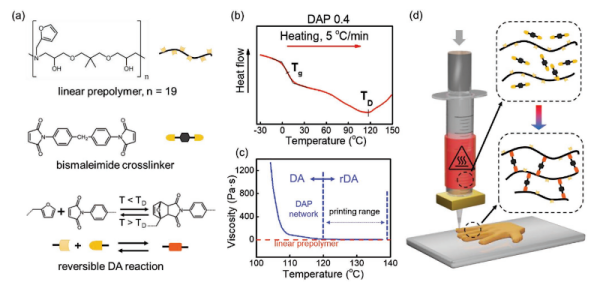
Biological machines such as human and animal bodies are quite incredible. Your body seamlessly incorporates materials as different as muscle, bone, and tendons into an integrated whole. Now Texas A&M researchers think they can imitate nature using polymer networks that have a tunable stiffness. As a bonus, similar to biological devices, the material spontaneously self-heals.

The trick relies on the Diels-Alder reaction which is a cycloaddition reaction of a conjugated diene to an alkene. Diels-Alder-based polymers or DAPs will bond together even when they have different physical characteristics and they undergo a reversible reaction to heat which offers shape-memory and healing capability.

Continue reading “Polymer Networks Make Better 3D Prints” →

Low-Level Academy Gets Into Details

We often say that you don’t have to know how an engine works to drive a car, but you can bet that every driver at the Indy 500 knows exactly how it works. You could say the same for computers. You don’t need to understand the details, but it really helps, especially if something goes wrong. [Low-Level Academy] has an online class where you can program in Rust inside your browser to learn about low-level TCP and UDP networking details.

Just how low it goes, we aren’t exactly sure, yet. There are three of eight modules ready to go. The first three cover number encoding, exchanging messages with UDP, and fragmentation. Reliability, routing, server programming, TCP, and HTTP are not out yet, but the ultimate project is a web server. In addition, new modules are released to sponsors first, so the fragmentation module for example won’t be available for a few more days. While that seems unorthodox, it is no different than having to wait for an HBO show to show up on basic cable in reruns.

Continue reading “Low-Level Academy Gets Into Details” →