Visualizing Eddy Currents

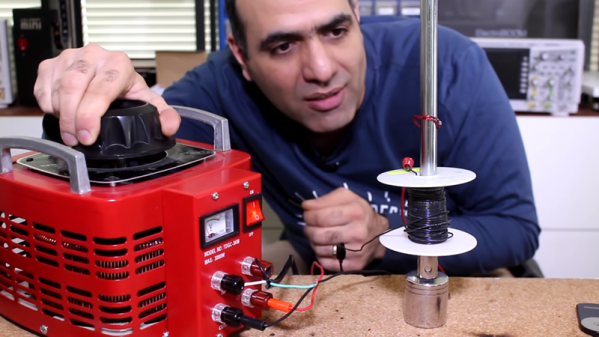
If [Electroboom] gives up making videos and decides to become a lounge lizard in the Poconos, we hope he adopts the stage name Eddy Currents. However, he is talking about eddy currents in his recent video post that you can see below.

We know he doesn’t really think he can get the magnet to slow down with one sheet of aluminum foil and that he stages at least most of his little electric accidents, but we still enjoy watching it. Meanwhile, he also has a good explanation of why a copper pipe will slow down a magnet and how eddy current affects transformer efficiency.

Continue reading “Visualizing Eddy Currents”

Flux Engine Reads Floppies

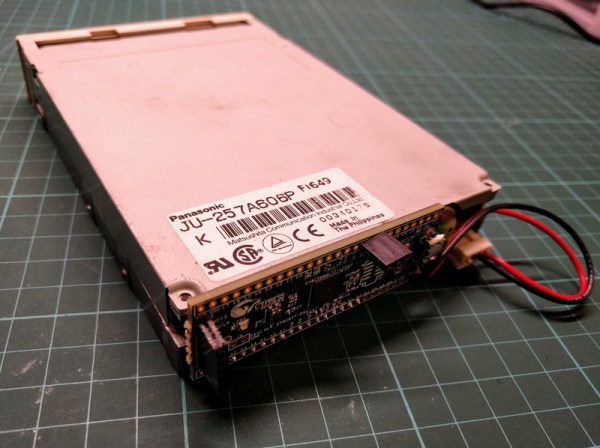
It is a bit of a paradox that we are storing more and more information digitally, yet every year more and more of it is becoming harder to access. Data on a variety of tapes and disks that were once common, is now trapped on media due to lack of hardware to read it. Do you have a ZIP drive? Do you have a computer that it will work with? Floppies are problem too. You might think you beat the system just by having a USB floppy drive. While these do exist, they typically won’t read oddball formats. That is, except for Flux Engine, an open source USB floppy drive.

The device uses a $15 Cypress development board and just some wiring (along with a 3.5 or 5.25 floppy drive, of course). Currently, the firmware only supports read only access to IBM standard disks and Acorn DFS/ADFS disks. It can also read and write Brother word processor disks. However, being open source, it could do more. The author, [David Given], is looking for Commodore 1541 and Apple CLV disks to borrow so he can get those working. He’s also offered to entertain other formats if you are willing to loan him a disk.

The software uses libusb and is known to work on Linux and Windows with Cygwin. It should also work with OSX. However, you will need a Windows box of some sort to build the Cypress firmware because the Cypress tools won’t work anywhere else. [David] wants to change processors because of this, but if he does, he’ll miss the PSoC function blocks, we are guessing.

The design is actually rather simple. The firmware only measures the time between flux transitions and sends them to the attached PC. All the heavy lifting occurs on the PC, which means it should be pretty easy to analyze and decode new formats. While writing is possible, it appears there is more work that needs to happen to make it reliable. [David] comments that you really need a real drive to test your writing with so you don’t write things only you can read back. Makes sense.

This certainly is more user-friendly than the last method we looked at. We had to wonder if [David] has thought about 8-inch floppies.

Bell Labs, Skunk Works, And The Crowd Sourcing Of Innovation

I’ve noticed that we hear a lot less from corporate research labs than we used to. They still exist, though. Sure, Bell Labs is owned by Nokia and there is still some hot research at IBM even though they quit publication of the fabled IBM Technical Disclosure Bulletin in 1998. But today innovation is more likely to come from a small company attracting venture capital than from an established company investing in research. Why is that? And should it be that way?

The Way We Were

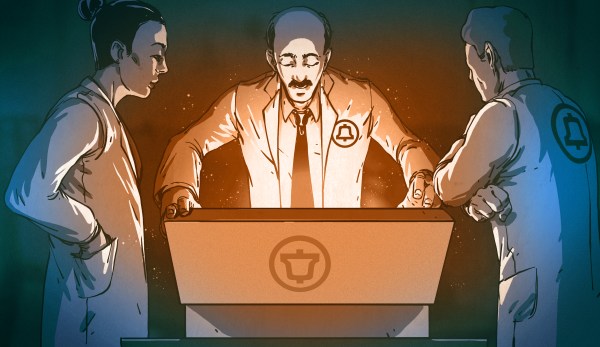
There was a time when every big company had a significant research and development arm. Perhaps the most famous of these was Bell Labs. Although some inventions are inevitably disputed, Bell Labs can claim radio astronomy, the transistor, the laser, Unix, C, and C++ among other innovations. They also scored a total of nine Nobel prizes.

Bell Labs had one big advantage: for many years it was part of a highly profitable monopoly, so perhaps the drive to make money right away was less than at other labs. Also, I think, times were different and businesses often had the ability to look past the next quarter.

Continue reading “Bell Labs, Skunk Works, And The Crowd Sourcing Of Innovation”

MIT IAP Tackles Radio

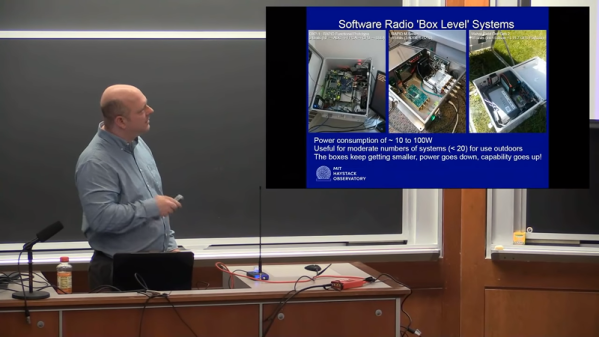
MIT is well known for rigorous courses, but they also have a special four-week term at the start of each year called the IAP — Independent Activities Period. This year, the MIT Radio Society had several interesting presentations on both the history and application of radio. You weren’t there? No problem, as the nine lecture were all recorded for you to watch at your leisure. You can see one of the nine, below.

These aren’t some five minute quicky videos, either. They are basically live captures that run anywhere from an hour to almost two hours in length. The topics are a great mix including radio history, software-defined radio, propagation, radio astronomy, RADAR, and even 5G.

You might have to pick and choose. Some of the lectures are suitable for just about anyone. Some assume a bit more radio expertise in electronics or math. Still, they are all worth at least a cursory skim to see if you want to really sit and watch in detail. The only nitpick is that some presenters used a laser pointer that doesn’t show up on the inset slide graphics in the video. That makes sense because the inset slides are not really in the room, but it can make it a little difficult to understand what the speaker is pointing to on a crowded slide.

Of course, if you want to dive deep and you need more background, MIT — along with many other institutions — will let you use their learning material for free. We were especially fans of the circuits class but there are many others including just raw materials from OCW.

Continue reading “MIT IAP Tackles Radio”

Command Line Utilities… In The Cloud?

Although many people think of Linux-based operating systems as graphical, really that GUI is just another application running over the bare operating system. Power users, remote administrators, and people running underpowered computers like a Raspberry Pi have a tendency to do more with command line tools. [Igor] did a FOSDEM19 presentation you can see below about how he’s providing web-like services to the command line using web servers and curl as a client.

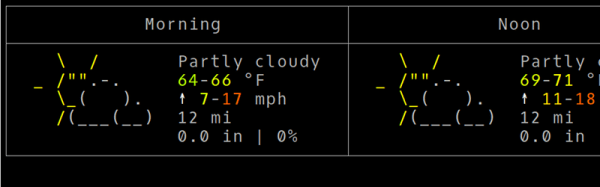
This is subtly different from just accessing an ordinary web server via curl. The output is meant for display in the terminal. Of course, you could also hit them with a web browser, if you wanted — at least, for some of them. [Igor’s] tools include a weather reporter, a QR code encoder, information and graphs for currency and cybercurrency rates, and an online help system for programmers.

Continue reading “Command Line Utilities… In The Cloud?”

Understanding Math Rather Than Merely Learning It

There’s a line from the original Star Trek where Khan says, “Improve a mechanical device and you may double productivity, but improve man and you gain a thousandfold.” Joan Horvath and Rich Cameron have the same idea about improving education, particularly autodidacticism or self-learning. They share what they’ve learned about acquiring an intuitive understanding of difficult math at the Hackaday Superconference and you can watch the newly published video below.

The start of this was the pair’s collaboration on a book about 3D printing science projects. Joan has a traditional education from MIT and Rich is a self-taught guy. This gave them a unique perspective from both sides of the street. They started looking at calculus — a subject that scares a lot of people but is really integral (no pun intended) to a lot of serious science and engineering.

You probably know that Newton and Leibniz struck on the fundamentals of calculus about the same time. The original papers, however, were decidedly different. Newton’s approach was more physical and less mathematical. Leibniz used formal logic and algebra. Although both share credit, the Leibniz notation won out and is what we use today.

Continue reading “Understanding Math Rather Than Merely Learning It”

In Space, No One Can Hear You Explode: The Byford Dolphin Incident

“It wouldn’t happen that way in real life.” One of the most annoying habits of people really into the “sci” of sci-fi is nitpicking scientific inaccuracies in movies. The truth is, some things just make movies better, even if they are wrong.

What would Star Wars be without the sounds of an epic battle in space where there should be no sound? But there are plenty of other examples where things are wrong and it would have been just as easy to get them right — the direction of space debris in the movie Gravity, for example. But what about the age-old trope of explosive decompression? Some movies show gross body parts flying everywhere. Others show distressed space travelers surviving in space for at least brief periods.



It turns out, dropping pressure from one atmosphere to near zero is not really good for you as you might expect. But it isn’t enough to just make you pop like some meat balloon. You are much more likely to die from a pulmonary embolism or simple suffocation. But you are a meat balloon if you experience a much greater change in pressure. How do we know? It isn’t theoretical. These things have happened in real life.

Continue reading “In Space, No One Can Hear You Explode: The Byford Dolphin Incident”