ILLIAC Was HAL 9000’s Granddaddy

Science fiction is usually couched in fact, and it’s fun to look at an iconic computer like HAL 9000 and trace the origins of this artificial intelligence gone wrong. You might be surprised to find that you can trace HAL’s origins to a computer built for the US Army in 1952.

If you are a fan of the novel and movie 2001: A Space Oddessy, you may recall that the HAL 9000 computer was “born” in Urbana, Illinois. Why pick such an odd location? Urbana is hardly a household name unless you know the Chicago area well. But Urbana has a place in real-life computer history. As the home of the University of Illinois at Urbana–Champaign, Urbana was known for producing a line of computers known as ILLIAC, several of which had historical significance. In particular, the ILLIAC IV was a dream of a supercomputer that — while not entirely successful — pointed the way for later supercomputers. Sometimes you learn more from failure than you do successes and at least one of the ILLIAC series is the poster child for that.

The Urbana story starts in the early 1950s. This was a time when the 1945 book “First Draft of a Report on the EDVAC” was sweeping through the country from its Princeton origins. This book outlined the design and construction of the Army computer that succeeded ENIAC. In it, Von Neumann proposed changes to EDVAC that would make it a stored program computer — that is, a computer that treats data and instructions the same.
Continue reading “ILLIAC Was HAL 9000’s Granddaddy”

Reverse Engineering CMOS

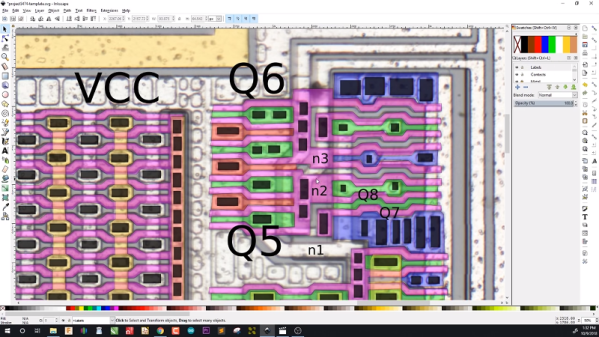
ICs have certainly changed electronics, but how much do you really know about how they are built on the inside? While decapsulating and studying a modern CPU with 14 nanometer geometry is probably not a great first project, a simple 54HC00 logic gate is much larger and much easier to analyze, even at low magnification. [Robert Baruch] took a die image of the chip and worked out what was going on, and shares his analysis in a recent video. You can see that video, below.

The CMOS structures are simple because a MOSFET is so simple to make on an IC die. The single layer of aluminum conductors also makes things simple.

Continue reading “Reverse Engineering CMOS”

Just In Time For Halloween: Another Talking Skull

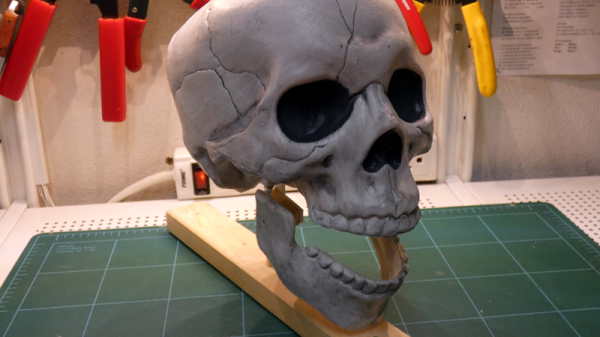
It isn’t a unique idea, but we liked [Eric Wiemers’s] take on the classic animated skull for Halloween. In addition to showing you the code and the wiring, the video spends some time discussing what the audio looks like and what has to happen to get it into a format suitable for the Arduino. You can see the spooky video, below.

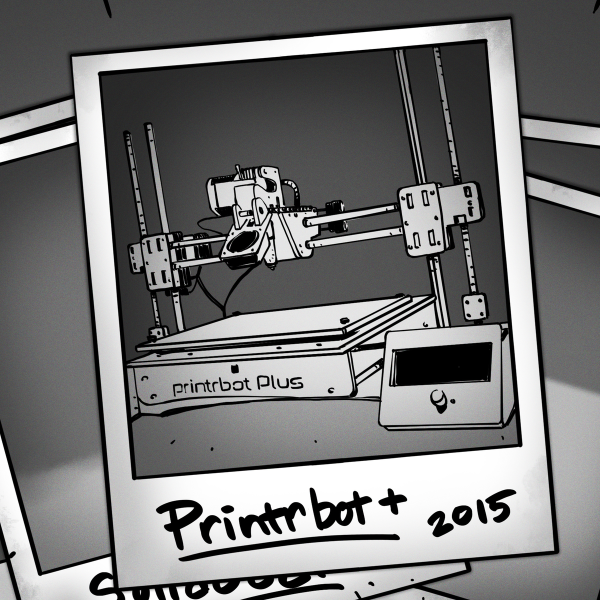
Of course, this is also a 3D printing project, although the skull is off-the-shelf. We wondered if he felt like a brain surgeon taking the Dremel to the poor skull. To fix the two parts of the device, he used brass threaded inserts that are heat set, something we’ve seen before, but are always surprised we don’t see more often.

Continue reading “Just In Time For Halloween: Another Talking Skull”

Hams See Dark Side Of The Moon Without Pink Floyd

Ham radio operators bouncing signals off the moon have become old hat. But a ham radio transmitter on the Chinese Longjiang-2 satellite is orbiting the moon and has sent back pictures of the Earth and the dark side of the moon. The transceiver’s main purpose is to allow hams to downlink telemetry and relay messages via lunar orbit.

While the photo was received by the Dwingeloo radio telescope, reports are that other hams also picked up the signal. The entire affair has drawn in hams around the world. Some of the communications use a modulation scheme devised by [Joe Taylor, K1JT] who also happens to be a recipient of a Nobel prize for his work with pulsars. The Dwingeloo telescope has several ham radio operators including [PA3FXB] and [PE1CHQ].

Continue reading “Hams See Dark Side Of The Moon Without Pink Floyd”

Glasses For The Hearing Impaired?

If you don’t have hearing loss, it is easy to forget just how much you depend on your ears. Hearing aids are great if you can afford them, but they aren’t like glasses where they immediately improve your sense in almost every way. In addition to having to get used to a hearing aid you’ll often find increased noise and even feedback. If you’ve been to a theater lately, you may have noticed a closed caption display system somewhere nearby that you can sit within visual range of should you be hard of hearing. That limits your seat choices though, and requires you to split your attention between the stage and the device. The National Theatre of London is using Epson smart glasses to put the captions right in your individual line of vision (see video below).

The Epson glasses are similar to the Google Glass that caused such a stir a few years ago, and it seems like such a great application we are surprised it has taken this long to be created. We were also surprised to hear about the length of the project, amazingly it took four years. The Epson glasses can take HDMI or USB-C inputs, so it seems as though a Raspberry Pi, a battery, and the glasses could have made this a weekend project.

Continue reading “Glasses For The Hearing Impaired?”

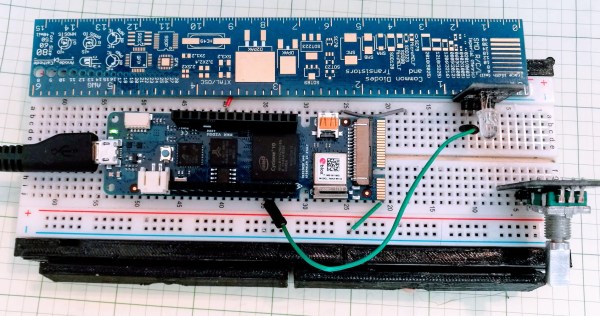
Flash: Arduino Vidor FPGA Instructions Hit France

If you speak French and you have an Arduino Vidor 4000, you are in luck because there’s some good news. The good news is there’s finally some inside information about how to configure the onboard FPGA yourself. The bad news though is that it is pretty sparse. If your high school French isn’t up to the task, there’s always Google Translate.

We knew some of this already. You’ll need Quartus, the FPGA design tool from Altera — er, Intel — and we know about the sample project on GitHub, too. Instead of using conventional Verilog or VHDL, the new information uses schematic capture, but that’s OK. All the design entry winds up in the same place, so it should be easy to adapt to the language of your choice. In fact, in part 2 they show both some schematics and some Verilog. Google Translate does have a little trouble with code comments, though. If you want something even stouter, there’s an example that uses Verilog to output a video frame.

Continue reading “Flash: Arduino Vidor FPGA Instructions Hit France”

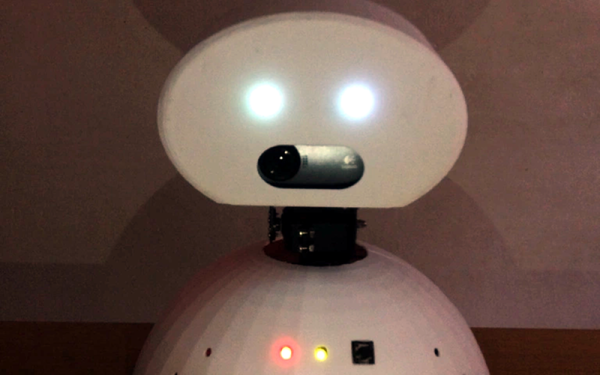
R3-14, The Personal Assistant Two Years In The Making

One of the great things about hacking together projects these days is how many powerful subsystems are readily available to reuse. [Sanjeet] took full advantage of a whole slate of reusable pieces when he built R3-14 — a personal assistant robot that you can see in action in the video below.

Many people started out in electronics building something simple like a crystal radio or an LED cube. But how far could you get if your projects had to begin at the most basic level, by drawing out copper wire, fabricating coils, capacitors, semiconductor devices, and batteries? Even if you know how to do all those things, it would take a lot of time, so there is no shame in using off-the-shelf components. By the same token, [Sanjeet] uses Google Assistant, 433 MHz RF transmitters, and a Raspberry Pi as components in this build. Along the way, he also contributed some reusable pieces himself, including an LED library for the PI and a library to allow Siri to control a Raspberry Pi.

Continue reading “R3-14, The Personal Assistant Two Years In The Making”