CNC Dummies For Routers

[This Old Tony] has a few videos that have made appearances on Hackaday. His latest one is CNC Dummies for Routers (see below). The subtitle, CNC Basics, is an honest one. If you’re already well versed in GCode and Mach 3, you probably won’t make it through the 14 minute video (although Tony is pretty entertaining even if you know what he’s talking about).

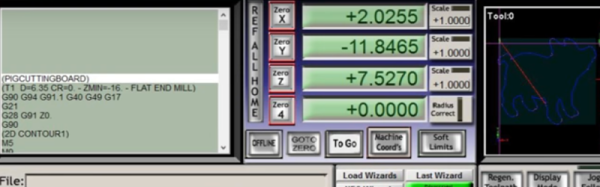
By his own admission, this is really CNC basics for hobby-grade CNC routers and mills. He starts off talking about his custom-built machine along with some common machines in the $500-$5000 range. He then gives a simple sketch of what GCode looks like.

Continue reading “CNC Dummies For Routers”

Raspberry Pi Radio Makes The Sweet Music Of Bacteria

We’ve noticed a lot of musical groups are named after insects. Probably has something to do with the Beatles. (If you study that for a while you’ll spot the homophonic pun, and yes we know that the Crickets inspired the name.) There’s also Iron Butterfly, Adam Ant, and quite a few more. A recent art project by a Mexican team — Micro-ritmos — might inspire some musical groups to be named after bacteria.

The group used geobacter — a kind of bacteria found in soil — a Raspberry Pi, an Arduino, and a camera to build an interesting device. As it looks at the bacteria and uses SuperCollider to create music and lighting from the patterns. You can see a video of Micro-ritmos, below.

Continue reading “Raspberry Pi Radio Makes The Sweet Music Of Bacteria”

Neural Network Keeps It Light

Neural networks ought to be very appealing to hackers. You can easily implement them in hardware or software and relatively simple networks can perform powerful functions. As the jobs we ask of neural networks get more complex, the networks require more artificial neurons. That’s why researchers are pursuing dense integrated neuron chips that could do for neural networks what integrated circuits did for conventional computers.

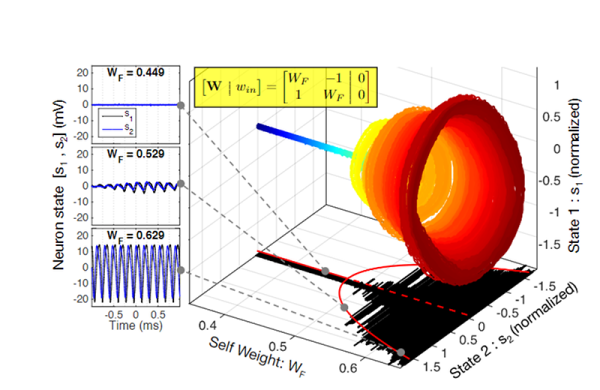
Researchers at Princeton have announced the first photonic neural network. We recently talked about how artificial neurons work in conventional hardware and software. The artificial neurons look for inputs to reach a threshold which causes them to “fire” and trigger inputs to other neurons.

To map this function to an optical device, the researchers created tiny circular waveguides in a silicon substrate. Light circulates in the waveguide and, when released, modulates the output of a laser. Each waveguide works with a specific wavelength of light. This allows multiple “inputs” (in the form of different wavelengths) to sum together to modulate the laser.

The team used a 49-node network to model a differential equation. The photonic system was nearly 2,000 times faster than other techniques. You can read the actual paper online if you are interested in more details.

There’s been a lot of work done lately on both neural networks and optical computing. Perhaps this fusion will advance both arts.

Open Source Pancakes

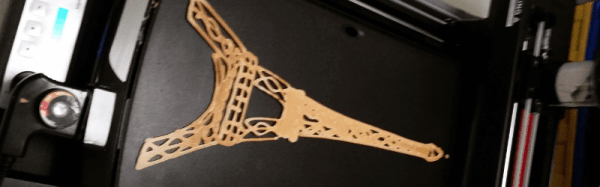
It is definitely a first world problem: What do you do when creating a custom pancake requires you to put a design on an SD card and plug it into your pancake printer? This is what was nagging at [drtorq]. Granted, since he works for a publication called “The Stack” maybe a pancake printer isn’t so surprising. [drtorq] built the custom PancakeBOT software on Linux as a start to his hacking on the flapjack creating robot.

[drtorq] promises more hacking on the printer in the future, so this is just step one. We expect the mods will be a lot like a typical 3D printer, except the heated bed is absolutely necessary on this model. The printer is more like a CNC engraver than a 3D printer since it is basically an XY carriage with a nozzle that flows batter instead of polymer.

Continue reading “Open Source Pancakes”

ZX81 Connects To The Network


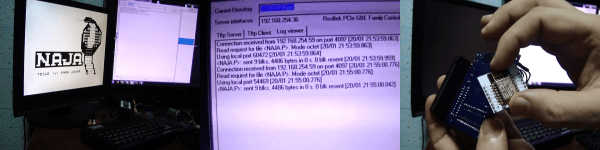
[Victor Trucco] makes us wish we spoke Portuguese. He’s done a lot of retrocomputing projects including connecting a ZX81 to the Internet to load programs. The project uses — what else — an ESP8266 to get the WiFi communications. You can see a video below if you want to exercise your high school Portuguese.

It is somewhat ironic that the ZX81’s CPU is kept busy driving the video, reading the keyboard, and running about just over 3 MHz which doesn’t even translate into 3 MIPS on that processor. Meanwhile, the “servant” ESP8266 has a 32-bit Tensilica CPU running at 80 MHz. Times have changed.

Continue reading “ZX81 Connects To The Network”

Victorian Mouse

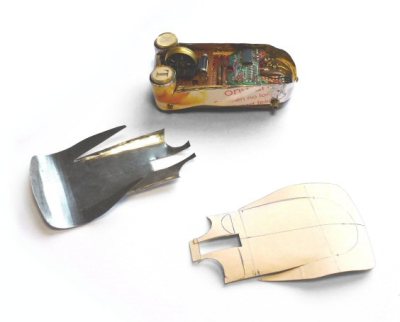
If Babbage had started the computer revolution early, we might have seen a mouse like the one [Peter Balch] created. He started with the guts from a USB wheeled mouse and some gears from an old clock movement. In addition to the big wheels to capture X and Y movement, the mouse buttons look like the keys from an old typewriter.

mechanical-mouse-magicWe were afraid the project would require advanced wood or metal working capability, but the bottom of the mouse is made from paper mache. The top and sides are cut from tinplate. Of course, the paint job is everything.


The electronics part is pretty simple, just hacking a normal mouse (although it is getting harder to find USB mice with mechanical encoders). However, we wondered if it would have been as simple to use an optical wireless mouse. That would leave the wheels just for show, but honestly, most people aren’t going to know if the wheels are useful or just ornamental, anyway.

If you don’t feel like gutting a mouse, but you still want USB, you could use an Arduino or similar board that can simulate a mouse. We’ve seen quite a few of those in the past. Now all you need is a matching keyboard.

Build Your Own EMI Probes

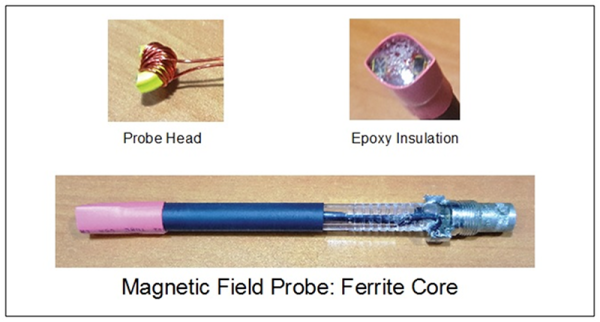
[Gerald Musy] wanted to investigate the source of electromagnetic interference (EMI) in his switching power supply design. Stymied by the high cost of EMI probes, he decided to build his own. Lucky for us, he wrote up his results of experimenting with four different designs.

The probes include an unshielded loop, a shielded loop, a ferrite core probe, and an electric field probe. None of these are especially complex to build–the ferrite core one is probably the most involved–you can see from the scope traces that the different probes pick up different information.

Continue reading “Build Your Own EMI Probes”