Color-Changing Sutures Detect Infection

If you’ve ever had surgery, you know firsthand how important it is to keep the wound from getting infected. There are special conductive sutures that sense changes in wound status via electrical signal and relay the information to a computer or smart phone. As awesome as those sound, they’re a first-world solution that is far too pricey for places that need it most — developing countries. And surgical wounds in developing countries are about four times more likely to get infected than those in the US.

Iowa high-school student [Dasia Taylor] found a much simpler solution that could drive down the infection rate. She used beets to develop color-changing sutures that turn from bright red to purple within five minutes if an infection is present.

Beets, and other fruits and vegetables like blackberries, plums, and blueberries are natural indicators of pH. They have a compound called anthocyanin that gives them both their pigment and this cool property. Beets are perfect because they change color at a pH of nine — the same pH level of infected human skin, which is normally around five.

[Dasia] experimented with several types of suture thread to see which ones would absorb the beet juice in the first place. She settled on a cotton-polyester blend that is braided. While it probably helps absorb the beet juice, it would also give bacteria several places to hide. Another problem is that many surgeries involve cutting muscle, too, and by the time a deeper infection would show up on the sutures, it would be pretty late in the game. But if these color-changing sutures can be made to be cost-effective, safe for skin, and of course, keep wounds together, this solution is way better than nothing at all and definitely worth producing. You can see [Dasia] talk about her project in the video below.

Want to know more about natural pH indicators? Sure you do.

Continue reading “Color-Changing Sutures Detect Infection”

Hiding Behind The Silkscreen: The Carolinacon 2021 Badge Has A Secret

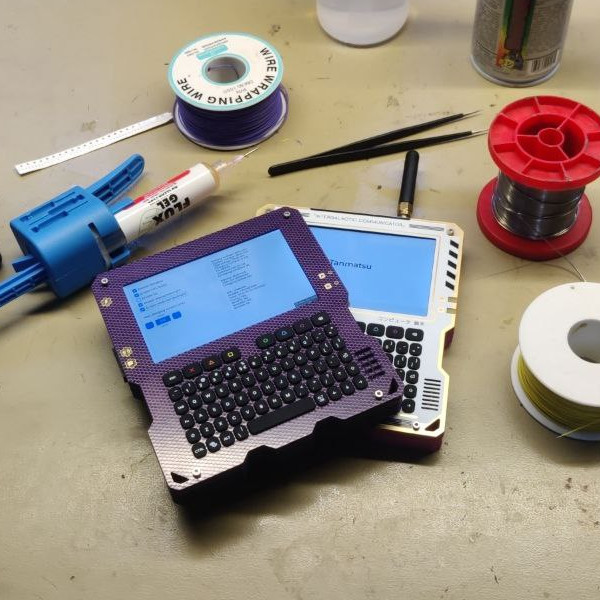
The pandemic may have taken away many of our real-world events, but as they’ve gone online their badge teams have often carried on regardless. One of these comes from Carolinacon, and it’s decided to eschew the bleeding edge of electronic wizardry and instead push slightly at the boundaries of PCB art. It contains a hidden message in a copper layer behind a band of white silkscreen, which is revealed by a set of LEDs on the reverse of the board shining through the translucent FR4.

Electronics-wise it’s a pretty simple design, sporting only an ATtiny microcontroller and a photoresistor alongside the LEDs, and with the secret message being triggered when the badge is placed in the dark. The conference’s pig logo is eye-catching, but it has no pretences towards being a dev board or similar. The technique of LEDs behind copper and silkscreen is an interesting one though, and something that we think could bear more investigation in future designs. It’s pleasing to see that there are still new avenues to be taken in the world of PCB-based art.

This isn’t the first time this event has had an eye-catching badge, we’ve covered one of their previous offerings.

3D Printer As Robot: The Functograph

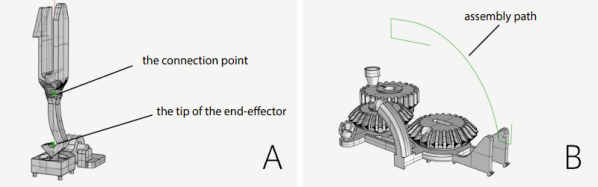
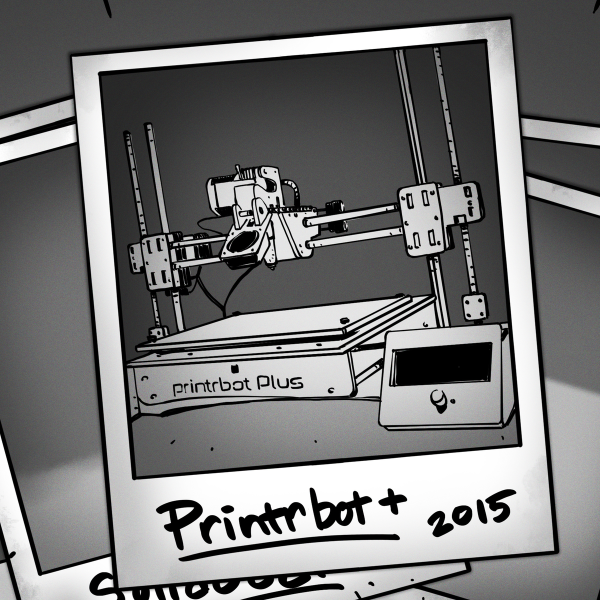
A 3D printer is really a specialized form of robot. Sure, it isn’t exactly Data from Star Trek, but it isn’t too far from many industrial robots. Researchers from Meiji University made the same observation and decided to create a 3D printer that could swap a hot end for other types of robotic manipulators. They call their creation the Functgraph. (Video, embedded below.)

Some of the tasks the Functgraph can do including joining printed parts into an assembly, breaking support material, and more. The surprise twist is that — unlike traditional tool change schemes — the printer prints its own end effectors together with the print job and picks them up off the build plate.

Continue reading “3D Printer As Robot: The Functograph”

Satellite Ground Station Upcycles Trash

While the term “upcycle” is relatively recent, we feel like [saveitforparts] has been doing it for a long time. He’d previously built gear to pick up low-Earth orbit satellites, but now wants to pick up geosynchronous birds which requires a better antenna. While his setup won’t win a beauty contest, it does seem to work, and saved some trash from a landfill, too. (Video, embedded below.)

Small dishes are cheap on the surplus market. A can makes a nice feedhorn using a classic cantenna design, although that required aluminum tape since the only can in the trash was a cardboard oatmeal carton. The tape came in handy when the dish turned out to be about 25% too small, as well.

Continue reading “Satellite Ground Station Upcycles Trash”

Ford And HP Teamed Up To Drive Down Plastic Waste

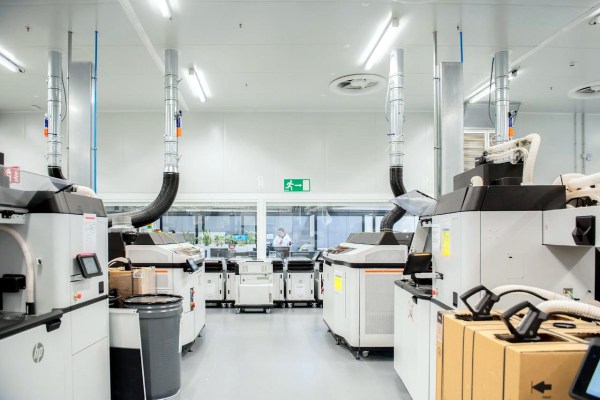
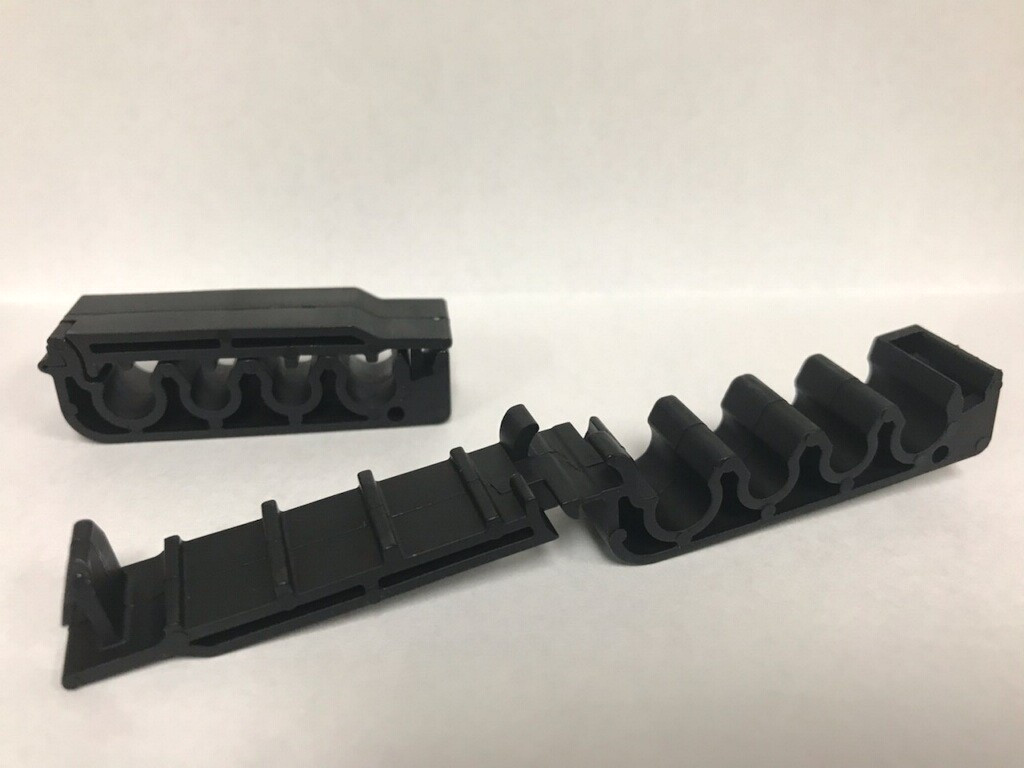
This mass manufacturer movement towards electric cars is one thing, but what about sustainability on the plastic part production line? Ford and HP have teamed up to turn used 3D printed parts and powders into pellets that will be fodder for injection-molded parts — specifically the fuel-line clips for Super Duty F250 trucks.

Two of the sustainably-made fuel clips.

According to Ford’s press release, their goal is to reach 100% sustainable materials in all their vehicles, not just the diesel-drinking Super Duty. Their research team found ten other Fords whose existing fuel-line clips could instead be made sustainably, and the company plans to implement the recycled plastic clips on all future models.

There are all sorts of positives at play here: the recycled clips cost 10% less to make and end up weighing 7% less than traditionally-made clips, all the while managing to be more chemical and moisture resistant.

And so much plastic will be kept out of landfills, especially once this idea takes off and more manufacturers get involved with HP or form other partnerships. One of the sources of Ford’s plastic is Smile Direct Club, which has 60 printers cranking out over 40,000 dental aligners every day.

There’s more than one way to combine 3D printing and sustainability. Did someone say fungal sound absorbers?

[Images via Ford]

Reverse Engineering Silicon, One Transistor At A Time

Many of will have marveled at the feats of reverse engineering achieved by decapping integrated circuits and decoding their secrets by examining the raw silicon die. Few of us will have a go for ourselves, but that doesn’t stop the process being a fascinating one. Fortunately [Ryan Cornateanu] is on hand with a step-by-step description of his journey into the art of decapping, as he takes on what might seem an unlikely subject in the form of the CH340 USB to serial chip you’ll find on an Arduino Nano board.

Starting with hot sulphuric acid is probably not everyone’s idea of a day at the bench, but having used it to strip the epoxy from the CH340, he’s able to take a look under the microscope. This is no ordinary microscope but a metallurgists instrument designed to light the top of the sample from one side with polarised light. This allows him to identify an area of mask ROM and zoom in on the transistors that make each individual bit.

At this point the chemistry moves into the downright scary as he reaches for the hydrofluoric acid and has to use a PTFE container because HF is notorious for its voracious reactivity. This allows him to take away the interconnects and look at the transistor layer. He can then with a bit of computer vision processing help extract a bit layer map, which with some experimentation and guesswork can be manipulated into a firmware dump. Even then it’s not done, because he takes us into the world of disassembly of what is an unknown architecture. Definitely worth a read for the armchair chip enthusiast.

If you’re thirsty for more, of course we have to direct you towards the work of [Ken Shirriff].

This Vintage LED Matrix Lives In A Gold Bathtub

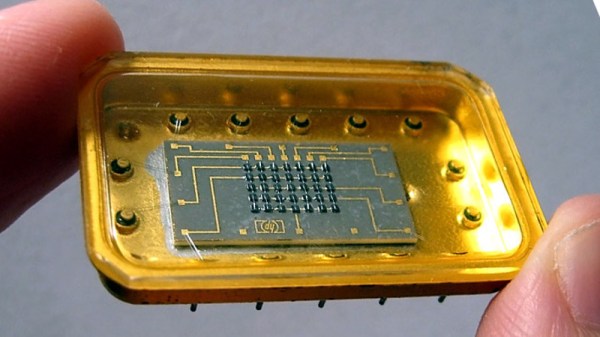
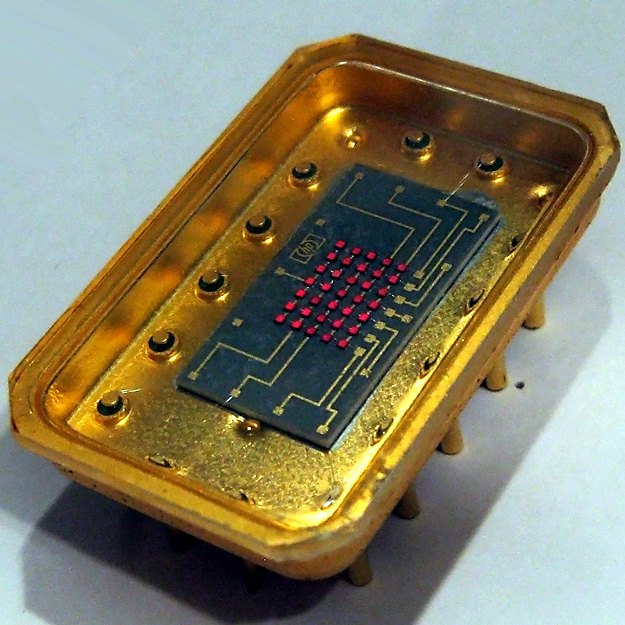
Early LED displays came in all sorts of configurations. Because the LED was fairly new technology, all kinds of ideas were getting tried, and with all that work there was plenty of opportunity for hardware that didn’t make the cut to fall into obscurity. That’s exactly what happened to the Hewlett-Packard 5082-7002, a 5×7 LED matrix display with something many of its brethren didn’t: an oversized gold tub to sit in.

It doesn’t seem that these displays were ever used in any actual products, and its origins are a mystery, but the device itself was nevertheless assigned an HP part number. Beyond that, not much is known about them, but [Industrial Alchemy] reminds us that many early LED devices were poorly documented and never produced in any real quantities. They became forgotten hardware, waiting to be rediscovered.

The 5082-7002 has a oversized gold tub that makes the 5×7 LED matrix mounted inside look puny by comparison, and reading any display made from these units would be difficult because the large size of the device would mean a lot of empty space between each character or digit. But it’s definitely got a striking look to it, no doubt about that.

What’s neat is that the 5802-7002 actually showed up in a video we featured with a look back at cool old LED technology. If you would like to (briefly) see the HP 5802-7002 a bit closer under a microscope, here is a link to the video, cued to 2:19.