Haiku OS Releases Beta 6

After just a little over 25 years of the Haiku project trying to keep the BeOS spirit alive, the team has now released Beta 6. The spicy details of what is now all better can naturally be found in the detailed release notes. Part of the size of these release notes is due to the previous beta release being two years ago, though nightly builds have kept Haiku users appeased in the meantime.

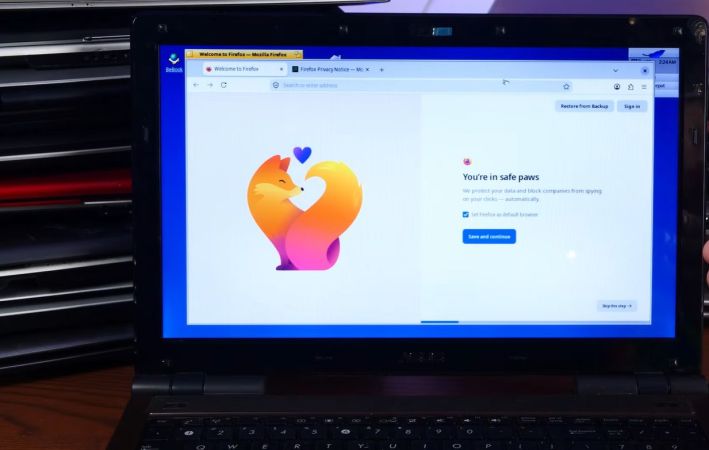
The headline features that are new compared to the previous release include the ability to run the Firefox browser and derivatives, QEMU hardware virtualization using the NetBSD Virtual Machine Monitor (NVMM), improved POSIX and hardware compatibility, as well as many bug fixes. Unfortunately 64-bit ARM support still has to wait a bit longer.

Naturally, such a joyful new release wouldn’t go unnoticed by [Action Retro], who decided to celebrate by installing this new release on a stack of old laptops that he bought for a dollar each. With system requirements starting at a Pentium II with 256 MB of RAM, it’s very zippy to install and boot on. As [Action Retro] noticed, a fresh install on a random 2000s Asus laptop both WiFi and audio worked out of the box.

Wrestling through his e-waste pile of laptops, the functional laptops provided a pretty good experience, making these at least an excellent target for a fresh Haiku install as a daily driver.

We looked at Beta 5 and the nightlies back in 2024, with recently attempts being made to port Nvidia GPU drivers to Haiku, with good results.
Continue reading “Haiku OS Releases Beta 6”

Building An Airsoft Claymore Mine

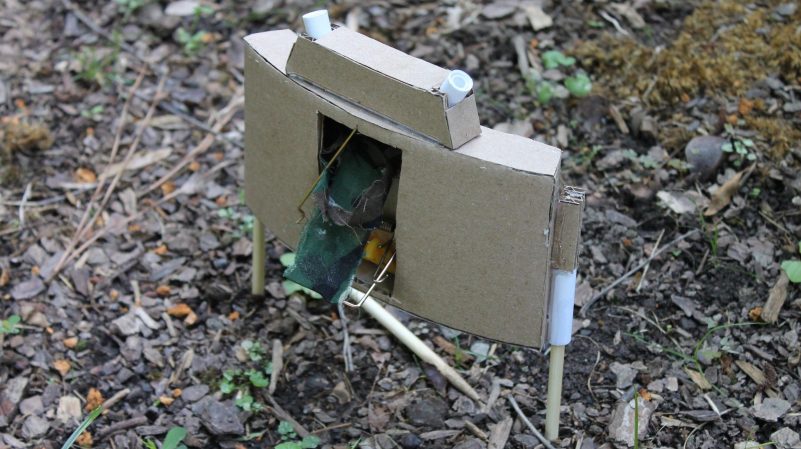
The Claymore mine is a rather fearsome weapon of war, using explosives to blast a cone of shrapnel towards advancing enemies. It’s not really something you should try and build at home. An airsoft version, though, is altogether more appropriate. [RegiBlackwood] has developed a simple way to build exactly that.

It’s a cheap and cheerful build, with the claymore housing itself built out of cardboard. Wooden dowels are used to stake it into the ground, just like the real thing. In the center of the housing sits a regular old mouse trap. Only, it’s been modified to hold a sling carrying a payload of BBs. The trap is also tweaked to make its spring more powerful, and to enable it to be triggered with the tug of a tripwire. When triggered, the mousetrap fires and hurls the sling forth, spewing a rain of BBs from the front of the device—ideally quelling the advance on your position.

Built properly, it’s a fun piece of airsoft hardware that could really change the dynamics of your regular game. If you’re looking to do point defence, you might also consider building yourself some automated turrets as well…

How Gold Plastic Syndrome Is Killing Toys And Game Consoles

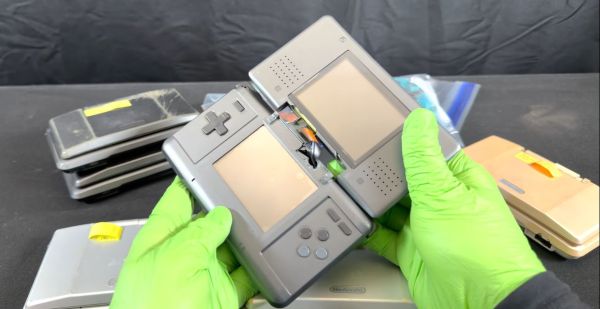
In a recent video [Sqwerks] does a deep-dive into the problem of disintegrating plastic enclosures of Nintendo DS consoles. These original NDS handheld consoles have a metallic-like coating that appears to interact with the ABS plastic, causing yellowing as well as extreme brittleness and correspondingly broken hinges. Unsurprisingly, this causes the shell to essentially disintegrate the moment you try to disassemble them for something like a screen replacement.

While somewhat the opposite of plasticizer migration into ABS from PVC insulation that we covered before, the underlying cause is probably similar, with the Transformers toy community having come to call it Gold Plastic Syndrome (GPS) based on the fact that it were mostly gold-colored parts on these plastic toys that seemed to be affected. Over time the additives used to add a cool metal sheen and swirls to the plastic appear to interact in a way that makes the ABS plastic very brittle.

Although the underlying cause of GPS doesn’t appear to be known yet, the Transformers community has documented this happening since the late 1980s and into the early 2000s, with even reports that some toys from the mid-2010s suffer from this. Whatever the underlying cause of GPS is, the result is always the same, with disintegrating brittle plastic and often a powdery residue.

In the case of NDS consoles, replacing the affected shell with a third-party replacement is still a viable option today, with [Sqwerks] recommending this solution. For other enclosures and toys where the plastic effectively is the toy, it might be that all we can do is watch them slowly disintegrate until we figure out how to revert GPS.

Continue reading “How Gold Plastic Syndrome Is Killing Toys And Game Consoles”

Reactive Heat And Wind Come To VR, Thanks To Smart Plugs

Want to feel the heat of nearby fire, explosions, or radiation? Or even just the gentle warmth and breeze of a sunny day in the wasteland? If you said yes, you’re in luck because [GingasVR] created an immersive heat mod and wind mod for the VR version of Fallout 4 that leverages economical smart outlets and game scripting to do just that.

The heart of this hack lies in gluing two things that don’t normally go together. In this case [GingasVR] uses a bit of game scripting to control TP-Link HS100 or HS110 Smart Plugs, allowing virtual events to control things in the real world. An ordinary fan in a smart plug creates wind on demand, and heat comes from a 250 watt infrared heat lamp aimed toward the player. For heat, an IR lamp is the way to go because it’s highly directional, can be quickly cycled on and off, and responds rapidly.

The range of immersive effects opened up by this is pretty compelling. Sunny weather yields a gentle glow of warmth, but nearby explosions cause a short full-blast flash of heat. The heat of fires also grows and fades with proximity. This being Fallout, [GingasVR] ensured local radiation has an effect on the heat level as well. Want to see it in action? She briefly explains around the 3:20 mark in this video.

Using ordinary appliances and smart plugs controlled from within VR to modify environmental effects is clever, and we like that it’s entirely nondestructive. The scripting mod for the game doesn’t overwrite any game files, and the hardware used requires no modifications.

Not into Fallout? [GingasVR] has similar Skyrim VR mod, if that’s more your bag. And if you’re modding Skyrim VR anyway, consider adding a “meditation device” headband to make magic respond to your actual state of mind.

Hackaday Europe 2026: Playstation 4 To Psychometer

There are many ways to detect stress in an individual. You can use self-reporting checklists, you could try and measure various vital signs like respiratory rate and pulse and infer things, or you could observe the levels of hormones like cortisol in the blood.

Or… you could pull some parts out of a Playstation 4, and get hacking. Edwin Hwu did precisely that, creating a device that can image the skin down to the nanometer and potentially even determine fine details about an individual’s health status. He came to Hackaday Europe 2026 to tell us all about it.

Continue reading “Hackaday Europe 2026: Playstation 4 To Psychometer”

It’s Teletext, But On The Radio

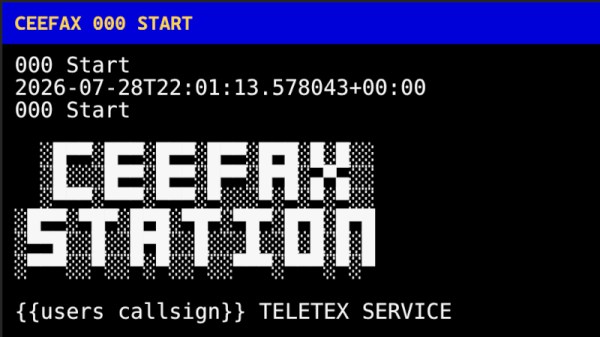
Old-school teletext with its pixelated text and block graphics may now be largely a thing of the past, but that doesn’t mean it’s without enthusiasts or there’s no more life in the idea. [M7TJF] has a project which takes teletext and puts it on amateur radio through the magic of AX.25. It’s called CEEFAX Station, in honor of the BBC’s teletext offering from back in the day.

What you get is a Linux package or a Windows executable, which you run and presumably hook the computer up to a radio. It can either be a transmitting node or a receiving one for browsing pages, and there’s an online map to track who’s doing either and on what frequencies. This is all brand new so there’s not much on there at the moment, but we expect that as people try this mode, this will change.

Sadly it’s a little unclear on how the protocol works and how the pages are encoded, but it’s early days. Meanwhile if you hanker for the real thing, it’s still about in some places.

PETG: The PLA Filament Alternative That Just Works

A typical response to the previous article on why PLA filament is so darn brittle. This has led some people to not use PLA filament at all, while others promote using PLA only for prototyping and throw-away parts, especially in light of PLA being compostable under the right conditions. For many mechanical parts, people turn to PETG.

Much like the PET polymer used for everything from food containers to drink bottles, PETG is durable, more resistant to degradation through mechanisms like hydrolysis and its filament form doesn’t need to be coddled like PLA does. PETG, on the other hand, tends to come from crude oil and shrugs at industrial composting conditions.

In terms of durability, degradation mechanisms and recyclability, is PETG the basic FDM filament which we should all just be using?

Continue reading “PETG: The PLA Filament Alternative That Just Works”