Double The VRAM Of An RTX 3070

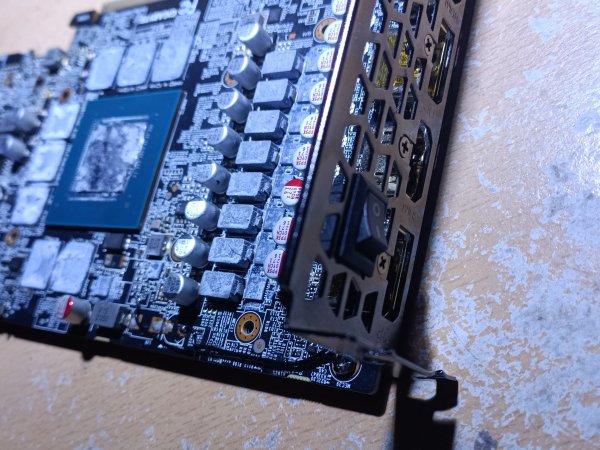
Modern games are quite often limited by the amount of volatile memory available to the GPU. Games can require many gigabytes of data during the rasterization process. So the obvious solution for better performance would be to buy a faster GPU, right? Well, not for [AssassinWarlord], who decided to find just what happens when you double the VRAM on an RTX 3070. The forum post is in German, but a translator gets the job done rather nicely.

For those of you following along at home, you will need a set of eight Samsung K4ZAF325BM-HC16 GDDR6 memory modules. In this case, the memory modules were salvaged from an AMD RX6900XT with a defective core. Naturally, you will need to re-ball the chips. To help the process, [AssassinWarlord] bought a stencil from AliExpress, with a 3D-printed holder for the memory modules.

Continue reading “Double The VRAM Of An RTX 3070”

The Pacemaker Patch

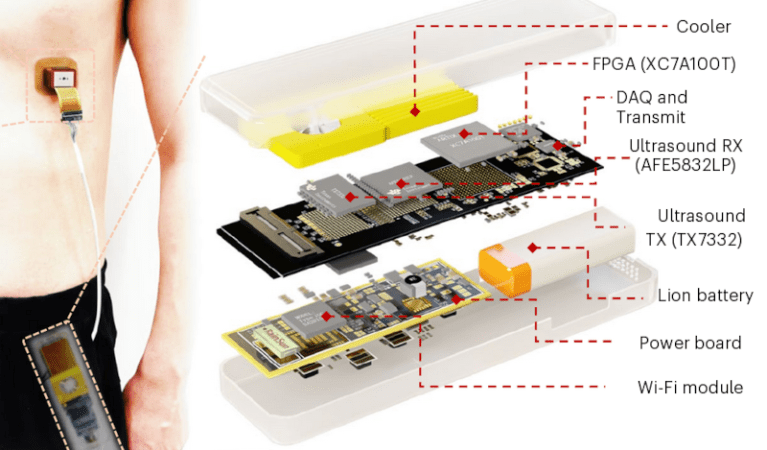
A pacemaker is implanted to send signals that regulate a patient’s heartbeat, and to do that, you need power. That means they require battery changes, and when the device in question happens to be inside your chest, that means surgery. Sometimes as often as every five years. [Alex Music] writing in Spectrum notes that researchers have a new paper discussing a possible alternative: a tiny patch stuck to the outside of the chest that uses ultrasound to pace the heart rhythm.

Rats, pigs, and human heart cell samples have all responded to the system. You might wonder how ultrasound could make your heart beat, but the new pacemaker relies on gene therapy to sensitize your heart cells to the high-frequency waves. The therapy is delivered by a simple injection.

In addition to the chest patch, the patient would need a data and power module that they could keep in their pocket. The gene therapy doesn’t alter your DNA but introduces RNA to make heart cells produce a sound-sensitive protein in the cell’s ion channels. When stimulated, the ion channels admit calcium, which causes the heart to beat.

Pacemakers are nothing less than a modern technological marvel. Maybe if this catches on, cheap junked pacemakers will show up on the surplus market. They could be useful.

Robot Chess But Each Piece Is A Small Robot

A topless chess piece. (Credit: 3DprintedLife, YouTube)

We have seen a number of self-playing chess boards over the years, but the general theme has been standard chess pieces moved by either an internal electromagnet or an external robotic arm. This is, of course, a reasonable choice, as it reduces complexity, and sometimes you can even use standard chess pieces on a regular board. But what if each piece could move by itself? That seems cooler, so that’s what [3DprintedLife] did with 3D-printed chess pieces that are also tiny robots.

Although technically not the first, as you can buy the commercial Chessnut Move offering, this being an open hardware and source project makes it a lot more interesting, also because the general design is generic enough to be usable for applications other than just playing chess.

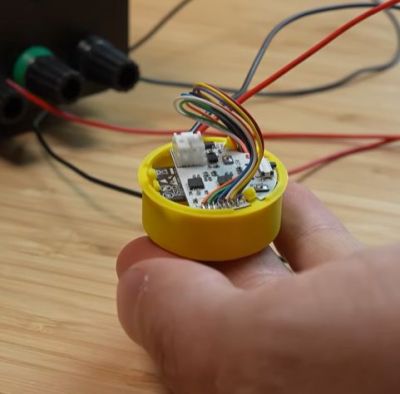
The MiniBots, as the individual pieces are called, are built around a custom PCB with an ESP32-C3 module, two PMO8-2 miniature stepper motors with requisite drivers, a magnetometer, and are powered by a 170 mAh LiPo battery. Communication with the central hub is done using ESP-NOW, with each MiniBot using its own dedicated channel.

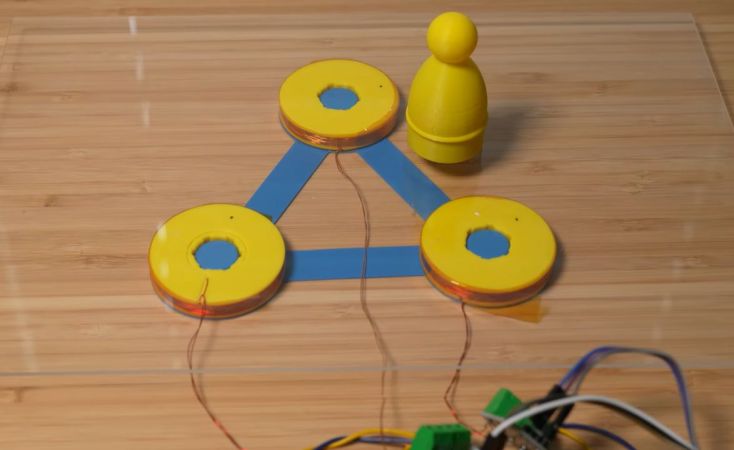
This hub’s mainboard also runs on an ESP32-C3 for the wireless interface, while the processing is handled via a serial link with a Raspberry Pi SBC that runs the main Python-based software. Localizing the individual pieces on the board is done by scanning electromagnets embedded in the board and using the readings from the individual magnetometers to triangulate the positions.

Although at the end of the video a basic prototype sort of works, the ESP32-C3, being a single-core MCU, tripped up the firmware, necessitating some changes that should be in the next update, along with power saving and easier recharging being issues to address.

If you want to see a more conventional chess robot, we’ve seen plenty.

Continue reading “Robot Chess But Each Piece Is A Small Robot”

Bambuddy Says Bye To Bambu Lab Cloud Services

If you have a Bambu Labs printer and aren’t keen to send your files to Bambu’s servers with each print job, then check out Bambuddy, an open-source, self-hosted, cloud-free central command that offers a local alternative for managing Bambu Labs printers. It acts as a replacement for the official cloud services, allowing you to slice, print, and monitor with full local control and zero reliance on Bambu Labs’ servers. Continue reading “Bambuddy Says Bye To Bambu Lab Cloud Services”

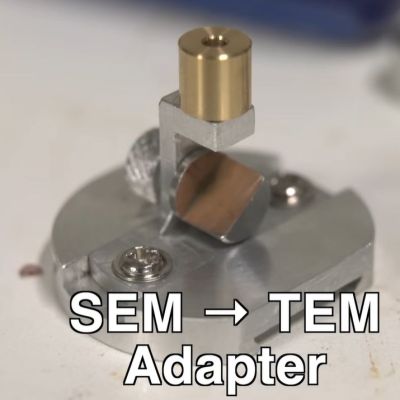
Converting A Scanning Electron Microscope Into A TEM Is Surprisingly Easy

Although both a SEM and a TEM are electron microscopes, their working principles and images are very different. Whereas an SEM uses secondary electrons ejected after bombarding a sample’s surface with primary electrons, a TEM works more like an X-ray machine, with a sensor placed behind the sample to record primary electrons after they pass through said sample. It is, however, possible to turn a SEM into a TEM with some creativity, as [ProjectsInFlight] recently did with his SEM.

We previously covered how the SEM in the video was saved from being scrapped and subsequently revived, and now it is getting a pretty nice upgrade. That said, this SEM to TEM change isn’t anything new, with so-called STEM imaging having been possible for ages using a rather simple reflecting adapter. The problem here is that such adapters cost enough to make you dread filing a budget request, yet they are simple enough that you might be able to DIY one.

The main concern with the DIY adapter was clearance between the sample holder and the fragile components inside the chamber. This turned out to be a hair under 14 mm (0.55″), giving not a lot of space to work with, but that was relative to the standard bulky sample holder. With a thinner sample plate machined out of aluminum, significantly more space became available, including for the primary electron mirror and shield for the secondary electrons.

Some more lathe, milling, and tapping work later, the entire sample holder came together. During testing a hack was implemented to enable adjusting the mirror angle while in the evacuated vacuum chamber so that the adapter could be dialed-in. Subsequently, a first sample was imagined in the form of gold nanoparticles, which revealed a leaky secondary electron shield due to bypassing.

Further testing revealed that the shield needed to extend much higher to meaningfully block secondary electrons, after which the TEM image massively improved. Subsequently, a previously expired mosquito graciously donated its wings to science, with TEM imaging clearly revealing the delicate structures within these wonders of evolutionary design.

The next challenge will be to TEM image biological cells, which require substantial preparation.

This isn’t the first STEM converter we’ve seen. The SEM has a long checkered history that we’ve talked about before, too.

Continue reading “Converting A Scanning Electron Microscope Into A TEM Is Surprisingly Easy”

Custom Watch Is On The Case

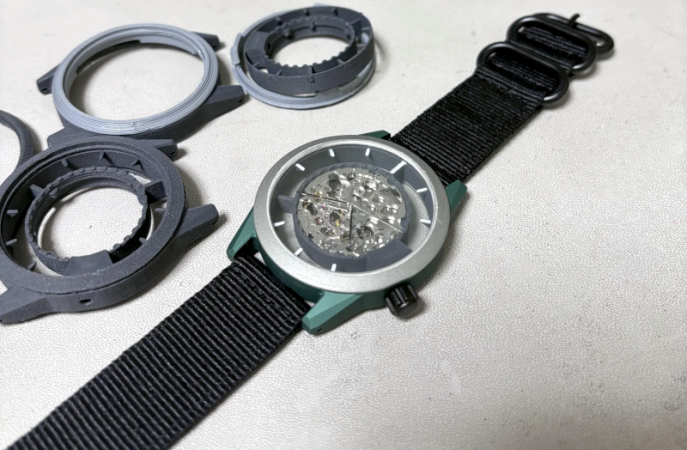
We were excited to see [Z0hn]’s project about 3D printing a custom watch from scratch — both because it was an exciting idea, and because the pictures looked great. While we still liked the project, we quickly realized it wasn’t really printing a watch so much as it was printing a case that holds an off-the-shelf movement. But it still looked great.

Many homebrew watches are cool and fine to wear to your next hackerspace board meeting. But this watch wouldn’t raise an eyebrow out among the normal public. Conventional watches use press-fit backs, tiny screws, or make the back screw into the housing. None of those are great for 3D printing, so this watch uses a bayonet connector, which is easy to create, robust, and reliable.

The watch looks easy to modify, so if you don’t like, for example, the unusual crown placement, you can change it. The movement is a Miyota 8N24 and, of course, the crystal is off-the-shelf, too.

While not exactly a printed watch, it was still pretty cool, and there are lessons to be learned here if you want to pull off the same feat. Or just go full on hacker. You could, too, try your hand with an open source movement.

Patterns Everywhere

I studied physics in college, and I’m always surprised how fundamental some of the concepts are. Take waves for example. You really wouldn’t expect the same underlying concept to be at work on surface of a pond, the string of a guitar, light passing through two slits, and then in the probabilistic behavior of electrons orbiting inside nuclei. But here we are, in a world filled with wave-like phenomena.

What little control theory I know, I’ve learned in the school of hard knocks. But it’s equally amazing that the same basic concepts govern the tuning of car shock absorbers, PID controllers, active audio filters, and other more complex systems where feedback matters. Crucial in all of these systems is the judicious balance of amplification and damping.

And last week on vacation, learning to drive a covered wagon pulled by a heavy draft horse, I saw the same patterns again. The horse likes to pull, and when the wagon comes over the crest of the top of a hill, it starts to roll forward into his harness, pushing him from behind. This makes the horse uneasy, and he slows down, the wagon pushes him harder, and positive feedback gets out of control.

The man who was teaching me to drive the wagon said, “it’s not like a car” in that you don’t tap the brakes to slow down and then let go. Rather, you hold on the brakes for a lot longer than you think is necessary – until the horse tells you that he feels like pulling again – and then you let up only a tiny bit at a time. Otherwise, you end up in the under-damped case, where you let the wagon go too much, it slows the horse, you slam the brakes, the horse pulls hard, and you let up on the brakes, and the cycle continues anew.

What he meant by “not like a car” was that the brakes aren’t just slowing down the wagon, they’re adding damping to keep the horse-wagon system from oscillating. Once that clicked in my mind, everything was smooth sailing. After a couple of days, I even started adding some feed-forward to my mental PID controller, letting the brakes go a little bit more when the horse was approaching the bottom of a hill, and he obviously wanted to pick up a little more speed before the grade ahead.

The horse seemed happy that I was finally getting it, but I don’t think he had any understanding of tuning PID loops. He did have me pondering, on a long stretch of rolling hills on a summer morning, if there were a good minimal set of patterns that explained a maximal breadth of phenomena. I’m starting with the physics of waves and the control of feedback systems, but what’s next?