An Explanation Of A Classic Semiconductor Riddle

Back in 1996, Bob Pease posed an experiment in an April Fools column. “Take an ordinary NPN transistor, ground the base, pull the emitter up to 12 V with a 1 KΩ resistor and measure the collector voltage referenced to ground.” Do the experiment, and you might be surprised to find a small negative voltage present on the collector. [Filip Piorski] has always loved the riddle, and has explained how it works in a Youtube video.
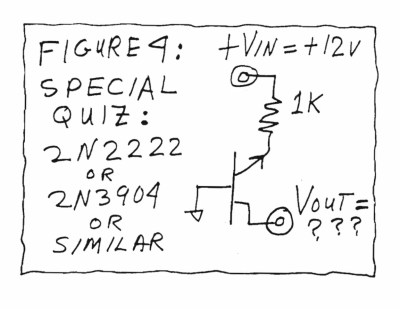
The key to the trick is the breakdown voltage of the transistor; normally somewhere around 7-8 volts for a typical small NPN transistor. At this point, where the base-emitter junction enters the breakdown regime, it begins to emit light. This light actually travels through the silicon lattice, where it reaches the base-collector junction, which acts like a photodiode under the right conditions. This generates the negative voltage seen at the collector under these conditions.

[Filip] goes on to try the experiment with a TO-3 transistor with the top cut off so he could visualise the effect in action. His photos, taken in a dark room, show tiny flecks of light appearing at spots on the silicon die. If you’ve got more insight on the effect in action, drop a comment below.

It might seem like a simple curiosity, however silicon junctions and their light emissions are an area of active research in semiconductor physics. Video after the break.

Continue reading “An Explanation Of A Classic Semiconductor Riddle”

Survey Of Simple Logic Simulators

A few months ago, a tweet by [Ken Shirriff] asking about simple digital simulators caught my attention. The topic came up again in May when a repair video by [CuriousMarc] featured one such simulator called Logisim-evolution. It made me want to take a fresh look on what’s out there and which features set the different simulators apart.

So today, let’s take a quick survey of a few such simulators that I found. I’m focusing on plain logic simulators, analyzing ones and zeros using Boolean logic. They are not doing SPICE-like analog analysis of transistor logic gates, but they’re still quite handy for proofing out designs.

Continue reading “Survey Of Simple Logic Simulators”

Final Weekend For Display Challenge Of The Hackaday Prize

This is the final weekend to enter your display-related project in the 2021 Hackaday Prize. The good news is, pretty much anything that has a display on it fits the bill here.

The goal of the “Rethink Displays” challenge is to envision interesting ways to visualize data. How many times an hour do you reach for an unlock a smartphone just to get a small bit of data — current temperature, upcoming appointment, the next street to turn on, or how much time is left on your soufflé. There must be another way!

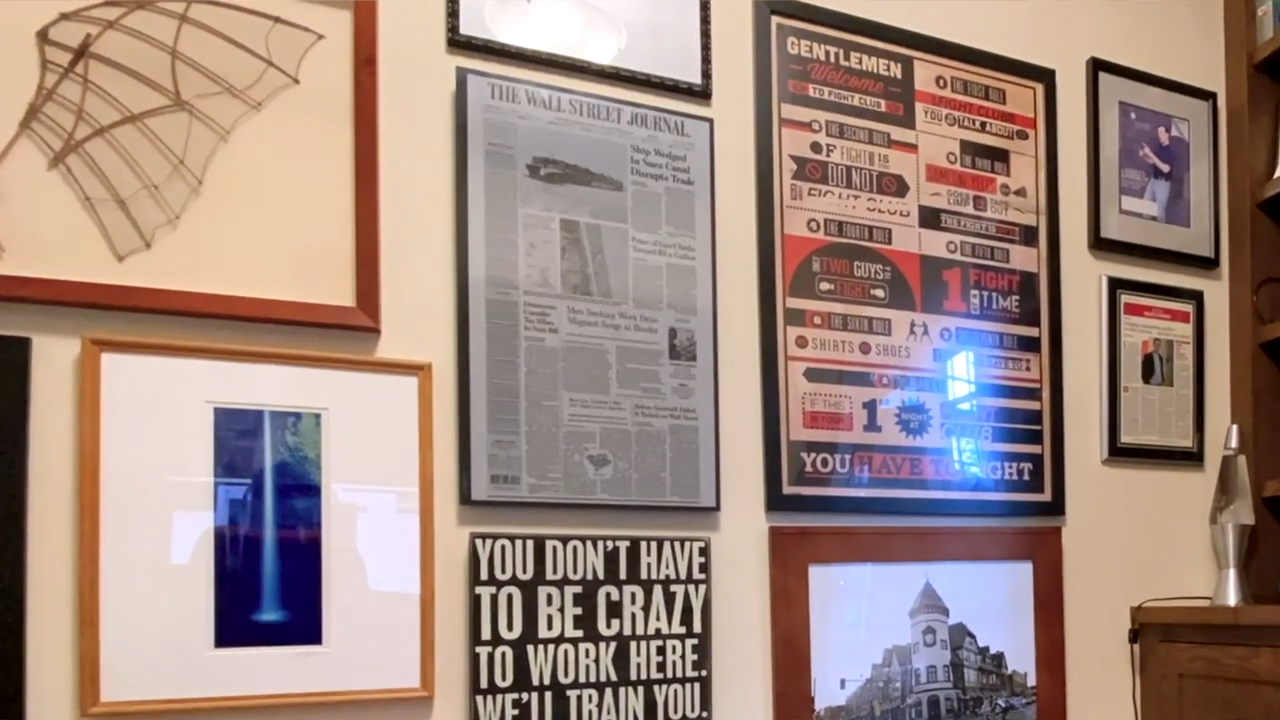
The newspaper is an eInk display that hides in plain sight among non-dynamic framed artwork.

That’s where you come in! Show off us a clever way to convey meaning by choosing a display that makes sense for the type of data and power budget available. Maybe it’s an ePaper display that camouflages itself as wall art, a set of analog meters for the current weather, or a way to upcycle old displays to live on after their portable lives have ended.

This doesn’t need to be a final product. Ten entries will be selected to receive a $500 prize and move on to the final round at the end of October. So if you spend this weekend pulling together a proof of concept, and do a superb job of telling the story of what you’re building, you’ll be firmly in the running! Finalists will have plenty of time to work on completing the designs.

Have a great idea but no time to work on it? Let people know it’s up for grabs by sharing the concept below.

Automatic Chessboard Lets Online Players Move The Pieces

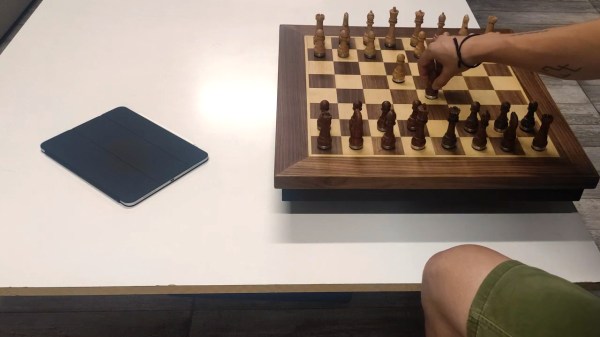
Playing chess online is all well and good, and opens up a whole world of competitors that would otherwise be unavailable in one’s local area. But there’s something to be said for playing over the board, which comes up often enough for many players that they refer to it with the acronym OTB. [Carlos] built an automatic chessboard by the name of Phantom, intending to bridge the disparate worlds of chess, from cyberspace to meatspace.

The Phantom board in action.

The basic idea is a chessboard that a player can use in the typical way, moving the pieces on the board as normal. The opposing pieces are then moved automatically to reflect an opposing player’s moves as received from an online chess server.

The board outwardly appears normal, with little to suggest anything is amiss. Only the metallic gleam at the base of each piece gives the game away. Pieces are moved by a SCARA arm hidden inside the board, which uses a magnet to drag them around from position to position. It’s quite something to watch the pieces glide around as if by magic, even more so when one is dragged off the board in a combat situation.

As for the control system, an Arduino Nano 33 IoT handles online connectivity to fetch game data from the Lichess chess server, while an ESP32 is responsible for all the motors, and a regular Arduino Nano scans a matrix of Hall effect sensors responsible for locating pieces on the board.

The system allows for seamless play, detecting when pieces are moved by the player via the Hall effect sensors, and reporting back to the chess server online. Similarly, when the game state is updated, the SCARA arm steps in to move the relevant pieces reflecting the moves of the distant player.

It’s a fun project, and one that will surely light up the many chessheads in the Hackaday community. We’ve seen other automated chess builds before too, like Trap Chess, in which pieces can suddenly fall from the board at any time. Video after the break.

Continue reading “Automatic Chessboard Lets Online Players Move The Pieces”

Injection-Molded Glass Breakthrough Shatters Ceiling Of Work Methods

Glass is one of humanity’s oldest materials, and it is still used widely for everything from drinking vessels and packaging to optics and communications. Unfortunately, the methods for working with glass are stuck in the past. Most methods require a lot of high heat in the range of 1500 °C to 2000 °C, and they’re all limited in the complexity of shapes that can be made.

As far as making shapes goes, glass can be blown and molten glass pressed into molds. Glass can also be ground, etched, or cast in a kiln. Glass would be fantastic for many applications if it weren’t for the whole limited geometry thing. Because of the limitations of forming glass, some optic lenses are made with polymers, even though glass has better optical characteristics.

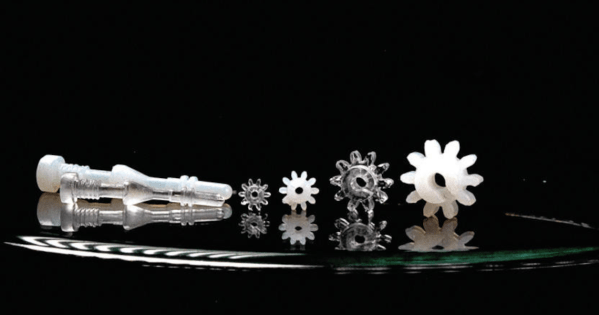
Ideally, glass could be injection molded like plastic. The benefits of this would be twofold: more intricate shapes would be possible, and they would have a much faster manufacturing time. Well, the wait is over. Researchers at Germany’s University of Freiburg have figured out a way to apply injection molding to glass. And it’s not just any glass — they’ve made highly-quality, transparent fused quartz glass, and they did it at lower temperatures than traditional methods. The team used x-ray diffraction to verify that the glass is amorphous and free of crystals, and were able to confirm its optical transparency three ways — light microscopy, UV-visible, and infrared measurements. All it revealed was a tiny bit of dust, which is to be expected outside of a clean room.

Continue reading “Injection-Molded Glass Breakthrough Shatters Ceiling Of Work Methods”

Turning The Virtual Boy Into A Handheld Console

The Virtual Boy, Nintendo’s most infamous failure, was plagued by several issues. The most glaring problem was the red monochrome stereoscopic display technology which gave many users a headache after even a short time playing, but it’s sky-high price and extremely limited library of games kept many prospective buyers at bay as well. There was also the issue of portability: unlike the Game Boy it was named after, the Virtual Boy barely qualified as a portable system due to the fact it needed to be set up on a table to use.

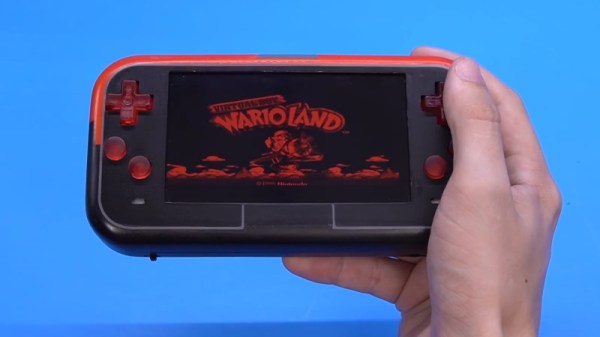
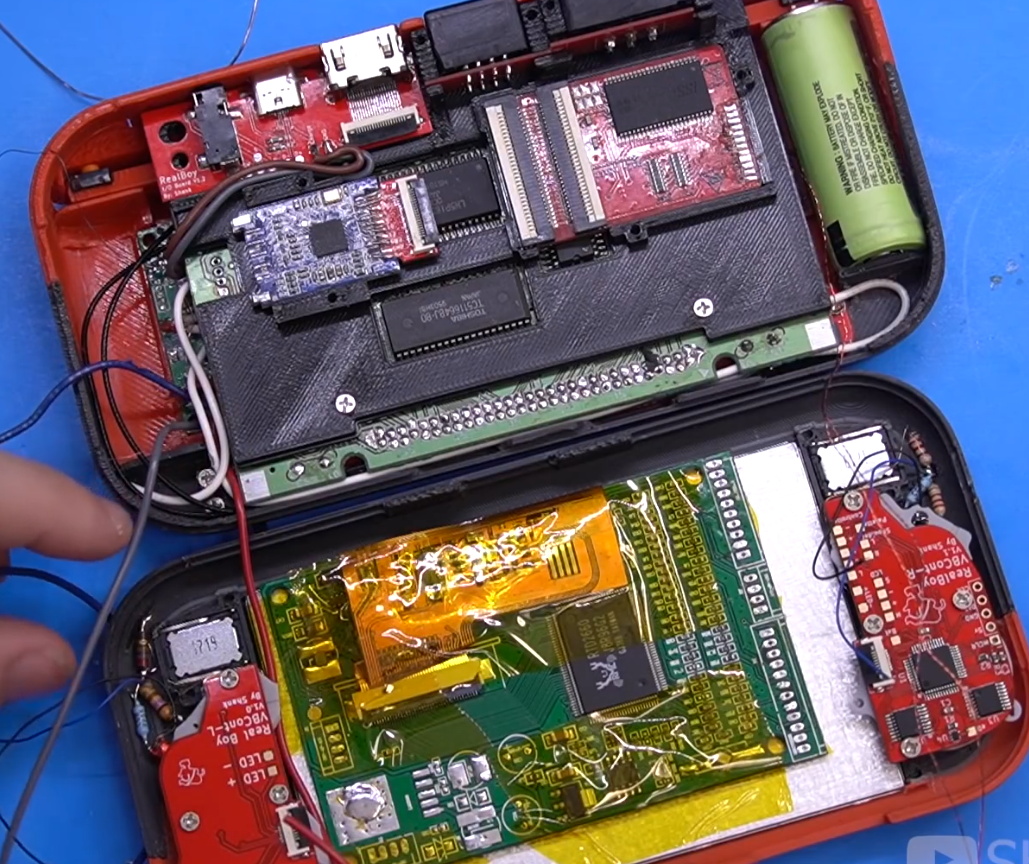
But now, thanks to the tireless efforts of [Shank], at least a few of those issues have been resolved. He’s built the world’s first truly portable Virtual Boy, which swaps the system’s troubled 3D display for a modern IPS LCD panel. The custom handheld, designed to merge the Virtual Boy’s unique aesthetic with the iconic styling of the Game Boy Advance, looks like it came from some alternate timeline where Nintendo decided to produce a cheaper and less cumbersome version of the system rather than abandoning it.

While the work [Shank] has put into the project is unquestionably impressive, it should be said that it took the efforts of several talented hackers to create the handheld Virtual Boy. The key component that made the modification possible in the first place is the VirtualTap by [Furrtek], which not only provides the VGA output that’s driving the LCD panel, but fools the system’s motherboard into believing the servo-actuated stereoscopic display is still connected and active.

It’s also using the open source power management board that [GMan] originally developed for his own portable N64, [Bassline] chipped in to cast the custom buttons and D-pad in translucent resin, and [Mitch 3D] put an untold number of hours into printing and reprinting the system’s multicolored enclosure until it came out just right.

All the little details of the final system, which [Shank] calls the Real Boy, put this project into a league of its own. Special combinations of button presses allows the user to change the color of the display, should you get sick of the infamous red-tint. The buttons also have RGB LEDs behind them that correspond with the color scheme of the display itself, for that extra bit of gamer cred. He even made sure to include the system’s original link port, despite the fact that no officially released game ever made use of it.

Our first run in with [Shank] was when he demoed a portable Wii built into a mint tin. It made for a pretty pitiful gaming experience, but the project demonstrated his dedication to seeing a project through to the end. Watching his skills improve over the last few years has been inspiring, and we can’t wait to see what he comes up with next.

Continue reading “Turning The Virtual Boy Into A Handheld Console”

Sand Hack Boosts Power On InSight Mars Lander

We love that part in Apollo 13 where the NASA engineers have to fit a square carbon dioxide filter in a round hole. We love basically every scene of The Martian where Mark Watney hacks together any piece of hardware he can get his hands on to survive on a hostile planet. What we love even more is watching actual NASA engineers trying out a hack and ordering the InSight lander to scoop sand on itself to increase the power from its solar panels.

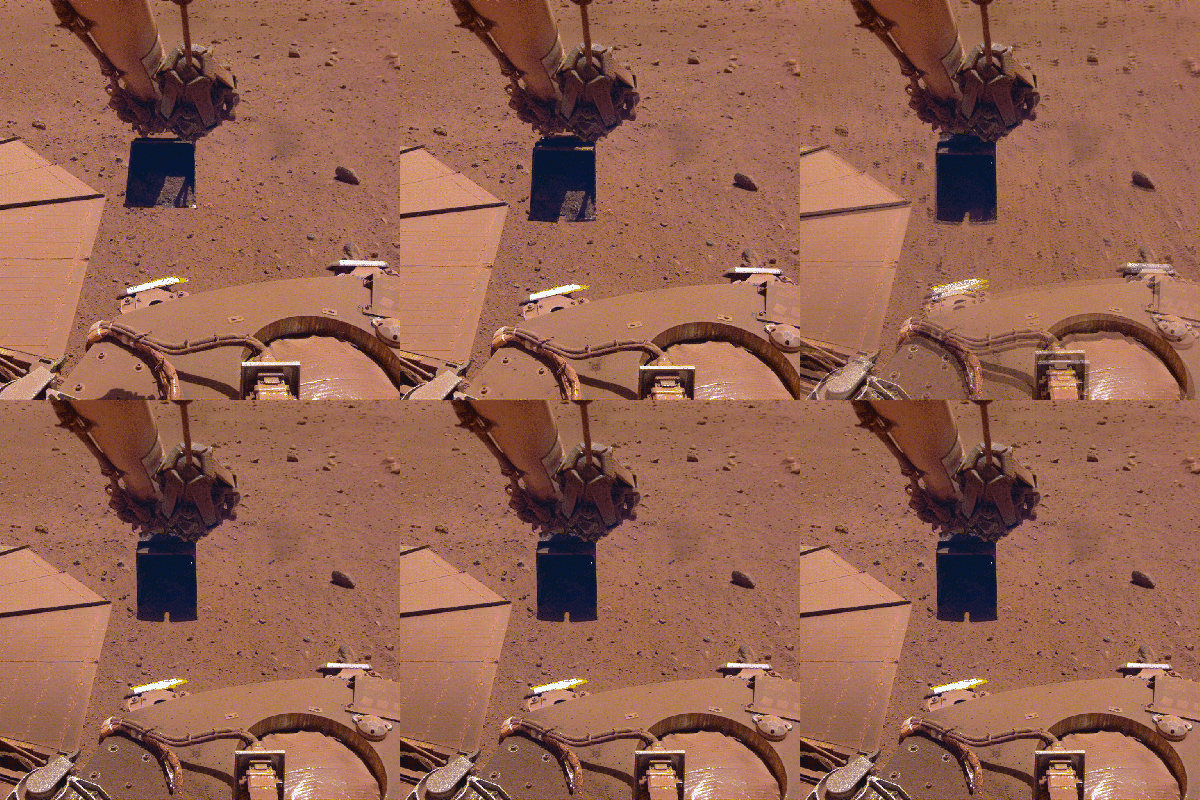
InSight, which recently had its two-year mission to study the interior geology of Mars extended, has been suffering from a buildup of dust on its solar panels. This dust is only adding on to the expected power loss which occurs as the red planet approaches aphelion — the maximum distance from the Sun in its orbit. Attempts to shake the panels clear by pulsing their deployment motors were unsuccessful. Other solar-powered missions have experienced a cleaning effect from the Martian winds; however, despite seeing plenty of gusts, InSight has not seen any significant improvement.

Counterintuitively, operators instructed the lander to slowly trickle more dust and sand from its scoop close to (not on top of) one of the solar panels. As the wind blew, larger particles were carried by the breeze across the panels and bounced off the surface, carrying away some accumulated dust. While that may sound like a minuscule effect, the experiment resulted in about 30 extra watt-hours per Sol. Margins are still thin, and science instruments will still need to be disabled to conserve power. But this boost alone was enough to delay the powerdown for a few weeks.

There are so many exciting missions operating on Mars right now. Though, it’s also fun to take a look back at some of the earliest probes. And we’re always amazed at the resources NASA makes available for us to have some DIY fun.