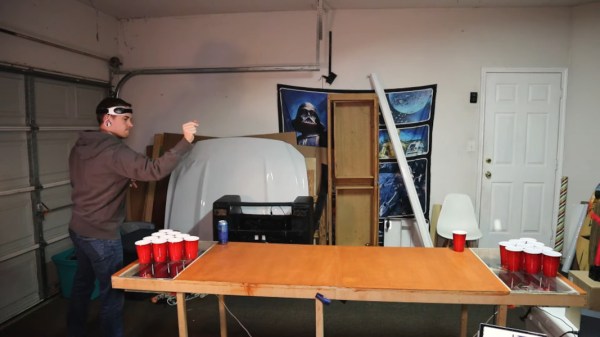
Mind-Controlled Beer Pong Gets Easier As You Drink

Wouldn’t it be nice if beer pong could somehow get easier the more you drink? You know, so you can drink more? [Ty Palowski] has made it so with automated, mind-controlled beer pong.

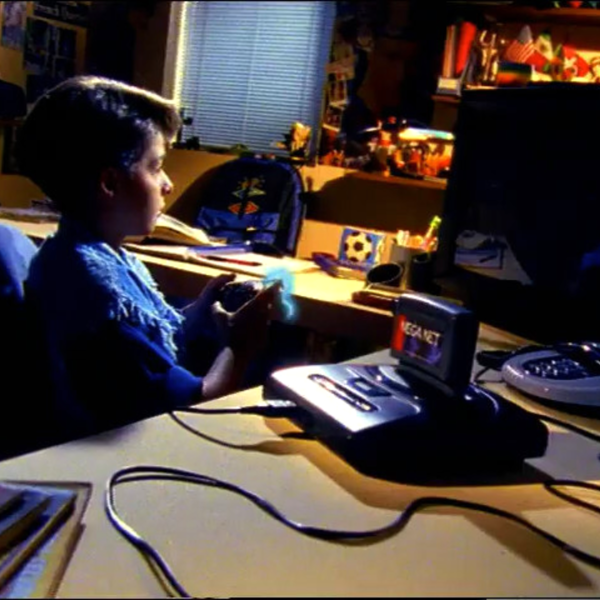
[Ty] started by making a beer pong table that moves the cups back and forth at both ends. An Arduino Nano controls a stepper that controls a slider, and the cups move with the slider through the magic of magnets. The mind control part came cheaper than you might think. Back in 2009, Mattel released a game called Mind Flex that involves an EEG headset and using brain waves to guide a foam ball on a stream of air through a little obstacle course. These headsets are available for about $12 on ebay, or at least they were before this post went up.

[Ty] cracked open the headset added an HC-06 Bluetooth module to talk to the Arduino. It’s using a program called Brainwave OSC to get the raw data from the headset and break it into levels of concentration and relaxation. The Arduino program monitors the attention levels, and when a certain threshold of focus is reached, it moves the cups back and forth at a predetermined speed ranging from 1 to an impossible-looking 10. Check out the two videos after the break. The first one covers the making of the the automatic beer pong part, and the second is where [Ty] adds mind control.

We’ve seen a different headset — the hacker-friendly NeuroSky Mindwave — pop up a few times. Here’s one that’s been hacked to induce lucid dreaming.

Continue reading “Mind-Controlled Beer Pong Gets Easier As You Drink”

North American Field Guide To Rail Cars

Trains are one of the oldest and most reliable ways we have of transporting things and people over long distances. But how often do you think about trains? Where I live, they can clearly be heard every hour or so. I should be used to the sound of them by now, but I like it enough to stop what I’m doing and listen to the whistles almost every time. In the early morning quiet, I can even hear the dull roar as it rumbles down the track.

I recently got a front row seat at a railroad crossing, and as the train chugged through the intersection, I found myself wondering for the hundredth time what all the cars had in them. And then, as I have for the last twenty or thirty years, I wondered why I never see a caboose anymore. I figured it was high time to answer both questions.


Image via GBX

Boxcar

Boxcars are probably the most easily identifiable after the engine and the caboose.

Boxcars carry crated and palletized freight like paper, lumber, packaged goods, and even boxes. Refrigerated box cars carry everything from produce to frozen foods.

Boxcars (and barns for that matter) are traditionally a rusty red color because there were few paint options in the late 1800s, and iron-rich dirt-based paint was dirt cheap.


Flat car with bulkheads. Image via YouTube

Flat Car

Standard, no-frills flat cars are the oldest types of rail cars. These are just big, flat platform cars that can carry anything from pipe, rail, and steel beams to tractors and military vehicles.

Flat cars come in different lengths and are also made with and without bulkheads that help keep the cargo in place. Some flat cars have a depression in the middle for really tall or heavy loads, like electrical transformers.


Image via Ship Cars Now

Auto Rack

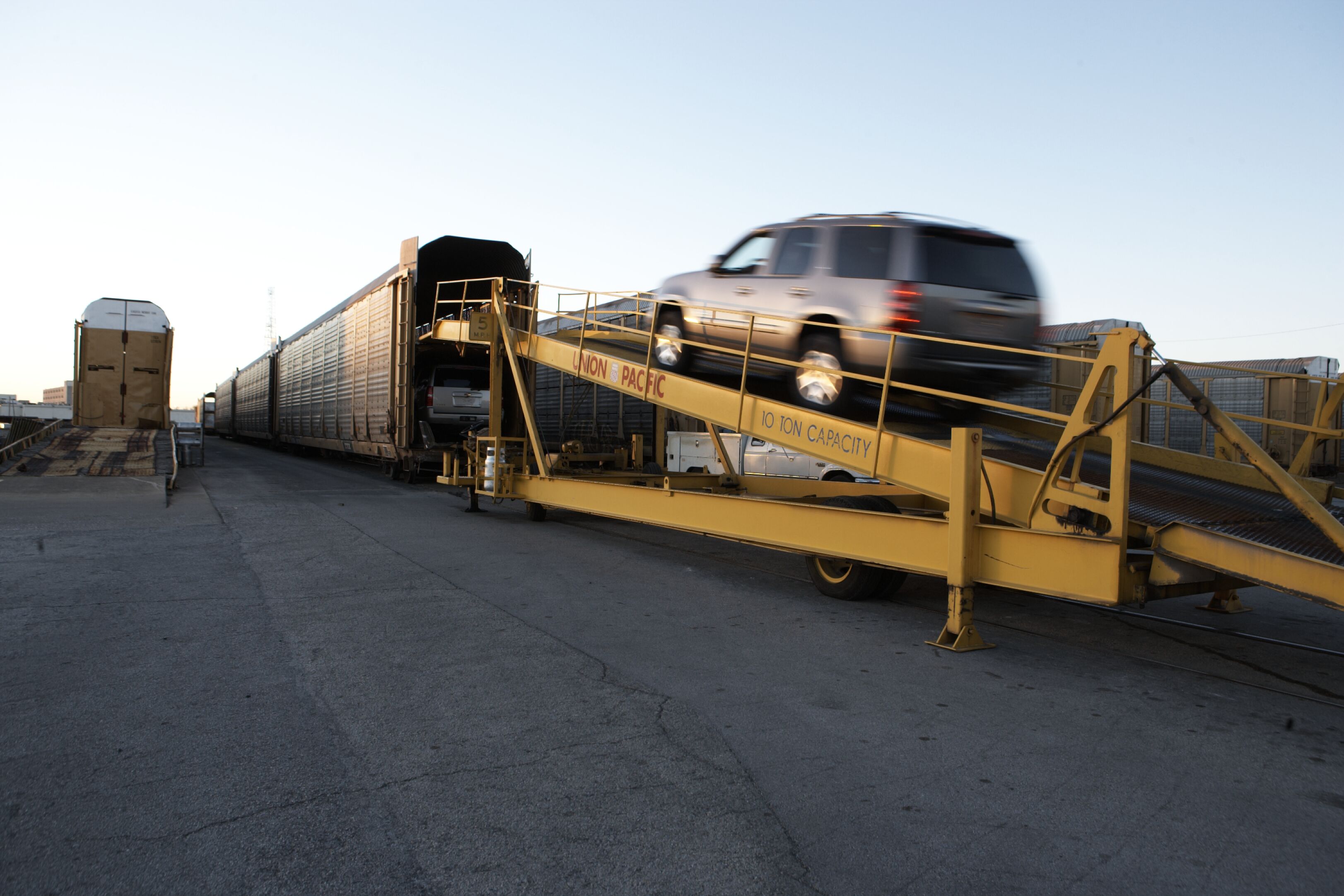
As the name implies, auto racks carry passenger cars, trucks, and SUV from factories to distributors. They come in two- and three-level models, although there have been specialized auto racks over the years.

Perhaps the strangest auto rack of them all was the Vert-a-Pac. When Chevrolet came up with the Vega in the gas-conscious 1970s, they wanted to be able to move them as cheaply as possible, so they shipped the cars on end. If you’re wondering about all the fluids in the car when they were upended, a special baffle kept oil from leaking out, the batteries were capped, and the windshield washer fluid bottle was positioned at an angle.

Continue reading “North American Field Guide To Rail Cars”

Speaker Snitch Tattles On Privacy Leaks

A wise senator once noted that democracy dies with thunderous applause. Similarly, it’s also how privacy dies, as we invite more and more smart devices willingly into our homes that are built by companies that don’t tend to have our best interests in mind. If you’re not willing to toss all of these admittedly useful devices out of the house but still want to keep an eye on what they’re doing, though, [Nick Bild] has a handy project that lets you keep an eye on them when they try to access the network.

The device is built on a Raspberry Pi that acts as a middle man for these devices on his home network. Any traffic they attempt to send gets sent through the Pi which sniffs the traffic via a Python script and is able to detect when they are accessing their cloud services. From there, the Pi sends an alert to an IoT Arduino connected to an LED which illuminates during the time in which the smart devices are active.

The build is an interesting one because many smart devices are known to listen in to day-to-day conversation even without speaking the code phrase (i.e. “Hey Google” etc.) and this is a great way to have some peace-of-mind that a device is inactive at any particular moment. However, it’s not a foolproof way of guaranteeing privacy, as plenty of devices might be accessing other services, and still other devices have  even been known to ship with hidden hardware.

Continue reading “Speaker Snitch Tattles On Privacy Leaks”

This Automated Wire Prep Machine Cuts And Strips The Wire

We’ve seen a fair number of automated wire cutting builds before, and with good reason: cutting lots of wires by hand is repetitive and carries the risk of injury. What’s common to all these automated wire cutters is a comment asking, “Yeah, but can you make it strip too?” As it turns out, yes you can.

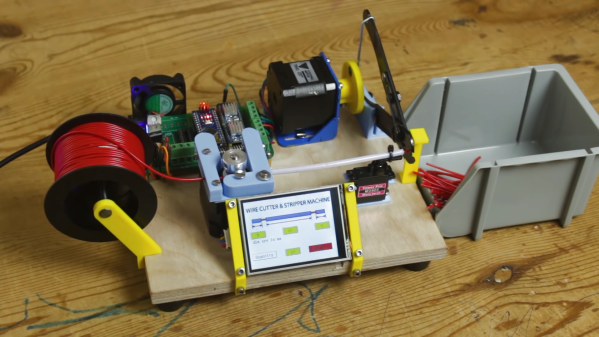
The key to making this automated wire cutter and stripper is [Mr Innovative]’s choice of tooling, and accepting a simple compromise. (Video, embedded below.) Using just about the simplest wire strippers around — the kind with a diamond-shaped opening that adjusts to different wire gauges by how far the jaws are closed — makes it so that the tool can both cut and strip, and adapt to different wire sizes. The wire is fed from a spool to a custom attachment sitting atop a stepper motor, which looks very much like an extruder from a 3D-printer. The wire is fed through a stiff plastic tube into the jaws of the cutter. Choosing between cutting and stripping is a matter of aiming the wire for different areas on the cutter’s jaws, which is done with a hobby servo that bends the guide tube. The throw of the cutter is controlled by a stepper motor — partial closure nicks the insulation, while a full stroke cuts the wire off. The video below shows the build and the finished product in action.

Yes, the insulation bits at the end still need to be pinched off, but it’s a lot better than doing the whole job yourself. [Mr Innovative] has a knack for automating tedious manual tasks like this. Check out his label dispenser, a motor rotor maker, and thread bobbin winder.

Continue reading “This Automated Wire Prep Machine Cuts And Strips The Wire”

Printed Circuits, 1940s Style

A presentation this month by the Antique Wireless Museum brought British engineer and inventor John Sargrove (1906-1974) to our attention. If you’ve ever peeked inside old electronics from days gone by, you’ve no doubt seen point-to-point wiring and turret board construction. In the 60s and 70s these techniques eventually made way for printed circuit boards which we still use today. But Mr Sargrove was way ahead of his time, having already invented a process in the 1930s to print circuits, not just boards, onto Bakelite. After being interrupted by the war, he formed a company Electronic Circuit Making Equipment (ECME) and was building broadcast radio receivers on an impressive automatic production line.

Mr. Sargrove’s passion was making radios affordable for everyone. But to achieve this goal, he had to make large advances manufacturing technology. His technique of embedding not only circuit traces, but basic circuit elements like resistors, capacitors, and inductors directly into the substrate foresaw techniques being applied decades later in integrated circuit design.  He also developed a compact vacuum tube which could be used in all circuits of a radio, called an “All-stage Valve“. Equally important was his futuristic automatic factory, which significantly reduced the number of factory workers needed to make radios from 1500 to 50. Having completed the radio design, he was also developing a television receiver using the same concepts. Unfortunately, ECME was forced into liquidation when a large order from India was cancelled upon declaration of independence in 1947.

You really must watch the video below. There are many bits and pieces of modern factory automation which we still use today, yet their implementation using 1940s techniques and technology is fascinating. Further reading links after the video. Thanks to [Mark Erdle] for the tip.

Continue reading “Printed Circuits, 1940s Style”

Roll Your Own Tracking

The smartphone is perhaps the signature device of our modern lives. For most of the population it is never more than an arm’s length away, it’s on your person more than any other device in your life. Smartphones are packed with all sorts of radios and ways to communicate wireless. [Amine Mansouri] built an ESP8266 based tracking device that takes advantage of this.

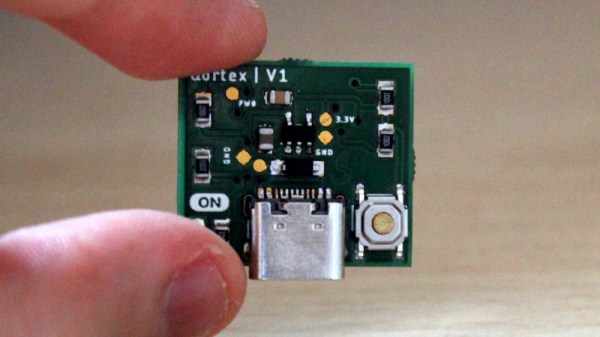
Most WiFi-enabled devices will send out “probe requests” frames trying to search for the SSIDs they were connected to. These packets contain the device MAC address as well as the SSIDs you’ve connected to. Using about 12 components, [Amine] laid out a small board in Eagle. By putting the ESP8266 in monitor mode, the probe frames can be logged and uploaded. The code can be updated OTA making it easy to service while in the field.

With permission from his local library, eight repeater boards were scattered throughout the building to forward the probe packets to where the tracker could pick them up. A simple web interface was built that allows the library to figure out how many people are in the library and how often they frequent the premises.

While an awesome project with open-source code on Github, it is important to stress how important is it to get permission to do this kind of tracking. While some phones implement MAC randomization, there are still many out in the wild that don’t. While this is similar to another project that listens to radio signals to determine the coming and going of ships and planes, tracking people with this sort of granularity is in a different category altogether.

Thanks [Amine] for sending this one in!

Home-Crafting A Motorcycle Throttle Hold

Cruise control is a common feature on automobiles, though less so in the motorcycle market. Given that continual throttle application on long rides can be a real pain in the wrist, many riders long for such a convenience. As a cheat solution, bolt-on locks that hold the throttle at a set position are available, though quality varies and generally they need to be activated by the throttle hand anyway. [Nixie] wanted a solution that would leave the right hand entirely free, and held, rather than locked, the throttle.

The device [Nixie] came up with is essentially a brake that fits inside the throttle handle and holds it in position. This is achieved with a mechanism that presses a pair of small brake shoes into the inside of the throttle, holding it from rotating back to neutral when the rider lets go. The brake is activated by a control on the left handlebar via a Bowden cable, allowing [Nixie] to activate the throttle hold on the highway and use the right hand to check pockets or simply rest.

It’s a tidy build, and [Nixie] does a great job of explaining the various design choices and the intricacies of the Bowden cable actuated mechanism. It’s anything but a one-size-fits-all build, but other enterprising machinists could certainly duplicate the design for other motorcycles without too many problems.

For those interested in more traditional cruise control, we’ve featured a teardown of a simplistic 90s Jeep system before. Video after the break.

Continue reading “Home-Crafting A Motorcycle Throttle Hold”