Tape Cutting Bot Trims The Tedium

If you have ever had to assemble a batch of electronic kits, you will know the tedious nature of cutting the tape containing your components. It’s easy enough to count four or five surface-mount resistors and snip them off with a pair of scissors once or twice, but when you are faced with repeating the task a hundred or more times, its allure begins to pale.

[Overflo] faced just such a problem when assembling hundreds of kits for a workshop at the upcoming 34C3 event in Germany. The solution? A tape-cutting robot, of course! (YouTube video, embedded below.)

At the heart of the machine is a pair of scissors operated by a stepper motor, snipping away at the component tape fed by another stepper. An infra-red light barrier sensor counts sprocket holes, and the whole is under the control of an Arduino Pro Mini. An especially clever trick is that the strip passes over a marker pen, allowing different components in a kit to be identified by a color code.

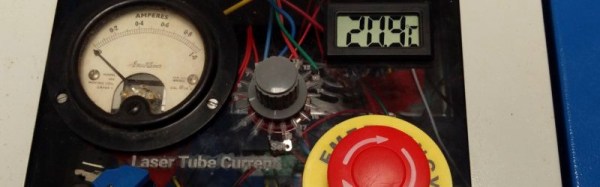
This isn’t the first such approach to this problem we’ve encountered, here’s one that cuts component tape with a laser.

Continue reading “Tape Cutting Bot Trims The Tedium”

Hackerfarm Brings Light To Puerto Rico

Puerto Rico has a long road to recovery, and part of this is the damaged infrastructure: much of the electricity distribution network was destroyed, and will take months or years to rebuild. The Japanese hacker group [Hackerfarm], founded by Hackaday friend [Akiba], is looking to help by sending some of their solar lanterns to provide off-grid light.

They’ve already shipped one batch, and are using the proceeds from sales of these paper lanterns to send more of them to Puerto Rico, where they will be given out to those who need them. The group has carried out similar projects before, distributing lanterns to Tsunami-hit areas of Japan and to Rwanda, where a women’s group builds and sells the lanterns. It seems like a great cause, and the design of the lanterns is pretty neat. We love that they provide an introduction to soldering and serve a higher purpose at the same time.

We’ve mentioned Hackerfarm before, both as part of a growing rural hackerspace scene, and because of their insane EL-wire creations and choreography. And [Akiba] gave a great talk at last year’s Supercon where he discussed the ins and outs of getting virtually anything done in Shenzhen. Check it out if you haven’t already.

Hackaday Prize Entry: Economical Bionic Leg

When it comes to high-tech bionic legs for amputees, all the cool stuff is titanium, carbon fiber or other, more exotic materials. With carbon fiber “blades” all the rage, it’s easy to forget that simpler technologies still work, and could be made to work even better with the addition of some inexpensive electronics. The Economical Bionic Leg project is the result of that idea.

Project creators [PremJ20] and [G.Vignesh] aren’t kidding about bringing the cost of these bionic legs down. The target goal is $60 per, with stainless steel and silicon rubber as a cheaper alternative to carbon fiber — the rubber would be molded to fit the amputated region. The heart of the project is a Particle Photon development board, with a flex sensor and accelerometer monitoring the prosthesis and supplying data to the cloud. It’s essentially a basic prosthetic leg with a monitoring system built in. Placing a sensor cuff on the regular leg, the artificial limb’s flexibility can be fine-tuned to match the two.

Will this inexpensive bionic leg ever compete in the Olympics, like [Oscar Pistorious] run in the 2012 London event? Probably not — the tech that goes into artificial limbs has the same amount of material science going into it as F1 racing and turbojet design. Still, this is a very cheap way to bring tech into something that desperately needs to be cheaper, and it’s a great Hackaday Prize entry, to boot.

Retrotechtacular: Hacking Wartime Mail

I’m guessing you got quite a few e-mails today. But have you ever had a v-mail? That sounds like some new term for video e-mail, but it actually dates back to World War II. If you are in Europe, the term was Airgraph — not much more descriptive.

If you make a study of war, you’ll find one thing. Over the long term, the winning side is almost always the side that can keep their troops supplied. Many historians think World War II was not won by weapons but won by manufacturing capability. That might not be totally true, but supplies are critical to a combat force. Other factors like tactics, doctrine, training, and sheer will come into play as well.

On the other hand, morale on the front line and the home front is important, too. Few things boost morale as much as a positive letter from home. But there’s a problem.

While today’s warfighter might have access to a variety of options to communicate with those back home, in World War II, communications typically meant written letters. The problem is ships going from the United States to Europe needed to be full of materials and soldiers, not mailbags. With almost two million U.S. soldiers in the European Theater of Operations, handling mail from home was a major concern.

British Mail Hack

The British already figured out the mail problem in the 1930s. Eastman Kodak and Imperial Airways (which would later become British Airways) developed the Airgraph system to save weight on mail-carrying aircraft.  Airgraph allowed people to write soldiers on a special form. The form was microfilmed and sent to the field. On the receiving end, the microfilm was printed and delivered as regular mail.

Continue reading “Retrotechtacular: Hacking Wartime Mail”

“The Cow Jumped Over The Moon”

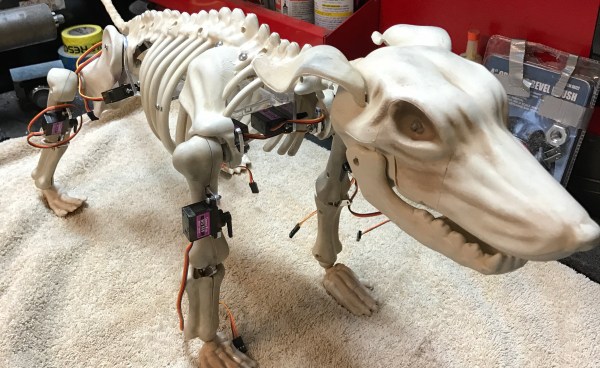
[Ash] built Moo-Bot, a robot cow scarecrow to enter the competition at a local scarecrow festival. We’re not sure if Moo-bot will win the competition, but it sure is a winning hack for us. [Ash]’s blog is peppered with delightful prose and tons of pictures, making this an easy to build project for anyone with access to basic carpentry and electronics tools. One of the festival’s theme was “Out of this World” for space and sci-fi scarecrows. When [Ash] heard his 3-year old son sing “hey diddle diddle, the cat and the fiddle…”, he immediately thought of building a cow jumping over the moon scarecrow. And since he had not seen any interactive scarecrows at earlier festivals, he decided to give his jumping cow a lively character.

Construction of the Moo-Bot is broken up in to three parts. The skeleton is built from lumber slabs and planks. The insides are then gutted with all of the electronics. Finally, the whole cow is skinned using sheet metal and finished off with greebles to add detailing such as ears, legs, spots and nostrils. And since it is installed in the open, its skin also doubles up to help Moo-bot stay dry on the insides when it rains. To make Moo-Bot easy to transport from barn to launchpad, it’s broken up in to three modules — the body, the head and the mounting post with the moon.

Moo-Bot has an Arduino brain which wakes up when the push button on its mouth is pressed. Its two OLED screen eyes open up, and the MP3 player sends bovine sounding audio clips to a large sound box. The Arduino also triggers some lights around the Moon. Juice for running the whole show comes from a bank of eight, large type “D” cells wired to provide 6 V — enough to keep Moo-Bot fed for at least a couple of months.

Check out the video after the break to hear Moo-bot tell some cow jokes – it’s pretty funny. We’re rooting for it to win the competition — Go Moo-bot.

Continue reading ““The Cow Jumped Over The Moon””

BOM Cost Optimization And Tindie Badge Engineering

For the last few months, I’ve been up to my neck in electronic conference badges. This year, I created the single most desirable badge at DEF CON. I also built a few Tindie badges, and right now I’m working on the logistics behind the Hackaday SuperConference badge. Sit tight on that last one — we’re doing something really, really special next month.

Most badge projects are one-off production runs. This is to be expected from a piece of hardware that’s only meant to be distributed at a single event. The Tindie badge is different. It’s now a thing, and we’re building multiple badges for all the cons and conferences Hackaday and Tindie are attending for the rest of the year. This means I have the opportunity to do hardware revisions on the Tindie badge. Right now I’ve built three versions of the Tindie and we’ve distributed about two thousand of these kits at DEF CON, Maker Faire New York, and the Open Hardware Summit.

After about two thousand units, I think we finally have this down. This is how I designed three versions of hardware in as many months and cut the BOM cost of each badge in half. This is bordering on a marginally impressive piece of engineering, and a great lesson on BOM cost optimization.

Continue reading “BOM Cost Optimization And Tindie Badge Engineering”

Running The SNES Classic Mini Emulator On The Raspberry Pi

Unless you’ve been living under a rock, you’d be familiar with Nintendo’s hugely popular Classic Mini consoles. Starting with the NES, and now followed with the SNES, the consoles ship in a cute, miniature enclosure and emulate Nintendo classics using the horsepower of modern ARM chips. These consoles use an emulator that has been created especially for the purpose by Nintendo, in house – and [Morris] [krom] wanted to see if he could take the emulator on the SNES Classic Mini and run it on the Raspberry Pi.

Yes, there are already SNES emulators on the Raspberry Pi. But anyone interested in the nuts and bolts of emulation can see the clear interest in the tricks and techniques Nintendo are using to achieve the feat. In particular, Nintendo engineers have the benefit of access to internal documentation that can make the job a lot easier, particularly when dealing with edge cases.

[krom] has been kind enough to share the full instructions necessary to recreate this feat. One stumbling block was the difference in hardware between the Raspberry Pi and the SNES Classic Mini – the Pi using a Broadcom GPU instead of the SNES’s Mali hardware. However, a workaround was simple enough – swapping out some libraries was all that was required. It also gives some interesting insight – it looks like the SNES Classic Mini relies on the SDL libraries to run.

While emulation of the SNES has been a largely solved problem for quite some time, it’s great to see more work going on in the field. In particular, the official Nintendo emulation is reported to be particularly adept at running games that rely on the SuperFX chip.

For another take on SNES emulation, try out your old Mario games on the HoloLens.

Thanks [Morris] for the tip!