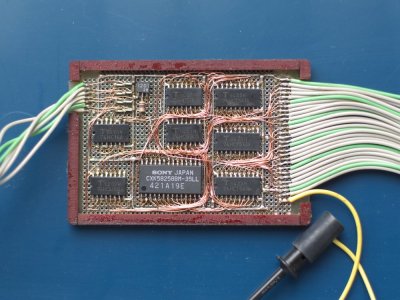
Back in the 90s when surface mount components gained widespread adoption, the quick and cheap PCB prototyping services of today were unavailable. This led many to develop their own approaches. In Japan a particularly novel and beautiful approach was, and still is, somewhat popular. [NE555]’s work is a excellent example of this technique using a fine enameled wire (you can find this on eBay as “magnet wire”), wirewrap board, and careful hand soldering. [NE555] has made a great video on the process (which you can watch below).
Friday was the 2016 Open Hardware Summit, a yearly gathering of people who believe in the power of open design. The use of the term “summit” rather than “conference” is telling. This gathering brings together a critical mass of people running hardware companies that adhere to the ideal of “open”, but this isn’t at the exclusion of anyone — all are welcome to attend. Hackaday has built the world’s largest repository of Open Hardware projects. We didn’t just want to be there — We sponsored, sent a team of people, and thoroughly enjoyed ourselves in the process.
Join me after the break for a look at the talks, a walk through the swag bags, and a feel for what this wonderful day held.
I am always torn about the title of “engineer.” When I talk to school kids about engineering, I tell that an engineer is a person who uses science and math to solve or analyze practical problems. However, these days you hear a lot of engineering titles thrown around to anyone who does any sort of technical (and sometimes non-technical) work. “Software engineers” don’t have to be licensed to practice, while civil engineers do. What’s in a name and does any of this matter?
Self-driving cars are something we are continually told will be the Next Big Thing. It’s nothing new, we’ve seen several decades of periodic demonstrations of the technology as it has evolved. Now we have real prototype cars on real roads rather than test tracks, and though they are billion-dollar research vehicles from organisations with deep pockets and a long view it is starting to seem that this is a technology we have a real chance of seeing at a consumer level.
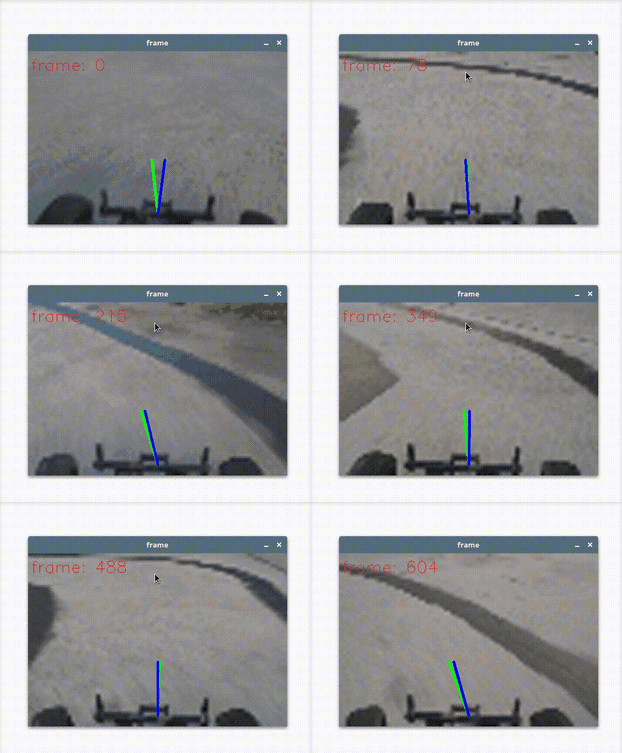
A self-driving car may seem as though it is beyond the abilities of a Hackaday reader, but while it might be difficult to produce safe collision avoidance of a full-sized car on public roads it’s certainly not impossible to produce something with a little more modest capabilities. [Jaimyn Mayer] and [Kendrick Tan] have done just that, creating a self-driving R/C car that can follow a complex road pattern without human intervention.
The NUC’s-eye view. The green line is a human’s steering, the blue line the computed steering.
Unexpectedly they have eschewed the many ARM-based boards as the brains of the unit, instead going for an Intel NUC mini-PC powered by a Core i5 as the brains of the unit. It’s powered by a laptop battery bank, and takes input from a webcam. Direction and throttle can be computed by the NUC and sent to an Arduino which handles the car control. There is also a radio control channel allowing the car to be switched from autonomous to human controlled to emergency stop modes.
They go into detail on the polarizing and neutral density filters they used with their webcam, something that may make interesting reading for anyone interested in machine vision. All their code is open source, and can be found linked from their write-up. Meanwhile the video below the break shows their machine on their test circuit, completing it with varying levels of success.
For the last seven months, Hackaday has been hosting the greatest hardware competition on Earth. The Hackaday Prize is a challenge to Build Something That Matters, asking hardware creators around the world to focus their skills to change the world.
The results have been spectacular. In five rounds of design challenges, we’ve seen more than 1000 entries and so far eighty of them have won $1000 and a chance to win the Grand Prize: $150,000 and a residency at the Supplyframe DesignLab in Pasadena.
Last week, we wrapped up the last challenge for the Hackaday Prize: Assistive Technologies. We’re now happy to announce twenty of those entries that have been selected to move to the final round and have been awarded a $1000 cash prize. Congratulations to the winners for the Assistive Technologies portion of the Hackaday Prize:
The finalists from each round are now being sent to our fantastic panel of judges. One of them will be awarded the Hackaday Prize. In addition to the prestige, they will win $150,000 and a residency at the Supplyframe DesignLab in Pasadena. Four more of the finalists will receive the other cash prizes of $25k, $10k, $10k, and $5.
Find out who will win live at the Hackaday Superconference on November 5th. The greatest hardware conference on the planet — the two-day hardware spectacular with an awesome speaker lineup, great workshops, and a fantastic community — includes the Hackaday Prize part. There’s still time to get a ticket to participate in this hardware spectacular and witness the crowning of the winner of The Hackaday Prize.
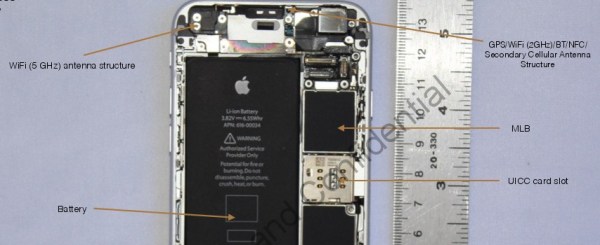
When a consumer electronics device is sold in the US, especially if it has a wireless aspect, it must be tested for compliance with FCC regulations and the test results filed with the FCC (see preparing your product for FCC testing). These documents are then made available online for all to see in the Office of Engineering and Technology (OET) Laboratory Equipment Authorization System (EAS). In fact, it’s this publishing in this and other FCC databases that has led to many leaks about new product releases, some of which we’ve covered, and others we’ve been privileged enough to know about before the filings but whose breaking was forced when the documents were filed, like the Raspberry Pi 3. It turns out that there are a lot of useful things that can be accomplished by poring over FCC filings, and we’ll explore some of them.
If you have ever thought that working out a Collatz sequence by hand was alright but lacked buttons and lights, the Collatz-o-matic by [mechatronicsguy] has you covered!
The device is a type of Tag system calculator. [mechatronicsguy] explains that a Tag system is a method of computing similar to a Turing machine; it consists of a read & write FIFO array (or tape or queue) of indeterminate length, and at every step the system reads the symbol at the “head”, deletes a fixed number of symbols from the “head”, and depending on what that first symbol was, appends one or more symbols to the “tail”. Then the process repeats with whatever new symbol is at the head.
The Collatz-o-Matic uses an RGB LED string to represent the queue, and is set up in the following way:
Delete two symbols (tags) from the front of the queue.
If the first symbol deleted was:
A – then write BC to the rear of the queue
B – then write A to the rear of the queue
C – then write AAA to the rear of the queue
Numbers are as easily represented as any other symbol, and the Collatz conjecture is that no matter what integer you start with, the system (probably) always eventually reaches state 1. There is video of the device demonstrating exactly that embedded below. Continue reading “The Collatz-O-Matic: A State Machine With Style!”→