Turning An Arduino Into A USB Keyboard

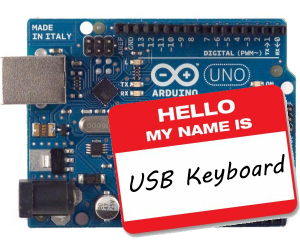
The newly released Arduino Leonardo has a few very interesting features, most notably the ability to act as a USB keyboard and mouse thanks to the new ATmega 32U4 microcontroller. This feature isn’t exclusive to the Leonoardo, as [Michael] explains in a build he sent in – the lowly Arduino Uno can also serve as a USB HID keyboard with just a firmware update.

The Arduino Uno (and Mega) communicate to your computer through a separate ATmega8U2 microcontroller. Simply by uploading new firmware with the Arduino Device Firmware Upgrade, it’s easy to have your old Arduino board gain some of the features of newer boards such as the Teensy or Leonardo.

[Michael] goes through the steps required to make this upgrade work and ends his build by showing off an Arduinofied ‘cut, copy and paste’ button project as well as a few multimedia controls. You can check those builds out in the video after the break.

If emulating a USB keyboard isn’t your thing, it’s also possible to install LUFA firmware to emulate everything from joysticks to USB audio devices. Very cool, and very useful.
Continue reading “Turning An Arduino Into A USB Keyboard”

Dollar Store Terminator Replica

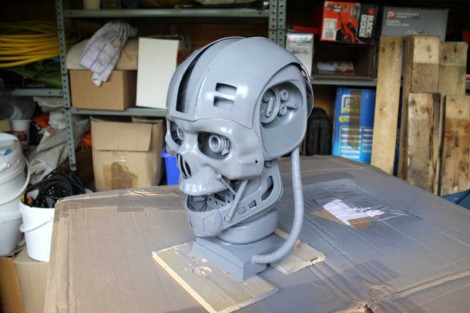
Okay, now we think [James] is just on a mission to see what he can build using the dollar store as his parts bin. This is the nearly finished replica of the cyborg skeleton from the Terminator franchise. It’s made mostly from things that cost $0.99.

Actually we’ve got that a bit wrong. [James] is really shopping at the £0.99 store but the concept is basically the same. He’s already shown us that he’s a pro at this with the arc reactor replica we recently saw from him. This time around a set of speakers donate their enclosures to build up the spinal column supporting the skull. Fittingly these are glued together using a hot glue gun from the store. The sides of the skull are carefully crafted from a set of four plastic bowls. The jaw comes together thanks to the corners of a plastic box’s lid. And finally the majority of the face is from a golden skull costume mask. Spray it all grey and pop in some LEDs for the eyes and he’s done it! He show’s off his final creation in the video after the break.

Continue reading “Dollar Store Terminator Replica”

Linux Picture Frame Serves As Wireless Raspberry Pi Display

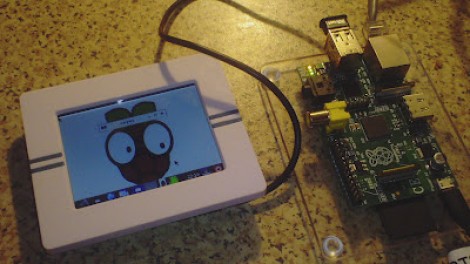
Here’s a novel approach to adding a display to your Raspberry Pi. Instead of using a wired display — either via the HDMI (which can feed a DVI port with a simple hardware adapter) or the composite video out — [Chris Bryden] decided to use Bluetooth to provide a wireless display. This really depends on the hardware that you have available. He snapped up a hackable digital picture frame for a song and used the 320×240 display for this project.

You can see the USB nub plugged into the RPi in the image above. It’s a Bluetooth dongle and there’s with a matching one on the digital frame. With the two networked in such a way [Chris] got to work setting up a VNC that would let him pull up the X desktop over the network.

This ends up being one of the best uses we’ve seen for the Bluetooth protocol, and the small screen offers a huge advantage over the use of a simple character display.

Building A CMOS Clock On A Breadboard

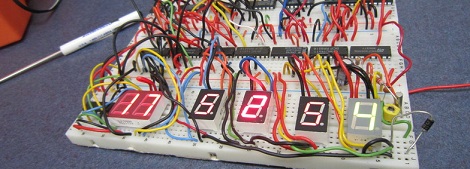
If you’re going to learn digital logic, why not aim high? That’s what [Easton] and his friend did when they built a clock using only 4000-series logic chips. On a breadboard, no less.

For a 1 Hz clock, [Easton] and his friend used a 4060 counter paired with a flip flop. This counts off 59 seconds until, with the help of an AND gate, the seconds counter rolls over to zero. After repeating that again for the minutes and building a similar circuit for the hour, and [Easton] had a working 4000-series 24-hour clock.

The breadboard clock may not be the prettiest thing, or a textbook example of how to prototype circuits,  but that was fixed with [Easton]’s friend’s PCB layout of a 12-hour clock. We couldn’t find any pics of this, but we’re sure it’s awesome and a great way to learn about logic and design.

An Interview With Laen (the Force Behind Dorkbot PDX)

[PT] recently interviewed [Laen], the man who makes it cheap and easy for hobbiests to have small PCBs manufactured. He created Dorkbot PDX’s PCB group order, a rapid turn PCB service which we see used in projects all the time (pretty much any purple PCB has gone through [Laen]).

Turns out his real name is [James Neal]. He’s a sysadmin by trade but deals in recreational circuitry at night. We were surprised to learn that the service has been rebranded. Its new name is OSH Park and it’s got a purple website with a new submission system. In the interview he discusses the genesis of the service. Inspired by a group parts order (that’s a mouthful!) with other hackers in Portland he saw a need for boards on which to mount them. The service has grown so much that he was spending 2-4 hours per night panelizing the designs. He made the wise choice to include an automated submission service in the new website that takes care of most of this work for him.

The rest of the interview spans a large range of topics. [Laen] shares his feelings on getting the boards manufactured domestically. He speaks briefly on the future of the service, and riffs on why open source hardware has value to him.

Quadrotor Opera Begs For Lasers And Pink Floyd

In case quadrocopters aren’t cool enough, here’s an orchestrated quadrotor light show that was shown at the Cannes Lions International Festival of Creativity this last week. With 16 quadrotors and a few can lights, it’s a light show not to be missed.

This quadrotor show was created by a collaboration between KMel robotics and Marshmallow Laser Feast. The guys behind KMel are the same brilliant minds behind this nanocopter swarm that can play the [James Bond] theme. For this light show, the guys at KMel Robotics used a Vicon motion capture system to coordinate the flock of quadrotors, as seen in this picture.

With a servo-controlled mirror on the bottom of each quatrotor, each vehicle in the fleet is able to reflect beams of light around the stage and into the audience. Now it’s only a matter of time until a setup like this is used for a showing of Laser Floyd.

Tip ‘o the hat to [cesar] for sending this one in. Via IEEE Spectrum.

Edit: They’re not can lights. After watching in 1080p, [Impulse405] is pretty confident they’re High End studio spots or a wash with a tight focus. Thanks for keeping us honest, [Impulse405]!

Resurrecting A PS3 Controller That Won’t Charge

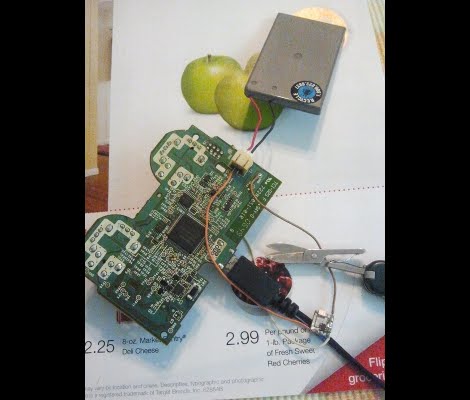
[SJM4306] grabbed a used PlayStation 3 from a game store that was going out of business. He got a pretty good deal on what had obviously been the floor model for a number of years. The one real problem was the controller that came with it. The thing was so filthy that he literally used gloves to disassemble and sanitize it. It worked just fine after that,until he discovered that it wouldn’t charge from the USB port as it’s supposed to. But he managed to replace the charging circuitry with some of his own.

When cleaning the insides of the controller he found there were numerous deposits of sludge which he attributes to spilled soda. This must have damage one of the chips responsible for charging because he was probing an unstable 2V rather than the regulated 5V which should be coming in on the USB lines. His solution was to desolder the USB port in order to separate its 5V pin from the PCB. He then etched a tiny board to host a MAX1555 charging IC. With the new hardware in place the controller is back in action.