LG TV Hacking Via Serial Connection Or IR Codes

[Brendan Robert] has been sending us forum thread links outlining the things he’s learned while hacking LG televisions. They were a bit hard to follow for the uninitiated, so we asked if he could give us an overview of what he’s been working on. Not only did he do that, but he made a little Hackaday shout-out seen above by adding the skull and cross-wrenches as one of the menu overlays.

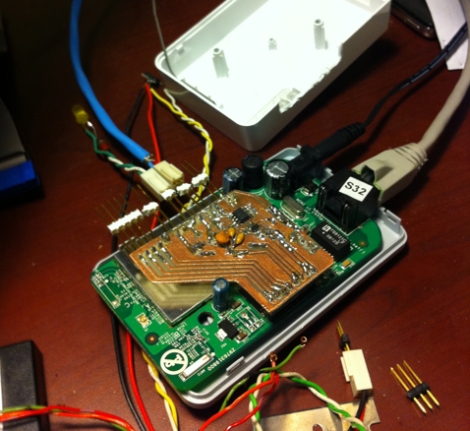
He’s using a TV as his computer monitor, which he picked up at a discount because it was a display model. Without the original remote, and wanting to have features like power-saving mode which is standard on monitors but not on this TV, he decided to see what he could accomplish. A couple of things made this quite a bit easier. First, there’s an RS232 port built into the back which removes the need to investigate and solder your own onto the board. Secondly, since LG built on the Linux kernel for the set, you can download some of the firmware sources from their website.

What he came up with is a script that will find and communicate with the TV over the serial connection. The test script used during development polled every possible command, looking for valid return values. Once [Brendan] established which commands work and what they do, he was able to take command of the unit, writing scripts to adjust brightness based on the ambient light in the room as seen from the computer’s webcam. Make sure you check out the sub-pages to his post that detail the brightness adjustments, stand-by functionality, custom overlay graphics, and the extra commands he uncovered.
Bypassing Manufacturer-imposed Battery Lockouts

sony_battery_cell_swapping

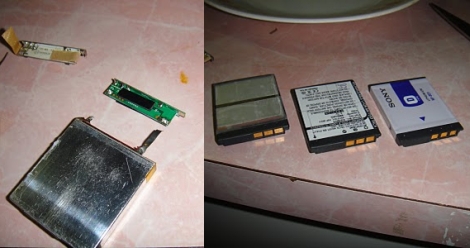
When [Barret] went to use his camera the other day it kept shutting down on him, and upon inspecting the battery, he found that it was a bit swollen. Knowing that he needed a replacement, he turned to an aftermarket battery he had sitting around, but grew pretty annoyed when his Sony Cybershot camera would not accept it.

Apparently a recent firmware update causes his camera to reject non-Sony batteries, a situation he describes as “battery DRM”. There was no way he was going to pony up another $50 to Sony instead of using the perfectly good $10 battery he already had, so he decided to rectify the issue himself.

He stripped both batteries of their plastic coatings, revealing the lithium cells and their charging circuits. He desoldered the PCB from his Sony battery, transplanting it to his aftermarket battery after a little bit of trimming. He wrapped everything up with some tape and gave his franken-battery a spin. It worked a treat, and he was so satisfied with it that he did a similar swap in his aging Logitech mouse.

As more and more companies lock competitors out of the user-replaceable consumables market, these sorts of hacks are certain to become more and more prevalent.

Controlling An Infuriating Game With An Accelerometer

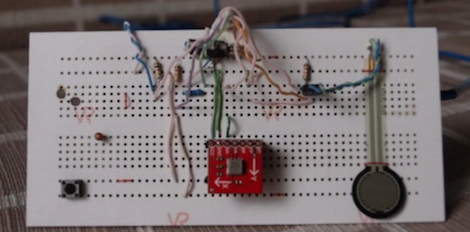
[Daniel] just made a motion controlled game controller to go with his infuriating game. Thankfully, [Daniel] posted the source for this game so first time players already know the level select codes.

The controller is based on an Arduino Uno with what looks to be a Sparkfun 2-axis accelerometer providing the tilt sensing. A similarly sourced half-inch force sensitive resistor and temperature sensor control the ‘jump pads’ in the game. A small vibrating pager motor strapped onto the controller as a rumble pack.

Continue reading “Controlling An Infuriating Game With An Accelerometer”

Klout Klok Tracks Your Popularity, Time

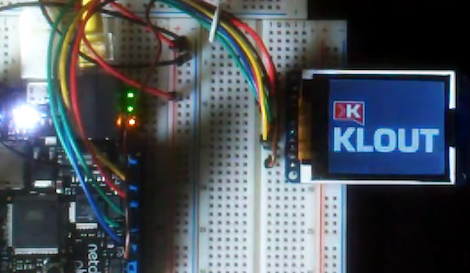
[Fabien Royer] has been playing around with Netduinos and he just came up with a really awesome project that will display the time and social media popularity. It’s a very nice build, and we’d guess that his social media influence is going to go up very shortly.

Klout is a service that connects to your Facebook or Twitter profile and tells you how much influence you have on a scale of 1 to 100 (possibly 10 to 100. see this). To build the Klout Klock [Fabian] used a Netduino Plus, a good choice because of the integrated ethernet port. The Netduino connects to the Klout API to either satiate vanity or admit prestige. The display is an adafruit TFT screen.

Continue reading “Klout Klok Tracks Your Popularity, Time”

Using A Router As A Linux-based PID Controller

espresso_machine_pid

[Nathan] had an small router kicking around and thought that he might as well put it to good use. He had always been interested in getting a better handle on his espresso machine, and figured that the router would be a perfect Linux-based PID controller.

He installed OpenWRT on the router, then disassembled it in order to get access to the router’s GPIO pins. He built a small PCB that allows him to get temperature info from the machine to the router using i2c. [Nathan] put together a PID package for OpenWRT, allowing him to control the machine over SSH, though he may build in a user-friendly web interface sometime in the future.

He says that most espresso machine PID controllers he has seen come in the form of big ugly boxes slapped on the side of the machine’s case, though we have to disagree with him on that point. Opinions aside, he is going for a minimalist design, and while he says that he is only about half way through the project, we think things are looking promising so far.

When everything is said and done, we hope to get a much closer look at all of his code, schematics, and more information on the router he used as well.

Followup: Portable SID Player Is Now PC Output

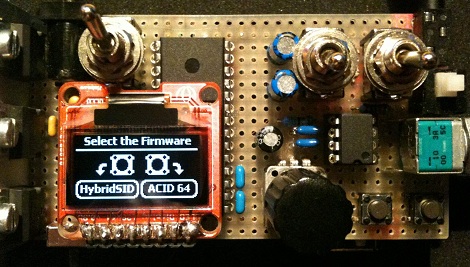
When we first covered [Markus]’ portable SID player we starting dreaming about an alternative universe circa 1987 that included a pocket-sized music player called the Commodore ePod. [Markus]’ updated firmware that connects his SID player to a PC will have to do for now, we suppose.

Continue reading “Followup: Portable SID Player Is Now PC Output”

Amazing Pipe Organ Desk Features Secret Compartments And An All-wood Logic Board

wood_organ_desk_with_secret_compartment

Feeling pretty good after putting together your brand new standing computer desk? Step aside please, [Kagen Schaefer] has something he’d like to show you.

His Pipe Organ Desk is undoubtedly one of the coolest pieces of furniture we have seen in a long time. The project took [Kagen] over three years to complete, which sounds about right once you see how much attention was put into every last detail.

This desk is amazing in several ways. First off, the entire desk was constructed solely from wood. The drawers, the supports, knobs, screws, and even the air valves – all wood. Secondly, when one of the desk’s drawers are pushed in, air is directed to the organ pipes at the front of the desk, which plays a note.

A small portion of the air is also directed into the desk’s pneumatic logic board, which keeps track of each note that has been played. When someone manages to play the correct tune, a secret compartment is unlocked. The pneumatic logic board is an unbelievable creation, consisting of well over 100 wooden screws which can be tuned to recognize any number of “secret tunes”.

Sure a well-placed axe can open the compartment too, but who would destroy such a fine piece of work?

[via Make]