Analog Computer Does Math

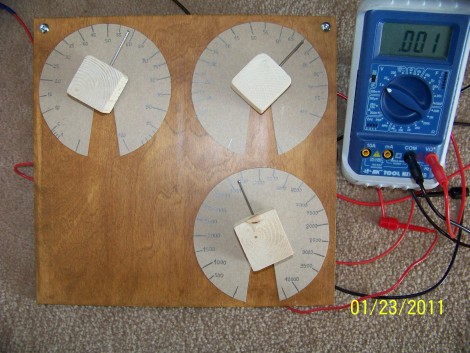
This analog computer can multiply, divide, square numbers, and find square roots. It has a maximum result of ten billion with an average precision of 2-3%. [Miroslav’s] build recreates something he saw in a Popular Electronics magazine. It uses a resistor network made up of three potentiometers with a digital multimeter is an integral part of the machine. To multiply a number you set the needles on the first two knobs to the numbers on which you are operating. To find the result turn the third knob until the multimeter has been zeroed out and read the value that knob is pointing to. It seems much more simple than some of the discrete logic computers we’ve seen, yet it’s just as interesting.
Touch Sensors: Overview, Theory, And Construction

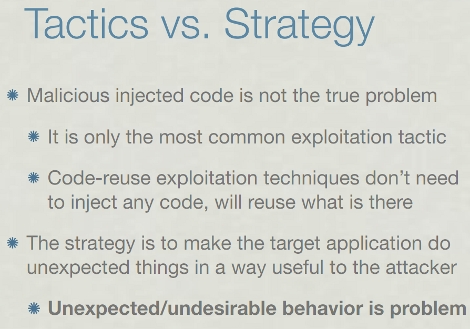
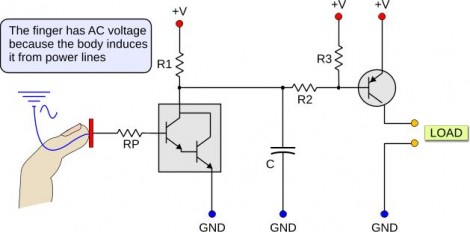
This collection of touch sensor information should be of interest to anyone who liked the simple touch sensor post from Thursday. That was a resistive touch sensor and is covered in detail along with AC hum sensors that trigger based on induced current from power lines around you, and capacitive touch switches like we’ve seen in past hacks. Each different concept is discussed and clearly illustrated like the slide above. [Giorgos Lazaridis] has also put together individual posts that build and demonstrate the circuits. We’ve embedded his resistive sensor demo video after the break and linked to all three example circuits.

Continue reading “Touch Sensors: Overview, Theory, And Construction” →

Charging Timer For R/C Batteries

arduino_controlled_socket

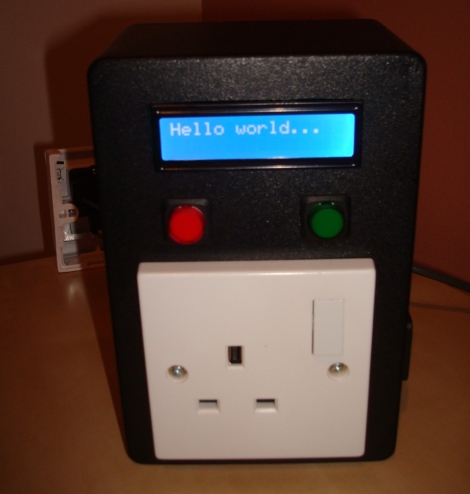
Santa brought [Quinten’s] son a shiny R/C truck for Christmas, but this new toy had one drawback – its batteries could only be connected to the charger for a maximum of 6 hours, lest he turn his house into a pile of smoldering ash.  With grave warnings from the manufacturer dancing in his head, he searched around for a timer that would allow him to cut power to the battery after charging for its allotted time.  Coming up empty, he decided to create his own timed electric socket regulated by an Arduino he had sitting around.  He grabbed a project box and wired up a nice looking socket timer, complete with an LCD status display.  To make things easy for his son, he added two buttons to the front of the controller – one for selecting the amount of charging time, and one to set the timer in motion.  As with his previous hacks, [Quinten] has provided plenty of documentation in the form of pictures, code, and even a video of the timer in action.

The Future Of Cyberattacks

[Dino A. Dai Zovi] gave a talk in the earlier part of 2010 where he shares his thoughts on the future of malicious exploits. You can watch it on Ustream and he’s also posted a set of slides (PDF) that goes along with it. We find the 48 minute video to be quite interested. Instead of going into mundane detail, he covers the broader picture; what has been done in the past, what will happen in the future, and how are we currently ill-equipped to respond to future threats? That last question is covered throughout the video, but seems to come back to the concept that we are stuck in a rut of terminology and past practice that is impeding our ability to innovate security strategies at the same rate that the bad guys are coming up with the next nasty thing to come down the pipeline.

MIDI Input For The Kaossilator

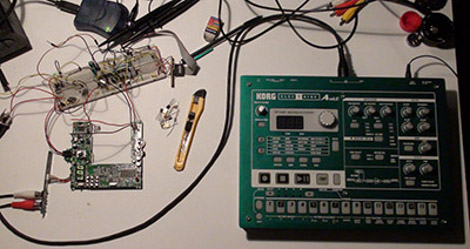
This isn’t strictly a MIDI input hack; [Furrtek] pulled off an alternate input hack for the Kaossilator that he’s currently using with a MIDI connection. In its unhacked form the Kaossilator is a small touchpad-based sound manipulation tool. [Furrtek] sniffed out how the touchpad data is read and used on the little device. He then purposed an ATtiny2313 as the core of a circuit that spoofs those signals. The microcontroller now listens for incoming MIDI data, looks up the proper signal translations in a table, then outputs them to the Kaossilator.

In the video after the break you can see that it works perfectly, with no lag or noticeable problems. As we alluded to at the top, there could be so much more done with this. Since the ATtiny2313 is merely translating MIDI into touchpad signals, the input could be anything. The first thing that comes to mind is a dance floor that changes the music based on how many people are out there tearing it up. Continue reading “MIDI Input For The Kaossilator” →

CNC Milled Docking System For Droid

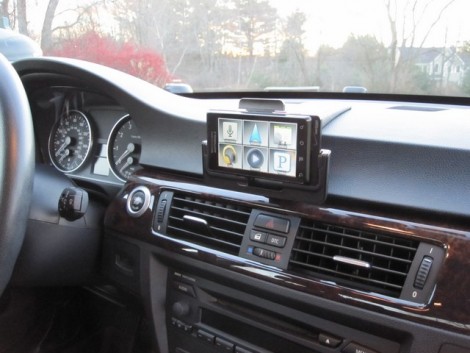
[Steve] wanted a dock for his Droid phone but couldn’t bear to put cheap-looking parts in his nice BMW. He decided to build his own in order to satisfy his functional and stylistic needs. His main goal was to have a dock with no wires showing, but it also needed to be removable and have the ability to work with different devices (GPS, Droid, etc.).

The hardest part of a build like this is matching the bracket system to the car’s interior. [Steve] sidestepped the problem by starting with a commercial mounting bracket made specifically for the BMW E90 series. From there he added the female half of a mounting bracket he milled himself. The male half connects to this part using an edge connector, passing signals and power between the car and whichever device is currently installed. This way he can design brackets for different devices and not change what’s in the car.

To get a closer look, check out the video after the break. The system he came up with looks wonderful and works great.

Continue reading “CNC Milled Docking System For Droid” →

Shotgun Blast Lights Up Your Controller

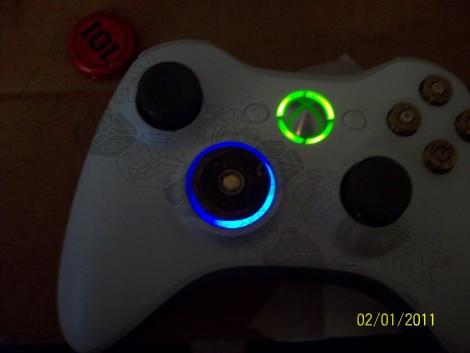
[Jrfhoutx] makes gaming in the dark a bit easier with this backlight shotgun shell d-pad for an Xbox 360 controller. He’s building on another tutorial he posted showing how to use the brass base of a shotgun shell to replace the stock plastic direction pad. That hack uses most of the original plastic part, cutting it down a bit and capping it off with the shell base. But now he’s detailing the process used to add LEDs around the base. He picked surface mount 0603 packages which are first chained together, then held in place using hot glue. While you’re in there, give this rapid-fire mod a try as well.