Floating Globe, Hacked To Rotate

they need to hire this guy

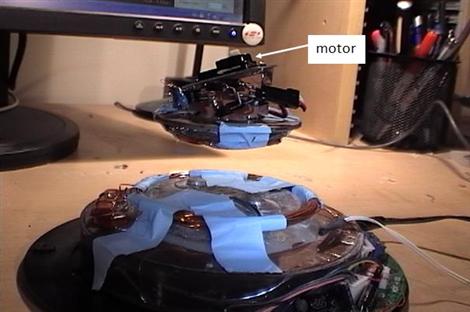
[Alexy Sha] has done this fantastic hack, where he modified a magnetic floating globe to be motorized and spin on a tilted axis. The original globe was simply levitating via a magnet mounted inside. Though you could spin it by hand, it wasn’t motorized, and actually floated completely vertically instead of being tilted.

[Alexy] wanted to take this idea further and make it automatically spin on a rotated axes. He built a rotation assembly that was basically a motor, hung off-center, attached at the center of the globe. He had to power it via a coil hidden in the base unit, so that it could remain light enough to float. He did a fantastic job and the final product seems like it is the true way it should have been sold.

Check out a video of it in action after the break. We actually like the spinning ring, when he’s testing it, just as much as the final spinning globe.
Continue reading “Floating Globe, Hacked To Rotate”

Controlling An AC Drill Using One PWM Connection

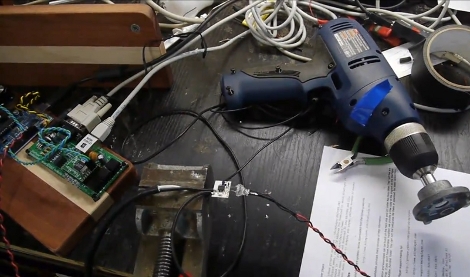
This peculiar setup allows [Ben Krasnow] to control an alternating current device using one pin on a microcontroller. He’s experimenting with a power drill and has relocated the trigger circuitry that makes it spin. On that board he found a variable resistor combined with a capacitor which control a triac, actuating the speed of a drill. [Ben’s] solution works great and isolates the drill from the control circuitry. He replace the variable resistor with a cadmium sulfide photoresistor (basically a variable resistor whose resistance depends on the intensity of light). Pulse-width modulation is used to adjust the brightness of an LED shining on that photoresistor and thereby affect the speed of the drill. This is such as simple alteration to the drill we’d call it MacGyver-esque.

See a demonstration after the break.

Continue reading “Controlling An AC Drill Using One PWM Connection”

Pressure Mapping Sensor Mat

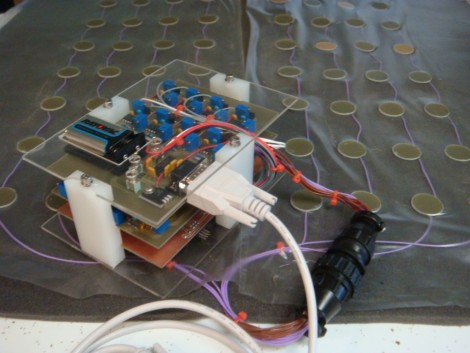
[imsolidstate] built his own pressure sensitive mat. It utilizes two discs of copper clad board with a piece of foam in between for each of 64 sensors. As the foam gets compressed, the capacitance between the two pieces of copper changes, a measurement that is fairly easy to make with an analog to digital converter. The mat is being used to measure how well a horse saddle fits the animal. Data is read in through a serial port and then mapped using Excel. This prototype proves that the concept works but [imsolidstate] mentions that there’s room to improve the sensitivity and that there could be more noise filtering incorporated into the design.

Spy Video TRAKR: The Teardown

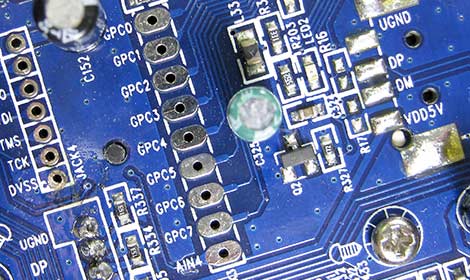
Last Friday we looked at Wild Planet’s Spy Video TRAKR programmable RC vehicle mostly from an end user perspective. Much of our weekend was spent dismantling and photographing the device’s internal works, and poring over code and documentation, in order to better gauge the TRAKR’s true hackability. Our prior review included some erroneous speculation…we can clarify a number of details now, and forge ahead with entirely new erroneous speculation!

Continue reading “Spy Video TRAKR: The Teardown”

Use A Big Magnet To Set The Time

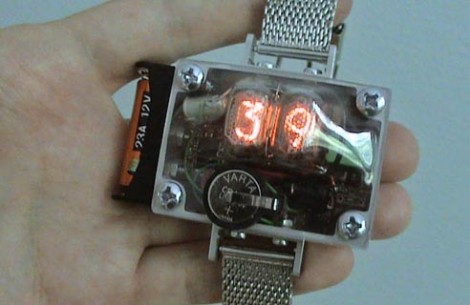
This bulky package is a Nixie tube wristwatch. We still like [Woz’s] watch better but this one has a few nice tricks of its own. Notably, there aren’t any buttons to set the time. Instead, a large magnet is used to actuate a magnetic switch inside the body. Speaking of enclosures, the case is aluminum and the face plate is polycarbonate but looks like it’s been vacuum formed. Check out the clip after the break.

Continue reading “Use A Big Magnet To Set The Time”

Arduino Based Thermal Printer

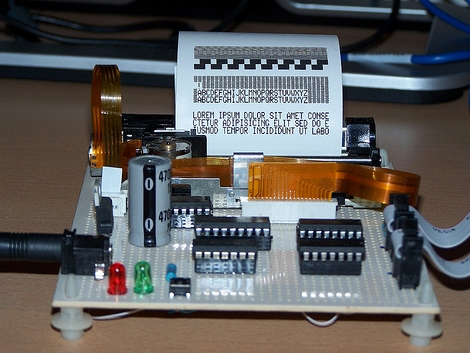
[Manuel] built his own thermal printer based around an Arduino. We’re a bit confused about the parts, his webpage specifies an EFA-1019HW2 print head but the bill of materials on his github shows EPT-1019W2. We can’t find a source for either product number, but we did find similar thermal line printers for as low as $32.00. The controller boards on the other hand look to be around $150 so building your own is a definite win. [Manuel’s] version can print 96 points and has a font set that prints 32 characters per line. Check out the video after the break and let us know if the noise of the print head is a deal killer for you.

Continue reading “Arduino Based Thermal Printer”

USB Typewriter

clickety-clackity-clickety-clackety-DING

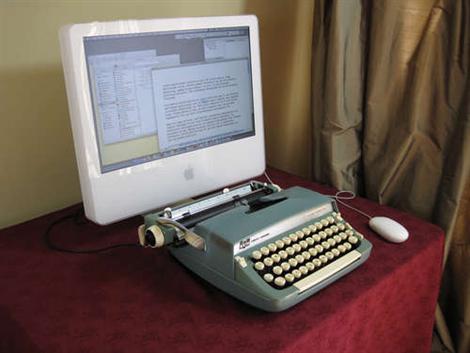
[Jackzylkin] has posted an instructible showing, in detail, the process of creating a USB typewriter. He takes us through the process of disassembling the typewriter, mounting all the sensors where the little hammers strike, and wiring it all up to a custom board to interface with the computer via USB. While he is selling the board, the schematics are available if you want to build your own. We think the clickety-clack of a real typewriter could be very satisfying to the touch, though it might drive your co workers insane. The younger ones might also quiz you as to what that archaic machine is. We’ve actually seen this done before, way back in 2005.