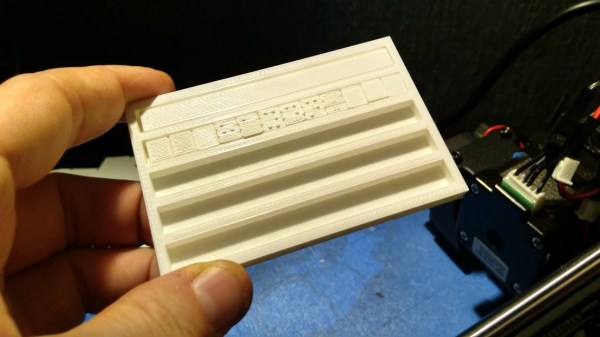
Nuts And Bolts: Keeping It Tight

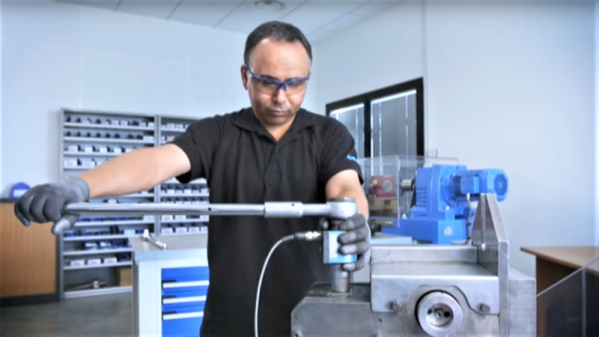
It’s not much of a stretch to say that without nuts and bolts, the world would fall apart. Bolted connections are everywhere, from the frame of your DIY 3D printer to the lug nuts holding the wheels on your car. Though the penalty for failure is certainly higher in the latter than in the former, self-loosening of nuts and bolts is rarely a good thing. Engineers have come up with dozens of ways to make sure the world doesn’t fall apart, and some work better than others. Let’s explore a few of these methods and find out what works, what doesn’t work, and in the process maybe we’ll learn a little about how these fascinating fasteners work.

Continue reading “Nuts And Bolts: Keeping It Tight”

Friday Hack Chat: 8-Bit Micros With Microchip

A few years ago, Microchip acquired Atmel for $3.56 Billion. There are plenty of manufacturers of 8-bit microcontrollers, but everyone makes 8051s, and the MSP430 isn’t as popular as it should be. Microchip’s acquisition of Atmel created what is probably the largest manufacturer of 8-bit micros, with a portfolio ranging from ATtinys smaller than a grain of rice to gigantic PICs.

This Friday, we’re hosting a Hack Chat with the Technical Marketing Engineer of 8-bitters at Microchip. If you love AVR, this is the guy to talk to. If you’re still rocking the vintage 1993 PICkit, this is the guy to talk to.

On the docket for this Hack Chat are some new PICs and some very interesting peripherals coming down the line. ADCC — A2D with computation — is on the table, along with configurable logic cells. This Hack Chat is also going to go over Microchip design tools like MP Lab Xpress.

Of course, these Hack Chats are a question and answer session for the community. We’re encouraging everyone to ask a few questions about what Microchip is doing. We’ve opened up a discussion guide for this Hack Chat. If you have a question, just add it to the list.

If you can’t make the Hack Chat, don’t worry. We’re going to have a transcript of the entire chat. That should be available here shortly after the chat concludes.

Here’s How To Take Part:

join-hack-chatOur Hack Chats are live community events on the Hackaday.io Hack Chat group messaging. This hack chat will take place at noon Pacific time on Friday, June 9th. Here’s a fancy time and date converter if you need timezone help.

Log into Hackaday.io, visit that page, and look for the ‘Join this Project’ Button. Once you’re part of the project, the button will change to ‘Team Messaging’, which takes you directly to the Hack Chat.

You don’t have to wait until Friday; join whenever you want and you can see what the community is talking about

Fail Of The Week: Sand Casting Copper

There’s trouble in the Kingdom of Random – the smithies of the realm are having trouble sand-casting copper. And while [King Grant] might not be directly asking for help, we think the Hackaday community might have plenty to say about his efforts.

We’ve all seen plenty of sand casting efforts before, including attempts to make otherwise unobtainable engine parts. And “lost foam” casting, where a model of the part is constructed of polystyrene foam that flashes off when the molten metal is poured, is a relatively new twist on the technique that’s been used to good effect on a recent Gingery lathe build. But most backyard foundries work in aluminum, which is apparently much easier to work with than the copper that [Grant Thompson] is working with. Ironically, his first pour worked the best — not perfect, but at least the islands defining the spokes of his decorative piece didn’t break off and float away as they did in every pour shown in the video below. That leads us to think that the greensand is too dry by the second video. Or perhaps the density of copper just makes it more likely for the sand to float. Maybe a cope and drag mold is in order to keep the islands in place and direct the flow of the copper better.

We know there’s a lot of expertise out there, so sound off in the comments about what you think is going on with these pours.

Continue reading “Fail Of The Week: Sand Casting Copper”

Show Us Your Internet Of Useful Things By Monday

Don’t forget to get your connected device entered in the Hackaday Prize by Monday morning. The current challenge is IuT ! IoT, a clever tilt at the Internet of Things, which is so hot right now. We don’t just want things to connect, we want that connection to be useful, so save your Internet Toasters and Twittering Toilets for another round.

So what are we looking for here? Any device that communicates with something else and thereby performs a service that has meaningful value. The Hackaday Prize is about building something that matters.

We’ve been covering a lot of great entries. HeartyPatch is an open source heart rate monitor and ECG that communicates through a smart phone. We’ve seen an affordable water level measuring station to help track when water levels are rising dangerously fast in flood prone areas. And the heads-up display for multimeters seeks to make work safer for those dealing with high voltages. Get inspired by all of the IuT ! IoT entries.

There’s $20,000 at stake in this challenge alone, as twenty IuT projects will be named finalists, awarded $1000 each, and move on to compete for the top prizes in the finals.

If you don’t have your project up on Hackaday.io yet, now’s the time. Once your project is published, entering is as easy as using the dropdown box on the left sidebar of your project page. [Shulie] even put together a quick video showing how to submit your entry. Check to make sure “Internet of Useful Things” is listed on your project’s sidebar and if not, use that dropdown to add it.

Automate The Freight: Maritime Drone Deliveries

Ships at sea are literally islands unto themselves. If what you need isn’t on board, good luck getting it in the middle of the Pacific. As such, most ships are really well equipped with spare parts and even with raw materials and the tools needed to fabricate most of what they can’t store, and mariners are famed for their ability to make do with what they’ve got.

But as self-sufficient as a ship at sea might be, the unexpected can always happen. A vital system could fail for lack of a simple spare part, at best resulting in a delay for the shipping company and at worst putting the crew in mortal danger. Another vessel can be dispatched to assist, or if the ship is close enough ashore a helicopter rendezvous might be arranged. Expensive options both, which is why some shipping companies are experimenting with drone deliveries to and from ships at sea. Continue reading “Automate The Freight: Maritime Drone Deliveries”

Designing Products With Injection Molding In Mind

3D printing is a technique we’ve all been using for ages at home, or via Shapeways, but if you are designing a product, 3D printing will only get you so far. It’s crude, slow, expensive, and has lots of limitations. While it’s great for the prototyping stage, ultimately products manufactured in volume will be manufactured using another method, and most likely it will be injection molding. Knowing how to design a part for injection molding means you can start prototyping with 3D printing, confident that you’ll be able to move to a mold without major changes to the design.

The 2017 Hackaday Prize includes a $30,000 prize for Best Product as we seek products that not only show a great idea, but are designed for manufacturing and have thought through what it takes to get them into the hands of the users. Some of the entries seem to be keenly aware of the challenges associated with moving from prototyping to production. Here are some examples of best practices when prototyping with future injection molding in mind.

Continue reading “Designing Products With Injection Molding In Mind”

Hackaday Links: June 4, 2017

Quick question: what was the first personal computer? We love pointless arguments over technological history, so let’s just go down the list. It wasn’t an IBM, and the guy who invented the personal computer said he didn’t invent the personal computer. The Apple I is right out, and there were some weird Italian things that don’t quite count. Here’s an auction for, “The first personal computer”, a MICRAL N, released in 1974. There’s an 8080 running at 500kHz with 16kB of RAM and ‘mixed memory’. This is an important bit of history that belongs in a museum, and the auction will start at €20,000. The starting price might be a bit high; recently an original Apple I sold at auction for €90,000. This is a pittance for what these things usually go for. Is the market for vintage retrocomputers dropping out from underneath us? Only time will tell.

In Upstate NY? There’s a Hacker con going on June 16-17. You can get 20% off your ticket to ANYCon by using the code ‘HACKADAY’.

Colorblind? Hackaday readers suffer from colorblindness at a higher rate than the general population. [João] created this really neat tool to differentiate colors on a screen. Windows only, but still handy.

Everyone’s excited about the $150 3D printer that will be released by Monoprice sometime this summer. Here’s a $99 3D printer. Yes, it’s a Kickstarter so the standard warnings apply, but this bot does have a few things going for it. It uses actual NEMA 17 motors, and the people behind this printer actually have experience in manufacturing hardware. The downsides? It’s entirely leadscrew driven, so it’s going to be very, very slow.

What do you call the dumbest person with an EE degree? An engineer. It’s at this point where you should realize the value of a tertiary education is not defined by the most capable graduates; it’s defined by the least capable graduates.

Here’s your Sunday evening viewing: [Bunnie] gave a talk on RISC-V and the expectations of Open Hardware.

Hey, OpenBuilds has a new Mini Mill. It’s a basic CNC router designed for small ~1HP Bosch or Dewalt laminate trimmers. Small, but capable.

Kerbal Space Program, the only video game that should be required study materials at the Air Force Academy, Embry-Riddle and for everyone working at NASA, has been acquired by Take-Two Interactive. By all accounts, this is good news. According to reports, the original dev team left for Valve a few months ago, reportedly because of terrible conditions at Squad, the (former) developer of KSP.

The Stratolaunch carrier aircraft has rolled out of the hangar. It’s two 747s duct speed taped together.