Linux Fu: Automatic Header File Generation

I’ve tried a lot of the “newer” languages and, somehow, I’m always happiest when I go back to C++ or even C. However, there is one thing that gets a little on my nerves when I go back: the need to have header files with a declaration and then a separate file with almost the same information duplicated. I constantly make a change and forget to update the header, and many other languages take care of that for you. So I went looking for a way to automate things. Sure, some IDEs will automatically insert declarations but I’ve never been very happy with those for a variety of reasons. I wanted something lightweight that I could use in lots of different toolsets.

I found an older tool, however, that does a pretty good job, although there are a few limitations. The tool seems to be a little obscure, so I thought I’d show you what makeheaders — part of the Fossil software configuration management system. The program dates back to 1993 when [Dwayne Richard Hipp] — the same guy that wrote SQLite — created it for his own use. It isn’t very complex — the whole thing lives in one fairly large C source file but it can scan a directory and create header files for everything. In some cases, you won’t need to make big changes to your source code, but if you are willing, there are several things you can do.

Continue reading “Linux Fu: Automatic Header File Generation”
Linux Fu: Globs Vs Regexp

I once asked a software developer at work how many times we called fork() in our code. I’ll admit, it was a very large project, but I expected the answer to be — at most — two digits. The developer came back and read off some number from a piece of paper that was in the millions. I told them there was no way we had millions of calls to fork() and, of course, we didn’t. The problem was the developer wasn’t clear on the difference between a regular expression and a glob.

Tools like grep use regular expressions to create search patterns. I might write [Hh]ack ?a ?[Dd]ay as a regular expression to match things like “HackaDay” and “Hack a day” and, even, “Hackaday” using a tool like grep, awk, or many programming languages.

Continue reading “Linux Fu: Globs Vs Regexp”

IC Shortage Keeps Linux Out Of Phone Charger, For Now

We’ve been eagerly following the development of the WiFiWart for some time now, as a quad-core Cortex-A7 USB phone charger with dual WiFi interfaces that runs OpenWrt sounds exactly like the sort of thing we need in our lives. Unfortunately, we’ve just heard from [Walker] that progress on the project has been slowed down indefinitely by crippling chip shortages.

At this point, we’ve all heard how the chip shortage is impacting the big players out there. It makes sense that automakers are feeling the pressure, since they are buying literally millions of components at a clip. But stories like this are a reminder that even an individual’s hobby project can be sidelined by parts that are suddenly 40 times as expensive as they were when you first put them in your bill of materials.

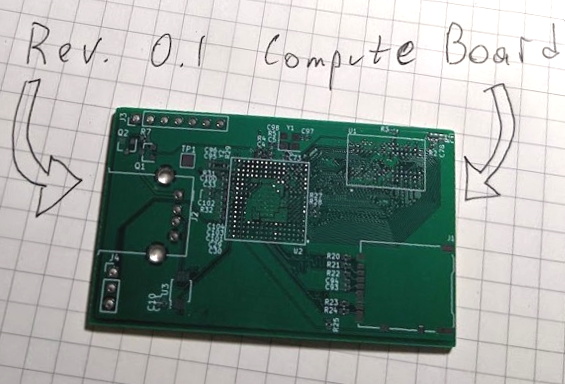
The new miniature compute board.

In this particular case, [Walker] explains that a power management chip you could get on DigiKey for $1.20 USD a few months ago is now in such short supply that the best offer he’s found so far is $49.70 a pop from an electronics broker in Shenzhen. It sounds like he’s going to bite the bullet and buy the four of them (ouch) that he needs to build a working prototype, but obviously it’s a no go for production.

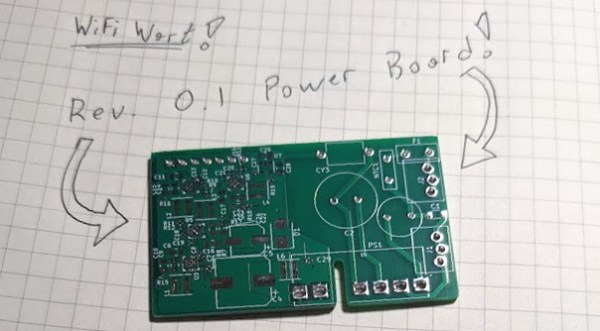
Luckily, it’s not all bad news. [Walker] has made some good progress on the power supply board, which will eventually join the diminutive computer inside the USB charger enclosure. Part of the trick is that the device is still supposed to be a functional USB charger, so in addition to 5 VDC for the output port, the power supply also needs to produce 1.1 V, 1.35 V, 2.5 V, 3.0 V, and 3.3 V for the computer. We’re glad to see he’s taking the high road with his mains circuitry, making sure to use UL listed components and maintaining proper isolation.

When we last checked in on the WiFiWart back in July, [Walker] had already managed to boot Linux on his over-sized prototype board. Now he’s got PCBs in hand that look far closer to the final size and shape necessary to tuck them into a phone charger. It’s a shame that the parts shortage is slowing down progress, but we’re confident we’ll at least get to see a one-off version of the WiFiWart powered up before the year is out.

Making Linux Offline Voice Recognition Easier

For just about any task you care to name, a Linux-based desktop computer can get the job done using applications that rival or exceed those found on other platforms. However, that doesn’t mean it’s always easy to get it working, and speech recognition is just one of those difficult setups.

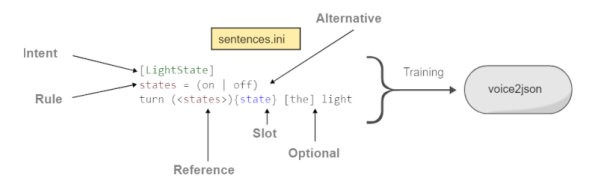
A project called Voice2JSON is trying to simplify the use of voice workflows. While it doesn’t provide the actual voice recognition, it does make it easier to get things going and then use speech in a natural way.

The software can integrate with several backends to do offline speech recognition including CMU’s pocketsphinx, Dan Povey’s Kaldi, Mozilla’s DeepSpeech 0.9, and Kyoto University’s Julius. However, the code is more than just a thin wrapper around these tools. The fast training process produces both a speech recognizer and an intent recognizer. So not only do you know there is a garage door, but you gain an understanding of the opening and closing of the garage door.

Continue reading “Making Linux Offline Voice Recognition Easier”

Linux Fu: User Space File Systems — Now For Windows, Too!

One of the nice things about the Unix philosophy that Linux inherited is that the filesystem is very modular. That’s good, too, because a typical system might want a choice of filesystems like ext4, reiserfs, btrfs, and even network systems like nfs. Besides that, there are fake file systems like /sys and /dev that help Linux make everything look like a file. The downside is that building a filesystem required changing the kernel or, at least, writing a loadable module. That’s not as hard as it sounds, but it is a little more difficult than writing a normal program. Then came FUSE — file system in user space. This is a single file system module that allows you to create new file systems by writing ordinary code.

Continue reading “Linux Fu: User Space File Systems — Now For Windows, Too!”

Raspberry Pi And ESP32-S2 Team Up For MutantC_V4

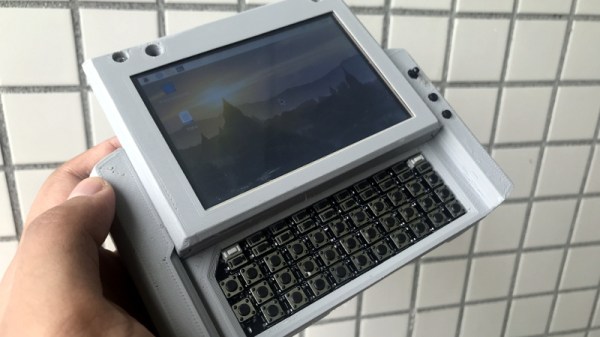
Back in 2019 we first came across the mutantC, an open source 3D printable Raspberry Pi handheld created by [rahmanshaber] that took more than a little inspiration from Sony’s VAIO ultra-mobile PCs (UMPCs) from the early 2000s. It was an impressive first effort, but it clearly had a long way to go before it could really be a practical mobile device.

Well after two years of development and three iterative versions of this Linux powered QWERTY slider, [rahmanshaber] is ready to show off the new and improved mutantC_v4. Outwardly it looks quite similar to the original version, with the notable addition of a tiny thumbstick and a pair of programmable buttons on the right side that can be used for input in addition to the touch screen. But inside it’s a whole other story, with so many changes and improvements that we hardly even know where to start.

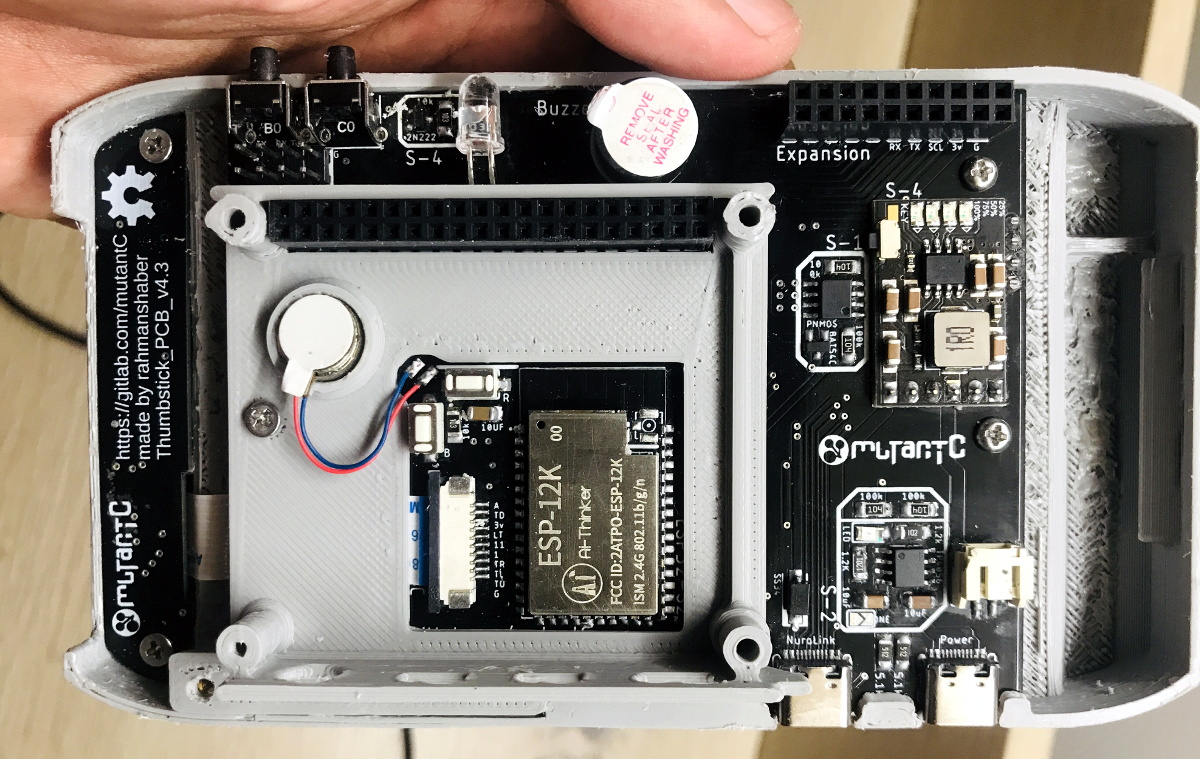
Inside the mutantC_v4, showing off the ESP32-S2

Probably the most notable improvement is the addition of an ESP32-S2, specifically a bare ESP-12K module, to the main PCB. Previous versions of the hardware used an Arduino Pro Micro to interface with all the hardware, but the added horsepower of the ESP32 should come in handy with the array of sensors, controls, and NeoPixels that [rahmanshaber] has tasked the chip with. There’s even a buzzer and a coin-style vibration motor in there to provide some feedback to the user. While the board has changed significantly, it still retains compatibility with the Pi Zero, 2, 3, and 4.

Another notable addition is the expansion connector on the bottom of the handheld that has pins for I2C, UART, and 3.3 V. In the video below, [rahmanshaber] mentions that this feature was previously implemented with a standard 2×6 female header block, but is now using a far slimmer female USB-C port. We do wonder if it’s not a bit confusing to have this faux-USB port right next to the real one that’s actually used to charge the system, but with such cramped quarters occasionally you’ve got to make some tough decisions like that.

It’s quite inspiring to see how [rahmanshaber] has honed his skills since releasing the first version of the mutantC. The 3D printed parts and PCBs have matured considerably over the last two years, showing how quickly a dedicated hobbyist can advance their abilities. The most recent version has been entered in the 2021 Hackaday Prize. But the show isn’t over yet, as we hear v5 of this impressive handheld may tackle the Raspberry Pi 4 Compute Module.

Continue reading “Raspberry Pi And ESP32-S2 Team Up For MutantC_V4”

Linux Fu: Walk, Chew Gum

If you ever think about it, computers are exceedingly stupid. Even the most powerful CPU can’t do very much. However, it can do what it does very rapidly and repeatably. Computers are so fast, they can appear to do a lot of things at once, too and modern computers have multiple CPUs to further enhance their multitasking abilities. However, we often don’t write programs or shell scripts to take advantage of this. However, there’s no reason for this, as you’ll see.

Bash Support

It is surprisingly easy to get multiple processes running under Bash. For one thing, processes on either side of a pipe run together, and that’s probably the most common way shell scripts using multiprogramming. In other words, think about what happens if you write ls | more.

Under the old MSDOS system, the first program would run to completion, spooling its output to a temporary file. Then the second program will run, reading input from the same file. With Linux and most other modern operating systems, both programs will run together with the input of the second program connected to the first program’s output. Continue reading “Linux Fu: Walk, Chew Gum”