Amstrad Portable Gets A Modern LCD Transplant

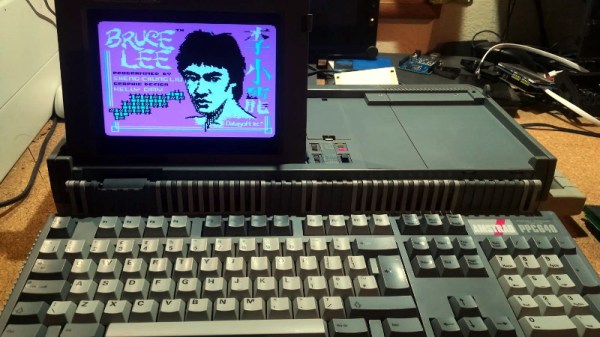
Playing classic games on the real hardware is an experience many of us enjoy, but sometimes the hardware is just a bit too retro for modern sensibilities. A case in point is the miserable monochrome LCD that was originally installed in the Amstrad PPC640 portable 8086 PC that [Drygol] recently picked up. He decided that his portable Amstrad sessions would be far more enjoyable if he swapped it out for a display that didn’t have 30+ years on the clock.

To quell the complaints of any of the vintage hardware aficionados out there, it’s worth mentioning that the original LCD was actually damaged and needed to be replaced anyway. Granted [Drygol] could have tried to find a contemporary panel to replace it with, but looking at the incredible before and after shots of the modded PPC640, it’s hard to argue he didn’t make the right decision by throwing a modern display into the otherwise largely original computer.
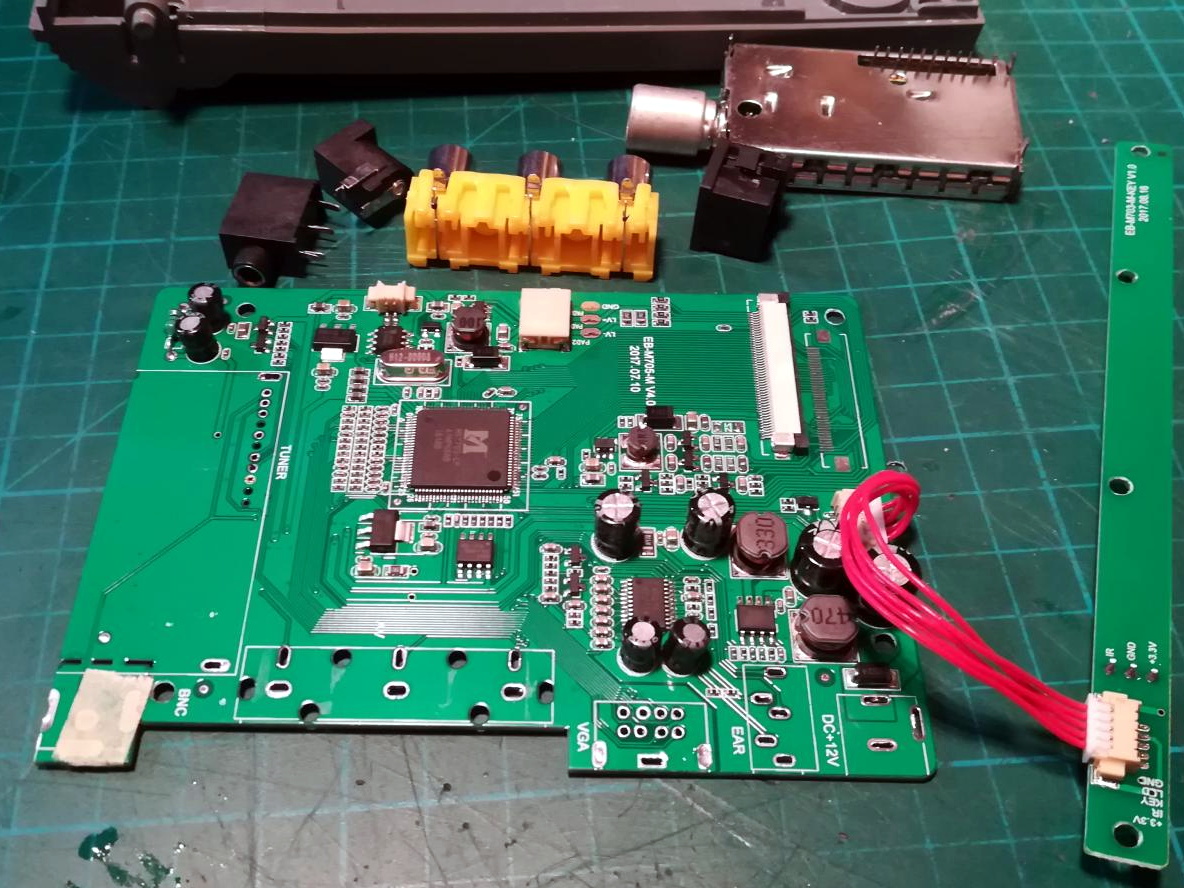
Getting the new LCD’s PCB ready for installation.

[Drygol] says he picked up a cheap 4:3 LCD TV on eBay, and as luck would have it, found that the new panel dropped perfectly into the original frame. Getting it buttoned back up required the removal of the RF can and all the female connections on the TV’s PCB, plus he had to cut some holes in the back of the display enclosure to mount the LCD’s controls, but overall it looks very stock.

Of course, getting the new LCD display in the original frame was only half the battle, it still needs to be connected up to the computer somehow. To get everyone playing nicely with each other, [Drygol] is using a commercially available MDA/CGA/EGA to VGA converter that is installed where the batteries would have gone originally. Wired to the PPC640’s external monitor connector, it allows him to drive the new display without having to use the original LCD interface.

[Drygol] has made something of a name for himself by performing some of the most impressive restorations and modifications of retro hardware in recent memory. From the unbelievable work that went into repairing a smashed Atari 800XL case to his gorgeous custom Amiga A500, his projects are sure to please the retro hardware lovers in the audience.

Continue reading “Amstrad Portable Gets A Modern LCD Transplant”
Collapse OS, An OS For When The Unthinkable Happens

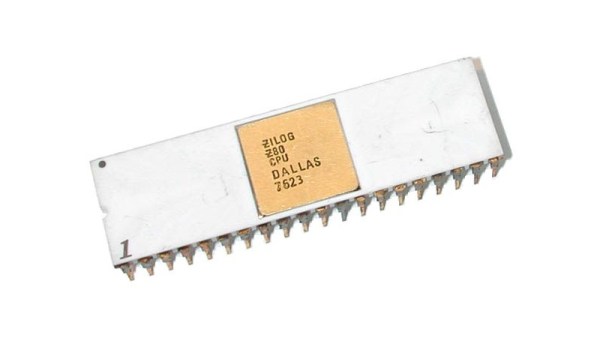
Decades of post-apocalyptic Hollywood movies have taught us that once all the trappings of our civilisation have been stripped away, it’s going to be kinda cool. We’re all going to wear slightly dusty looking 1980s motorcycling gear, and we’re going to drive really cool cars. Except of course Mad Max is fantasy, and the reality is likely to be unspeakbly grim. The future [Virgil Dupras] is anticipating is not a post-nuclear wasteland though, instead he’s trying to imagine what access to computing might look like in a world where the global supply chain has broken down. His solution is CollapseOS, an operating system designed for resilience and self-replication, that runs upon the minimal hardware of an 8-bit Z80.

It’s a pretty basic operating system so brace yourself if you are expecting a 64-bit fully multithreading kernel. Instead, you’re looking at a kernel, an assembler, and a text editor. One of the stated aims is that it can compile assembly language for a wide range of target CPUs, but it does not make it clear whether this means the OS itself will support those platforms. The self-replication is a fascinating feature though.

It’s an interesting question: what computing hardware would be available to the would-be hacker in a world in which all parts must be scavenged? The Z80 and other processors like it fit the bill admirably in one sense as it is possible to create a working computer using them with fairly minimal tools and knowledge, but we can’t help wondering whether the days when almost any electronic junk pile would contain one are now past. So what other easily accessible computing platforms might be created from post-apocalyptic junk in 2019? Remember, with no laptop and IDE you can’t just put an Arduino bootloader on that ATmega328 you desoldered from an old thermostat. As always the comments are open.

Image: Damicatz [CC BY 2.5].

Big Beautiful Vintage Computers, And Where To Find Them

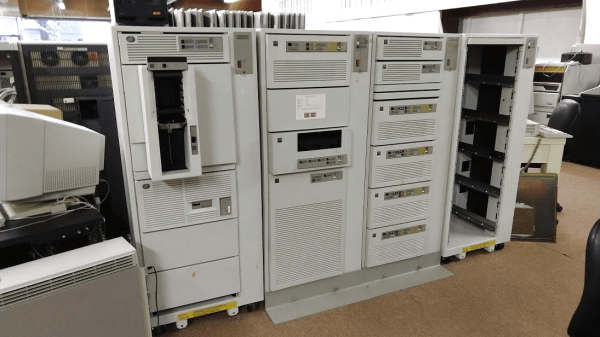
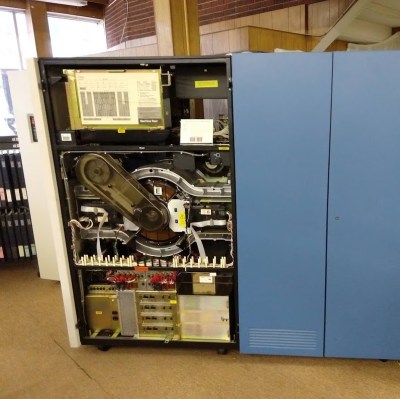
An IBM 3380E disk storage system, 5 gigabyte capacity.

[Ken Shirriff] recently shared some pictures and a writeup from his visit to the Large Scale Systems Museum, a remarkable private collection of mainframes and other computers from the 1970s to the 1990s. Housed in a town outside Pittsburgh, it contains a huge variety of specimens including IBM mainframes and desk-sized minicomputers, enormous disk and tape storage systems, and multiple 90s-era Cray supercomputers. It doesn’t stop there, either. Everything through the minicomputer revolution leading to personal home computers is present, and there are even several Heathkit HERO robot kits from the 80s. (By the way, we once saw a HERO retrofitted with wireless and the ability to run Python.)

Something really special is that many of the vintage systems are in working order, providing insight into how these units performed and acted. The museum is a private collection and is open only by appointment but they encourage interested parties not to be shy. If a trip to the museum isn’t for you, [Ken] has some additional photos from his visit here for you to check out.

How A Secret Gaming Scene Emerged In Communist East Germany

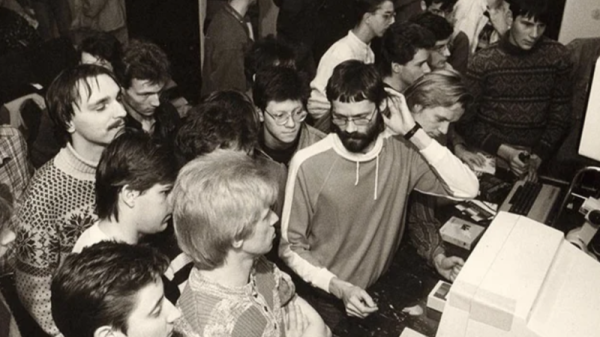
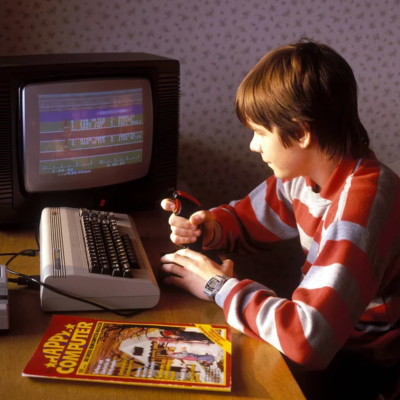
During the late 1980s, a gaming scene emerged in East Germany just before the fall of communism. Teenagers gathered in buildings like the “House of Young Talents” (HdjT), originally Palais Podewils, to watch and play Commodore 64 games. There were 20 similar clubs in Berlin alone, sometimes with more than 70 people crowded into a single room. Above all, the computers they were in possession of were all made in the West.

At a point in time when loyalties were frequently questioned, the club of self-proclaimed “freaks” soon attracted the attention of the Stasi, GDR (East Germany) intelligence agents who kept close tabs on the group. As one Stasi agent warned:

Given that there are also members within the interest groups or computer clubs with a verifiably negative attitude toward the socialist state and social order, there is a potential danger that the interest groups or computer clubs will go in a negative direction.

Domestically produced computers – the KC 85 from VEB Mikroelektronik Wilhelm Pieck Mühlhausen and the KC 87 from VEB Robotron – did not have the quality of C128 and C64s from Commodore. Surprisingly, even while microelectronics remained on the list of embargoed products imported to East Germany, C64s managed to make their way into the state. The GDR customs officials didn’t have any problem with Western imported hardware – what they were worried about was the software.
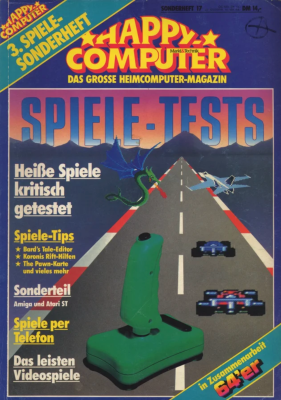
By the end of the 80s, modern data traffic over telephone lines had arrived in East Germany, causing fear that software would soon be disseminated without the need of a physical medium. For the gamers of GDR, however, many didn’t even have access to a phone line. They just wanted to go to computer clubs to swap software. Since computer games from the West were only available in government-run Intershop stores and not in normal shops, teenagers had to rely on the computer clubs to access these games. Games like Frogger and Rambo would be copied to cheaper cassette tapes – it wouldn’t even be violating the saw law since software was not protected by copyright within the country.

A few politically charged games – “Raid Over Moscow” and “Kremlin” – were forbidden to ensure that the HdjT wouldn’t be shut down. Towards the end of the GDR, the Stasi desperately tried to gain control of games “relating to the increasing activities of the political opponent”, but by this point the political situation was already heading towards the fall of the Wall. [Stefan Paubel], founder of the HdjT reflected that he was disappointed the Stasi didn’t try harder to report on the computer clubs.

They had everything critical in the reports: Swapping software, a complete list of all the games glorifying war and computers from the West.

It appeared that microelectronics were sacred to the GDR, since officials were trying to get more young people to engage with computers. The regime’s concern for their reputation led them to prioritize other forms of surveillance than technology. For a while after the fall of the Berlin Wall, the computer club continued to exist. It wasn’t until August 1990, two months before reunification, that the remaining members decided to dissolve the club.

[Thanks to Frank for the tip!]

Turn Your Old-school CRT Into A YouTube Media Player

Ever wish you could enjoy modern conveniences like YouTube in a retro world of CRTs and late 20th century graphics?

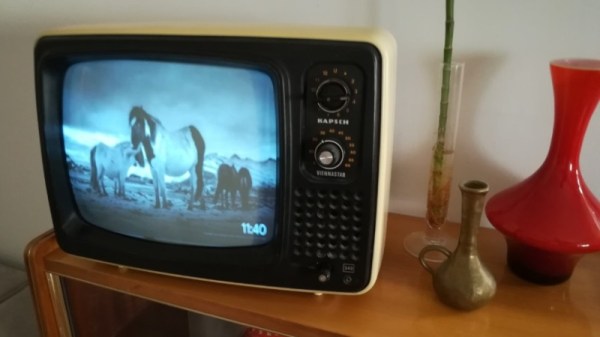
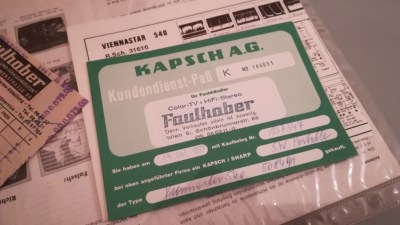
[Johannes Spreitzer] happened to find an old VIENNASTAR CRT (cathode-ray tube television) made by the Austrian brand Kapsh at a flea market. The CRT dates back to 1977 and uses just RF input, making it useless as a modern television set since most TV stations nowadays broadcast primarily in digital.

However, HDMI-to-RF transmitters do exist, making it possible to convert HDMI signals to RF or coaxial cable output to replace an antenna signal. What [Spreitzer] did next was to plug in a Chromcast and essentially convert the CRT into an old-school monitor. You can see some of the trippy graphics in the video below – the video samples shown fit the retro aesthetic, but I’m sure there’s video combinations that would seem pretty out of place.

HDMI-to-RF adapters are pretty easy to pick up at a hardware store, and they allow you to project videos onto specific channels on a CRT. Needless to say, they don’t work the other way around, although since there are still televisions that only pick up RF broadcasts, coaxial to HDMI adapters do exist.

Continue reading “Turn Your Old-school CRT Into A YouTube Media Player”

Repurposing A Toy Computer From The 1990s

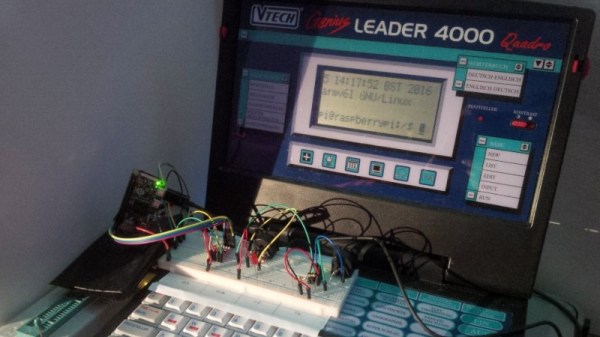
Our more youthful readers are fairly likely to have owned some incarnation of a VTech educational computer. From the mid-1980s and right up to the present day, VTech has been producing vaguely laptop shaped gadgets aimed at teaching everything from basic reading skills all the way up to world history. Hallmarks of these devices include a miserable monochrome LCD, and unpleasant membrane keyboard, and as [HotKey] found, occasionally a proper Z80 processor.

It started, as such things often do, with eBay. [HotKey] found that the second hand market is flooded with these decades-old educational gadgets, often selling for just a few bucks. As it turns out, children of the smartphone and tablet era don’t seem terribly interested in a “laptop” from 1991. At any rate, he ordered about a dozen different models and started tearing into them to see what made them tick.

He found that the VTech machines of around 20+ years old were using the Z80 processor, and what’s more, they shared a fairly standardized external cartridge interface for adding additional software or saving data. Upon attempting to dump some data from the cartridge port, [HotKey] discovered that it was actually connected to the computer’s main bus. He realized that with a custom designed cartridge, it should be able to take over the system and have it run his own code.

After more than a year of tinkering and talking to other hackers in the Z80 scene, [HotKey] has made some impressive headway. He’s not only created a custom cartridge that lets him load new code and connect to external devices, but he’s also added support for a few VTech machines to z88dk so that others can start writing their own C code for these machines. So far he’s created some very promising proof of concept programs such as a MIDI controller and serial terminal, but ultimately he hopes to create a DOS or CP/M like operating system that will elevate these vintage machines from simple toys to legitimate multi-purpose computers.

We’ve seen VTech hardware hacked in the past, but it’s generally been focused on the company’s more recent hardware such as the Linux-powered InnoTab. It will be interesting to see if these educational toys can fulfill some hacker’s dreams of having a cheap and portable box for Z80 tinkering.

Extreme Refurbishing: Amiga Edition

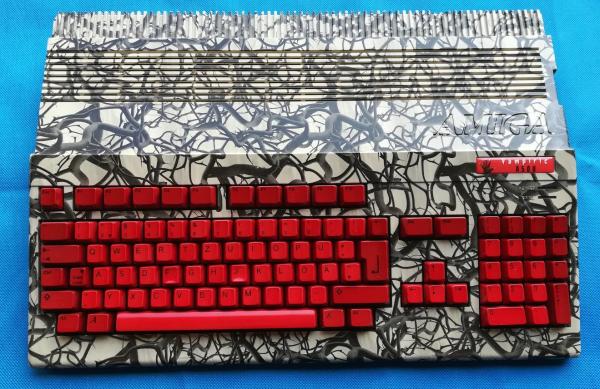
The last Amiga personal computer rolled off the assembly line in 1996, well over 20 years ago. Of course, they had their real heyday in the late 80s, so obviously if you have any around now they’ll be in need of a little bit of attention. [Drygol] recently received what looks like a pallet of old Amiga parts and set about building this special one: The Vampiric Amiga A500.

The foundation of this project was a plain A500 with quite a bit of damage. Corrosion and rust abounded inside the case, as well as at least one animal. To start the refurbishment, the first step was to remove the rust from the case and shields by an electrochemical method. From there, he turned his attention to the motherboard and removed all of the chips and started cleaning. Some of the connectors had to be desoldered and bathed in phosphoric acid to remove rust and corrosion, and once everything was put back together it looks almost brand new.

Of course, some other repairs had to be made to the keyboard and [Drygol] put a unique paint job on the exterior of this build (and gave it a name to match), but it’s a perfect working Amiga with original hardware, ready to go for any retrocomputing enthusiast. He’s no stranger around here, either; he did another extreme restoration of an Atari 800 XL about a year ago.