This Old Mouse: Building A USB Adapter For A Vintage Depraz Mouse

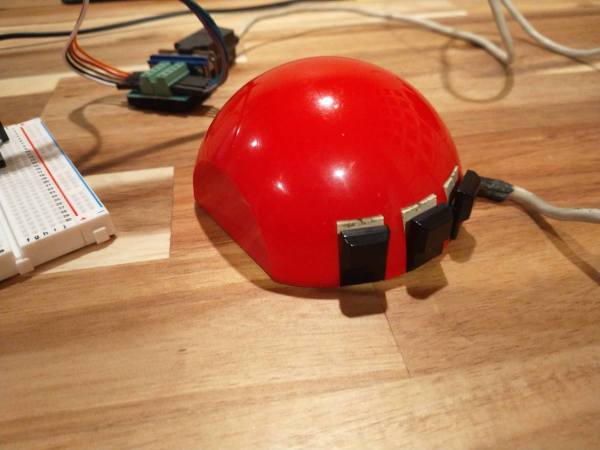
When [John Floren] obtained a vintage Depraz mouse, he started out being content to just have such a great piece of history in his possession. But if you’re like him, you know it’s not enough to just have something. What would it be like to use it?

To find out, [John] embarked on a mission to build a USB adapter for his not so new peripheral.
Originally used in very early terminals with a Unix GUI, the Depraz mouse utilizes an unusual male DE9 connector rather than the more familiar female DB9 used in RS232 serial mice. Further deviating from the norm, he found that the quadrature encoders were connected directly to the DE9 connector.

Armed with an Arduino Pro Mini Micro and some buggy sample code, he got to work. The aforementioned buggy code was scrapped and a fresh sketch for the Arduino Pro Mini Micro gave the Depraz mouse the USB interface it lacked. [John] also found that he wasn’t the first hardware hacker to have modified the mouse for their use. Be sure to read to the end the article to find out about the vintage surprise lurking in the mouse shell itself! A demonstration of the mouse in action can be seen in the video below the break.

Looking for a fun mouse hack? Perhaps you’d like to use your more modern USB mouse on a retro computer, or try your hand at recreating an early Apple mouse for use in modern computers.

Continue reading “This Old Mouse: Building A USB Adapter For A Vintage Depraz Mouse”

Custom Camera Flash Is Built For Stealth

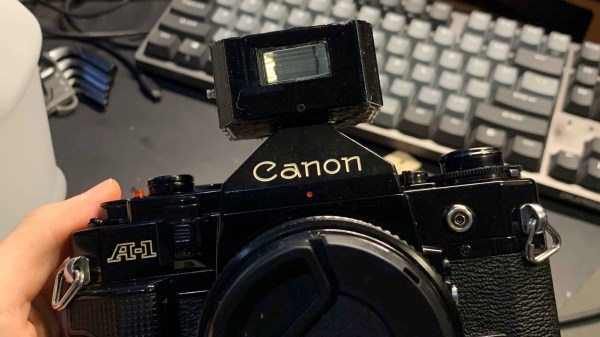
As [Joshua Bird] began his foray into the world of film photography, he was taken back by the old technology’s sheer hunger for light. Improvised lighting solutions yielded mixed results, and he soon realized he needed a true camera flash. However, all the options he found online were large and bulky; larger than the camera itself in some cases. To borrow his words, “[he] didn’t exactly want to show up to parties looking like the paparazzi”. So, he set about creating his own compact flash.

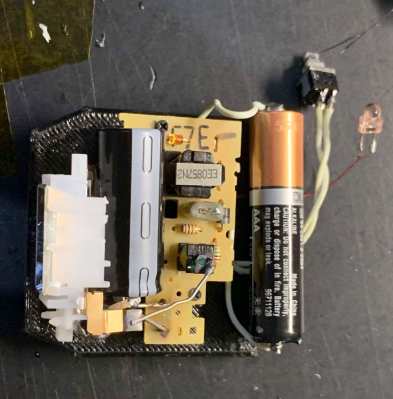
Impressed by the small size and simple operation of disposable camera flashes, [Joshua] lifted a module out of an old Fuji and based his design around it. An existing schematic allowed him to attach the firing circuitry to his Canon’s hot shoe without the risk of putting the capacitor’s 300 volts through the camera. With that done, he just had to model a 3D-printed case for the whole project and assemble it, using a few more parts from the donor disposable.

Of course, as it came from a camera that was supposed to be thrown in the trash, this flash was only designed for a specific shutter speed, aperture, and film. Bulkier off-the-shelf flashes have more settings available and are more capable in a variety of environments. But [Joshua] built exactly what he needed. He now has a sleek, low-profile external flash that works great in intimate settings. We’re excited to see the photographic results.

This is not the first photography hacker we’ve seen breathe new life into disposable flashes. Some people see far more than a piece of camera equipment in old flashes, though, with aesthetically stunning results.

[via reddit]

Overdriving Vacuum Tubes And Releasing The Magic Light Within

We’ve all seen electronic components that have been coaxed into releasing their small amount of Magic Smoke, which of course is what makes the thing work in the first place. But back in the old times, parts were made of glass and metal and were much tougher — you could do almost anything to them and they wouldn’t release the Magic Smoke. It was very boring.

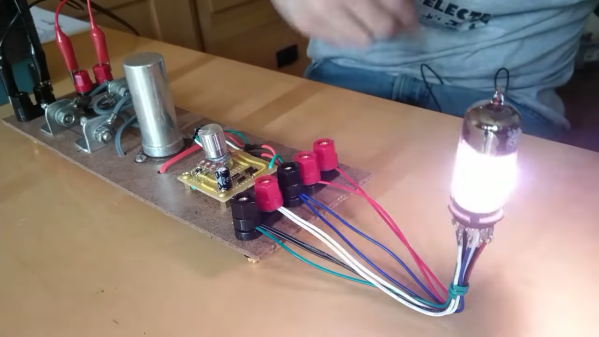
Unless you knew the secret of “red plating”, of course, which [David Lovett] explores in the video below. We’ve been following [David]’s work with vacuum tubes, the aforementioned essentially smokeless components that he’s putting to use to build a simple one-bit microprocessor. His circuits tend to drive tubes rather gently, but in a fun twist, he let his destructive side out for a bit and really pushed a few tubes to see what happens. And what happens is pretty dramatic — when enough electrons stream from the cathode to the anode, their collective kinetic energy heats the plate up to a cherry-red, hence the term “red plating”.

[David] selected a number of victims for his torture chamber, not all of which cooperated despite the roughly 195 volts applied to the plate. Some of the tubes, though, cooperated in spades, quickly taking on a very unhealthy glow. One tube, a 6BZ7 dual triode, really put on a show, with something getting so hot inside the tube as to warp and short together, leading to some impressive pyrotechnics. Think of it as releasing the Magic Light instead of the Magic Smoke.

Having seen how X-ray tubes work, we can’t help but wonder if [David] was getting a little bit more than he bargained for when he made this snuff film. Probably not — the energies involved with medical X-ray tubes are much higher than this — but still, it might be interesting to see what kinds of unintended emissions red-plating generates.

Continue reading “Overdriving Vacuum Tubes And Releasing The Magic Light Within”

Dial-a-SID Is A Glorious Chiptune Jukebox

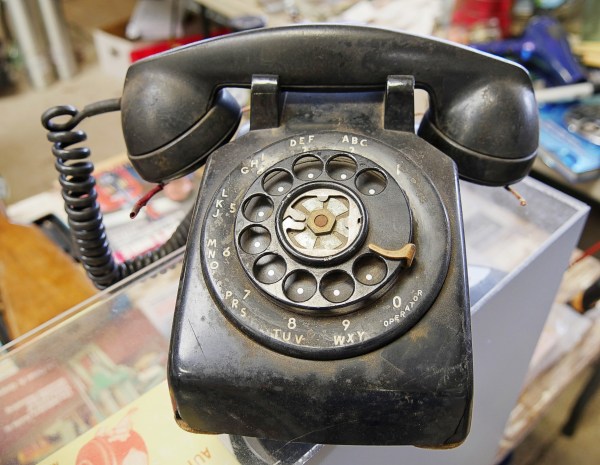
Old-school rotary telephones aren’t particularly useful for their original intended purpose in this day and age, but they’re great fun to hack into new projects. [Linus Åkesson] has done just that, with his Dial-a-SID jukebox build. (Video, embedded below.)

The build installs a Raspberry Pi 3 inside the body of the telephone, running a SID chip emulator and loaded up with the High Voltage SID Collection. The Pi inside outputs sound to an external stereo system for playing chiptunes at a party.

The real party piece, however, is that the handset can be lifted and the telephone dialled in order to listen to and select tracks for the playlist. Tracks can be selected by individual codes, by composer, or even by year. In the event the playlist grows empty, the default behaviour can be set to keep playing random tracks in the meantime.

With over 2000 hours of SID music inside, it’s unlikely the Dial-a-SID will run out of tunes anytime soon. We’d love to see a similar interface used for a jukebox hooked up to a modern streaming service, too. If you build one, let us know! Alternatively, consider hooking up your rotary phone to your smartphone. Video after the break.

Continue reading “Dial-a-SID Is A Glorious Chiptune Jukebox”

Leggo My Nintoaster!

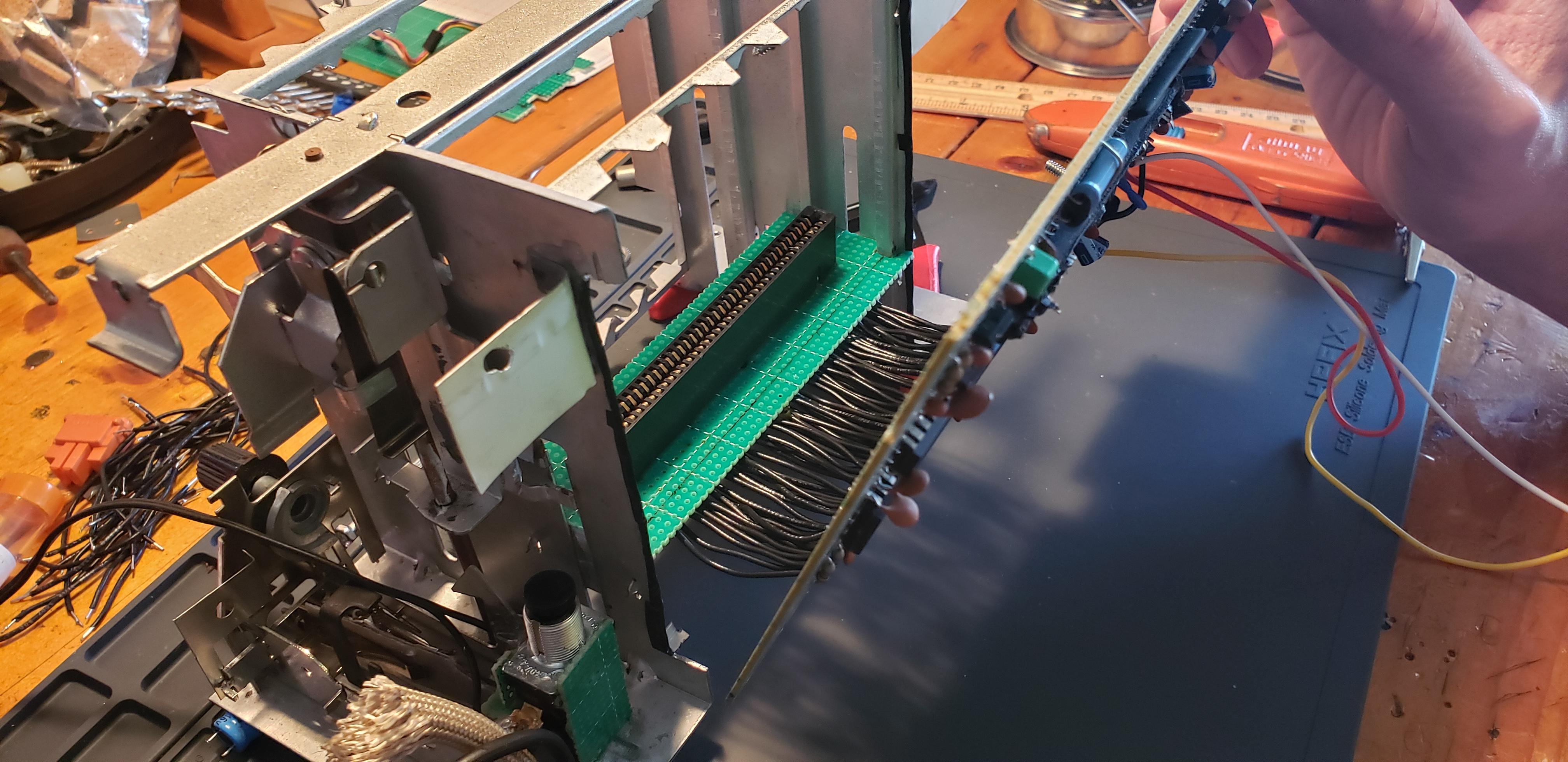
If you’re one of today’s lucky 10,000* who have never seen a Nintoaster case mod before, boy are we glad you get to see this one first. [Dizzle813] found a shiny old Sunbeam toaster that looks just like the one we grew up with. Although the original creator made a build video, there is room for improvement in the explanation, and some people prefer reading, anyway. This handy guide references and builds upon [VomitSaw]’s original Nintoaster video.

[Dizzle813] really makes the hard parts look easy, and a build like this seems to be mostly hard parts. Unless you find this exact vintage of Sunbeam, you would have to orchestrate the innards as needed to fit your toaster. The hardest part of all is probably wiring up the 72-pin connector to the NES motherboard, but [Dizzle813] managed to pull it off using 22 AWG solid-core wire and still get everything to flex and fit together. Even still, they broke off a pin trying to ease it into the perfboard, but cutting a hole in the connector and inserting a bodge wire replacement worked just fine.

We absolutely love the way this looks and operates, especially with the lever-activated power button and the six orange LEDs inside that are brightness-controlled through the toastiness knob. Be sure to check out the demo after the break.

Isn’t it great when things are built into other things? Case in point: there’s a laptop hiding inside this printer.

*relevant xkcd

Continue reading “Leggo My Nintoaster!”

Evan Doorbell’s Telephone World

Ah, phone phreaking. Some of us are just old enough to remember the ubiquity of land lines, but just young enough to have missed out on the golden years of phreaking. There’s something nostalgic about the analog sounds of the telephone, and doubly so when you understand what each click and chunk sound means. If this wistful feeling sounds familiar, then you too will appreciate [Evan Doorbell] and his recordings of 1970s telephone sounds. He’s been slowly working through his old recordings, and compiling them into a series of narrated tours of the phreak subculture.

[Evan]’s introduction to exploring the phone system started from a misdialed number, and an odd message. He describes that recorded “wrong number” message as being very different from the normal Ma Bell messages — this one was almost sultry. What number did he have to dial to hear that unique recording again? What follows is a youth spent in pursuit of playing with the phone system, though it would be more accurate to say the “phone systems”, as discovering the differences between the various local phone exchanges is a big part of the collection. Check out the first tape in the series after the break.
Continue reading “Evan Doorbell’s Telephone World”

Vintage Remote Control Gets Bluetooth Upgrade

This swanky Magnavox remote is old enough to predate the use of infrared, and actually relies on ultrasound to communicate with the television. It’s a neat conversation starter, but not terribly useful today. Which is why [Chad Lawson] decided to gut the original electronics and replace it with a Adafruit Feather 32u4 Bluefruit LE that can actually talk to modern devices.

We know, we know. Some in the audience will  probably take offense to such a cool gadget being unceremoniously torn apart, but to be fair, [Chad] does say he has a second one that will remain in its original state. Plus a quick check on eBay shows these old remotes don’t seem to be particularly rare or valuable. In fact, after some browsing through the recently concluded auctions, we’re fairly sure he paid $27 USD for both of these remotes.

Anyway, [Chad] found that a piece of perfboard in his collection just happened to be nearly the same size as the PCB from the remote, which made the rest of the conversion pretty straightforward. He simply had to mount tactile switches on one side of the perfboard so the remote’s original buttons would hit them when pressed, and then wire those to the Adafruit on the other side. We know there’s a 3.7 V 500 mAh pouch battery in there someplace as well, though it’s not immediately clear where he hid it in the images.

The code [Chad] came up with tells the Adafruit to mimic a Bluetooth Human Interface Device (HID) and send standard key codes to whatever device pairs with it. That makes it easy to use as a media remote on the computer, for example. We’ve seen something similar done with the ESP32, if you’ve already got one in the parts bin and are looking to revamp a remote control of your own.

At the end of the write-up, [Chad] mentions he may try developing an ultrasonic receiver that can pick up the signals from the unmodified remote control. That would be a nice way to bring this whole thing full circle, and should appease even the most hardcore vintage remote control aficionados.