My Life In The Connector Zoo

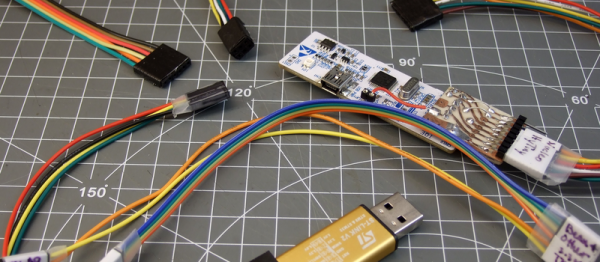
“The great thing about standards is that there are so many to choose from.” Truer words were never spoken, and this goes double for the hobbyist world of hardware hacking. It seems that every module, every company, and every individual hacker has a favorite way of putting the same pins in a row.

We have an entire drawer full of adapters that just go from one pinout to another, or one programmer to many different target boards. We’ll be the first to admit that it’s often our own darn fault — we decided to swap the reset and ground lines because it was convenient for one design, and now we have two adapters. But imagine a world where there was only a handful of distinct pinouts — that drawer would be only half full and many projects would simply snap together. “You may say I’m a dreamer…”

This article is about connectors and standards. We’ll try not to whine and complain, although we will editorialize. We’re going to work through some of the design tradeoffs and requirements, and maybe you’ll even find that there’s already a standard pinout that’s “close enough” for your next project. And if you’ve got a frequently used pinout or use case that we’ve missed, we encourage you to share the connector pinouts in the comments, along with its pros and cons. Let’s see if we can’t make sense of this mess.

Continue reading “My Life In The Connector Zoo”

Resurrection — Pressing WW2 Radio Equipment Back Into Service

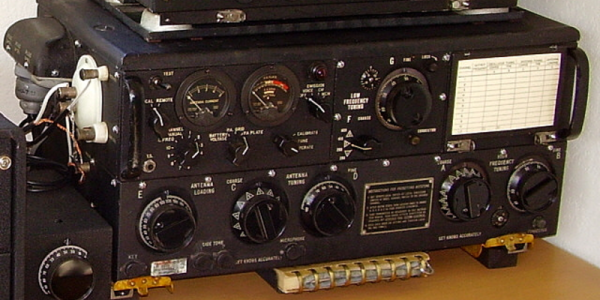
Mass production was key to survival during the Second World War. So much stuff was made that there continues to be volumes of new unpacked stuff left over and tons of used equipment for sale at reasonable prices. Availability of this war surplus provided experimenters in the mid 20th century with access to high performance test equipment, radio equipment, and high quality components for the first time.

Even today this old stuff continues to motivate and inspire the young generations because of its high build quality, unique electro-mechanical approaches, and overall innovative designs which continue to be relevant into the 21st century. In this post we will show you how to get started in the hobby of resurrecting WW2 radio equipment and putting it back on the air.

Continue reading “Resurrection — Pressing WW2 Radio Equipment Back Into Service”

A Realistic Look At The Death Of A Standard

A bit ago I wrote an article called, “Death To The 3.5mm Audio Jack, Long Live Wireless.” A few readers were with me, a few were indifferent, many were vehemently against me, and there was a, not insubstantial, subset in a pure panic about the potential retirement of a beloved connector. Now I used a lot of opinionated language dispersed with subjectively evaluated facts to make a case that the connector is out. Not today maybe, but there is certainly a tomorrow not so far off where there are more wireless headsets at the electronics store than wired ones.

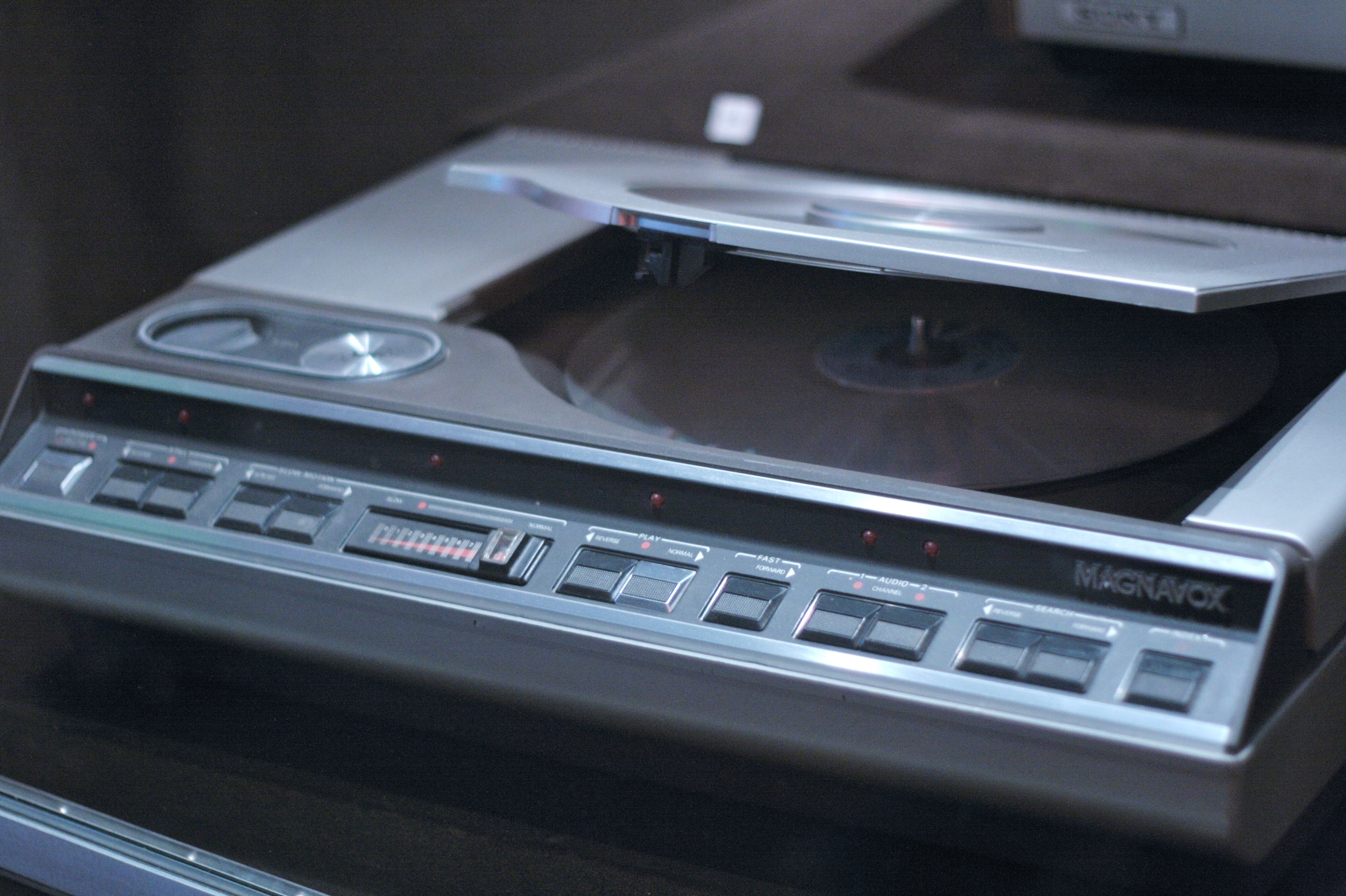
I think I saw a laserdisc player in operation exactly once.
I think I saw a Laserdisc player in operation exactly once.

So what happens when a standard dies? What happens when technology starts to move on? Let’s take a look at the CD-ROM.  Continue reading “A Realistic Look At The Death Of A Standard”

Tools Of The Trade — Injection Molding

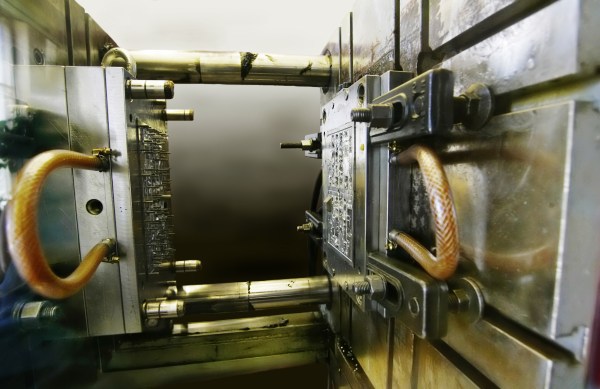
Having finished the Tools of the Trade series on circuit board assembly, let’s look at some of the common methods for doing enclosures. First, and possibly the most common, is injection molding. This is the process of taking hot plastic, squirting it through a small hole and into a cavity, letting it cool, and then removing the hardened plastic formed in the shape of the cavity.

The machine itself has three major parts; the hopper, the screw, and the mold. The hopper is where the plastic pellets are dumped in. These pellets are tiny flecks of plastic, and if the product is to be colored there will be colorant pellets added at some ratio. The hopper will also usually have a dehumidifier attached to it to remove as much water from the pellets as possible. Water screws up the process because it vaporizes and creates little air bubbles.

Next the plastic flecks go into one end of the screw. The screw’s job is to turn slowly, forcing the plastic into ever smaller channels as it goes through a heating element, mixing the melted plastic with the colorant and getting consistent coloring, temperature, and ever increasing pressure. By the time the plastic is coming out the other end of the screw, and with the assistance of a hydraulic jack, it can be at hundreds of tons of pressure.

Finally, the plastic enters the mold, where it flows through channels into the empty cavity, and allowed to sit briefly to cool.  The mold then separates and ejector pins push the part out of the cavity.

Continue reading “Tools Of The Trade — Injection Molding”

Specifications You Should Read: The NASA Workmanship Standards

"This is reflective of the typically idiosyncratic way engineer's of this era explored the human condition. The purple and shitty gradient show's the artists deep struggle with deadlines and his personal philosophy on the tyranny of the bourgeois. " - A segment from a confused student's art history paper
“Reflective of the typically idiosyncratic way engineers of this era explored the human condition. The shitty gradient show’s the deep struggle with deadlines and their personal philosophy on the tyranny of the bourgeois. ” – An excerpt from a confused student’s art history paper after the standard is installed in the Louvre.

The NASA workmanship standards are absolutely beautiful. I mean that in the fullest extent of the word. If I had any say in the art that goes up in the Louvre, I’d put them up right beside Mona. They’re a model of what a standard should be. A clear instruction for construction, design, and inspection all at once. They’re written in clear language and contain all the vernacular one needs to interpret them. They’re unassuming. The illustrations are perfectly communicative.  It’s a monument to the engineer’s art.

Around five years ago I had a problem to solve. Every time a device went into the field happily transmitting magic through its myriad connectors, it would inevitably come back red tagged, dusty, and sad. It needed to stop. I dutifully traced the problem to a connector, and I found the problem. A previous engineer had informed everyone that it was perfectly okay to solder a connector after crimping. This instruction was added because, previously, the crimps were performed with a regular pair of needle nose pliers and they came undone… a lot. Needless to say, the solder also interfered with their reliable operation, though less obviously. Stress failures and intermittent contact was common.

Continue reading “Specifications You Should Read: The NASA Workmanship Standards”

What’s New, ESP-32? Testing The Arduino Library

In case you missed it, the big news is that a minimal Arduino core is up and working on the ESP32. There’s still lots left to do, but the core functionality — GPIO, UART, SPI, I2C, and WiFi — are all up and ready to be tested out. Installing the library is as easy as checking out the code from GitHub into your Arduino install, so that’s exactly what I did.

I then spent a couple days playing around with it. It’s a work in progress, but it’s getting to the point of being useful, and the codebase itself contains some hidden gems. Come on along and take a sneak peek.

Continue reading “What’s New, ESP-32? Testing The Arduino Library”

Parts You Should Know: A Universe Of Useful Injection Molded Standoffs

Your clever branding won't work on me! *types caption in on iPhone*
Your clever branding won’t work on me!
*types caption in on iPhone, sips Starbucks*

I remember the first time I built a computer. My sister and I had our last fight about who would get to use the family computer, it was time I had one of my own. I knew a little bit, and I knew I wasn’t going to be one of those plebs that overpaid for a Gateway in its cow box. So I outsourced. One of the computer literate parents in my Scout Troop very kindly agreed to put together a list of components for me. I spent my Christmas money, birthday money, and a small mountain of money I had saved up. I remember getting the parts in the mail. I was so excited that a week earlier I had even bought one of those super lame computer tool kits to put it together.

I still remember how enormously frustrating the stand-offs for the mother board were to install. I think computers were still figuring out that they didn’t need ALL of the features of a mainframe. Anyway there was a 3mm screw on each side of a cm tall brass standoff. It also wanted me to put these little isolating paper washers on the assembly for some reason. Even with my then presidentially sized hands it took a long time. My Mom later told me that it was around this time she was certain the whole endeavour was going to end in tears.

Six hours of careful work later I had the computer together and running when I realized I had forgotten to buy an OS for it. She was nearly right.

Regardless. My early experience with computer assembly left me with a love for standardized screws, a hate for excessive fasteners, and a deep loathing for improperly routed wires. I was a weird kid. Anyway, when it came time for me to start designing my own enclosures for circuit boards I had all the unique psychological damage and underpinnings I would need to waste a lot of time googling on the internet for an alternate, screwless, method of standing a board off from a surface.

Continue reading “Parts You Should Know: A Universe Of Useful Injection Molded Standoffs”