Fail Of The Week: A Candle Caused Browns Ferry Nuclear Incident

A colleague of mine used to say he juggled a lot of balls; steel balls, plastic balls, glass balls, and paper balls. The trick was not to drop the glass balls. How do you know which is which? For example, suppose you were tasked with making sure a nuclear power plant was safe. What would be important? A fail-safe way to drop the control rods into the pile, maybe? A thick containment wall? Two loops of cooling so that only the inner loop gets radioactive? I’m not a nuclear engineer, so I don’t know, but ensuring electricians at a nuclear plant aren’t using open flames wouldn’t be high on my list of concerns. You might think that’s really obvious, but it turns out if you look at history that was a glass ball that got dropped.

In the 1960s and 70s, there was a lot of optimism in the United States about nuclear power. Browns Ferry — a Tennessee Valley Authority (TVA) nuclear plant — broke ground in 1966 on two plants. Unit 1 began operations in 1974, and Unit 2 the following year. By 1975, the two units were producing about 2,200 megawatts of electricity.

That same year, an electrical inspector and an electrician were checking for air leaks in the spreading room — a space where control cables split to go to the two different units from a single control room.  To find the air drafts they used a lit candle and would observe the flame as it was sucked in with the draft. In the process, they accidentally started a fire that nearly led to a massive nuclear disaster.

Continue reading “Fail Of The Week: A Candle Caused Browns Ferry Nuclear Incident”

Hackaday Visits The Electric City

Much to the chagrin of local historians, the city of Scranton, Pennsylvania is today best known as the setting for the American version of The Office. But while the exploits of Dunder Mifflin’s best and brightest might make for a good Netflix binge, there’s a lot more to the historic city than the fictional paper company. From its beginnings as a major supplier of anthracite coal to the introduction of America’s first electrically operated trolley system on its streets, Scranton earned its nickname “The Electric City” by being a major technological hub from the Industrial Revolution through to the Second World War.

Today, the mines and furnaces of Scranton lie silent but not forgotten. In the 1980’s, the city started turning what remained of their industrial sites into historic landmarks and museums with the help of State and Federal grants. I recently got a chance to tour some of these locations, and came away very impressed. They’re an exceptional look into the early technology and processes which helped turn America into an industrial juggernaut.

While no substitute for visiting these museums and parks for yourself, hopefully the following images and descriptions will give you an idea of what kind of attractions await visitors to the modern day Electric City.

Continue reading “Hackaday Visits The Electric City”

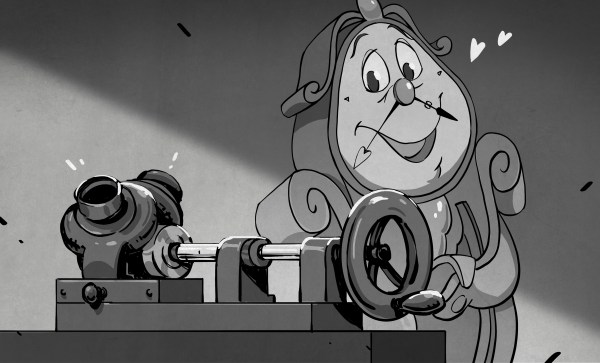
Talking Clock? That’s Nothing New

Do you talk to your alarm clock? I do. I was recently in a hotel room, woke up in the middle of the night and said, “Computer. What time is it?” Since my Amazon Echo (which responds to the name Computer) was at home, I was greeted with silence. Isn’t the future great?

Of course, there have been a variety of talking clocks over the years. You used to be able to call a phone number and a voice would tell you the time. But how old do you think the talking clock really is? Would you guess that this year is the 140th anniversary of the world’s first talking clock? In fact, it doesn’t just hold the talking clock record. The experimental talking clock Frank Lambert made is also the oldest surviving recording that can be still be played back on its original device.

In 1878, the phonograph had just been invented and scratched out sounds on a piece of tin foil. Lambert realized this wouldn’t hold up to multiple playbacks and set out to find a more robust recording medium. What he ended up building was a clock that would announce the time using lead to record the speech instead of tin foil.

Continue reading “Talking Clock? That’s Nothing New”

ILLIAC Was HAL 9000’s Granddaddy

Science fiction is usually couched in fact, and it’s fun to look at an iconic computer like HAL 9000 and trace the origins of this artificial intelligence gone wrong. You might be surprised to find that you can trace HAL’s origins to a computer built for the US Army in 1952.

If you are a fan of the novel and movie 2001: A Space Oddessy, you may recall that the HAL 9000 computer was “born” in Urbana, Illinois. Why pick such an odd location? Urbana is hardly a household name unless you know the Chicago area well. But Urbana has a place in real-life computer history. As the home of the University of Illinois at Urbana–Champaign, Urbana was known for producing a line of computers known as ILLIAC, several of which had historical significance. In particular, the ILLIAC IV was a dream of a supercomputer that — while not entirely successful — pointed the way for later supercomputers. Sometimes you learn more from failure than you do successes and at least one of the ILLIAC series is the poster child for that.

The Urbana story starts in the early 1950s. This was a time when the 1945 book “First Draft of a Report on the EDVAC” was sweeping through the country from its Princeton origins. This book outlined the design and construction of the Army computer that succeeded ENIAC. In it, Von Neumann proposed changes to EDVAC that would make it a stored program computer — that is, a computer that treats data and instructions the same.

Continue reading “ILLIAC Was HAL 9000’s Granddaddy”

Hacking When It Counts: Setting Sail In A Submarine

By the early 20th century, naval warfare was undergoing drastic technological changes. Ships were getting better and faster engines and were being outfitted with wireless communications, while naval aviation was coming into its own. The most dramatic changes were taking place below the surface of the ocean, though, as brave men stuffed themselves into steel tubes designed to sink and, usually, surface, and to attack by stealth and cunning rather than brute force. The submarine was becoming a major part of the world’s navies, albeit a feared and hated one.

For as much animosity as there was between sailors of surface vessels and those that chose the life of a submariner, and for as vastly different as a battleship or cruiser seems from a submarine, they all had one thing in common: the battle against the sea. Sailors and their ships are always on their own dealing with forces that can swat them out of existence in an instant. As a result, mariners have a long history of doing whatever it takes to get back to shore safely — even if that means turning a submarine into a sailboat.

Continue reading “Hacking When It Counts: Setting Sail In A Submarine”

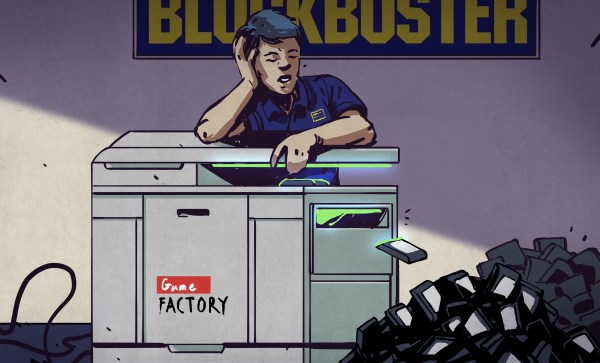
Remember When Blockbuster Video Tried Burning Game Cartridges On Demand?

By the onset of the 1990s one thing was clear, the future was digital. Analog format sales for music were down, CD sales were up; and it was evident, at least in the US, that people were bringing more computing devices into their homes. At the beginning of the decade, roughly 1 in 3 American households had a Nintendo Entertainment System in them, according to this Good Morning America segment.

With all those consoles out there, every shopping season became a contest of “who could wait in line the longest” to pickup the newest titles. This left last minute shoppers resorting to taking a rain check or return home empty handed. Things didn’t have to be this way. The digital world had emerged and physical media just needed to catch up. It would take an unlikely alliance of two disparate companies for others to open their minds.

Continue reading “Remember When Blockbuster Video Tried Burning Game Cartridges On Demand?”

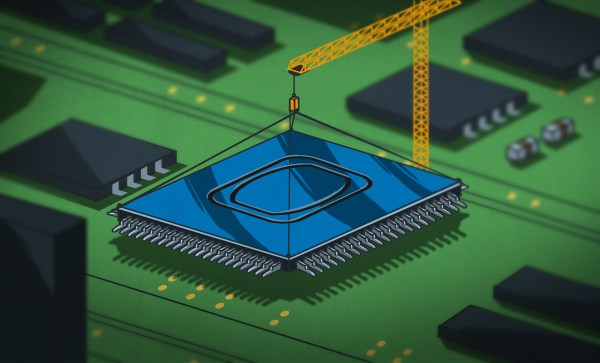
What’s A Couplate? The Stepping Stone To Integrated Circuits

We are spoiled these days because you can shop online and get all manner of inexpensive electronic goodies shipped to your door. This is due to the fantastic electronic fabrication workflow that has grown into a global powerhouse, facilitated by complex yet inexpensive integrated circuits! But it took a few intermediate steps to get here, and one of those is known as a couplate.

When I was a kid, the big deal was to find an old radio in the trash. You could spend a few hours stripping all sorts of parts from the thing and add it to your collection for a future project. Of course, old radios from the 1970s and earlier had a lot of the usual parts we use today, even though many of them were bigger — no surface mount parts yet. Since older radios were the usual find in a dumpster, tubes were common but you could find some transistor radios.

Once in a while something older. There would be a little box with some wires poking hiding in an old radio from the 1940s or 1950s (too early for ICs). In a way, though, these were predecessors to the Integrated Circuit and they went by a few names, depending on who sold them. PEC (Printed Electronic Circuit), a couplate, or a BulPlate, are all names for hardware that was a stepping stone between discrete circuitry and ICs.

Continue reading “What’s A Couplate? The Stepping Stone To Integrated Circuits”