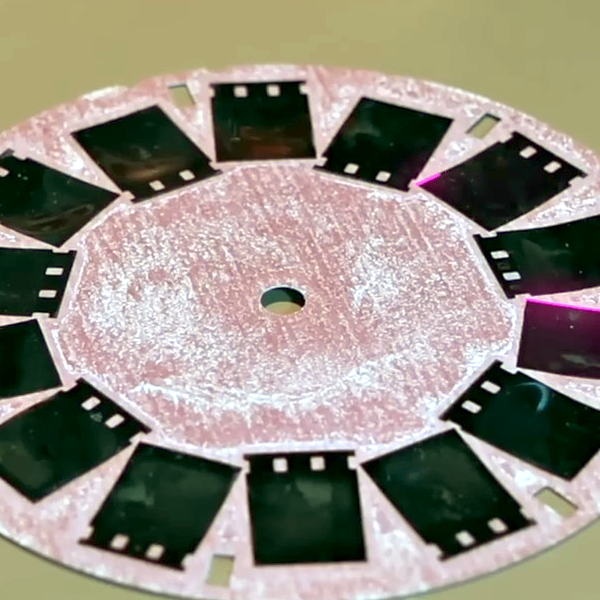
Morse code — that series of dots and dashes — can be useful in the strangest situations. As a kid I remember an original Star Trek episode where an injured [Christopher Pike] could only blink a light once for yes and twice for no. Even as a kid, I remember thinking, “Too bad they didn’t think to teach him Morse code.” Of course odd uses of Morse aren’t just for TV and Movies. Perhaps the strangest real-life use was the case of the Colombian government hiding code in pop music to send messages to hostages.
In 2010, [Jose Espejo] was close to retirement from the Colombian army. But he was bothered by the fact that some of his comrades were hostages of FARC (the Revolutionary Armed Forces of Colombia; the anti-government guerrillas), some for as many as ten years. There was a massive effort to free hostages underway, and they wanted them to know both to boost morale and so they’d be ready to escape. But how do you send a message to people in captivity without alerting their captors?
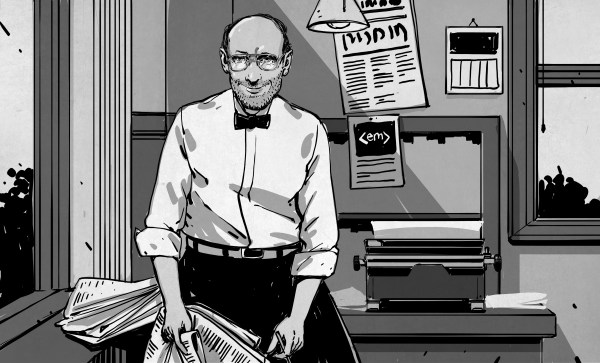
A reasonable selection of the Hackaday readership will have had their first experiences of computing on an 8-bit machine in a black case, with the word “Sinclair” on it. Even if you haven’t work with one of these machines you probably know that the man behind them was the sometimes colourful inventor Clive (now Sir Clive) Sinclair.
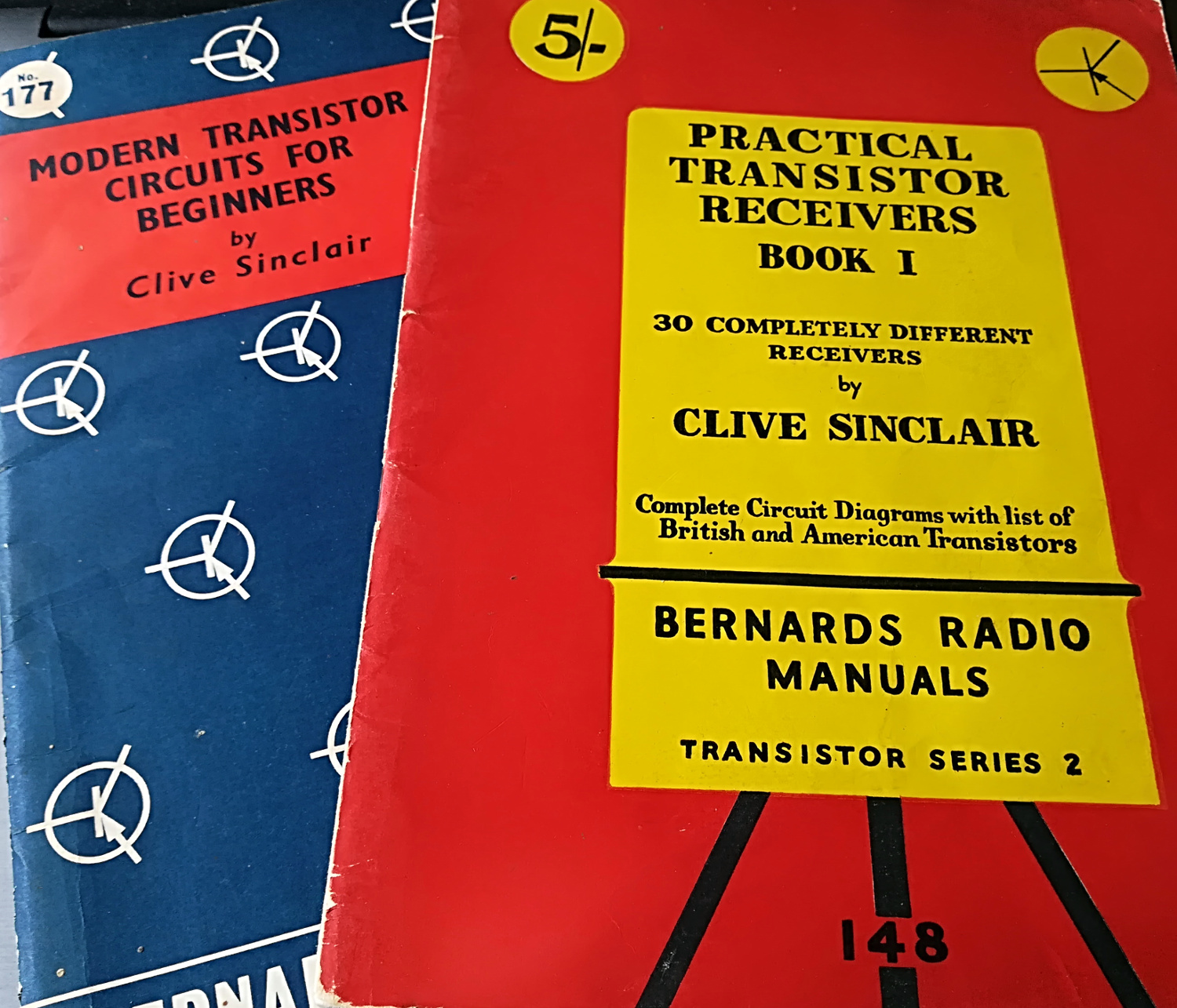
The finest in 1950s graphic design, applied to electronics books.
He was the founder of an electronics company that promised big results from its relatively inexpensive electronic products. Radio receivers that could fit in a matchbox, transistorised component stereo systems, miniature televisions, and affordable calculators had all received the Sinclair treatment from the early-1960s onwards. But it was towards the end of the 1970s that one of his companies produced its first microcomputer.
At the end of the 1950s, when the teenage Sinclair was already a prolific producer of electronics and in the early stages of starting his own electronics business, he took the entirely understandable route for a cash-strapped engineer and entrepreneur and began writing for a living. He wrote for electronics and radio magazines, later becoming assistant editor of the trade magazine Instrument Practice, and wrote electronic project books for Bernard’s Radio Manuals, and Bernard Babani Publishing. It is this period of his career that has caught our eye today, not simply for the famous association of the Sinclair name, but for the fascinating window his work gives us into the state of electronics at the time.
The image of the crackpot inventor, disheveled, disorganized, and surrounded by the remains of his failures, is an enduring Hollywood trope. While a simple look around one’s shop will probably reveal how such stereotypes get started, the image is largely not a fair characterization of the creative mind and how it works, and does not properly respect those who struggle daily to push the state of the art into uncharted territory.
That said, there are plenty of wacky ideas that have come down the pike, most of which mercifully fade away before attracting undue attention. In times of war, though, the need for new and better ways to blow each other up tends to bring out the really nutty ideas and lower the barrier to revealing them publically, or at least to military officials.
Of all the zany plans that came from the fertile minds on each side of World War II, few seem as out there as a plan to use birds to pilot bombs to their targets. And yet such a plan was not only actively developed, it came from the fertile mind of one of the 20th century’s most brilliant psychologists, and very nearly resulted in a fieldable weapon that would let fly the birds of war.
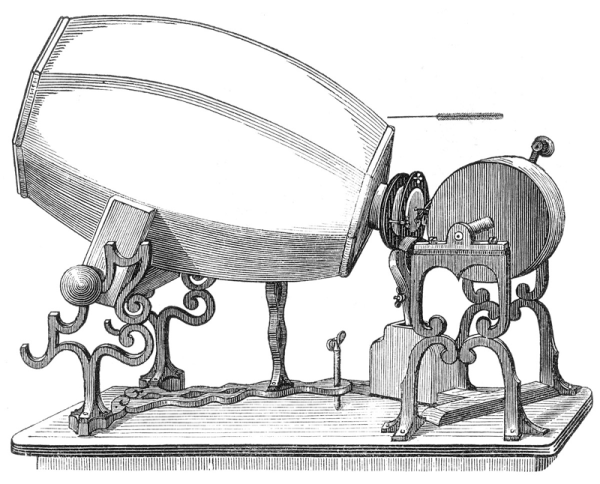
You probably learned in school that Thomas Edison was the first human voice recorded, reciting Mary Had a Little Lamb. As it turns out though, that’s not strictly true. Edison might have been the first person to play his voice back, but he wasn’t the first to deliberately record. That honor goes to a French inventor named Édouard-Léon Scott de Martinville. He wanted to study sound and created the phonautograph — a device which visualized sound on soot-covered paper. They were not made to be played back, but the information is there. These recordings were made around 1860. There’s a 9-part video series about how the recordings were made — and more interestingly — how they were played back using modern technology. Part 1 appears below.
We say around 1860 because there were some early recordings starting around 1857 that haven’t been recovered. Eventually, the recordings would have a tuning fork sound which allows modern playback since the known signal can estimate the speed of the hand-cranked cylinder. The date of the first recovered recording was today, April 9th, 158 years ago.
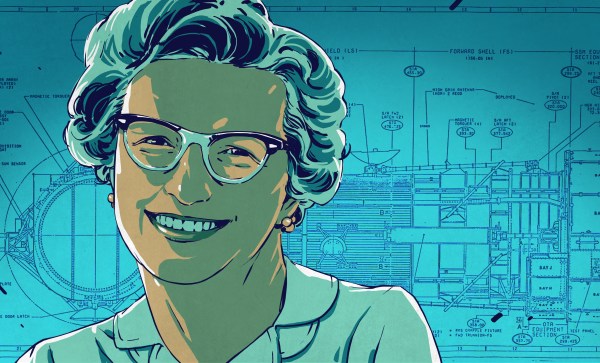
When she was four years old, Nancy Grace Roman loved drawing pictures of the Moon. By the time she was forty, she was in charge of convincing the U.S. government to fund a space telescope that would give us the clearest, sharpest pictures of the Moon that anyone had ever seen. Her interest in astronomy was always academic, and she herself never owned a telescope. But without Nancy, there would be no Hubble.
Goodnight, Moon
A view of the Milky Way from Reno, Nevada. Via Lonely Speck
Nancy was born May 16, 1925 in Nashville, Tennessee. Her father was a geophysicist, and the family moved around often. Nancy’s parents influenced her scientific curiosities, but they also satisfied them. Her father handled the hard science questions, and Nancy’s mother, who was quite interested in the natural world, would point out birds, plants, and constellations to her.
For two years, the family lived on the outskirts of Reno, Nevada. The wide expanse of desert and low levels of light pollution made stargazing easy, and Nancy was hooked. She formed an astronomy club with some neighborhood girls, and they met once a week in the Romans’ backyard to study constellations. Nancy would later reminisce that her experience in Reno was the single greatest influence on her future career.
By the time Nancy was ready for high school, she was dead-set on becoming an astronomer despite a near-complete lack of support from her teachers. When she asked her guidance counselor for permission to take a second semester of Algebra instead of a fifth semester of Latin, the counselor was appalled. She looked down her nose at Nancy and sneered, “What lady would take mathematics instead of Latin?”
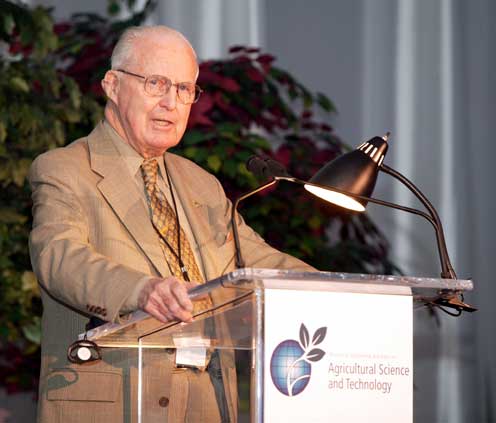
Everyone loves a hero. Save someone from a burning building, and you’ll get your fifteen minutes of fame. That’s why I’m always surprised that more people don’t know Norman Borlaug, who would have celebrated his 104th birthday on Sunday. He won the Nobel prize in 1970 and there’s good reason to think that his hacking efforts saved about a billion people from starving to death. A billion people. That’s not just a hero, that’s a superhero.
To understand why that claim is made, you have to go back to the 1970s. The population was growing and was approaching an unprecedented four billion people. Common wisdom was that the Earth couldn’t sustain that many people. Concerns about pollution were rampant and there were many influential thinkers who felt that we would not be able to grow enough food to feed everyone.
Paul Ehrlich, in particular, was a Stanford University biologist who wrote a book “The Population Bomb.” His forecast of hundreds of millions starving to death in the 1970s and 1980s, including 65 million Americans, were taken very seriously. He also predicted doom for India and that England would not exist by the year 2000.
Here we are 40 or 50 years later and while there are hungry people all over the world, there isn’t a global famine of the proportions many people thought was imminent. What happened? People are pretty good problem solvers and Norman Borlaug — along with others — created what’s known as the Green Revolution.
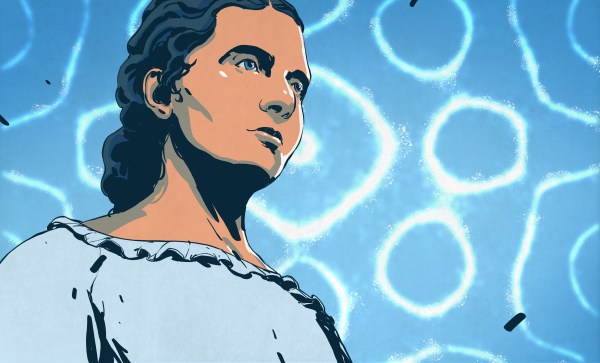
When a 13-year old Marie-Sophie Germain was stuck in the house because of the chaotic revolution on the streets of Paris in 1789, she found a refuge for her active mind: her father’s mathematics books. These inspired her to embark on pioneering a new branch of mathematics that focussed on modeling the real world: applied mathematics.
Post-revolutionary France was not an easy place for a woman to study mathematics, though. She taught herself higher maths from her father’s books, eventually persuading her parents to support her unusual career choice and getting her a tutor. After she had learned all she could, she looked at studying at the new École Polytechnique. Founded after the revolution as a military and engineering school to focus on practical science, this school did not admit women.
Anyone could ask for copies of the lecture notes, however, and students submitted their observations in writing. Germain got the notes and submitted her coursework under the pseudonym Monsieur Antoine-August Le Blanc. One of the lecturers that she impressed was Joseph Louis Lagrange, the mathematician famous for defining the mathematics of orbital motion that explained why the moon kept the same face to the earth. Lagrange arranged to meet this promising student and was surprised when Germain turned out to be a woman.
Gauss and Germain
‘Le Blanc’ also corresponded with German mathematician Carl Friedrich Gauss on number theory. When Napoleon’s armies occupied the town the famous mathematician lived in, Germain enlisted a family friend in the army to check that Gauss had not been harmed. Gauss didn’t realize who had helped him out, until he discovered that ‘Le Blanc’ was Sophie Germain, he wrote to her thanking her for her concern and praising her mathematical prowess given the hurdles set before her.
“How sweet is the acquisition of a friendship so flattering and precious to my heart. The lively interest you took during this terrible war deserves the most sincere recognition….But when a person of this sex, who, for our mores and prejudices, must recognize infinitely more obstacles and difficulties than men to become acquainted with these thorny searches, knows how to get rid of these obstacles and to penetrate what they have, most hidden, must undoubtedly, she has the most noble courage, talents quite extraordinary, genius superior.”
As well as working on the thorny and theoretical problems of number theory, Germain worked on applying mathematics to real world problems. One of these was a challenge set by the Paris Academy of Science to mathematically describe the elasticity of metal plates. An experimenter called Ernest Chladni had demonstrated that a metal plate would resonate in odd ways when vibrated at certain frequencies. If you put sand on the plate, it would collect in different patterns created by the resonance of the plate, called Chladni figures. To win the prize, the solution had to predict these figures.
The Mathematics of Stress and Strain
Mathematically predicting the behavior of metal plates could make it easier to design metal objects and predict how they would behave under stress. The prize was set in 1808 but was so difficult that Germain was the only one who decided to try to solve it, as it required coming up with a whole new way to analyze and describe how materials bend and change under stress.
The first two solutions that she submitted were rejected due to mathematical errors, but the third version won her the prize in 1816. However, due to the Academy policy of not allowing women to join (and to only attend events if they were wives of members), Germain was not able to attend the ceremony where the prize was granted. She was also not allowed to attend meetings of the Academy. After the Academy failed to publish her prize-winning work, Germain had to pay to publish the work herself in 1821.
Later, her friend Joseph Fourier allowed her to attend meetings and presentations, but the mathematical establishment never really accepted her, or her work. In a letter to a colleague in 1826 she complained about the way they rebuffed her:
“These facts are my domain and it is to me alone that they remain hidden. That’s the privilege of the ladies: they get compliments and no real benefits.”
In the same letter, Germain complained of suffering fatigue and she was diagnosed with breast cancer shortly afterwards. She died in 1831. Her final years were spent working on a solution to Fermat’s Last Theorem, and just before her death she published a partial solution that was the basis for much research into the theorem, which was finally solved only with computer help in the late 1990s.
Although Sophie Germain never earned a degree in her lifetime, she was given an honorary degree in 1837 from the University of Göttingen at the suggestion of Gauss, who noted that
“she proved to the world that even a woman can accomplish something worthwhile in the most rigorous and abstract of the sciences and for that reason would well have deserved an honorary degree.”
The Academy that snubbed her also now offers an annual prize for mathematics in her name. Perhaps more importantly, her work formed the basis of the study of elasticity and stress in metals that allowed engineers to build larger objects and buildings. Creations such as the Eiffel tower in 1887 were directly influenced by her work, and it laid some of the groundwork for Einstein’s theory of General Relativity.
Modern scholars argue that Germain could have been more than she was: her work, they argue, was hamstrung by a limited understanding of some of the fundamental concepts that Gauss and others had described. Although her work was fundamental and important, if she had been given free access to the education that she wanted and deserved, it’s easy to imagine that she would have gone farther.




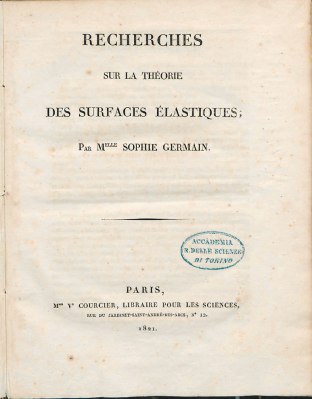 The first two solutions that she submitted were rejected due to mathematical errors, but the third version won her the prize in 1816. However, due to the Academy policy of not allowing women to join (and to only attend events if they were wives of members), Germain was not able to attend the ceremony where the prize was granted. She was also not allowed to attend meetings of the Academy. After the Academy failed to publish her prize-winning work,