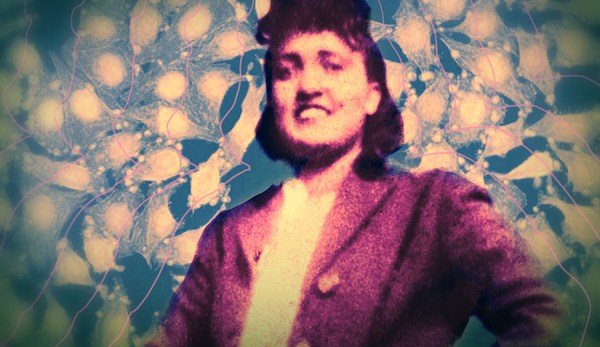
In early 1951, a woman named Henrietta Lacks visited the “colored ward” at Johns Hopkins hospital for a painful lump she found on her cervix. She was seen by Dr. Howard W. Jones, who indeed found a tumor growing on the surface of her cervix. He took a tissue sample, which confirmed Henrietta’s worst fears: She had cancer.
The treatment at the time was to irradiate the tumor with radium tubes placed in and around the cervix. The hope was that this would kill the cancerous cells while preserving the healthy tissue. Unbeknownst to Henrietta, a biopsy was taken during her radium procedure. Slivers of her tumor and of healthy cervix cells were cut away. The cancer cells were used as part of a research project. Then something amazing happened: the cancerous cells grew and continued to grow outside of her body.
As Henrietta herself lay dying, the HeLa immortal cell line was born. This cell line has been used in nearly every aspect of medical research since the polio vaccine. Millions owe their lives to it. Yet, Henrietta and her family never gave consent for any of this. Her family was not informed or compensated. In fact, until recently, they didn’t fully grasp exactly how Henrietta’s cells were being used.
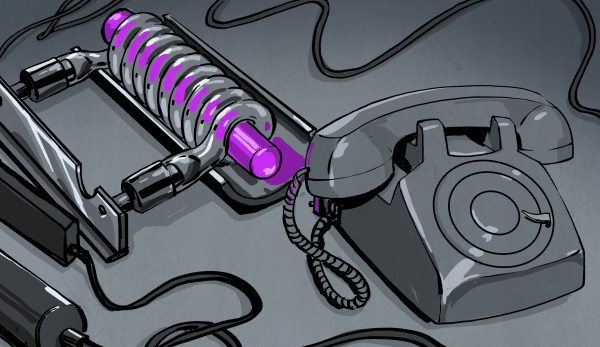
Lasers are such a fundamental piece of technology today that we hardly notice them. So cheap that they can be given away as toys and so versatile that they make everything from DVD players to corneal surgery a reality, lasers are one of the building blocks of the modern world. Yet lasers were once the exclusive province of physicists, laboring over expansive and expensive experimental setups that seemed more the stuff of science fiction than workhouse tool of communications and so many other fields. The laser has been wildly successful, and the story of its development is an intriguing tale of observation, perseverance, and the importance of keeping good notes.
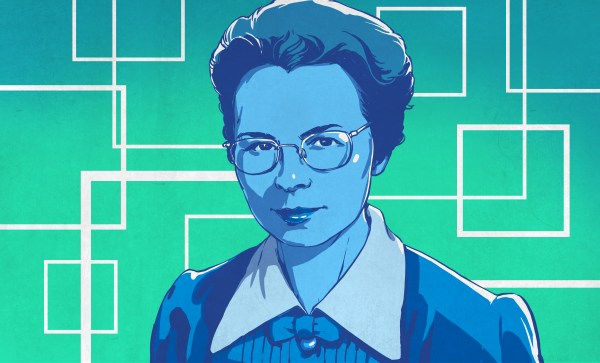
Whether you realize it or not, Katharine Burr Blodgett has made your life better. If you’ve ever looked through a viewfinder, a telescope, or the windshield of a car, you’ve been face to face with her greatest achievement, non-reflective glass.
Katharine was a surface chemist for General Electric and a visionary engineer who discovered a way to make ordinary glass 99% transparent. Her invention enabled the low-cost production of nearly invisible panes and lenses for everything from picture frames and projectors to eyeglasses and spyglasses.
Katharine’s education and ingenuity along with her place in the zeitgeist led her into other fields throughout her career. When World War II erupted, GE shifted their focus to military applications. Katharine rolled up her sleeves and got down in the scientific trenches with the men of the Research Lab. She invented a method for de-icing airplane wings, engineered better gas masks, and created a more economical oil-based smokescreen. She was a versatile, insightful scientist who gave humanity a clearer view of the universe.
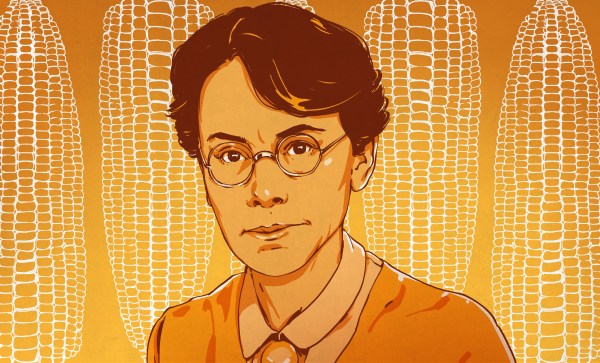
The tale of much of Barbara McClintock’s life is that of the scientist working long hours with a microscope seeking to solve mysteries. The mystery she spent most of her career trying to solve was how all cells in an organism can contain the same DNA, and yet divide to produce cells serving different functions; basically how cells differentiate. And for that, she got a Nobel prize all to herself, which is no small feat either.
Becoming a Scientist
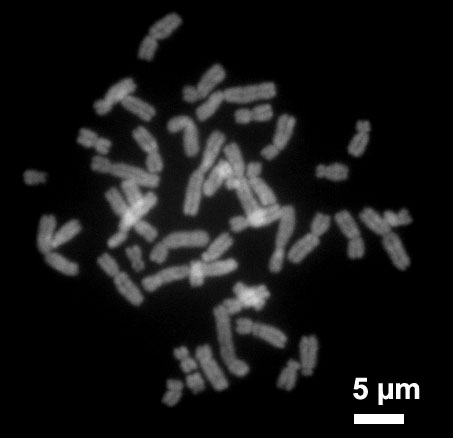
Human chromosomes, long strands of DNA by Steffen Dietzel CC BY-SA 3.0
McClintock was born on June 16, 1902, in Hartford, Connecticut, USA. From age three until beginning school, she lived with her aunt in Brooklyn, New York while her father strove financially to start up a medical practice. She was a solitary and independent-minded child, a trait she later called her “capacity to be alone”.
In 1919, she began her studies at Cornell’s College of Agriculture and took her first course in genetics in 1921. A year later, due to the interest she showed in genetics, she was invited to take the graduate genetics course at Cornell. It was here that she became interested in the new field of cytogenetics, specifically of maize or corn. Cytogenetics studies how the chromosomes relate to cell behavior, particularly during cell division. Chromosomes are the long strands of DNA within the nucleus of every cell and shown here in the photo at a time when they are condensed, or coiled up.
While still at Cornell she developed a number of methods for visualizing and characterizing maize which ended up in textbooks. She also became the first to describe the morphology of the ten maize chromosomes, basically their form and structural relationships, which then allowed her to discover more about the chromosomes. One of her colleagues observed that ten of the seventeen significant advances made in the field at Cornell between 1929 and 1935 were hers. This was only the first step in what would be the remarkable career of a very well respected scientist.
There are some notable figures in history that you know of for just one single thing. They may have achieved much in their lifetimes or they may have only been famous for Andy Warhol’s fifteen minutes, but through the lens of time we only know them for that single achievement. Then on the other hand there are those historic figures for whom there is such a choice of their achievements that have stood the test of time, that it is difficult to characterize them by a single one.
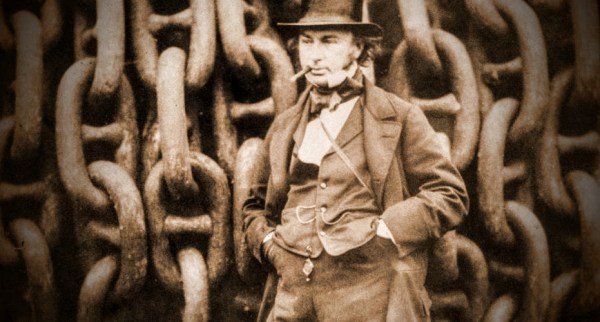
Isambard Kingdom Brunel, in front of the launching chains for the Great Eastern. [Public domain]Such is the case of Isambard Kingdom Brunel, the subject of today’s Hardware Heroes piece. Do we remember him for his involvement in the first successful tunnel to pass beneath a river, as a builder of some of the most impressive bridges on the 19th century, the innovator in all aspects of rail engineering, the man behind the first screw-driven ocean-going iron ship, or do we remember him as all of those and more?
It is possible that if you are not British, or in particular you are not from the West of England, this is the first you’ve heard of Brunel. In which case he is best described as a towering figure of many aspects of engineering over the middle years of the 19th century. His influence extended from civil engineering through the then-emerging rail industry, to shipbuilding and more, and his legacy lives on today in that many of his works are still with us.
Engineering: The Family Trade
Brunel’s father, Marc Brunel, was an engineer and refugee from the French Revolution who found success in providing the British Navy with a mass-production system for wooden pulley blocks as used in the rigging of sailing ships. He enters this story for his grand project, the world’s first tunnel to be dug under a navigable river, beneath London’s River Thames from Rotherhithe to Wapping, and for his patented tunneling shield which made it possible to be dug.
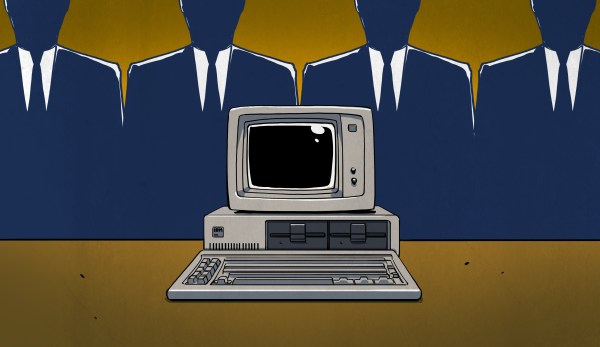
It was the dawn of the personal computer age, a time when Apple IIs, Tandy TRS-80s, Commodore PETs, the Atari 400 and 800, and others had made significant inroads into schools and people’s homes. But IBM, whose name was synonymous with computers, was nowhere to be seen. And yet within a few years, the IBM PC would be the dominant player.
Those of us who were around at the time cherished one of those early non-IBM computers, and as the IBM PC came out, either respected it, looked down on it, or did both. But now, unless your desktop machine is a Mac, you probably own a computer that owes its basic design to the first IBM PC.
The Slow Moving Elephant
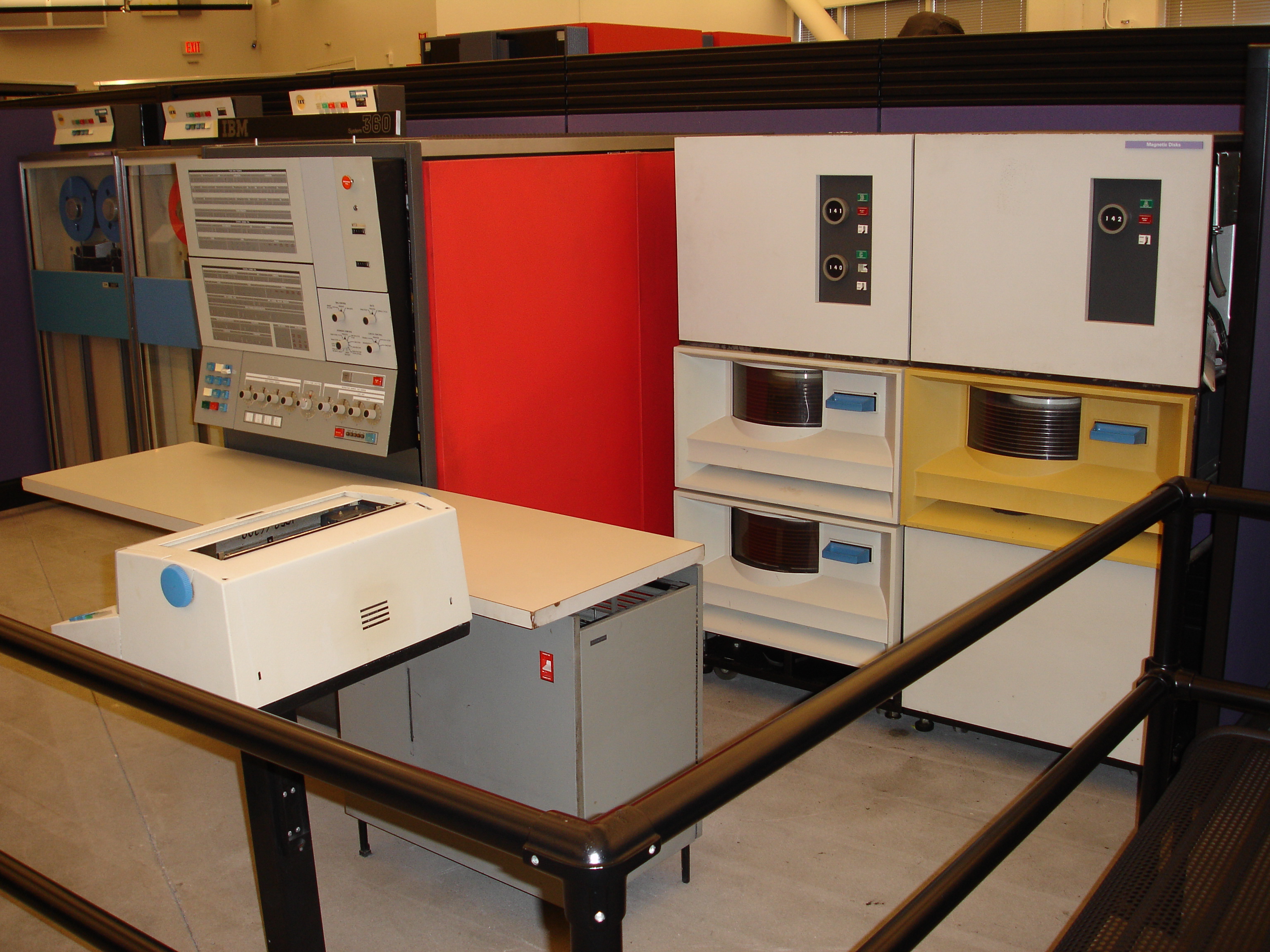
IBM System/360 Model 30 mainframe by Dave Ross CC BY 2.0
In the 1960s and 1970s, the room-filling mainframe was the leading computing platform and the IBM System/360 held a strong position in that field. But sales in 1979 in the personal computer market were $150 million and were projected to increase 40% in 1980. That was enough for IBM to take notice. And they’d have to come up with something fast.
Fast, however, wasn’t something people felt IBM could do. Decisions were made through committees, resulting in such a slow decision process that one employee observed, “that it would take at least nine months to ship an empty box.” And one analyst famously said, “IBM bringing out a personal computer would be like teaching an elephant to tap dance.”
And yet, in just a few short years, IBM PCs dominated the personal computer market and the majority of today’s desktops can trace their design back to the first IBM PC. With even more built-in barriers which we cover below, how did the slow-moving elephant make this happen?
If you have a car parked outside as you are reading this, the overwhelming probability is that it has a reciprocating piston engine powered by either petrol(gasoline), or diesel fuel. A few of the more forward-looking among you may own a hybrid or even an electric car, and fewer still may have a piston engine car powered by LPG or methane, but that is likely to be the sum of the Hackaday reader motoring experience.
We have become used to understanding that perhaps the era of the petroleum-fueled piston engine will draw to a close and that in future decades we’ll be driving electric, or maybe hydrogen. But visions of the future do not always materialize as we expect them. For proof of that, we only need to cast our minds back to the 1950s. Motorists in the decade following the Second World War would have confidently predicted a future of driving cars powered by jet engines. For a while, as manufacturers produced a series of prototypes, it looked like a safe bet.
The Chrysler gas turbine car from [Bryan]’s article. CZmarlin [Public domain].Back in August, my colleague [Bryan] wrote a feature: “The Last Interesting Chrysler Had A Gas Turbine Engine“, in which he detailed the story of one of the more famous gas turbine cars. But the beautifully styled Chrysler was not the only gas turbine car making waves at the time, because meanwhile on the other side of the Atlantic a series of prototypes were taking the gas turbine in a slightly different direction.
Rover was a British carmaker that was known for making sensible and respectable saloon cars. They passed through a series of incarnations into the nationalized British Leyland empire, eventually passing into the hands of British Aerospace, then BMW, and finally a consortium of businessmen under whose ownership they met an ignominious end. If you have ever wondered why the BMW 1-series has such ungainly styling cues, you are looking at the vestiges of a Rover that never made it to the forecourt. The very successful Land Rover marque was originally a Rover product, but beyond that sector, they are not remembered as particularly exciting or technically advanced.
The Rover JET1 prototype. Allen Watkin [CC BY-SA 2.0].At the close of the Second World War though, Rover found themselves in an interesting position. One of their contributions to war production had been the gas turbine engines found in the first generation of British jet aircraft, and as part of their transition to peacetime production they began to investigate civilian applications for the technology. Thus the first ever gas turbine car was a Rover, the 1950 JET1. Bearing the staid and respectable styling of a 1950s bank manager’s transport rather than the space-age look you might expect of the first ever gas turbine car, it nonetheless became the first holder of the world speed record for a gas turbine powered car when in 1952 it achieved a speed of 152.691 MPH.
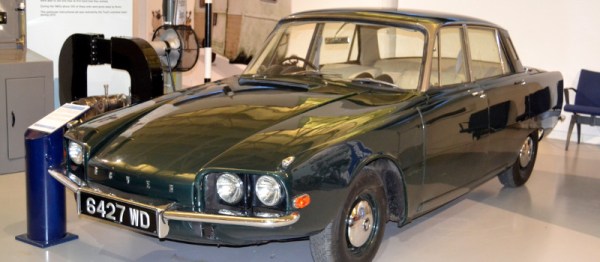
The JET1 was soon followed by a series of further jet-powered prototypes culminating in 1956’s T3 and 1961’s T4. Both of these were practical everyday cars, the T3, a sports coupé, and the T4, an executive saloon car whose styling would appear in the 1963 petrol-engined P6 model. There was also an experimental BMC truck fitted with the engine. The P6 executive car was produced until 1977, and all models were designed to have space for a future gas turbine option by having a very unusual front suspension layout with a pivot allowing the spring and damper to be placed longitudinally in the front wing.
The Rover-BRM racing car at Gaydon. David Merrett [CC BY 2.0].It was not only prototypes for production cars with gas turbines that came from Rover in the 1960s though, for in 1963 they put their gas turbine into a BRM racing chassis and entered it into the Le Mans 24 hour endurance race. It returned in the 1964 season fitted with a novel rotating ceramic honeycomb heat exchanger to improve its efficiency, racing for a final season in 1965.
The fate of the gas-turbine Rovers would follow that of their equivalent cars from other manufacturers including the Chrysler covered by [Bryan]. Technical difficulties were never fully overcome, the increasing cost of fuel made gas turbine cars uneconomic to run, and meanwhile by the 1960s the piston engine had improved immeasurably over what had been available when the JET1 had been produced. The Rover P6 never received its gas turbine, and the entire programme was abandoned. Today all the surviving cars are in museums, the JET1 prototype in the Science Museum in London, and the T3, T4, and Rover-BRM racing car at the Heritage Motor Centre at Gaydon. The truck survives in private hands, having been restored, and is a regular sight at summer time shows.
As a footnote to the Rover story, in response to the development of JET1 at the start of the 1950s, their rival and later British Leyland stablemate Austin developed their own gas turbine car. If international readers find Jet1’s styling a bit quaint compared to the American jet cars, it is positively space-age when compared to the stately home styling of the Sheerline limousine to which Austin fitted their gas turbine.

![[Isambard Kingdom Brunel], in front of the launching chains for the Great Eastern. [Public domain]](https://hackaday.com/wp-content/uploads/2017/11/ikbrunelchains.jpg)
![The Chrysler gas turbine car from [Brian]'s article. CZmarlin [Public domain].](https://hackaday.com/wp-content/uploads/2017/08/turbine.jpg)
![The Rover Jet1 prototype. Allen Watkin [CC BY-SA 2.0].](https://hackaday.com/wp-content/uploads/2017/11/rover_sort_of-_2398190117.jpg)
![The Rover-BRM racing car at Gaydon. David Merrett [CC BY 2.0].](https://hackaday.com/wp-content/uploads/2017/11/1024px-rover_brm_-_gas_turbine_heritage_motor_centre_gaydon_1.jpg)









