Humanity has been harvesting energy from the wind for centuries. The practice goes back at least to 8th century Persia where the first known historical records of windmills came, but likely extends even further back than that. Compared to the vast history of using wind energy directly to do things like mill grain, pump water, saw wood, or produce fabrics, the production of electricity is still relatively new. Despite that, there are some intriguing ways of using wind to produce electricity. Due to the unpredictable nature of wind from moment to moment, using it to turn a large grid-tied generator is not as straightforward as it might seem. Let’s take a look at four types of wind turbine configurations and how each deal with sudden changes in wind speeds. Continue reading “Converting Wind To Electricity Or: The Doubly-Fed Induction Generator”
Curated76 Articles
Hackaday’s finest original content articles curated by the Hackaday editors
The 2003 Northeast Blackout And The Harsh Lessons Of Grid Failures
The grid failure in 2003 which reverted much of the eastern US and Canada back to a pre-electrification era may be rather memorable, yet it was not the first time that a national, or even international power grid failed. Nor is it likely that it will be the last. In August of 2023 we mark the 20th anniversary of this blackout which left many people without electricity for up to three days, while costing dozens of people their lives. This raises the question of what lessons we learned from this event since then.
Although damage to transmission lines and related infrastructure is a big cause of power outages – especially in countries where overhead wiring is the norm – the most serious blackouts involve the large-scale desynchronization of the grid, to the point where generators shutdown to protect themselves. Bringing the grid back from such a complete blackout can take hours to days, as sections of the grid are reconnected after a cascade scenario as seen with the 2003 blackout, or the rather similar 1965 blackout which affected nearly the same region.
With how much more modern society relies today on constant access to electrical power than it did twenty, let alone fifty-eight years ago, exactly how afraid should we be of another, possibly worse blackout?
Continue reading “The 2003 Northeast Blackout And The Harsh Lessons Of Grid Failures”
Blame It On The Sockets: Forensic Analysis Of The Arecibo Collapse
Nearly three years after the rapid unplanned disassembly of the Arecibo radio telescope, we finally have a culprit in the collapse: bad sockets.
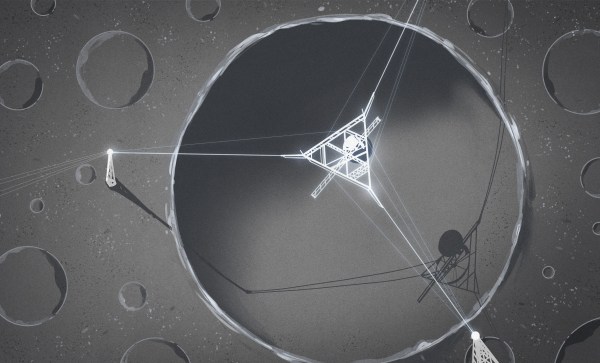
In case you somehow missed it, back in 2020 we started getting ominous reports that the cables supporting the 900-ton instrument platform above the 300-meter primary reflector of what was at the time the world’s largest radio telescope were slowly coming undone. From the first sign of problems in August, when the first broken cable smashed a hole in the reflector, to the failure of a second cable in November, it surely seemed like Arecibo’s days were numbered, and that it would fall victim to all the other bad luck we seemed to be rapidly accruing in that fateful year. The inevitable finally happened on December 1, when over-stressed cables on support tower four finally gave way, sending the platform on a graceful swing into the side of the natural depression that cradled the reflector, damaging the telescope beyond all hope of repair.
The long run-up to the telescope’s final act had a silver lining in that it provided engineers and scientists with a chance to carefully observe the failure in real-time. So there was no real mystery as to what happened, at least from a big-picture perspective. But one always wants to know the fine-scale details of such failures, a task which fell to forensic investigation firm Thornton Tomasetti. They enlisted the help of the Columbia University Strength of Materials lab, which sent pieces of the failed cable to the Oak Ridge National Laboratory’s High Flux Isotope reactor for neutron imaging, which is like an X-ray study but uses streams of neutrons that interact with the material’s nuclei rather than their electrons.
The full report (PDF) reveals five proximate causes for the collapse, chief of which is “[T]he manual and inconsistent splay of the wires during cable socketing,” which we take to mean that the individual strands of the cables were not spread out correctly before the molten zinc “spelter socket” was molded around them. The resulting shear stress caused the zinc to slowly flow around the cable strands, letting them slip out of the surrounding steel socket and — well, you can watch the rest below for yourself.
As is usually the case with such failures, there are multiple causes, all of which are covered in the 300+ page report. But being able to pin the bulk of the failure on a single, easily understood — and easily addressed — defect is comforting, in a way. It’s cold comfort to astronomers and Arecibo staff, perhaps, but at least it’s a lesson that might prevent future failures of cable-supported structures.
Continue reading “Blame It On The Sockets: Forensic Analysis Of The Arecibo Collapse”
Review: WAINLUX K8, A Diode Laser That’s Ready To Work
Rarely a week goes by that some company doesn’t offer to send us their latest and greatest laser. You know the type — couple of aluminum extrusions, Class 4 diode flopping around in the breeze, and no enclosure to speak of unless you count the cardboard box they shipped it in. In other words, an accident waiting to happen. Such gracious invitations get sent to the trash without a second thought.
Now don’t get me wrong, I have no doubt that the average Hackaday reader would be able to render such a contraption (relatively) safe for use around the shop. Build a box around it, bolt on a powerful enough fan to suck the smoke out through the window, and you’ve turned a liability into a legitimate tool. But the fact remains that we simply can’t put our stamp on something that is designed with such a blatant disregard for basic safety principles.

That being the case, a recent email from WAINLUX nearly met the same fate as all those other invitations. But even at a glance it was clear that this new machine they wanted to send out, the K8, was very different from others we’d seen. Different even from what the company themselves have put out to this point. This model was fully enclosed, had a built-in ventilation fan, an optional air filter “sidecar”, and yes, it would even turn off the laser if you opened the door while it was in operation. After reading through the promotional material they sent over, I had to admit, I was intrigued.
It seemed like I wasn’t the only one either; it was only a matter of days before the Kickstarter for the WAINLUX K8 rocketed to six figures. At the time of this writing, the total raised stands at just under $230,000 USD. There’s clearly a demand for this sort of desktop laser, the simplicity of using a diode over a laser tube is already appealing, but one that you could actually use in a home with kids or pets would be a game changer for many people.
But would the reality live up to the hype? I’ve spent the last couple of weeks putting a pre-production WAINLUX K8 through its paces, so let’s take a look and see if WAINLUX has a winner on their hands.
Continue reading “Review: WAINLUX K8, A Diode Laser That’s Ready To Work”
The Briny Depths Give Wine An Edge, But How?
Though Hackaday scribes have been known to imbibe a few glasses in their time, it’s fair to say that we are not a wine critic site. When a news piece floated by about a company getting into trouble for illegally submerging crates of wine though, our ears pricked up. Why are vintners dumping their products in the sea?
Making wine, or indeed any alcoholic beverage, starts with taking a base liquor, be it grape juice, apple juice, barley malt solution, or whatever, and fermenting it with a yeast culture to produce alcohol. The result is a drink that’s intoxicating but rough, and the magic that turns it into a connoisseur’s tipple happens subsequently as it matures. The environment in which the maturation happens has a huge influence on this, which is one of many reasons why wine from the cellar of a medieval chateau tastes better than that from an industrial unit in southern England. The Californian company was attempting to speed up this process by leaving the bottles beneath the waves. Continue reading “The Briny Depths Give Wine An Edge, But How?”
Privacy And Photography, We Need To Talk
One of the fun aspects of our global community is that there are plenty of events at which we can meet up, hang out, and do cool stuff together. They may be in a Las Vegas convention center, a slightly muddy field in England, or a bar in Berlin, but those of us with a consuming interest in technology and making things have a habit of finding each other. Our events all have their own cultures which make each one slightly different from others.
The German events, for example, seem very political to my eyes — with earnest blue-haired young women seeking to make their mark as activists, while the British ones are a little more laid-back and full of middle-aged engineers seeking the bar. There are some cultural things which go beyond the superficial though and extend into the way the events are run, and it’s one of these which I think it’s time we had a chat about.
Our Community Takes Privacy Seriously

The hacker community differs from the general public in many ways, one of which is that we tend to have a much greater understanding of privacy in the online age. The Average Joe will happily sign up to the latest social media craze without a care in the world, while we quickly identify it as a huge data slurp in which the end user is the product rather than the customer.
The work of privacy activists in our community in spotting privacy overreaches may pass unnoticed by outsiders, but over the years it’s scored some big wins that benefit everyone. Part of this interest in privacy appears at our events; it’s very much not done to take a photograph of someone at a hacker event without their consent. This will usually be clearly stated in the code of conduct, and thus if taking a picture featuring someone it’s imperative to make damn sure they’re OK with it. Continue reading “Privacy And Photography, We Need To Talk”
Making Electricity At The South Pole
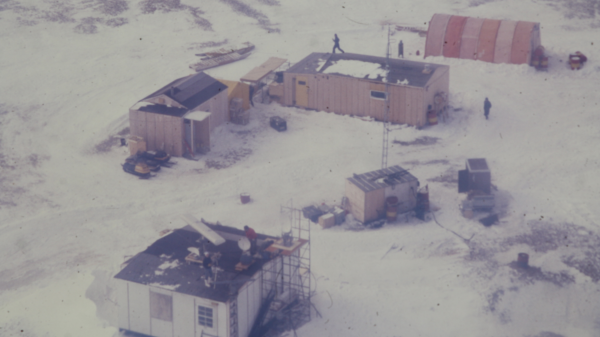
In case you’ve ever wondered how the South Pole research stations are powered, then a recent blog post, South Pole Electrical Infrastructure by anonymous IT engineer [brr] is for you. Among the many issues covered, let’s look at how the electricity is made and, spoiler alert, how the specially formulated AN8 fuel blend is transported to the generators.
The main source of power is a trio of Caterpillar 3512B diesel generator sets, de-rated to 750 kW each due to the high altitude and the special fuel mixture. Unsurprisingly, all the fuel must be imported to Antarctica, a horribly inefficient endeavor. Fuel arrives initially at McMurdo Station harbor by tanker ship. From there, it can be sent to the Amundsen-Scott South Pole Station in one of two ways. The Lockheed LC-130 is a modified C-130 Hercules cargo plane developed in the 1950s specifically to support polar operations. It is the least efficient method, consuming 1.33 kg to transport 1 kg of fuel. Alternatively, fuel can be dragged by tractors via the South Pole Overland Traverse (SPoT), a 1600 km highway over compacted snow and ice. The trek takes about 40 days and only consumes 0.56 kg of fuel for every 1 kg, which is much better than air.