Quantum Atomic Interferometer For Precision Motion Sensing

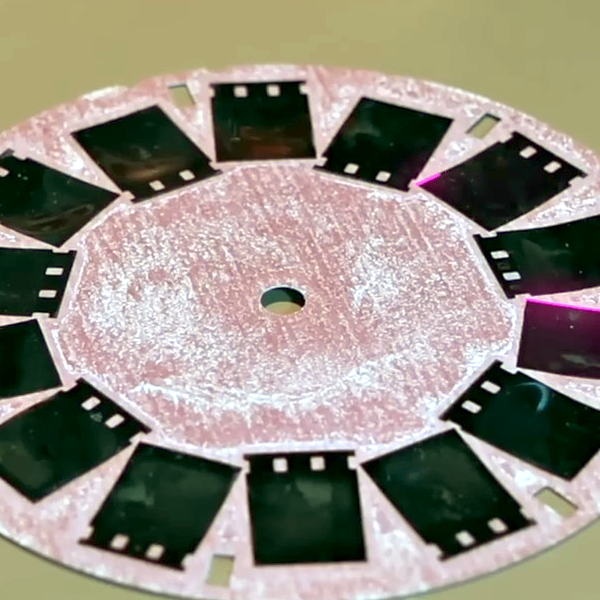
The current state of the art of embedded motion sensing is based around micro-electromechanical systems (MEMS) devices. These miracles of microfabrication use tiny silicon structures, configured to detect acceleration and rotational velocity in three dimensions. Accumulate these accelerations and rotations, and you’ve got a device that can find its orientation and track movement without any external waypoints. This is the basis of the technique of dead reckoning.

Why do we care about dead reckoning anyway? Surely GPS and related positioning systems are good enough? Above ground GPS is usually good enough, but underwater and underground this simply won’t work. Even heading indoors has a dramatic effect on the GPS signal strength, so yes, we need another way for some applications.

Right now, the current state of the art in portable sensors are MEMS devices, and you can get them for the cost of a hamburger. But if you want the ultimate in accuracy, you’ll want a quantum atomic interferometer. What that is, and how it will be possible to make one small enough to be useful, is half of the story. But first, let’s talk MEMS.

Continue reading “Quantum Atomic Interferometer For Precision Motion Sensing”
The Label Says HDMI 2.1 But That Doesn’t Mean You’ll Get It

Technology moves quickly these days as consumers continue to demand more data and more pixels. We see regular updates to standards for USB and RAM continually coming down the pipeline as the quest for greater performance goes on.

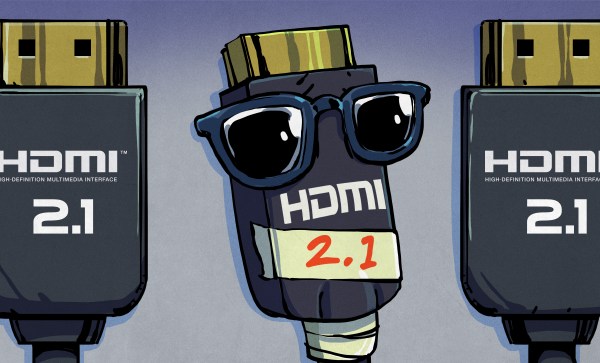
HDMI 2.1 is the latest version of the popular audio-visual interface, and promises a raft of new features and greater performance than preceding versions of the standard. As it turns out, though, buying a new monitor or TV with an HDMI 2.1 logo on the box doesn’t mean you’ll get any of those new features, as discovered by TFT Central.

Continue reading “The Label Says HDMI 2.1 But That Doesn’t Mean You’ll Get It”

The Dreamcast Legacy

The Dreamcast is a bit of an odd beast. Coming on the heels of the unpopular Sega Saturn, the Dreamcast was meant to be a simple console built with off-the-shelf parts and released in late 1998. The Nintendo 64 was already tough competition (1996). Ultimately, the Dreamcast fell out of the public eye in the early 2000s as the Playstation 2, Xbox, and Gamecube were all released with incredible fanfare just a few years later. In some sense, Sega’s last console is a footnote in gaming history.

But despite not achieving the success that Sega hoped for, the Dreamcast has formed a small cult following, because as we know, nothing builds a cult-like following like an untimely demise. Since its release, it has gained a reputation for being ahead of its time. It was the first console to include a modem for network play and an easy storage solution for transferring game data between consoles via the VMUs that docked in the controllers. It had innovative and classic games such as Crazy TaxiJet Set RadioPhantasy Star Online, and Shenmue. Microsoft even released a version of Windows CE with DirectX allowing developers to port PC games to the console quickly.

We see our fair share of console hacks here on Hackaday, but what is the ultimate legacy of the Dreamcast? How did it come to be? What happened to it, and why did so much of Sega’s hopes ride on it? Continue reading “The Dreamcast Legacy”

Plastics: Photopolymers For 3D Printing And Beyond

Chances are good that if you’ve done any 3D printing, it was of the standard fused deposition modeling variety. FDM is pretty simple stuff — get a bit of plastic filament hot enough, squeeze the molten goo out of a fine nozzle, control the position of the nozzle more or less precisely in three dimensions, and repeat for hours on end until your print is done. To the outsider it looks like magic, but to us it’s just another Saturday afternoon.

Resin printing is another thing altogether, and a lot closer to magic for most of us. The current crop of stereolithography printers just have a high-resolution LCD display between a UV light source and a build tank with a transparent bottom. Prints are built up layer by layer by flashing UV light patterns into the tank as a build plate slowly lifts it up from the resin, like some creature emerging from the primordial goo.

Of course it’s all just science, but if there is any magic in SLA printing, surely it’s in the resins used for it. Their nondescript brown plastic bottles and information-poor labels give little clue as to their ingredients, although their hydrocarbon reek and viscous, sticky texture are pretty good clues. Let’s take a look inside the resin bottle and find out what it is that makes the magic of SLA happen.

Continue reading “Plastics: Photopolymers For 3D Printing And Beyond”

Is Cloud Seeding Good, Bad, Or Ugly?

The Chinese Communist Party celebrated its centenary on the 1st of July, 2021. For such a celebration, clear skies and clean air would be ideal. For the capable nation-state, however, one needn’t hope against the whims of the weather. One can simply control it instead!

A recent paper released by Tsinghua University indicated that China had used cloud seeding in order to help create nicer conditions for its 100-year celebration. Weather modification techniques have been the source of some controversy, so let’s explore how they work and precisely what it was that China pulled off.

Continue reading “Is Cloud Seeding Good, Bad, Or Ugly?”

Error Codes And The Law Of Least Astonishment

Do you know the law of least astonishment? I am not sure of its origin, but I first learned it from the excellent “Tao of Programming.” Simply put, it is the principle that software should always respond to the users in a way that least astonishes them. In other words, printing a document shouldn’t erase it from your file system.

Following the law of least astonishment, what should a program do when it hits a hard error? You might say that it should let the user know. Unfortunately, many systems just brush it under the rug these days.

I think it started with Windows. Or maybe the Mac. The thinking goes that end users are too stupid or too afraid of error codes or detailed messages so we are just leaving them out. Case in point: My wife’s iPhone wouldn’t upload pictures. I’m no expert since I carry an Android device, but I agreed to look at it. No matter what I tried, I got the same useless message: “Can’t upload photos right now. Please try again later.” Not only is this not very informative, but it also implies the problem is in something that might fix itself later like the network.

The real culprit? The iCloud terms of service had changed and she had not accepted the new contract. I have a feeling it might have popped up asking her to do that at some point, but for whatever reason she missed it. Until you dug into the settings and checked the box to agree to those terms, “later” was never going to happen.

Continue reading “Error Codes And The Law Of Least Astonishment”

PinePhone Malware Surprises Users, Raises Questions

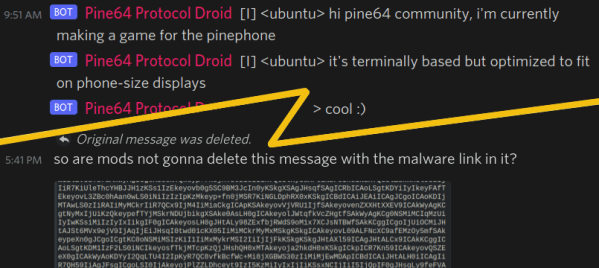
On December 5th, someone by the IRC nickname of [ubuntu] joined the Pine64 Discord’s #pinephone channel through an IRC bridge. In the spirit of December gift-giving traditions, they have presented their fellow PinePhone users with an offering – a “Snake” game. What [ubuntu] supposedly designed had the potential to become a stock, out-of-the-box-installed application with a small but dedicated community of fans, modders and speedrunners.

Unfortunately, that would not be the alternate universe we live in, and all was not well with the package being shared along with a cheerful “hei gaiz I make snake gaem here is link www2-pinephnoe-games-com-tz replace dash with dot kthxbai”  announcement. Shockingly, it was a trojan! Beneath layers of Base64 and Bashfuscator we’d encounter shell code that could be in the “example usage” section of a modern-day thesaurus entry for the word “yeet“.

Continue reading “PinePhone Malware Surprises Users, Raises Questions”