Ask Hackaday: Is PLA Biodegradable?

The most popular plastic for 3D printers is PLA – polylactic acid – a plastic that’s either derived from corn starch, inedible plant detritus, or sugar cane, depending where in the world it was manufactured. Being derived from natural materials, PLA is marketed as being biodegradable. You don’t need to worry about low-poly Pokemon and other plastic trinkets filling landfills when you’re printing with PLA, all these plastic baubles will return to the Earth from whence it came.

3D printers have been around for a few years now, and now objects printed in PLA have been around the sun a few times. A few of these objects have been completely forgotten. How’s that claim of being biodegradable holding up? The results are mixed, and as always, more data is needed.

A few weeks ago, [LazyGecko] found one of his first experiments in 3D printing. In 2012, he was experimenting with tie dying PLA prints by putting his prints in a jar filled with water and blue dye. This jar was then placed in the back of his cupboard and quickly forgotten. 3.5 years later, [LazyGecko] remembered his experiment. Absolutely nothing happened, save for a little bit of blue dye turning the print a pastel baby blue. The print looks and feels exactly like the day it came off the printer.

[LazyGecko]’s blog post was noticed by [Bill Waters], and he has one datum that points to PLA being biodegradable. In 2015, [Bill] printed a filter basket for his fish tank. The first filter basket worked well, but made a small design change a week later, printed out another, and put the first print in storage. He now has two nearly identical prints, one in constant use in a biologically interesting environment, the other sitting on a shelf for a year.

[Bill]’s inadvertent experiment is very close to the best possible experimental design to make the case for PLA biodegradability. The 3D printed filter basket in constant use for a year suffered significant breakdown, and the honeycomb walls are starting to crumble. The ‘inert’ printed filter basket looks like it just came off the build plate.

If that’s not confusing enough, [Bill] also has another print that has spent a year in a fish tank. This end cap for a filter spray bar didn’t see any degradation, despite being underwater in a biologically active environment. The environment is a little different from a filter basket, though; an aquarium filter is designed to break down organics.

To answer the question, ‘is PLA biodegradable,’ the most accurate answer is, ‘maybe’. Three data points in uncontrolled environments isn’t enough to draw any conclusions. There are, undoubtedly, more forgotten 3D prints out there, and more data to back up the claim of PLA being biodegradable.

This is where you come in. Do you have some forgotten prints out there? Your input is needed, the fruits of your labors are evidence, your prints might be decaying and we want to know about it below.


It’s Time The Software People And Mechanical People Sat Down And Had A Talk.

With the advances in rapid prototyping, there’s been a huge influx of people in the physical realm of hacking. While my overall view of this development is positive, I’ve noticed a schism forming in the community. I’m going to have to call a group out. I think it stems from a fundamental refusal of software folks to change their ways of thinking to some of the real aspects of working in the physical realm, so-to-speak. The problem, I think, comes down to three things: dismissal of cost, favoring modularity over understanding, and a resulting insistence that there’s nothing to learn.

Continue reading “It’s Time The Software People And Mechanical People Sat Down And Had A Talk.” →

Reviving The Best Keyboard Ever

For the last few decades, the computer keyboard has been seen as just another peripheral. There’s no need to buy a quality keyboard, conventional wisdom goes, because there’s no real difference between the fancy, ‘enthusiast’ keyboards and ubiquitous Dell keyboards that inhabit the IT closets of offices the world over.

Just like the mechanic who will only buy a specific brand of wrenches, the engineer who has a favorite pair of tweezers, or the amateur woodworker who uses a hand plane made 150 years ago, some people who use keyboards eight or twelve hours a day have realized the older tools of the trade are better. Old keyboards, or at least ones with mechanical switches, aren’t gummy, they’re precise, you don’t have to hammer on them to type, and they’re more ergonomic. They sound better. Even if it’s just a placebo effect, it doesn’t matter: there’s an effect.

This realization has led to the proliferation of high-end keyboards and keyboard aficionados hammering away on boards loaded up with Cherry MX, Alps, Gateron, Topre, and other purely ‘mechanical’ key switches. Today, there are more options available to typing enthusiasts than ever before, even though some holdouts are still pecking away at the keyboard that came with the same computer they bought in 1989.

The market is growing, popularity is up, and with that comes a herculean effort to revive what could be considered the greatest keyboard of all time. This is the revival of the IBM 4704 terminal keyboard. Originally sold to banks and other institutions, this 62-key IBM Model F keyboard is rare and coveted. Obtaining one today means finding one behind a shelf in an IT closet, or bidding $500 on an eBay auction and hoping for the best.

Now, this keyboard is coming back from the dead, and unlike the IBM Model M that has been manufactured continuously for 30 years, the 62-key IBM Model F ‘Kishsaver’ keyboard is being brought back to life by building new molds, designing new circuit boards, and remanufacturing everything IBM did in the late 1970s.
Continue reading “Reviving The Best Keyboard Ever” →

Bullet-time Video Effect By Throwing Your Phone Around

Ski areas are setting formal policies for drones left and right, but what happens when your drone isn’t a drone but is instead a tethered iPhone with wings swinging around you like a ball-and-chain flail as you careen down a mountain? [nicvuignier] decided to explore the possibility of capturing bullet-time video of his ski runs by essentially swinging his phone around him on a tether. The phone is attached to a winged carrier of his own design, 3D printed in PLA.

One would think this would likely result in all kinds of disaster, but we haven’t seen the outtakes yet, and the making-of video has an interesting perspective on each of the challenges he encountered in perfecting the carrier, ranging from keeping it stable and upright, to reducing the motion sickness with the spinning perspective, and keeping it durable enough to withstand the harsh environment and protect the phone.

He has open sourced the design, which works for either iPhone or GoPro models, or it is available for preorder if you are worried about catastrophic delamination of your 3D printed model resulting in much more bullet-like projectile motion.

Continue reading “Bullet-time Video Effect By Throwing Your Phone Around” →

Google Contest Builds More Efficient Inverters

A few summers ago, Google and IEEE announced a one million dollar prize to build the most efficient and compact DC to AC inverter. It was called the Little Box Challenge, with the goal of a 2kW inverter with a power density greater than 50 Watts per cubic inch.

To put this goal into perspective, the DC inverter that would plug into a cigarette lighter in your car has a power density of about 1 or 2 Watts per cubic inch. Very expensive inverters meant for solar installations have a power density of about 5 Watts per cubic inch. This competition aimed to build an inverter with ten times the power density of what is available today.

Now, the results are in, and the results are extremely surprising. The best entry didn’t just meet the goal of 50 W/in³, it blew the goal out of the water.

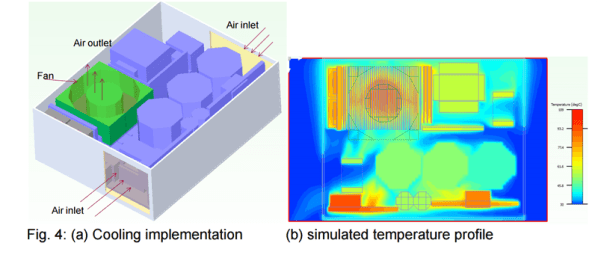
The winning entry (PDF) comes from CE+T Power, and comes in a package with a volume of 13.77 in³. That’s a power density of 143 W/in³ for a unit you can hold in the palm of your hand. The biggest innovations come from the use of GaN transistors and an incredible thermal management solution.

Other finalists for this competition include Schneider Electric Team from France that managed a 100 W/in³ and a Virginia Tech team that managed a power density of 61.2 W/in³.

Thanks [wvdv2002] for the tip.

Social Engineering Your Way To The Target PA System

If we were to express an official view of the what these guys did once they hacked into a Target store’s PA system, we’d have to go with definitely uncool. However, it’s good to know that phone phreaking and good ol’ social engineering isn’t dead yet. Many of us got our start by playing with the systems around us.

Anyone could call into a Target store and request to be transferred to the PA’s extension code, which was the same everywhere. If the person transferring the call wasn’t quick on their feet, the caller would then be patched directly into the stores PA system. The kicker? Target had no way of stopping the PA until the caller hung-up. It’s the way the system was designed.

The hack itself is embarrassingly simple. The PA is attached to the in-store phone network. This is pretty standard. We’ve all seen a sales associate go up to phone in a store, dial a number, and make an announcement throughout the store. Where Target went wrong is improper separation of systems, and poorly thought out standardization.

The weakest link in security is always the people it’s designed for, not the one’s it’s designed to keep out. It’s a fun little prank, and hopefully Target has it sorted out now.

Continue reading “Social Engineering Your Way To The Target PA System” →

Rescuing The World’s First Preserved Railway

Preserved railways are now an established part of the tourist itinerary. It doesn’t matter if you call it a railroad, railway, chemin de fer, Eisenbahn or whatever, the chances are that somewhere near you there will be a line rescued from dereliction on which you can spend a Saturday afternoon in vintage rolling stock being hauled by a locomotive long ago withdrawn from regular service. They are established enough to have become an industry in their own right, with the full range of support services to maintain hundred-year-old machinery and even build entire new locomotives.

So we’ve become used to seeing preserved railways in a state of polished perfection. Sometimes a little too perfect, there was a wry observation in a recent BBC documentary on the subject that a typical British preserved railway represents an average day in the 1950s when the Queen was about to visit. Anyone who lived through that era will tell you the reality was a little different, how run down the system was after World War II and just how dirty everything became when exposed to decades of continuous coal smoke.

A particularly worn-out section of railway in those days could be found at Tywyn, on the Welsh coast. A 2’3″ narrow-gauge line built in the 1860s to serve a slate quarry and provide a passenger service to local communities, the Tal-y-Llyn Railway (Welsh pronunciation help) had been in continuous decline for decades and on the death of its owner in 1950 faced closure. With only one of its two locomotives operational and its track in a parlous state it attracted the attention of the author Tom Rolt, already famous for kick-starting the preservation of Britain’s inland waterway system. A preservation society was formed, and in a joint enterprise with the former owner’s estate the line was saved. The world’s first preserved railway had commenced operations.

"Lawnmower" Locomotive in 1952 [Source: talyllyn.co.uk]
“Lawnmower” Locomotive in 1952 [Source: talyllyn.co.uk]
In a country reeling from the economic effects of fighting a world war there was no infrastructure for a group of enthusiasts rescuing a near-derelict railway. Nobody had ever done this before, there was no body of expertise and certainly no handy suppliers to call when parts were required. To rebuild their line the Tal-y-Llyn volunteers had to reach into their own well of initiative gained over the “Make do and Mend” war years and build their own way out of any challenges they encountered. In case you were wondering what the relevance to Hackaday readers has been in the last few paragraphs there’s your answer: what would you do if you were handed seven and a quarter miles of run-down track and a single barely serviceable locomotive that is one of the oldest in the world still running?

We are fortunate that in 1953 an American film maker, Carson “Kit” Davidson, visited the line, and through his affectionate short film we have a portrayal of the railway’s state in the early stages of preservation. When the footage was shot they had secured a second serviceable locomotive courtesy of the nearby and recently closed Corris Railway, but had yet to replace the majority of the worn-out and overgrown track. It’s a treat to watch, and sets the stage very well for the home-made machinery that is to follow.

Continue reading “Rescuing The World’s First Preserved Railway” →