How To Deal With A Cheap Spectrum Analyzer

The Hackaday Superconference is all about showcasing the hardware heroics of the Hackaday community. We also have a peer-reviewed journal with the same goal, and for the 2018 Hackaday Superconference we got a taste of the first paper to make it into our fully Open Access Journal. It comes from Ted Yapo, it is indeed a tale of hardware heroics: what happens when you don’t want to spend sixty thousand dollars on a vector network analyzer?

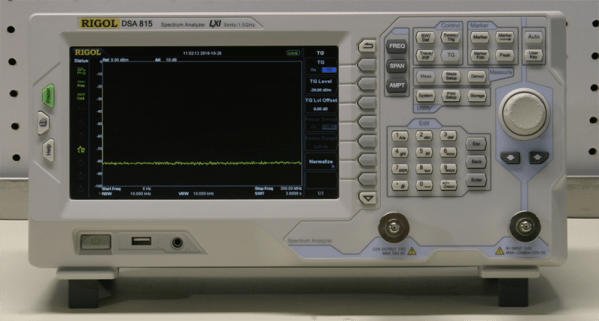
Ted’s talk begins with a need for a network analyzer. These allow for RF measurements, but if you ever need one, be prepared: you can spend twenty thousand dollars on a used VNA. Around the time Ted’s project began, Rigol released their cheap spectrum analyzer, the DSA815. This thing only cost a thousand dollars. It was their first revision of the hardware, and it was only a scalar network analyzer. Being the first revision of the hardware, there were a few problems; there was leakage that would affect the measurement. The noise floor was higher than it should have been. These problems can be corrected, though, with a little bit of cunning from Ted:

Continue reading “How To Deal With A Cheap Spectrum Analyzer”

Circuit VR: Redundant Flip Flops And Voting Logic

We are somewhat spoiled because electronics today are very reliable compared to even a few decades ago. Most modern electronics obey the bathtub curve. If they don’t fail right away, they won’t fail for a very long time, in all likelihood. However, there are a few cases where that’s not a good enough answer. One is when something really important is at stake — the control systems of an airplane, for example. The other is when you are in an environment that might cause failures. In those cases — near a nuclear reactor or space, for example, you often are actually dealing with both problems. In this installment of Circuit VR, I’ll show you a few common ways to make digital logic circuits more robust with some examples you can run in the Falstad simulator in your browser.

Continue reading “Circuit VR: Redundant Flip Flops And Voting Logic”

Hackaday Podcast 003: Igloos, Lidar, And The Blinking LED Of RF Hacking

It’s cold outside! So grab a copy of the Hackaday Podcast, and catch up on what you missed this week.

Highlights include a dip into audio processing with sox and FFMPEG, scripting for Gmail, weaving your own carbon fiber tubes, staring into the sharpest color CRT ever, and unlocking the secrets of cheap 433 MHz devices. Plus Elliot talks about his follies in building an igloo while Mike marvels at what’s coming out of passive RFID sensor research.

And what’s that strange noise at the end of the podcast?

Take a look at the links below if you want to follow along, and as always, tell us what you think about this episode in the comments!

Direct download (60 MB or so.)

Continue reading “Hackaday Podcast 003: Igloos, Lidar, And The Blinking LED Of RF Hacking”

Resurrecting An Amiga 500+

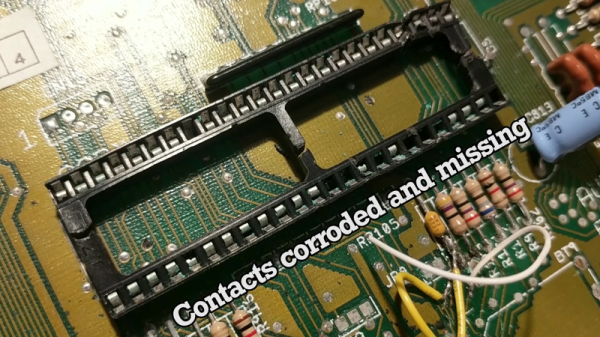
Recently, I was lucky enough to receive a big haul of retro computer gear from a friend who was emptying out his garage. Even better, the haul was almost entirely old Amiga gear — my favorite computing platform of all time. Upon returning home, I gleefully sorted through the boxes, powering things up one by one. Amazingly, everything worked… except for one lonely Amiga 500+. I was greeted by a dull grey screen. This wouldn’t do, so naturally, I got to work.

It seemed like a shame to be opening the machine, as after almost 30 years of life, this one still had its warranty seal intact. Regardless, nothing ventured, nothing gained – the Torx bits were at hand and the screws were coming out.

Continue reading “Resurrecting An Amiga 500+”

Samy Kamkar’s LED Balloon Network

Writing this in the frigid darkness of a Northern Hemisphere January evening, I have to admit to more than a little envy of Samy Kamkar and his friends. One of their summer events is a private party at a secluded campground somewhere that looks quite warm, which from here seems mighty attractive.

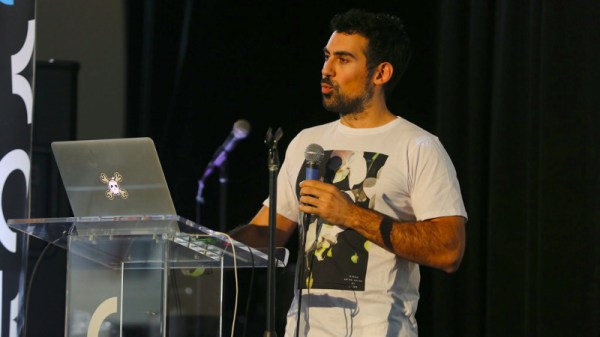
Samy wanted to provide a spectacle for his friends. What he came up with is glowing orbs; LED balloons that would float above the campsite and wow his friends with their pretty synchronised illumination. Thus an adventure in wireless communications, lighter-than-air flammable gasses versus electronics weight calculations, and code optimization began, the details of which were shared in Samy Kamkar’s 2018 Hackaday Superconference talk embedded below.

Continue reading “Samy Kamkar’s LED Balloon Network”

Cool Tools: A Little Filesystem That Keeps Your Bits On Lock

Filesystems for computers are not the best bet for embedded systems. Even those who know this fragment of truth still fall into the trap and pay for it later on while surrounded by the rubble that once was a functioning project. Here’s how it happens.

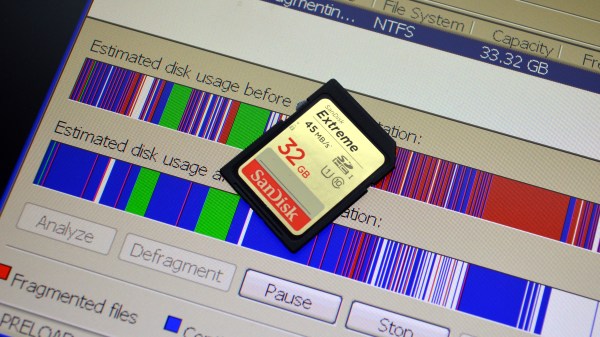
The project starts small, with modest storage needs. It’s just a temperature logger and you want to store that data, so you stick on a little EEPROM. That works pretty well! But you need to store a little more data so the EEPROM gets paired with a small blob of NOR flash which is much larger but still pretty easy to work with. Device settings go to EEPROM, data logs go to NOR. That works for a time but then you remember that people on the Internet are all about the Internet of Things so it’s time to add WiFi. You start serving a few static pages with that surprisingly capable processor and bump into storage problems again so the NOR flash gets replaced with an SD card and now the logs go there too. Suddenly you’re dealing with multiple files and want access on a computer so a real filesystem is in order. FAT is easy, so the card grows a FAT filesystem. Everything is great, but you start to notice patches missing from the logs. Then the SD card gets totally corrupted. What’s going on? Let’s take a look at the problem, and how to reach embedded file nirvana.

Continue reading “Cool Tools: A Little Filesystem That Keeps Your Bits On Lock”

The 1859 Carrington Event

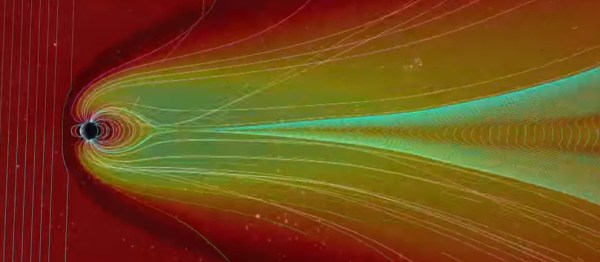
Like many Victorian gentlemen of means, Richard Carrington did not need to sully himself with labor; instead, he turned his energies to the study of natural philosophy. It was the field of astronomy to which Carrington would apply himself, but unlike other gentlemen of similar inclination, he began his studies not as the sun set, but as it rose. Our star held great interest for Carrington, and what he saw on its face the morning of September 1, 1859, would astonish him. On that morning, as he sketched an unusual cluster of sunspots, the area erupted in a bright flash as an unfathomable amount of energy stored in the twisted ropes of the Sun’s magnetic field was released, propelling billions of tons of star-stuff on a collision course with Earth.

Carrington had witnessed a solar flare, and the consequent coronal mass ejection that would hit Earth just 17 hours later would result in a geomagnetic storm of such strength that it would be worldwide news the next day, and would bear his name into the future. The Carrington Event of 1859 was a glimpse of what our star is capable of under the right circumstances, the implications of which are sobering indeed given the web of delicate connections we’ve woven around and above the planet.

Continue reading “The 1859 Carrington Event”