Retrotechtacular: We’re Gonna Have Manual Transmissions The Way My Old Man Told Me!

archimedesSimple machines are wonderful in their own right and serve as the cornerstones of many technological advances. This is certainly true for the humble lever and the role it plays in manual transmissions as evidenced in this week’s Retrotechtacular installment, the Chevrolet Motor Company’s 1936 film, “Spinning Levers”.

This educational gem happens to be a Jam Handy production. For you MST3K fans out there, he’s the guy behind shorts like Hired! from the episodes Bride of the Monster and the inimitable Manos: The Hands of Fate. Hilarity aside, “Spinning Levers” is a remarkably educational nine-ish minutes of slickly produced film that explains, well, how a manual transmission works. More specifically, it explains the 3-speed-plus-reverse transmissions of the early automobile era.

It begins with a nod to Archimedes’ assertion that a lever can move the world, explaining that the longer the lever, the better the magic. In a slightly different configuration, a lever can become a crank or even a double crank. Continuous motion of a lever or series of levers affords the most power for the least work, and this is illustrated with some top-drawer stop motion animation of two meshing paddle wheels.

gearsNext, we are shown how engine power is transferred to the rear wheels: it travels from a gear on the engine shaft to a gear on the drive shaft through gears on the countershaft. At low speeds, we let the smallest gear on the countershaft turn the largest gear on the drive shaft. When the engine is turning 90 RPM, the rear wheel turns at 30 RPM. At high speeds using high gears, the power goes directly from the engine shaft to the drive shaft and the RPM on both is equal. The film goes on to explain how the gearbox handles reverse, and the vast improvements to transmission life made possible through synchromesh gearing.

Continue reading “Retrotechtacular: We’re Gonna Have Manual Transmissions The Way My Old Man Told Me!” →

Hackaday Links: July 20, 2014

hackaday-links-chain

Etch-a-Sketch spray-painted silver with electronics bolted onto the side? Sign us up! This art installation adds one thing that we don’t often see in these types of hacks, eerie audio.

If you’re still mining bitcoin you need to do it faster than anyone else… that’s pretty much how the whole thing works. [Lewin] has been using the Antminer USB ASIC and toyed around with overclocking to 2.2 GH/s (gighashes per second) but to make sure his hardware holds up to the overwork he hacked his own water cooling system for the dongle.

Smart phones are the best bang for your buck on portability and power. Better yet you can get slightly broken ones for a song. If you manage to find an Android device with a broken touch screen but functioning LCD try this trick to add a mouse to it. There must be another life for this in a future hack!

We have a love-hate relationship with this particular crowd-funding campaign. First this hate: It’s basically a 100% clip-art video presentation with an $800,000 ask. Yeah… good luck buddy. On the other hand, this is the type of stuff we actually want to see as crowd funding. The idea is to use modern materials and techniques to build [Nikola Tesla’s] Wardenclyffe Tower, which was designed and built to research wireless energy (both as a means of communication and actual energy transfer). It was never fully functional and ended up being demolished. Wouldn’t it be great if teams of highly skilled and motivated people took grand ideas like this, crossing every theoretical “t” and dotting every theoretical “i”, and then proposed a crowd funding campaign to build a test platform? Oh wait, that sounds very much like a government research grant. Anywhoo… check out the Global Energy Transmission’s campaign.

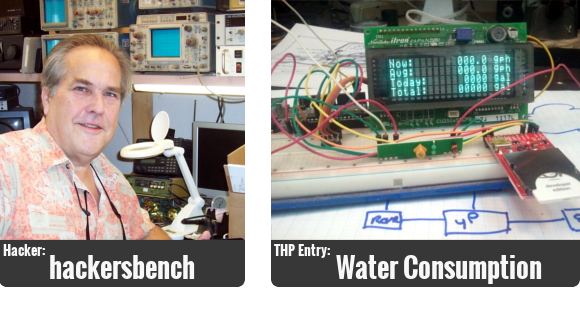
THP Hacker Bio: Hackersbench


hackersbench-contestant-bio-banner

Remote sensing applications that make sense and cents? (sorry, couldn’t help ourselves) That’s what [hackersbench], aka [John Schuch], aka [@JohnS_AZ] is working on as his entry for The Hackaday Prize.

He received a multi-thousand-dollar water bill after having an underground pipe break and leak without knowing it. His idea will help you notice problems like this sooner. But if you actually have a way to capture data about your own water use you also have a tool to help encourage less wasteful water use habits. We wanted to learn more about the hacker who is working on this project. [John’s] answers to our slate of questions are after the break.

Continue reading “THP Hacker Bio: Hackersbench” →

Developed On Hackaday: Discovering Shenzhen And Its Companies

Assembly line in shenzhen

Two weeks ago we showed a first demonstration video of the offline password keeper (aka Mooltipass) the Hackaday community had been working on for the last 6 months. We received lots of interesting feedback from our dear readers and around a thousand of them let us know they were interested in purchasing the device. We agreed that preferential pricing should be offered to them, as they have been supporting this community driven project for so long.

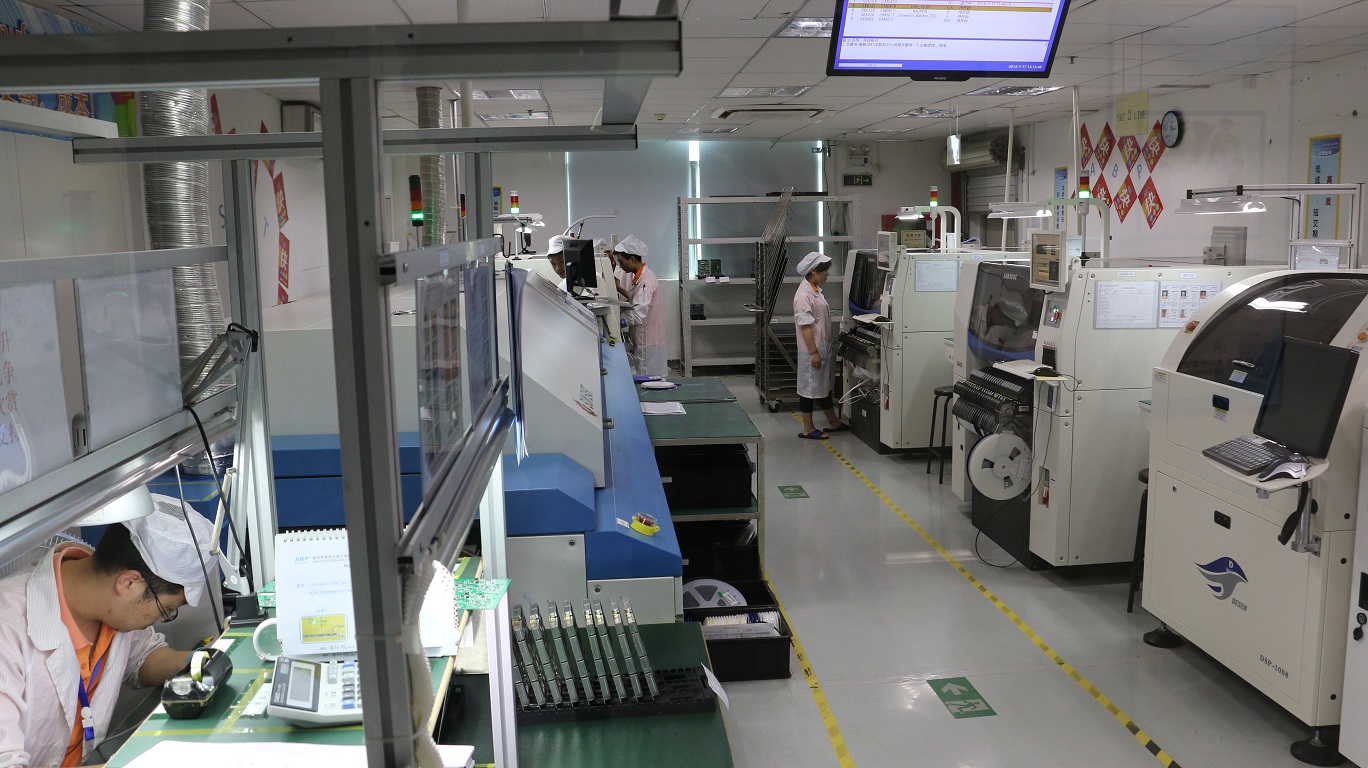
For the next few days I will be touring Shenzhen and finally meeting the persons who have been assembling my electronics projects for the last 2 years, including the Mooltipass beta testers’ batch. I’ll also meet with Ian from Dangerous Prototypes, talk with the people behind the Haxlr8r program, visit Seeedstudio offices and a CNC shop. If everything goes well with the camera I just purchased in Hong Kong I should have nice things to show you. In the meantime, don’t hesitate to leave a comment below in case you’re in the area…

Retrotechtacular: AT&T’s Hello Machine

1ESSHow many Ma Bell employees does it take to build an ESS mainframe? This week, Retrotechtacular takes you into the more poetic recesses of the AT&T Archive to answer that very question. This wordless 1974 gem is an 11-minute exploration of the construction and testing of a Western Electric 1ESS. It begins with circuit board population and ends with lots of testing.



tree

The film is really quite groovy, especially the extreme closeups of wire wrapping and relay construction. The soundtrack is a string-heavy suite that moves you through the phases of bringing up the 1ESS while drawing parallels to the wires of communication. You may lose count of the punch down blocks and miles of cables, but there are surprisingly few mustaches.

Continue reading “Retrotechtacular: AT&T’s Hello Machine” →

Hackaday Links: July 13, 2014

hackaday-links-chain

Don’t like sunglasses? Deal with it. They’re the pixeley, retro sunglasses from your favorite animated .GIFs, made real in laser cut acrylic. Points of interest include heat-bent frames made out of a single piece of acrylic.

Remember this really small FPGA board? The kickstarter is ending really soon and they’re upgrading it (for an additional $30) with a much better FPGA.

Sparkfun is now hosting the Internet of Things. They’re giving people a tiny bit of space to push data to, and you can also deploy your own server. That’s interesting, and you can expect us doing a full post on this soon.

Need waveforms? [Datanoise] is building a wavetable synthesizer, and he’s put all his waveforms online. Now if we could just get a look at the synth…

If you only have $20 to spend on a board, you’ll want to pick up at Teensy 3.1. [Karl] wrote some bare metal libraries for this awesome board, and while it’s not as extensive as the standard Arduino libs, it’s more than enough to get most projects off the ground. Included are UARTs, string manipulation tools, support for the periodic interval timers on the chip, and FAT and SD card support.

Thumbnail that say The Hacklet

The Hacklet #7 – MIDI

7

This week’s Hacklet is all about Hackaday.io projects which use MIDI, or Musical Instrument Digital Interface for the uninitiated. MIDI was designed from the ground up as an open communications standard for musical instruments. Nearly every major instrument company participated in the design of the standard. MIDI was first demonstrated in January of 1983, with the communications standard document following in August. Hackers, makers, and musicians immediately ran with it, using MIDI to do things the designers never dreamed of.

SAMSUNG[Robert’s] 9×9 Pixel Muon Detector/Hodoscope  is a great example of this. [Robert] is using 18 Geiger Muller Tubes to detect cosmic particles, specifically muons. The tubes are stacked in two rows which allows him to use coincidence detection. Rather than just plot some graphs or calculate impact probabilities, [Robert] hacked a Korg Nanokey 2 MIDI controller to output MIDI over USB messages corresponding to the detected muons. Check out his video to see a sample of the music of the universe!


diyMPCNext up is [Michele’s] DIY MPC style MIDI controller. [Michele] needed a simple low-cost drum controller that wouldn’t wake his neighbors. He loved Akai MPC controllers, so he rolled his own. [Michele] investigated force sensitive resistors but found they were very expensive. At a cost of $8 USD each, his resistors alone would be nearly the cost of a low-end MPC!  [Michele] created his own sensitive pads using a sandwich of copper tape and 3M Velostat conductive sheets. An HCF4067 routes all the analog lines to a single pin of Teensy 3.0, which then converts the analog resistor outputs to MIDI messages.

pic-midi-1vo[Johan] loves his analog synths, and wanted them to be able to talk MIDI too. He built MIDI2VC, a circuit which converts MIDI to 1V/Octave (similar to  CV/Gate). 1V/Octave is an analog control system used in some early synthesizers, as well as many modern analog creations. Pitches are assigned voltages, and as the name implies, each octave is 1 volt. A4 on the keyboard is represented by 4 volts, while A5 is 5 volts. [Johan] used a Microchip PIC16LF1823 to receive and convert the MIDI signals. The PIC outputs I2C data to an MCP4725 DAC which drives the analog side of the house.

eldanceLong before DMX512 came on the scene, hackers were controlling lights via MIDI. [Artis] continues this with El Dance, a wireless system for controlling electroluminescent wire worn by dancers. Similar in function to  [Akiba’s] EL wire system, [Artis] took a lower cost route and used the venerable NRF24L01 radio module. He added an antenna which gives the modules a range of about 30 meters. The computer running the dance routine’s music sees the transmitter side of the link as a MIDI instrument. Standard note on and off commands activate the EL wire strings.

midi-vibeOur final hack comes from [Jen] who built a MIDI Vibrator Inductor Synth. [Jen] performs in an experimental music band called My Wife, with instruments as varied as violins and sewing machines. [Jen] must be a fan of Van Halen’s Poundcake as she’s using a similar technique, with a MIDI twist. An Arduino converts MIDI notes to analog values, which are sent to a motor controller board. The motor controller uses PWM to drive a vibrator motor at the frequency of the note being played. Like all DC motors, the vibrator puts out a ton of electromagnetic noise, which is easily picked up by [Jen’s] electric bass.

That’s it for this week’s Hacklet! Tune in next week for more projects from Hackday.io!